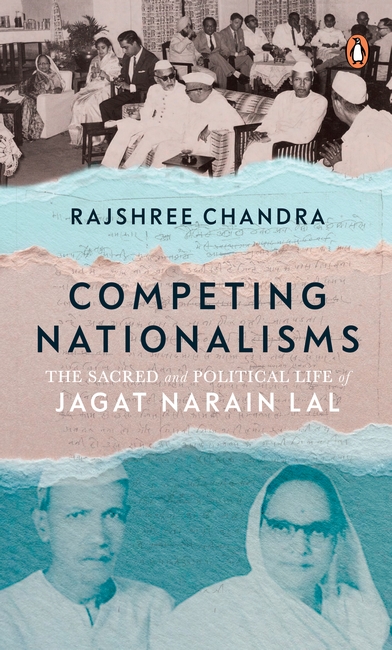
Competing Nationalisms is more than a political biography of Jagat Narain Lal-now forgotten by history, but once an influential member of the freedom movement in Bihar. As a member of the Congress and of the Hindu Mahasabha; as a Hindu nationalist who wanted to combine religion with civic virtues; as a Gandhian and an ‘ascetic nationalist’ seeking freedom in a political world, Jagat Narain Lal’s life becomes a mirror for the times in which a mix of religiosity, spirituality and ritual could not be separated from either the social or the political field.
The book travels with Jagat Narain Lal on his journey through four pathways-Ascetic, Hindu Nationalist, Anti-Colonial and Civic nationalisms. His life and times give us a glimpse into these intersecting, contesting and mutating idioms of nationalism. There are bigger leaders, taller nationalists, more valiant fighters of freedom, but none who perhaps so tortuously embodied the many possibilities and contradictions of Indian nationalism. In his anxieties, vulnerability, negotiations and truth-telling, we glimpse Indian nationalism’s own fraught relationship with questions of identity, faith and nationhood.
In leafing through her grandfather’s life, page by yellowed page, Chandra presents not just his political biography but, in a sense, a personal biography of Indian nationalism as well. In Jagat Narain Lal’s small story lies a bigger history of competing nationalisms, as well as a tale that
speaks to the present.

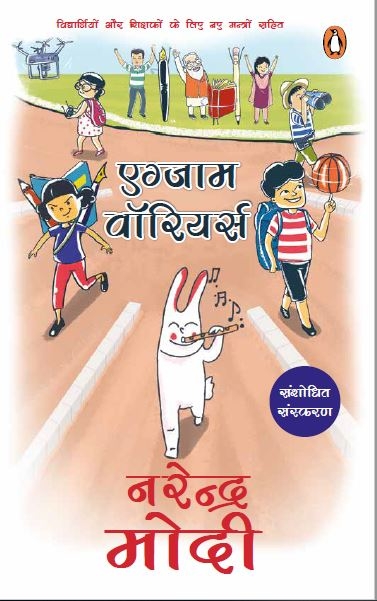
The new and enhanced edition of Exam Warriors by Narendra Modi is not only an inspiring book for students but also for their parents and teachers. Written in a fun and interactive style, with illustrations, activities and yoga asanas, this book will be a friend in acing exams and facing life.
Non-preachy, practical and thought-provoking, Exam Warriors is a handy guide for youth of India and across the world.

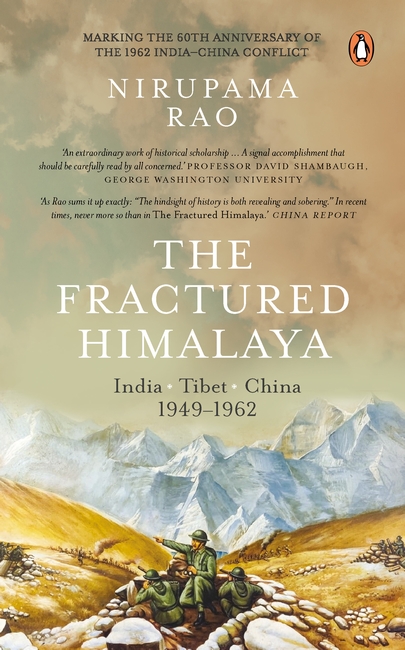
A deep dive into understanding India-China relations
Why did India and China go to war in 1962? What propelled Jawaharlal Nehru’s ‘vision’ of China? Why is it necessary to understand the trans-Himalayan power play of India and China in the formative period
of their nationhoods? The past shadows the present in this relationship and shapes current policy options, strongly influencing public debate in India to this day.
Nirupama Rao, a former Foreign Secretary of India, unknots this intensely complex saga of the early years of the India-China relationship. As a diplomat-practitioner, Rao’s telling is based not only on archival material from India, China, Britain and the United States, but also on a deep personal knowledge of China, where she served as India’s Ambassador. In addition, she brings a practitioner’s keen eye to the labyrinth of negotiations and official interactions that took place between the two countries from 1949 to 1962.
The Fractured Himalaya looks at the inflection points when the trajectory of diplomacy between these two nations could have course-corrected but did not. Importantly, it dwells on the strategic dilemma posed by Tibet in relations between India and China-a dilemma that is far from being resolved. The question of Tibet is closely interwoven into the fabric of this history. It also turns the searchlight on the key personalities involved-Jawaharlal Nehru, Mao Zedong, Zhou Enlai and the 14th Dalai Lama-and their interactions as the tournament of those years was played out, moving step by closer step to the conflict of 1962.

A practical guide to helping readers find their dream jobs.
Searching for a job is always stressful-the majority of job seekers experience nervousness, anxiety and tension during their job search. While one’s qualifications, experience and talent are important, all these are of no consequence if one cannot locate the right job, identify the right time to pitch for it and find the people who can help in getting it.
Job Search Secrets provides much-needed guidance to readers on how they can get their dream job easily. It includes tips on choosing the right career, finding hidden jobs, reaching people who can help in the job search, building long-term networks, using social media, cracking campus and virtual interviews, and more.
It is a step-by-step guide and practical manual with exercises and free tools, which anyone can use to find the dream job faster.
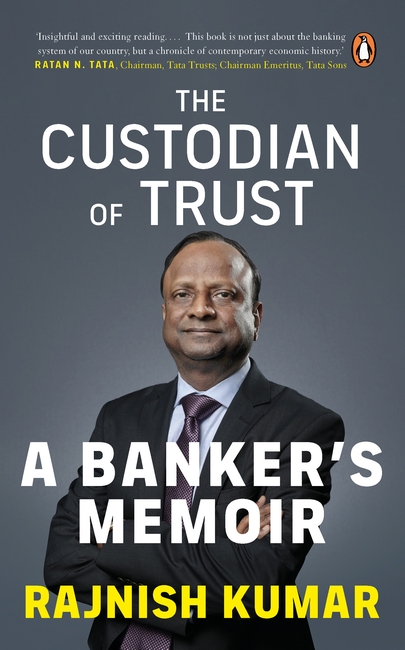
He was silently managing the crisis in India’s banking sector then.
Now he shares these stories in his memoir.
It began from a modest house in one of the narrowest lanes of the old city of Meerut. From being a probationary officer in the State Bank of India (SBI) in 1980 to its Chairman in 2017, Rajnish Kumar had an amazingly interesting journey in which he saw the many changes in India’s banking sector that greatly impacted the country and its economy.
As the Chairman of SBI, Kumar recounts, his term was rather momentous as the period-from 2017 to 2020-during which he shouldered this responsibility was rather unique under any circumstances. The Indian banking sector was going through one of its most tumultuous phases. The problem of non-performing loans (NPLs) had severely impacted the balance sheet and profitability of banks, especially those in the public sector.
In the aftermath of demonetization, the YES Bank fiasco, the crisis in Jet Airways and NPLs, among others, The Custodian of Trust is a candid memoir by the former Chairman of India’s largest commercial bank. Anecdotal, engaging and evocative, this book is an unputdownable memoir of a former banker.

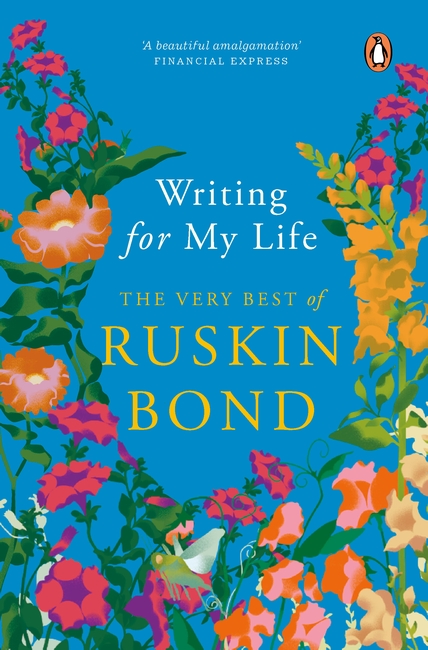
Experience the very best of Ruskin Bond’s writings in one book.
If only the world had no boundaries and we could move about without having to produce passports and documents everywhere, it really would be ‘a great wide beautiful, wonderful world’, says Ruskin Bond.
From his most loved stories to poems, memoirs and essays, Writing for My Life opens a window to the myriad worlds of Ruskin Bond, India’s most loved author. Capturing dreams of childhood, anecdotes of Rusty and his friends, the Ripley-Bean mysteries, accounts of his life with his father and his adventures in Jersey and London among others, this book is full of beauty and joy-two things Ruskin’s writing is mostly known for.
With a comprehensive introduction, this is the perfect gift to all the ardent readers and lovers of Ruskin’s effervescent writing. A wide collection of carefully curated and beautifully designed stories, this book is a collector’s edition.
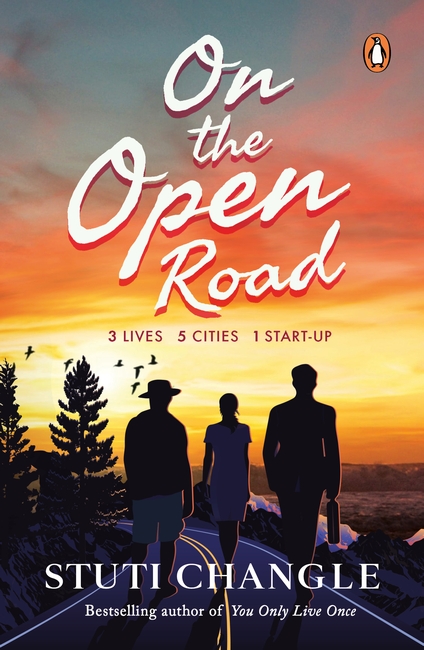
Myra wants to quit her job.
Kabir is looking to resign from the board.
Sandy just dropped out of college.
Discover yourself within these restless twenty-somethings as they stand on the cusp of making life-changing decisions. Battling their inner demons and societal taboos, they wish to live life on their own terms. Their passion brings them together and with nothing but Ramy’s travel blog as their guiding star, they set out on the open road to follow what they desire.
But their journey entails a devastating personal loss, an undying fear and a host of obstacles. Will they be able to
realize their shared dream? Or will they succumb to the hardships on their road to freedom?
On the Open Road is an inspirational story of three ordinary individuals who refuse to give up on themselves.
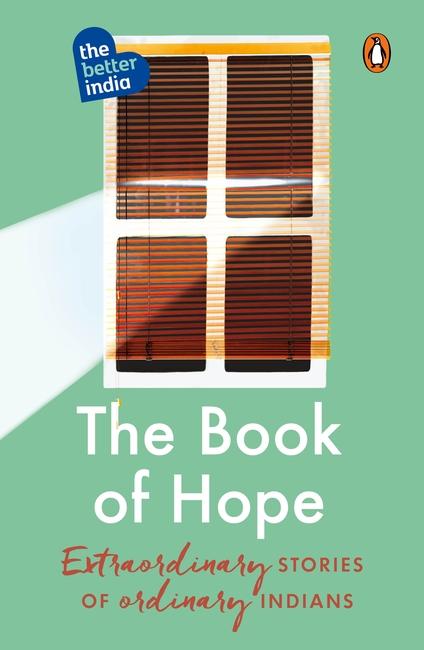
The Book of Hope is perfect for a nation that refuses to give up. Curated by The Better India, these are stories of resolve, love, faith, entrepreneurship, and compassion that will uplift your spirit. These stories serve as a pick-me-up when you’re feeling down, or when you need a reminder that in the end, we’ll make it through.
This book is an archive of a nation’s collective goodness. Stories are what connect us and remind us that hope is always possible, and the lives of these ordinary Indians will surely inspire you. These are the experiences of real people who found love, overcame loss, worked towards achieving their dreams, or those who bravely fought against societal norms. This book is a testament to the fact that anyone can do it - even you.
When all seems dull and bleak, think of this book as a ray of hope brightening up your heart, mind, and soul.
Foreword by Anand Mahindra.

Personal. Intimate. Deeply moving.
An absolutely unputdownable memoir.
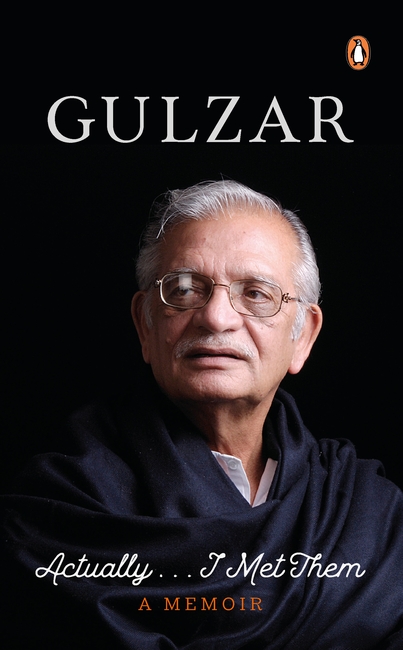
Do memories ever fade away? They never ‘dry up’, says Gulzar Saab, ‘They keep floating somewhere between the conscious and the subconscious mind. It’s a great feeling to swim there sometime. Pick up a few bubbly moments and cherish them again.’
From Bimal Roy to Satyajit Ray, R.D. Burman, Kishore Kumar, Ritwik Ghatak, Hrishikesh Mukherjee, Pandit Ravi Shankar, Pandit Bhimsen Joshi, Mahasweta Devi and Samaresh Basu, among others, in this fascinating book, Gulzar Saab goes down memory lane to bring to light his relationship with the doyens of cinema, music and literature, who he had known and worked with over a long period of time. In his words, ‘It seems like a dream when I revisit my memories of such great gurus and colleagues, and I feel overwhelmed that I have really interacted with them. I have to pinch myself on realizing that actually . . . I met them.’
Chatty, anecdotal and deeply personal, this book of memories will chronicle Gulzar Saab’s life and career through different eras of Indian cinema as he successfully transcended commercial and critical arts. Studded with rare photographs, Actually .. I Met Them will be a treat for his huge and devoted fan base.
An auto biography by Gulzar Saab.

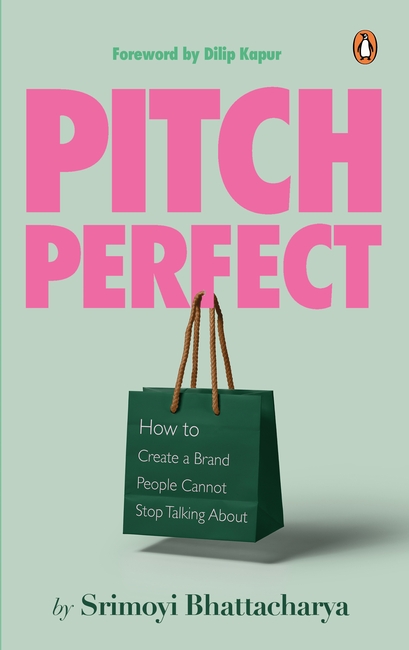
What do you do when you hear of an interesting brand or person?
You Google them, and visit their website and social media. It’s their storytelling that draws you in, and what locks you down are the stories being told about them. In today’s hyperconnected, hypercompetitive reality, everyone is vying for the same space on a screen with about 10 seconds of a potential client’s attention. So what’s the secret recipe to building a sticky brand while winning over and retaining consumers?
This is where Srimoyi Bhattacharya comes in to help you get your Pitch Perfect.
With more than 25 years of experience across three continents as a top publicist and strategist, Srimoyi is the founder of Peepul Consulting, one of India’s leading brand relations agencies. Respected for her depth of experience, she is an expert at helping brands find their most effective story, find their niche positioning or scale up, build conversations and amplify that message.
In Pitch Perfect, Srimoyi parts with every insider secret to help you pitch your brand just right. Plus, she’s brought in the finest names in luxury, fashion, beauty, lifestyle, media, social media, communications, and PR to give you valuable advice on building a brand people can’t stop talking about.
Whether you are starting a label, have been running a company for decades, or building a family business, this book is for you. It tells you how to establish your brand language, identify your audience, build creative associations, host memorable events, manage a crisis and much more.
Pitch Perfect is the must-read bible on brand-building, engagement, and amplification for anyone interested in the power of PR.