Karan Johar is synonymous with success, panache, quick wit, and outspokenness, which sometimes inadvertently creates controversy and makes headlines. KJo, as he is popularly called, has been a much-loved Bollywood film director, producer, actor, and discoverer of new talent. With his flagship Dharma Production, he has constantly challenged the norms, written and rewritten rules, and set trends.
But who is the man behind the icon that we all know? Baring all for the first time in his autobiography, An Unsuitable Boy, KJo reminisces about his childhood, the influence of his Sindhi mother and Punjabi father, obsession with Bollywood, foray into films, friendships with Aditya Chopra, SRK and Kajol, his love life, the AIB Roast, and much more. In his trademark frank style, he talks about the ever-changing face of Indian cinema, challenges and learnings, as well as friendships and rivalries in the industry.
Honest, heart-warming and insightful, An Unsuitable Boy is both the story of the life of an exceptional film-maker at the peak of his powers and of an equally extraordinary human being who shows you how to survive and succeed in life.

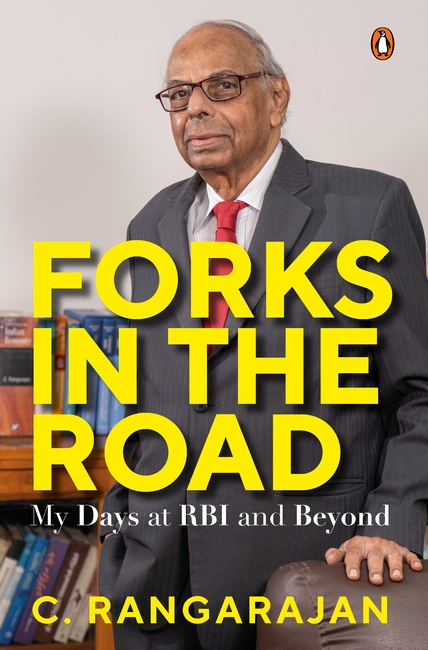
‘One doesn’t plan one’s life fully. Some of it is planned, but some of it is purely accidental. Much of my life is a matter of circumstance,’ says C. Rangarajan.
In this book, the veteran economist and policymaker provides a captivating account of his professional journey, starting with his purely accidental entry into the RBI in 1982. Rangarajan, regarded as one of the tallest figures in the history of India’s economic reforms, provides crucial insights into the role he played as part of the team which initiated far-reaching reforms in India’s economy in the early 1990s. The path-breaking reforms that he implemented during his tenure as governor of RBI included deregulation of interest rates, strengthening of the banking system by a gradual tightening of prudential norms, creation and nurturing of financial markets, giving them depth and vibrancy, shifting to market-determined exchange rates, making the rupee convertible on the current account and the cessation of automatic monetization of budget deficit.
Rangarajan describes the key events between 1982 and 2014, particularly in the areas of money and finance, explaining not only what happened but also the motivations and processes behind them. As a public figure and an architect of economic change in India, he also ruminates about his interactions with both political and economic actors. Forks in the Road is not only a memoir of a man who shaped India’s economy and positively impacted the lives of many, but also a fascinating account of India’s growth story. It is a description of what we did and what we did not, and where we succeeded and where we failed.

From steel to beverages and from supercomputers to automobiles, TATA companies have broken new ground and set new standards of excellence over the past two decades.
Tatalog presents eight riveting and hitherto untold stories about the strategic and operational challenges that TATA companies have faced, and the forward thinking and determination that have raised the brand to new heights. Among the engaging and inspiring stories told here are those of Tata Indica, the first completely Indian car that succeeded in the face of widespread cynicism; the jewellery brand Tanishq that has transformed one of India’s largest industries; and Tata Finance, which underwent several tribulations yet demonstrated the principles that TATA stands for.

There is perhaps no political figure in modern history who did more to secure and protect the Indian nation than Sardar Vallabhbhai Patel. But, ironically, seventy years after Patel brought together piece by piece the map of India by fusing the princely states with British India to create a new democratic, independent nation, little is understood or appreciated about Patel’s enormous contribution to the making of India. Caricatured in political debate, all the nuances of Patel’s difficult life and the daring choices he made are often lost, or worse, used as mere polemic.
If Mahatma Gandhi was the spiritual core of India’s freedom struggle and Jawaharlal Nehru its romantic idealism, it was Sardar Patel who brought in the vital pragmatism which held together the national movement and the first ideas of independent India. A naturally stoic man, Patel, unlike Gandhi or Nehru, wrote no personal history. He famously argued that its was better to create history than write it. This is why even his deepest misgivings and quarrels have been easily buried. But every warning that Patel left for India-from the dangers of allowing groups to create private militias to his thoughtful criticism on India’s approach to Kashmir, Pakistan and China-are all dangerously relevant today. It is impossible to read about Patel, who died in 1950, and not feel that had he lived on, India might have been a different country. It is also impossible to ignore Patel and understand not only what the idea of India is but also what it could have been, and might be in the future.
The Man Who Saved India is a sweeping, magisterial retelling of Sardar Patel’s story. With fiercely detailed and pugnacious anecdotes, multiple award-winning, best-selling writer Hindol Sengupta brings alive Patel’s determined life of struggle and his furious commitment to keep India safe. This book brings alive all the arguments, quarrels and clashes between some of the most determined people in Indian history and their battle to carve out an independent nation. Through ravages of a failing body broken by decades of abuse in and outside prison, Patel stands out in this book as the man who, even on his deathbed, worked to save India. Hindol Sengupta’s The Man Who Saved India is destined to define Patel’s legacy for future generations.

Screenwriter and fame-child Shaheen Bhatt has been a powerhouse of quiet restraint-until recently. In a sweeping act of courage, she now invites you into her head.
Shaheen was diagnosed with depression at eighteen, after five years of already living with it. In this emotionally arresting memoir, she reveals both the daily experiences and big picture of one of the most debilitating and critically misinterpreted mental illnesses in the twenty-first century. Shaheen takes us through the personal pendulum of understanding and living with depression in her privileged circumstances. With honesty and a profound self-awareness, Shaheen lays claim to her sadness, while locating it in the universal fabric of the human condition.
In this multi-dimensional, philosophical tell-all, Shaheen acknowledges, accepts and overcomes the peculiarities of living with depression. To anyone with mental health disorders, I’ve Never Been (Un)Happier stretches out its hand to gently provide solace and solidarity
Didda, princess of Lohara, is beautiful, intelligent–and lame.
Despised by her father and bullied by his heir, Didda’s childhood is miserable and her future, bleak.
When she is married off to the dissolute ruler of Kashmira, she must learn to hold her own in a court ridden with factions and conspiracies. But Didda is no ordinary queen. Ruthless and ambitious, she wants to rewrite history. Will she succeed?
Queen of Ice is a compulsive read that brings alive the turbulent history of tenth-century Kashmir with an exquisite balance of fact and fiction. This is award-winning author Devika Rangachari’s finest novel yet.
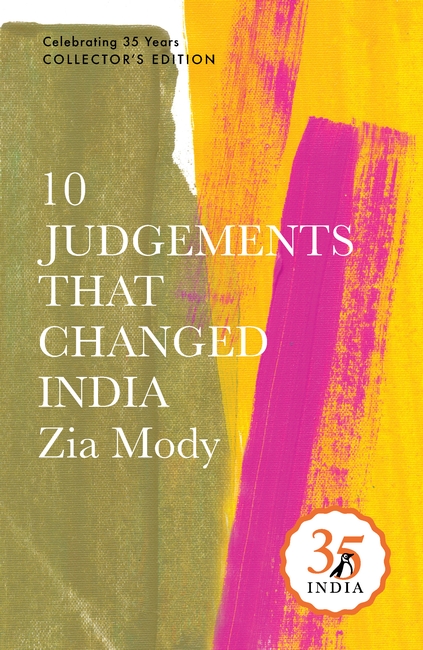
Who was Shah Bano and why was her alimony pertinent to India’s Secularism? Does the fundamental right to life include the right to livelihood and shelter? Where there is the right to live, is there also the right to die? How did Bhanwari Devi’s rape help define sexual harassment at the workplace? Here are the Supreme Court’s ten pivotal judgements that have transformed Indian democracy and redefined our daily, lives. Exploring vital themes such as custodial deaths, reservations and environmental jurisprudence, this book contextualizes the judgements, explains key concepts and maps their impacts. Written by one of India’s most respected lawyers, Ten Judgements That Changed India is an authoritative yet accessible read for anyone keen to understand India’s legal system and the foundations of our democracy.
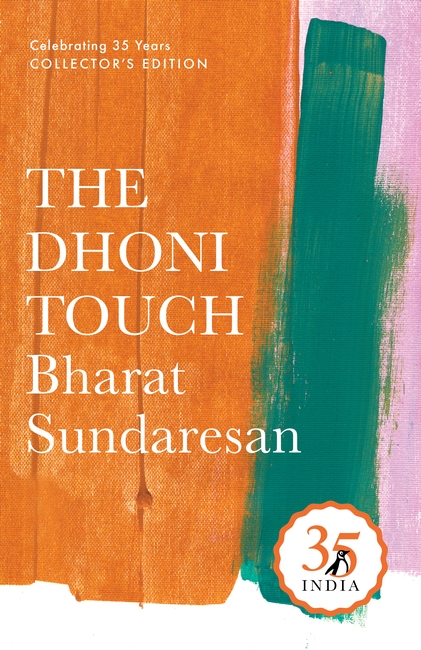
For over a decade, Mahendra Singh Dhoni has captivated the world of cricket and over a billion Indians with his incredible ingenuity as captain, wicketkeeper and batsman. Bharat Sundaresan tracks down the cricketer’s closest friends in Ranchi and artfully presents the different shades of Dhoni-the Ranchi boy, the fauji, the diplomat, Chennai’s beloved Thala, the wicketkeeping Pythagoras-and lays bare the man underneath. He discovers a certain je ne sais quoi about the man who has a magical ability to transform and elevate everything which comes into his orbit-the Dhoni Touch.

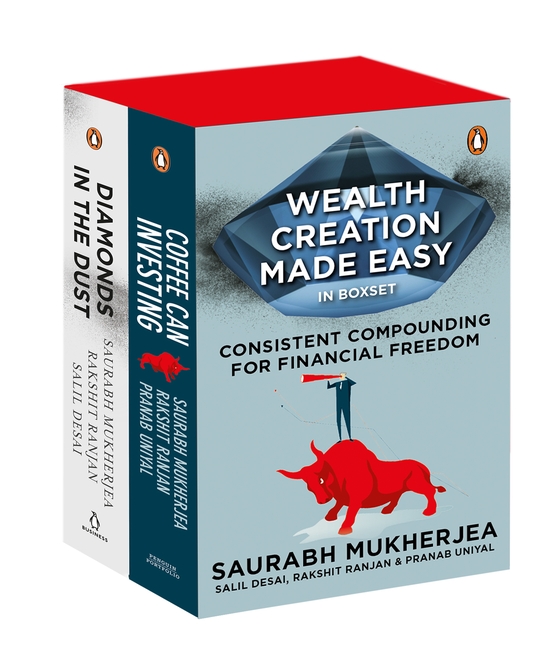
This box includes a set of two bestselling books on investing and wealth creation.
Diamonds in the Dust offers Indian savers a simple, yet highly effective, investment technique to identify clean, well-managed Indian companies that have consistently generated outsized returns for investors. Based on in-depth research conducted by the award-winning team at Marcellus Investment Managers, it uses case studies and charts to help readers learn the art and science of investing in the US$3 trillion Indian stock market.
The book also debunks many notions of investing that have emerged from the misguided application of Western investment theories in the Indian context.
Vital and indispensable, this book will serve as the ultimate manual on investing and provide practical counsel to readers to achieve their financial goals.
Coffee Can Investing offers a simple strategy to make not 10 not 15 but 20 percent compound annual growth rate (CAGR) on your investments. Using this strategy one can easily grow their money four to five times whilst taking half the risk compared to the overall market. The book decodes the secret to identifying low-risk investments that generate great returns.

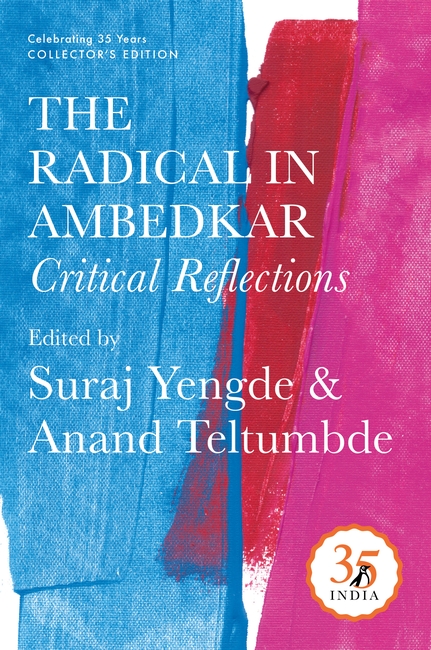
This landmark volume, edited and introduced by Anand Teltumbde and Suraj Yengde, establishes B.R. Ambedkar as the most powerful advocate of equality and fraternity in modern India. While the vibrant Dalit movement recognizes Ambedkar as an agent for social change, the intellectual class has celebrated him as the key architect of the Indian Constitution and the political establishment has sought to limit his concerns to the question of reservations. This remarkable volume seeks to unpack the radical in Ambedkar’s legacy by examining his life work from hitherto unexplored perspectives.
Although revered by millions today primarily as a Dalit icon, Ambedkar was a serious scholar of India’s history, society and foreign policy. He was also among the first dedicated human rights lawyers, as well as a journalist and a statesman. Critically evaluating his thought and work, the essays in this book-by Jean Drèze, Partha Chatterjee, Sukhadeo Thorat, Manu Bhagavan, Anupama Rao and other internationally renowned names-discuss Ambedkar’s theory on minority rights, the consequences of the mass conversion of Dalits to Buddhism, Dalit oppression in the context of racism and anti-Semitism, and the value of his thought for Marxism and feminism, among other global concerns.
An extraordinary collection of immense breadth and scholarship that challenges the popular understanding of Ambedkar, The Radical in Ambedkar is essential reading for all those who wish to imagine a new future.