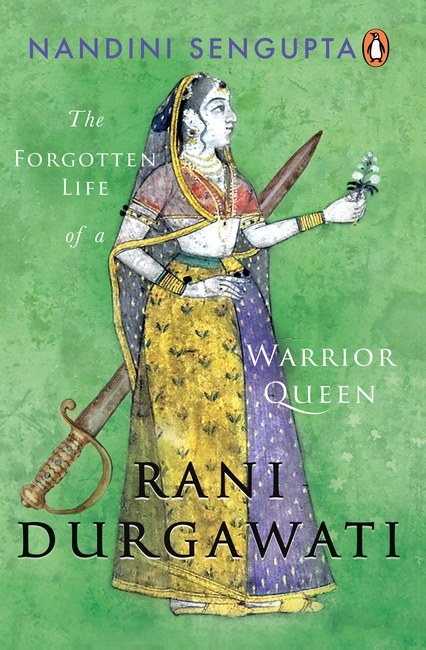
Gond Rani Veerangana Durgawati, queen of the tribal kingdom of Garha Mandla, ruled more than 450 years ago and died fighting for her dharma. A survivor who was not afraid to stand up for her rights, she was a warrior smart enough to use terrain to counter much larger manpower and artillery strength, a devoted mother and a model monarch who looked after her people till her last breath-the fact that she lived in blood-soaked medieval India, makes her story even more remarkable.
The feisty and formidable Rani Durgawati lives on in the folk tales and songs of her people. These songs and tales have now been used by Nandini Sengupta to create a meticulously researched and accessibly written biography of a forgotten female hero and one of India’s most underrated monarchs.

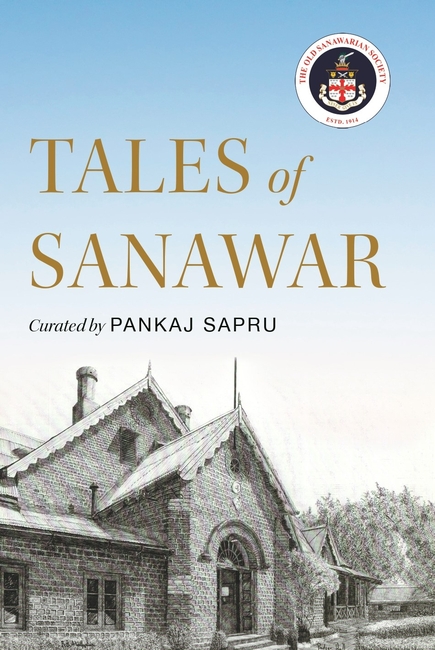
Tales of Sanawar, is a collection of anecdotal stories penned by some of the school’s most illustrious alumni and published by The Old Sanawarian Society (OSS®), its alumni association celebrating 175 years of their alma mater. The book contains schooldays memoirs of Old Sanawarians. Experiences of their childhood years on the Hilltop. Well-researched archival chronicles of the school take us back in time, from the days of the founding of the Lawrence Royal Military Asylum in 1847 to the independence of India and first-hand accounts of how Sanawar endured through that historic period of transition, including the great wars. Commentaries extracted from the school’s annual magazine provide a vivid description of life at Sanawar in the post-Independence years.

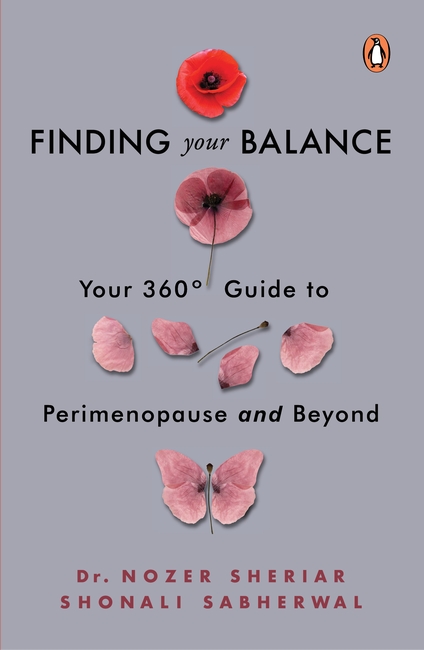
Urban myth has long made the menopause appear a scary endpoint in a woman’s life. This book debunks this misconception to reveal the menopause to be as much a journey-defined by the years leading up to and after it, known as the perimenopause-as an event.
What role do hormones play in the menopause? Do they work in isolation or are there external factors, such as your environment, your food and your mental state, that affect them? Can your concerns and symptoms only be medically addressed, or do you have a role to play?
In Finding Your Balance, gynaecologist Dr Nozer Sheriar and macrobiotic nutritionist Shonali Sabherwal combine their expertise into an empowering manual on navigating the (peri)menopause. Mixing personal journeys with professional knowledge, this book distils medical jargon into bite-sized, accessible knowledge that will enable women to make informed decisions on their health. Moreover, it guides the reader on to a holistic path that addresses how emotional states and lifestyles can influence the perimenopause.
Packed with information, Finding Your Balance is the best friend every woman needs.

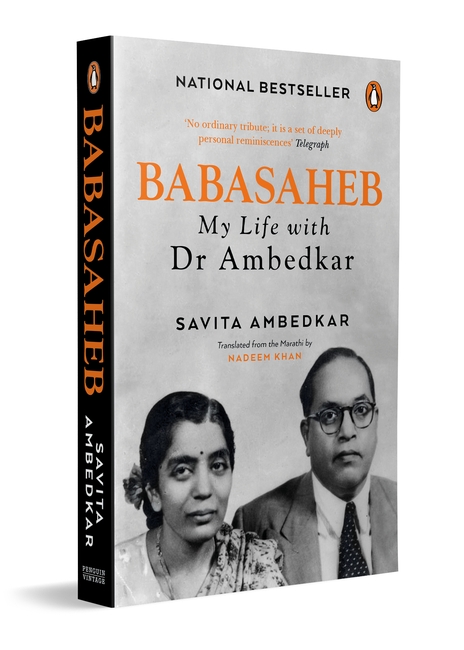
Born into a middle-class Saraswat Brahmin family, Dr Sharada Kabir met and got to know Dr Bhimrao Ambedkar as a patient riddled with life-threatening diseases, and eventually married him on 15 April 1948, getting rechristened Savita Ambedkar. From the day of their wedding to the death of Dr Ambedkar on 6 December 1956, she aided him in some of his greatest achievements-drafting the Constitution of India, framing the Hindu Code Bill, writing some of his most celebrated books, including The Buddha and His Dhamma, and leading millions of Dalits into Buddhism. Following his death, she was hounded into obscurity by some of Dr Ambedkar’s followers, who saw her as a threat to their political ambitions. She re-emerged into public life in 1970 and got back to working on the mission to which her husband had devoted his life-the welfare of the Dalit community. Her autobiography, Dr Ambedkaraanchya Sahavaasaat, was first published in Marathi in 1990.
This English translation by Nadeem Khan unearths a much valuable and forgotten account, an intimate portrait of one of the greatest figures of the twentieth century. A tenacious fighter, an outstanding scholar and an iconic leader, Dr B.R. Ambedkar was all that and more. Savita Ambedkar brings alive a different side of her husband: a man who wrote romantic letters, dictated what she should wear, whipped up delicious mutton curry, played the violin, and even tried his hand at sculpting. This is a book that humanizes Ambedkar as no other book has done yet.

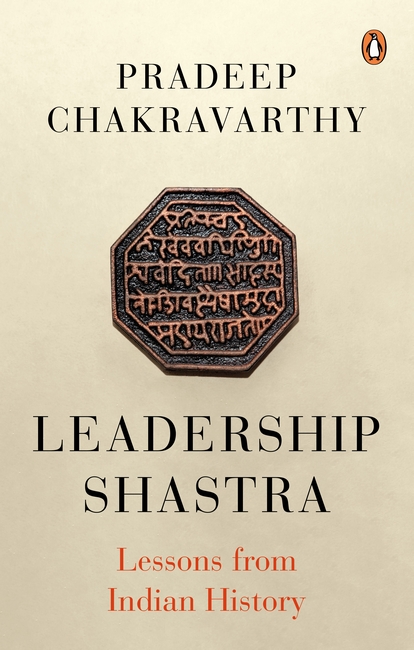
History is the past. Surely, it’s irrelevant today. Is it, though? What if history could be made to work for us in very real ways? In Leadership Shastra, Pradeep Chakravarthy does just that. He studies the lives of well-known historical figures like Shivaji, Babur, Ahilyabai Holkar, Sankaradeva and many others with a view to understand their motivations, actions and legacies. The book examines how developing a comprehension of our past could be the key to understanding our own selves, our actions, motivations and of those around us. This view of history as both useful and inspirational is unconventional: it is revealed here as a discipline that can be used for self-assessment and self-motivation. Engaging and enthralling, this is a book that will leave history buffs with much to think about, as much as it will serve as an introduction to the newbie.

Have you ever regretted a lost love?
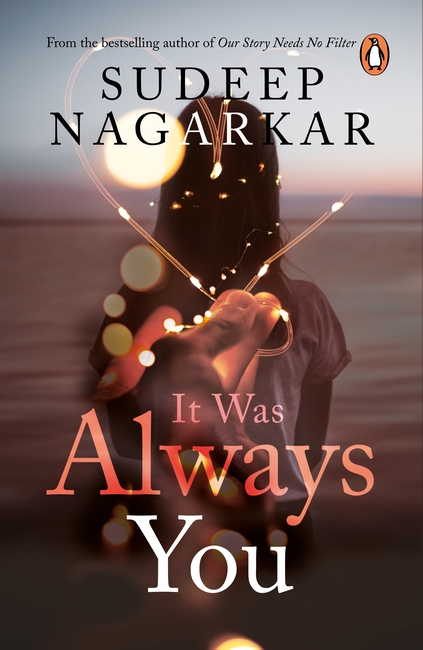
Karan and Shruti are a happily married couple. Until Karan’s ex resurfaces into his life one day. Soon Karan finds himself getting nostalgic over matters of the heart and thinking fondly of his first romance. Will he put his steady and seemingly perfect marriage at stake for his ex-girlfriend?
Meanwhile his best friend Aditya finds his own relationship with his wife Jasmine going through an emotional turmoil. Will both friends work towards keeping their marriage afloat, or make a decision they would later regret?

‘Evolution is an exquisite artist, even if an unconscious one.’- Eric Dinerstein
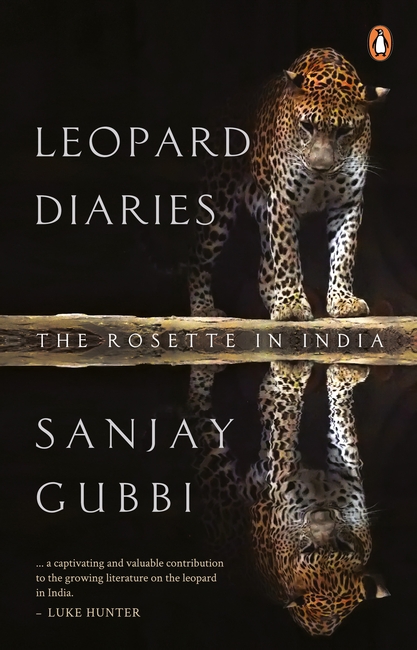
The leopard is perhaps one of the world’s most beautiful creatures. The spots on its body are even romantically called ‘rosettes’. It is social but solitary, inconspicuous but significant in numbers, large but elusive, and does not fit any of the pigeonholes of large-cat conservation. In India, the leopard is a poster boy of the fight to preserve wildlife, but in many countries, it faces either ecological or local extinction. A worrying phenomenon, given that these cats carry out important ecosystem services that have not been fully understood yet.
In Leopard Diaries: The Rosette in India, Sanjay Gubbi, who has studied and documented the leopard for nearly a decade, gives us a close look at this fascinating creature. From detailing its food habits to throwing new light on how the young are reared, from offering suggestions on tackling leopard-human conflict to imagining the future of this arresting animal, this book is a 360-degree view of the leopard, its ecological context, its fraught relationship with the human world, and how wildlife and human beings can find a way to co-exist.

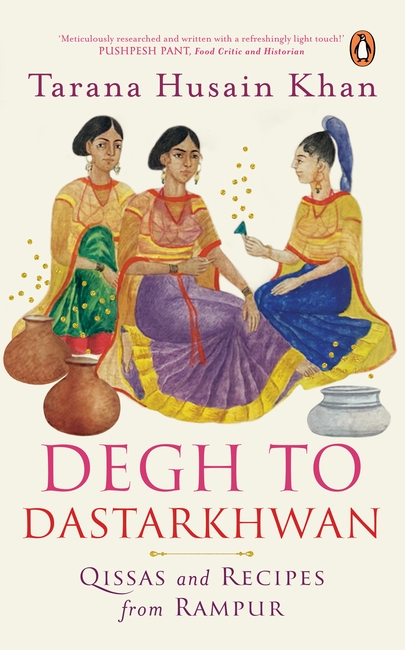
Tarana was an indifferent eater and an unenthusiastic cook until a chance encounter with a nineteenth-century Persian cookbook in Rampur’s fabled Raza Library started her off on a journey into the history of Rampur cuisine and the stories around it.
Part food memoir and part celebration of a cuisine, Degh to Dastarkhwan answers the question-‘what constitutes and distinguishes Rampur cuisine?’ Each chapter represents an emotion, an observance or a celebration. The spread of Rampuri food from the grand royal cuisine to the simple daily fare becomes the arena to express love, loss, forgiveness and spirituality. Peopled with compelling characters from all walks of life, the book is a tour de force that includes recollections of a princess to the spiritual ambience of a Sufi shrine, with stories of khansamas, weddings and funerals.
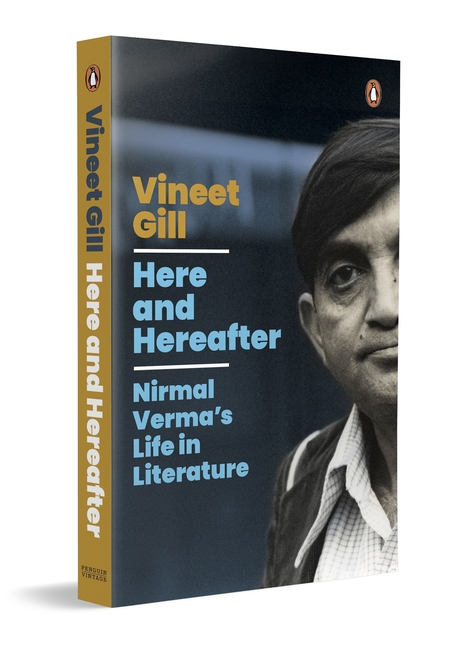
‘Here and Hereafter is as much about Nirmal Verma’s life in literature as it is about Vineet Gill’s. There is no other book quite like it’—ARVIND KRISHNA MEHROTRA
‘A literary gem’—AMITAVA KUMAR
How is a writer formed? Yes, through labour, commitment, perseverance, grit and various other things that we keep hearing about. But equally, a writer is formed through the workings of a particular kind of sensibility. As Vineet Gill attempts to understand this writerly sensibility in Nirmal Verma’s life and work, he finds that the personal and the literary are, on some level, inseparable.
In this masterly deep dive into the world of one of Hindi literature’s pioneers, Gill looks at the scattered elements of Verma’s life as ingredients that went into the making of the writer. The places he lived in, the people he knew, the books he read are all reflected, in Gill’s view, in Verma’s stories and novels. This is a work of intense readerly analysis and considered excavation-a contemplation on Verma’s oeuvre and its place in world literature.

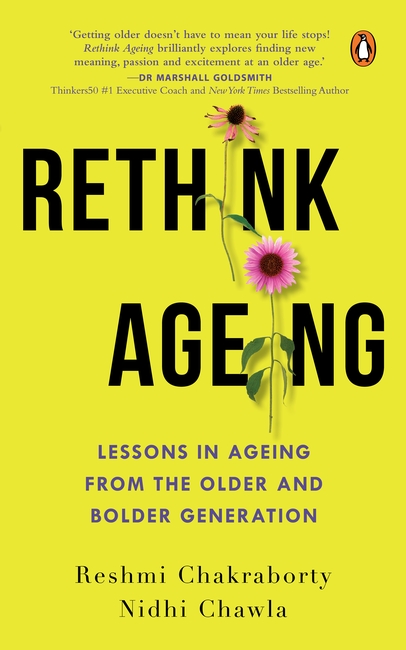
Veena Iyer, aged sixty-six, got a degree in dance movement therapy. She is training to upgrade her skill and now runs various workshops.
B.R. Janardan, aged eighty-seven, started running after sixty and has sixteen full marathons under his belt.
These important stories illustrate the shifting narrative for ageing in India. They battle the ageism that is deep-rooted in Indian culture with fixed notions of ‘approved’ behaviour. Grandchildren? Yes. Pilgrimage? Yes. But companionship? Gasp! A second career? Why the need?
India will have over 300 million senior citizens by 2050. ‘Active ageing’ has become a popular topic of conversation in urban India and is the process of developing and maintaining functional activities as one gets older. Therefore, it is no longer uncommon to meet people like Janardan or Iyer in our fast-evolving society. We have an ageing society that is living longer and adapting to nuclear families, faraway kids and amorphous social support. Urban Indians are navigating health challenges, isolation and shifting social barometers to practise active ageing, the best form of preventive healthcare. This book takes a deep dive into understanding ageing, its impact on society, and how to overcome certain ‘hurdles’. Biological age no longer defines and limits us. After all, why should age prevent us from living the lives we want to?