Traditionally, history has been telling us the stories of kings. In the long tradition of history writing, his-story has always dominated over her-story. Though queens evoke a sense of romance and their stories are told like fairy tales, it is common enough to find that these stories end in tragedy. In India’s history, not all queens are remembered today. Some are celebrated; while others have been almost ignored by historians.
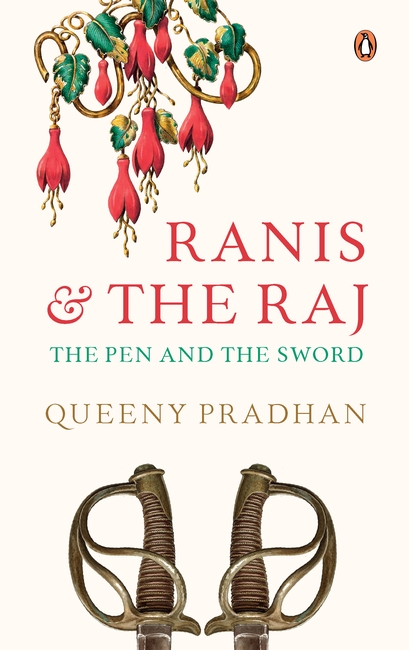
In Ranis and the Raj, Queeny Pradhan has selected six queens. All the six queens are fromthe nineteenth century and have faced the British Raj, the East India Company and the Crown. From the Rani of Sirmur, who was the earliest to deal with theBritish authorities, to Rani Chennamma, Rani Jindan, Begum Zeenat Mahal, Rani Lakshmi Bai, to the Sikkim Queen from the 1860s to 1890s, Pradhan has attempted to carve an engrossing historical narrative for each of these important figures in Indian history. Unlike the biographical convention in traditional history writing, theresearch in this book can be placed in the realm of ‘microhistory’. The life stories of these queens are fragmented due to the ‘silences’ and ‘invisibilization’ in political history of the time, and this book aims to fill these gaps.

Hinduism is an ancient religion, philosophy and way of life. Unlike other great religions that are based on a small set of books, there are hundreds of texts in Hinduism, most of which are very voluminous. They span not merely centuries, but millennia. And most importantly, these ancient scriptures are all in Sanskrit which many do not know. Therefore for a beginner with an interest in Hinduism it is a daunting task as you don’t know where to start such a study.
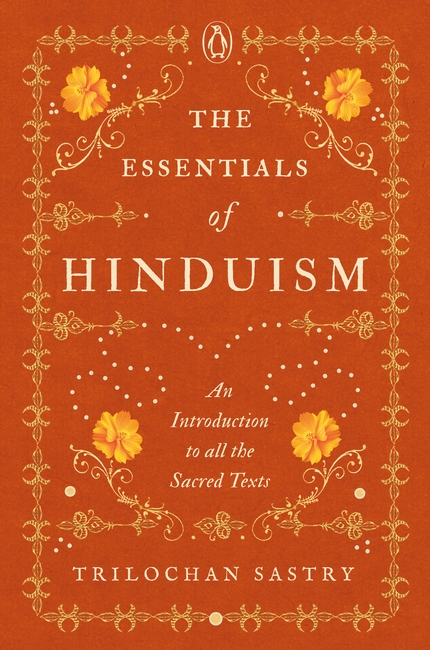
In The Essentials of Hinduism, Trilochan Sastry unpacks all the ancient texts from the Vedas to the epics covering the entire range of scriptures and everything you need to know about them in an easy-to-read and accessible way making it of special interest to Hindus and those from other religions and nations, and even those who are agnostic or atheistic.

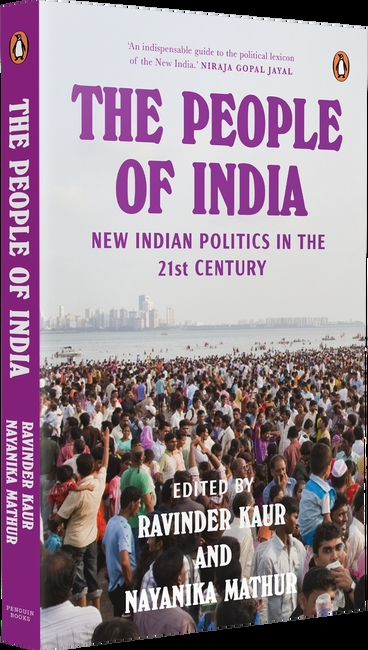
‘The People’ and ‘New India’ are terms that are being invoked freely to both understand and govern India as she enters her 75th year of post-colonial nationhood. Yet, there is little clarity on who these people of India really are, what they do, their desires, histories and attachments to India. Similarly, the phrase ‘New India’ is used far
too loosely to explain away a dangerously confounding politics.
In this book, some of the most respected scholars of South Asia come together to write about a person or a concept that holds particular sway in the politics of contemporary India. In doing so, they collectively open up an original understanding of what the politics at the heart of New India are-and how best we might come to analyse them.
This brilliant collection put together by Ravinder Kaur and Nayanika Mathur includes original and accessible essays by leading social science and humanities scholars of South Asia.

By the time he was thirteen, Alok Kejriwal had begun to have profound spiritual experiences. Separated from his parents at birth, he was raised under the loving care of his Nana and Nani. During the course of these life-altering events, Alok realized that his life was not going to be a usual one.
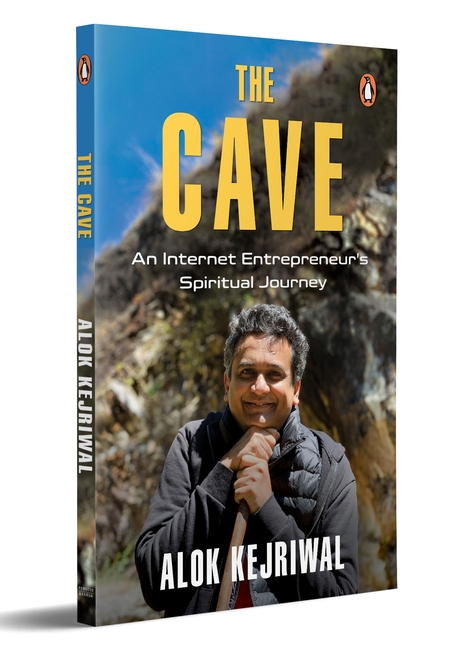
Over the next few years, Alok met unusual and blessed holy men who uplifted him. He visited temples and sacred places where he had transformative experiences. In November 2011, Alok visited a remote cave near Ranikhet in Uttarakhand that changed him forever.
The Cave is an insightful, honest and deeply personal account of Alok’s spiritual journey. With characteristic candour, he shares intimate aspects of his life that bring meaning and balance to his journey as a successful digital entrepreneur.
A playbook of the principles of success that Alok has acquired over the years, The Cave details the amazing opportunities that are available to us all, if only we follow our heart as much as we follow our mind.

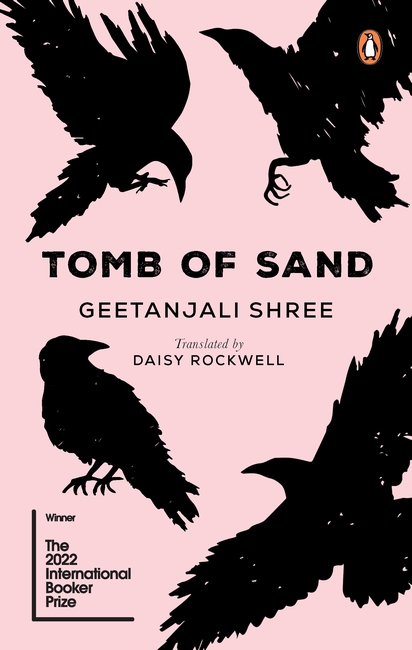
WINNER OF THE INTERNATIONAL BOOKER PRIZE 2022
WINNER OF AN ENGLISH PEN AWARD
In northern India, an eighty-year-old woman slips into a deep depression after the death of her husband, and then resurfaces to gain a new lease on life. Her determination to fly in the face of convention – including striking up a friendship with a transgender person – confuses her bohemian daughter, who is used to thinking of herself as the more ‘modern’ of the two.
To her family’s consternation, Ma insists on travelling to Pakistan, simultaneously confronting the unresolved trauma of her teenage experiences of Partition, and re-evaluating what it means to be a mother, a daughter, a woman, a feminist.
Rather than respond to tragedy with seriousness, Geetanjali Shree’s playful tone and exuberant wordplay results in a book that is engaging, funny, and utterly original, at the same time as being an urgent and timely protest against the destructive impact of borders and boundaries, whether between religions, countries, or genders.

In the ten-year anniversary edition of the classic that revolutionized the way Indians think about food and their eating habits, Don’t Lose Your Mind, Lose Your Weight teaches you simple steps you can take towards maintaining a healthy and proper diet and understanding your body and its nutritional requirements.
In FROM XL TO XS, Bollywood’s celebrated yoga instructor Payal Gidwani Tewari teaches you simple and easy to follow principles and exercise routines to lose (or gain) weight, stay fit, and transform your body structure. With photographs, celeb workouts, and useful tips by stars, From XL to XS is the best gift you can give yourself.
In Skin Rules, Dr Jaishree Sharad, one of India’s top cosmetic dermatologists, gives you a revolutionary six-week plan to healthy, blemish-free skin. From the basics-identifying your skin type, acquainting yourself with the fine print on labels-to home remedies, choosing the right make-up and the latest advancements in skincare treatments, this book has the answers to all your skin woes.

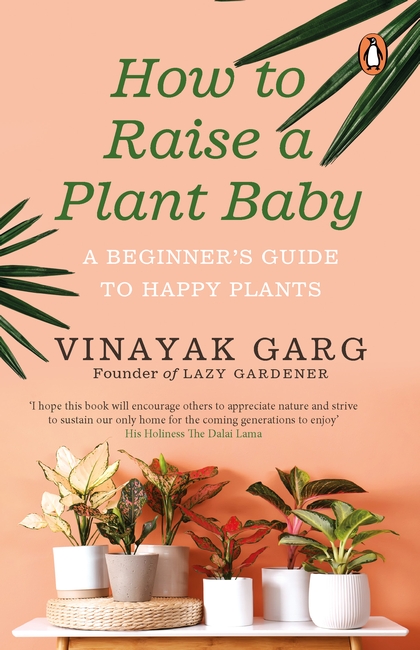
Urbanization has changed the way we garden and raise plants in our homes. As large spaces have become a luxury, the sprawling lawns in a house are a rare sight. They are replaced now by plants grown in small spaces, often indoors, with limited light, water and nutrition. This calls for relearning the principles of gardening that suit this new paradigm.
Written for all plant parents trying to raise their plant babies in an urban setting, this book is built on basic principles that keep plants healthy and covers all topics that any plant parent need to know-how to prepare their space, how to choose the right plants for their home, how to care for the plants and keep them happy and how to get family and friends started with plants of their own.
With stories from the Lazy Gardener community, supplemented with chapter-end summaries, explanatory illustrations and plant lists, the book will equip the reader to ask the right questions as they continue to garden and cultivate their knowledge of gardening. Useful for both new and experienced plant parents, Vinayak Garg’s How to Raise a Plant Baby guides them and explains everything they need to know.
We live in a world where there is a new fad diet, superfood, supplement or nutrition theory every month. There are so many tricks to optimizing workouts, peak performance, burning fat, living longer, sleeping better and biohacking your immune system. Wellness has become a part of mainstream discourse like never before, and the result is an overwhelming barrage of seemingly contradictory information.
But here’s one simple truth: good health impacts every aspect of life, be it productivity at work, interpersonal relationships or a balanced family life. In Hacking Health, Mukesh Bansal takes on the mammoth task of demystifying the science, simplifying the research and tracing the story of our relationship with our body. Through a combination of personal experience and cutting-edge science, this is a book that draws from ancient wisdom and also debunks unscientific myths to help you make smart choices in pursuit of good health. From nutrition and fitness to sleep and immunity, weight management and mental health to ageing and longevity, this book delves into the breadth and depth of holistic health and helps you navigate the lines between science and pseudoscience.
Can we use science to hack the human body’s functioning and be our most efficient, fittest and happiest selves? Hacking Health takes a 360-degree approach to answer this very question and help you unlock your body’s potential.

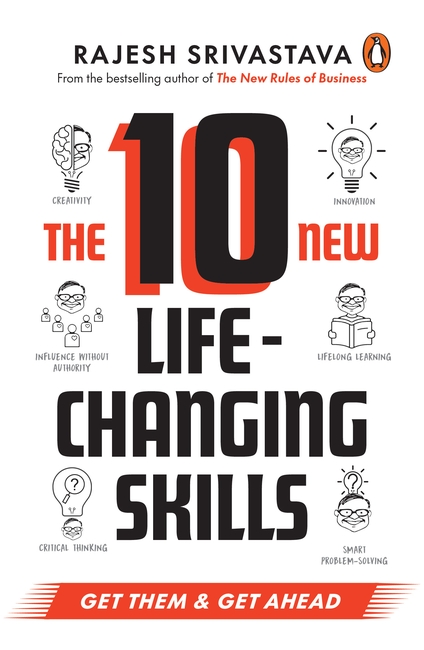
The earlier 3 Industrial Revolutions (3IRs) created blue collar and white-collar jobs, which required people to carry out instructions, not question authority and follow time tested systems and processes.
Now, we are in the midst of the 4th Industrial revolution (4IR), also called Industry 4.0. It is creating ‘green collar’ jobs, which need people to ‘think, reflect and act’. To develop these abilities and perform the green collar jobs efficiently, it is critical that professionals develop certain skills -the 10 new life-changing skills:
1. Creativity
2. Innovation
3. Critical Thinking
4. Framing the Right Question
5. Smart Problem-Solving
6. Lifelong Learning
7. Storytelling
8. Influence Without Authority
9. Humanness
10. Entrepreneurial Spirit.
This book will introduce readers to these skills, which they can apply in their businesses and professions to come up trumps.
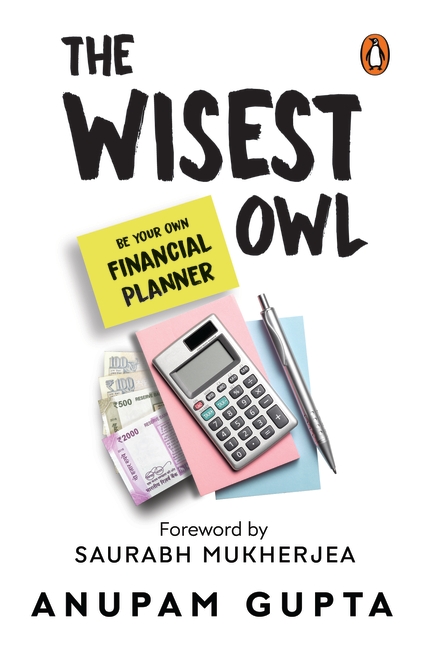
India is witnessing a major change in the way we look at money. Having reached the middle income status as a country, a vast section of the youth is now aspiring for higher financial goals. This large population is breaking away from its parents in almost every way, including financially. But the new generation of Indians entering the workforce demand more knowledge on their investments. They constantly grapple with complicated questions surrounding money: What do they do with their money? How do they plan for their future? Most of the time, they get bad advice. Mutual funds have not really delivered meaningful returns, stock selection is extremely complicated and sophisticated investments like PMSs, AIFs, etc., are only for the wealthy.
This book tries to help these young investors by offering them a framework they can use to create wealth in the long run. Using the wisdom and experience of Indian’s top personal finance professionals, the book answers critical questions, such as: Should I rent a house or buy a house? Passive investing versus active investing? Stocks versus mutual funds? Debt funds or FDs? And finally – crypto or no crypto?