Publish with Us

Follow Penguin

Follow Penguinsters

Follow Penguin Swadesh

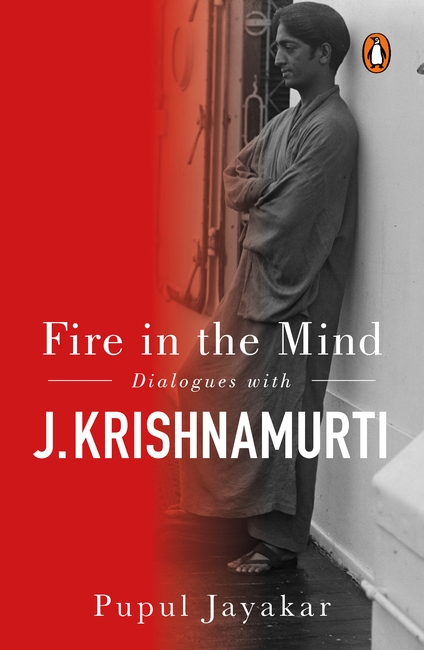
Fire in the Mind

Inspired and inspiring dialogues with one of the world’s greatest teachers

Fire in the Mind is a book of important discussions conducted with J. Krishnamurti. Held from the end of the 1960s to 28 December 1985, seven weeks before his death on 17 February 1986, these dialogues cover a vast ocean of human concerns-fear, sorrow, death, time, culture, ageing and the renewal of the brain. They also explore subjects that are central to scientific research today, such as the questions of biological survival, the nature of consciousness, artificial intelligence, computers and the mechanical mind.

J. Krishnamurti needs no introduction. A sage, a seer, a religious revolutionary and a teacher of profound compassion, Krishnamurti negated all spiritual authority. These dialogues reveal his approach to self-knowing and his way of investigation into the brain, the mind and the consciousness. In a world brought to the edge of the abyss by growing violence, soaring religious fundamentalism, the desecration of nature and a massive assault on human integrity, they provide a new direction to those of us seeking an alternative way of life.
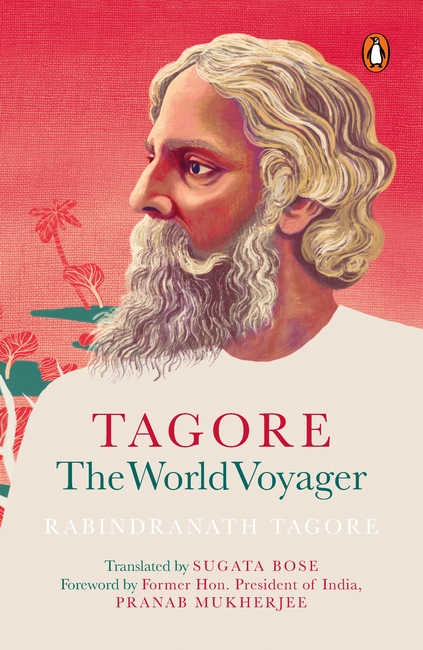
Tagore

Tagore’s beautiful songs now available in English translation

For long considered untranslatable, Tagore’s songs express most profoundly his romantic and religious perceptions. Prof. Bose aims to convey the artistic value of Tagore’s songs beyond the limits of his province. The first part, ‘Oceanic Songs’, introduces the lyrics and tunes of the songs to a foreign audience through a narrative of Tagore’s travels during which he communicated with the wider world. Since Tagore wrote only forty of his nearly 2500 songs on his journeys abroad, the second part presents a selection of ‘songs in five genres’.

This book endeavours to reach Tagore’s songs to people beyond the borders of India, transcending the barriers of language on the wings of music.

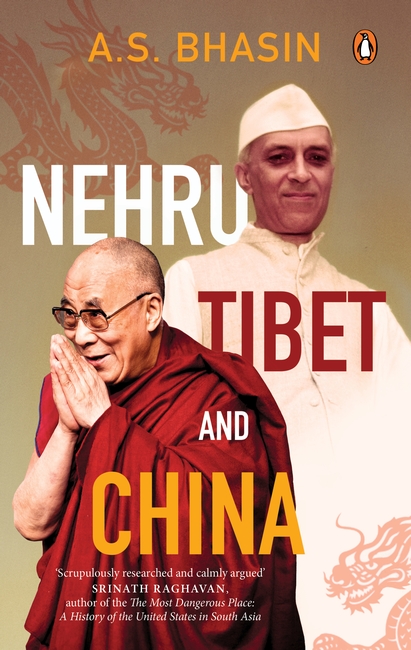
Nehru, Tibet and China

On 1 October 1949, the People’s Republic of China came into being and changed forever the course of Asian history. Power moved from the hands of the nationalist Kuomintang government to the Communist Party of China headed by Mao Tse Tung. All of a sudden, it was not only an assertive China that India had to deal with but also an increasingly complex situation in Tibet which was reeling under pressure from China.

Clearly, newly independent India, with Prime Minister Jawaharlal Nehru at its helm, was navigating very choppy waters. Its relations with China progressively deteriorated, eventually leading to the Indo-China war in 1962. Today, more than six decades after the war, we are still plagued by border disputes with China that seem to routinely grab the headlines. It leads one to question what exactly went on during those initial years of the emergence of a new China. And, more importantly, why have we repeatedly failed to arrive at a solution?

Based on years of meticulous archival research, this book in fascinating detail, analyses the events from 1949 to the Indo-China war in 1962 and its aftermath to explore the answers to these burning questions.

A Map of Longings

This first definitive biography of Agha Shahid Ali offers a rich portrait of the poet and the world he inhabited.

“A scintillating portrait of one of the finest poets of the late 20th century”-Ranjit Hoskote

“Manan Kapoor’s immersive study returns the poet to his roots, which are inescapably Indian-there’s no other word for the syncretic mastery of the Hindi, Urdu and English traditions that shaped his work.”-Jeet Thayil

Shahid is widely regarded as one of the finest poets from the Indian subcontinent, and his works are read across the world, touching millions of lives. A pioneer of ghazal writing in English, he wrote extensively about loss, nostalgia and home. A witness to the conflict that ravaged his homeland Kashmir, a loss he lamented in his collection The Country without a Post Office, Shahid has today become a symbol of hope in a violent world.

In this biography, Manan Kapoor explores the concerns that shaped Shahid’s life and works, following in the footsteps of the ‘Beloved Witness’ from Kashmir to New Delhi and finally to the United States. He charts Shahid’s friendships with figures like Begum Akhtar and James Merrill, and looks at the lives the poet touched with his compassion and love. He also traces the complex evolution of Shahid’s evocative verses, which mapped various cultures and geographies, and mourned injustice and loss, both personal and political. Drawing on various unpublished materials and in-depth interviews with Shahid’s family, friends, students and acquaintances, Kapoor narrates the riveting story of a major literary voice and presents Shahid’s poetic vision, revealing not just what he wrote but also how he taught the world to live.

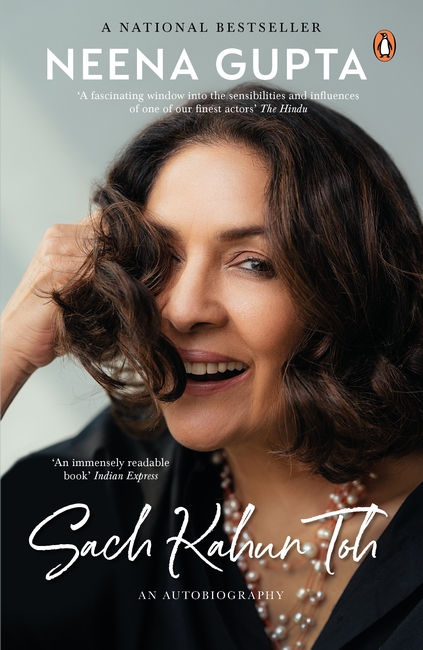
Sach Kahun Toh

An unsparingly honest memoir by an actor who is known to lead life on her own terms. Neena Gupta’s most awaited auto-biography!

In Sach Kahun Toh, actor Neena Gupta chronicles her extraordinary personal and professional journey-from her childhood days in Delhi’s Karol Bagh, through her time at the National School of Drama, to moving to Bombay in the 1980s and dealing with the struggles to find work. It details the big milestones in her life, her unconventional pregnancy and single parenthood, and a successful second innings in Bollywood. A candid, self-deprecating portrait of the person behind the persona, it talks about her life’s many choices, battling stereotypes, then and now, and how she may not be as unconventional as people think her to be.

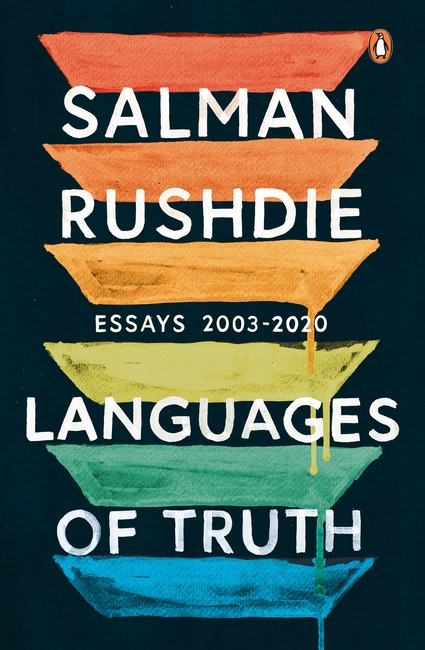
Languages of Truth

Salman Rushdie is celebrated as a storyteller of the highest order, illuminating truths about our society and culture through his gorgeous, often searing prose. Now, in his latest collection of nonfiction, he brings together insightful and inspiring essays, criticism, and speeches that focus on his relationship with the written word and solidify his place as one of the most original thinkers of our time.

Gathering pieces written between 2003 and 2020, Languages of Truth chronicles Rushdie’s intellectual engagement with a period of momentous cultural shifts. Immersing the reader in a wide variety of subjects, he delves into the nature of storytelling as a human need, and what emerges is, in myriad ways, a love letter to literature itself. Rushdie explores what the work of authors from Shakespeare and Cervantes to Samuel Beckett, Eudora Welty, and Toni Morrison mean to him, whether on the page or in person. He delves deep into the nature of “truth,” revels in the vibrant malleability of language and the creative lines that can join art and life, and looks anew at migration, multiculturalism, and censorship.

Enlivened on every page by Rushdie’s signature wit and dazzling voice, Languages of Truth offers the author’s most piercingly analytical views yet on the evolution of literature and culture even as he takes us on an exhilarating tour of his own exuberant and fearless imagination.

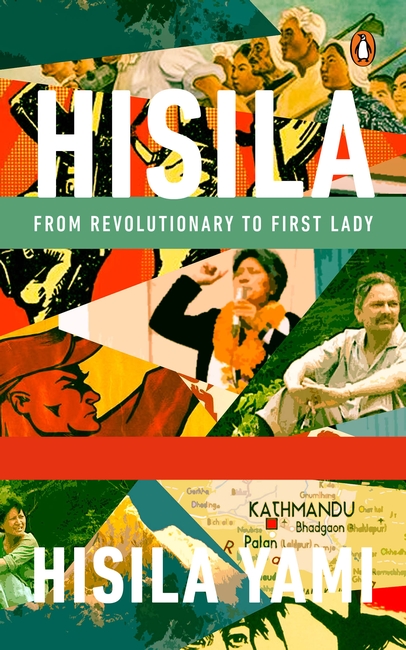
Hisila

In this fascinating book, Hisila Yami traces her journey from being a young Nepali student of architecture in Delhi in the early eighties to becoming a Maoist revolutionary engaging in guerrilla warfare in Nepal. Yami was one of the two women leaders who were a part of the politburo of the Communist Party of Nepal (Maoist), which led the People’s War in the country that changed the course of its history forever.
On the one hand, this is a lucidly written political memoir, where Yami talks about gaining political awareness, joining protests, being imprisoned, participating in the People’s War, and later her experiences as the first lady and a minister. But, at the same time, this is also a vivid narrative that offers touching glimpses of her personal life. She candidly writes about falling in love and marrying a fellow politician, Baburam Bhattarai, who later went on to become the prime minister of Nepal. From how she balanced her political life with motherhood to what it really meant to be a woman in the communist party that launched a civil war, Yami tells it all in what is truly an unforgettable account of a remarkable life.

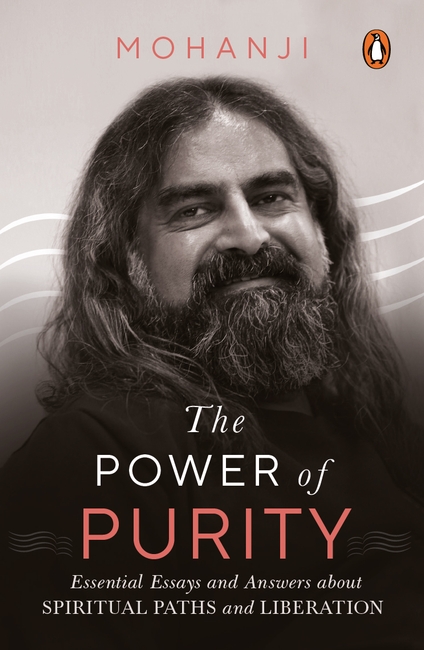
The Power of Purity

Who am I? Where have I come from? Why am I here?
What is my purpose? Why do people suffer? What is karma?
What is reincarnation?

Such burning existential questions have intrigued many since time immemorial. It is not for the faint of heart to pore over abstruse and often cryptic scriptures, or perform intense spiritual practices to get a glimpse of the truth. A panacea for seekers, The Power of Purity is a compilation of Mohanji’s spontaneous answers to questions posed during various satsangs (spiritual discourses) and interactions across the world. With razor-sharp clarity and wit, Mohanji provides the reader with deep, subtle, yet easy-to-understand insights into the varied aspects of human existence, uniting the seemingly contrasting goals of spiritual mastery and worldly success. Many can use this book as a guide to finding solutions to life’s myriad problems by randomly turning to one of its pages. In Mohanji’s words, ‘This book has been compiled to aid you to find your SELF and stay with your own soul. Those who are not eligible to read this book will not get to see it. Those who are casual readers will not understand this book. Those who were awaiting this message will take the cue and the next step . . . Nothing is accidental.’

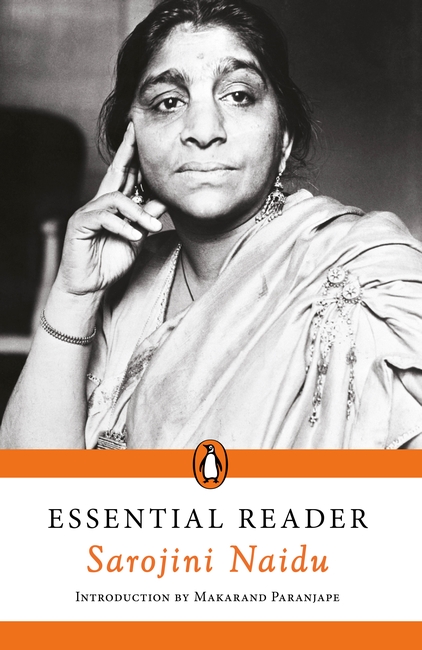
Essential Reader: Sarojini Naidu

Sarojini Naidu was a prolific writer and speaker, publishing three collections of poetry during her life and delivered many rousing speeches throughout the freedom struggle and after India gained Independence. This book compiles her best-known work, as well as letters she wrote throughout her life to Mahatma Gandhi, Jawaharlal Nehru, Rabindranath Tagore and others, to provide a glimpse into the kind of person she was and the ideas she believed in.
Through these pages, we can witness her innermost thoughts and feelings, and the important role she played in shaping the country’s freedom struggle and its ideas as a young nation, particularly through rousing speeches on the Education of Indian Women and the Battle of Freedom is Over, which were broadcast over the All India Radio on 15 August 1947.

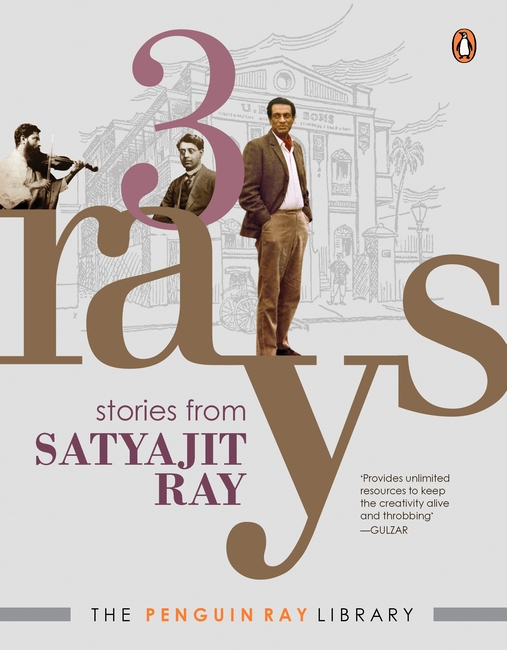
Three Rays

3 Rays is like exploring the Mother Earth, and finding the rare treasures’-Gulzar, poet, lyricist and film-maker

‘Satyajit Ray’s work is like a beautiful scene from nature, and that’s the reason we get lost in his beautiful art’ -Shoojit Sircar, film-maker

‘Ray’s magic, the simple poetry of his images and their emotional impact, will always stay with me’-Martin Scorsese, film director, producer, screenwriter and actor

‘Satyajit Ray’s artifice and honesty set him apart from other film directors’-The Guardian

‘Satyajit Ray’s world of restless watchfulness and nuance’-The New York Times

‘The quiet but deep observation … have impressed me greatly’-Akira Kurosawa, film-maker

The most anticipated book on the centenary birth anniversary of Satyajit Ray

An amazingly brilliant collection of Satyajit Ray’s previously unpublished autobiographical writings, illustrations, fictions and non-fictions

A collector’s item, 3 Rays is a source of delight for every reader

Satyajit Ray (1921-1992), through his life, philosophy and works offered a unique aesthetic sensibility, which took Indian cinema, art and literature to a new height. An ace designer, music composer, illustrator and a gifted writer, Ray gave us the awe-inspiring sleuth Feluda, and the maverick scientist, Professor Shonku-two iconic characters loved and revered by millions of readers.

On the occasion of his centenary birth anniversary, 3 Rays: Stories from Satyajit Ray, the first book in The Penguin Ray Library series, opens a window to the brilliance of this Renaissance man. With more than forty stories and poems along with many unpublished works, autobiographical writings and illustrations by Ray, this volume offers a unique glimpse into Ray’s creative genius.

error: Content is protected !!