



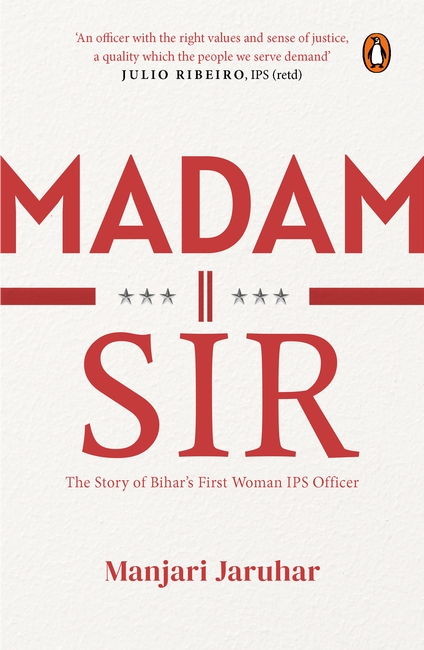
After an unexpected turn of events upended the homemaker role her parents had planned for her, Manjari Jaruhar overcame extraordinary odds to become the first woman from Bihar to join the country’s elite police cadre.
A masterclass in courage, resilience and leadership by a woman who broke new ground and thrived despite being viewed with disbelief and derision by her colleagues, Madam Sir is a stirring account of a sheltered girl’s rise to the top echelons of the Indian Police Service.
Set against the backdrop of significant events such as the Bhagalpur blindings, the 1984 anti-Sikh riots and Lalu Prasad’s reign in Bihar, Madam Sir looks at the IPS from the inside, through a woman’s eyes.
This is a story that will inspire you to pursue your dreams and infuse you with the spirit to reach impossible heights.
Catagory: Non Fiction
non fiction main category
Vibhajan
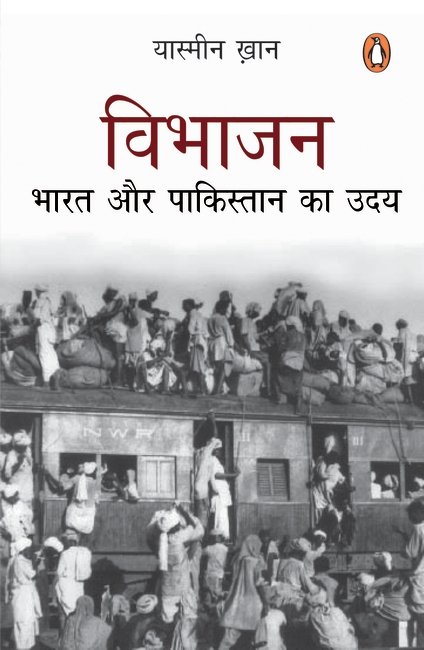
The Partition of India in 1947 was one of the most horrific events of decolonization in the twentieth century. The geographical divide brought displacement and death, rape and plunder, benefiting the few at the expense of the very many. In The Great Partition, Yasmin Khan exposes the widespread obliviousness to what Partition would entail in practice as well as the haste and recklessness with which it was completed. Moreover, she powerfully underscores the catastrophic human cost and shows why the repercussions of Partition resound even now, some sixty years later. Drawing on fresh information from an array of sources, Khan provides an authoritative and accessible analysis of Partition, and the damaging legacy left in its wake.
The Jungle Book (PREMIUM PAPERBACK, PENGUIN INDIA)
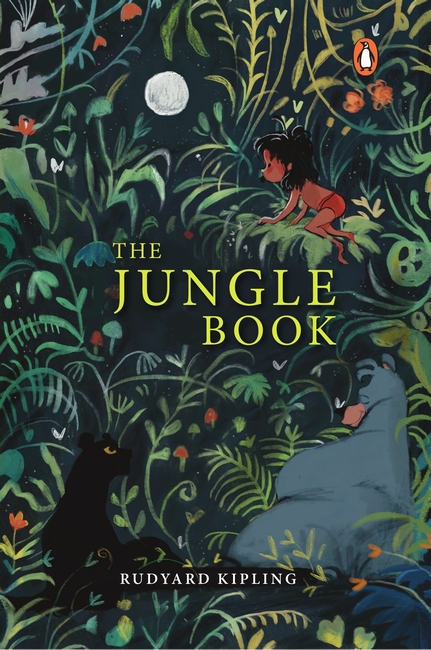
Mowgli is not an ordinary boy; he can climb trees like a monkey and even outrun a tiger. He is a child of the jungle. Discovered at the edge of a cave in the Seeonee hills, Mowgli was taken under the care and protection of a family of wolves when he was no more than a baby. Now adopted by the wolf-pack, he slowly grows up away from the world of men. Along the way he makes life-long friends: Baloo the brown bear and Bagheera the wise panther who help him learn the laws of the jungle.
But the jungle can be a dangerous place.
Together the trio face unforeseen dangers and find themselves caught up in exciting adventures-until Mowgli finally comes face-to-face with Shere Khan the tiger, and the Bandar-Log.
Join Mowgli on his journey through the jungle. Meet Little Toomai, Akela, Rikki-tikki-tavi, Kaa, and other fascinating creatures-and find yourself transported to the enchanting world of The Jungle Book!
Bhajpa Ka Abhyuday
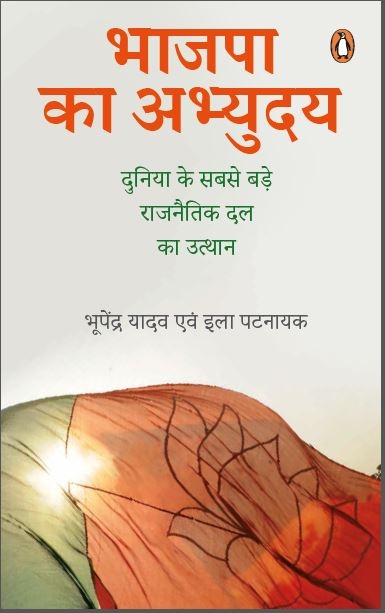
TheBharatiyaJanataPartyisanideathatwas seededintothemindsof nationalist Jana Sangh leaders when they began to envision India after Independence.Muchliketheverycorethefreedomstrugglewasbuilton, theysawIndiaasademographically,culturallyandhistoricallycohesiveand unifiednation-asBharat.Inthisbook,seniorBJPleaderandcabinetminister Bhupender Yadav and leading economist Ila Patnaik come together totrace
the BJP’s journey from its humble roots, through ups and downs and to eventuallygetting303seatsinLokSabhain2019andbecomingtheworld’s largest political party. While focusing on the larger economics and political story, the book encapsulates many smaller, yet hugely significant stories of individualsandincidents,whichbrought theBJPtowhereitstandsnow.For thefirsttimeever,TheRiseoftheBJP,tellsustheinsidestoryofhowoneofthe most powerful political parties makes decisions, implements ideas and executespolicy.Meticulouslyresearchedandimmenselyreadable,thebook shows us how the BJP fought competing ideologies, political assaults and catapultedtothecentrestageofnationalpolitics.
I Am Onir and I Am Gay
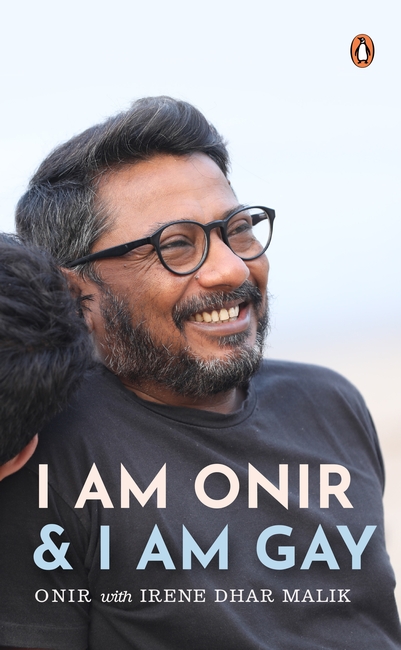
The award-winning filmmaker Onir, whose directorial debut, My Brother Nikhil (2005), broke new ground in LGBT representation on the Indian silver screen, opens up fully for the first time. From his childhood days in Bhutan to when he was a young man with no connections in the Hindi film industry who dreamt big and fought to carve a niche for himself, Onir takes the reader through his struggles and triumphs to offer an intimate glimpse of his fascinating journey to success. Now one of the few openly gay directors in Bollywood, Onir remains fearless about his identity and passionate about his role as a filmmaker in opening up the road to difficult conversations about identity and resilience.
I Am Onir and I Am Gay is a raw, eloquent and inspiring memoir about confronting and transcending frontiers. Written with his sister Irene Dhar Malik, this emotionally gritty and unabashedly honest personal story is a pathbreaking narrative of hope, love and the pursuit of dreams.
Bhagat Singh
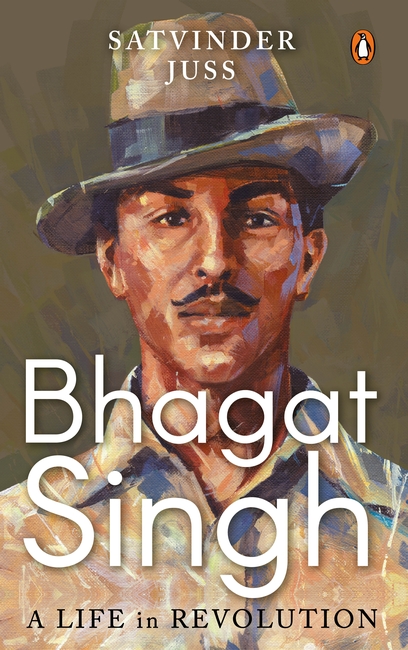
The continual tussles over Bhagat Singh’s identity, even more amplified of late, are a testament to the heroic status the man continues to hold in the annals of the Indian freedom struggle. Despite him having addressed his views on religion, politics and activism, there are many willing to forge completely new narratives of his life, and many more willing to believe them.
A timely antidote, this meticulously researched biography is an expansive foray into the life of Bhagat Singh. The volume deliberates upon his family from before when he was born, examining along the way the role that various episodes, policies and people played in shaping the identity of a legendary revolutionary, while also delving into his opinions on important questions of the time. It shines a bright light on the oft-ignored personal influences that made Singh who he was, along with the issue of his contested identity in today’s politics. This is the definitive Bhagat Singh biography of our times.
Stop Weighting
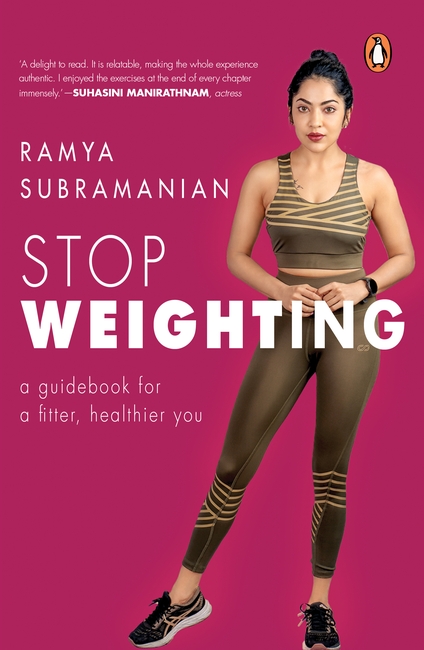
Ramya, the confident superstar and influencer of today, was once a naive and self-conscious teenager, who suffered bullying and body shaming. Just as any other insecure adolescent would, she began a long and tortuous journey to become ‘thin’. Ludicrous crash diets, intense workouts at the gym and an all-pervading sense of inferiority afflicted her for nearly a decade.
In the midst of this, Ramya was catapulted into fame at an early age when she got her first break as a television anchor. But with the media attention came all the toxic side-effects of being a celebrity. Until she decided to take back control over her life. Today, Ramya is healthier and happier than she has ever been. In Stop Weighting we find out how she achieved this.
Digging into stories, mistakes and life lessons, the book draws from the highs and lows of Ramya’s personal fitness journey with the hope that it will help others to lay the groundwork for their own. She busts the myths around fitness and helps readers establish safe and sustainable methods to become healthier without false promises or crazy diets. Surprisingly deep even in its light, funny and conversational tone, the book is integrated with tables and exercises making it a holistic guide to discovering a healthier, fitter and happier you.
Jezebel
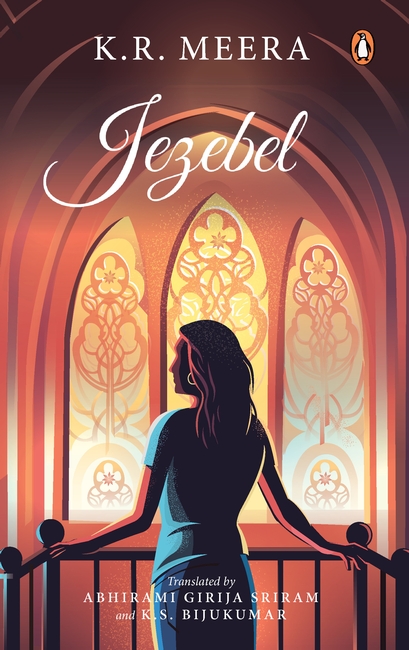
Translated from the Malayalam by Abhirami Girija Sriram and K.S. Bijukumar
Jezebel, a young doctor in Kerala, struggles against the cruel realities of a patriarchal world-realities that not even her education, resolve or professional brilliance can shield her from. Her already contentious divorce proceedings go suddenly awry, and her unhappy marriage holds complex secrets. In K.R. Meera’s blistering new novel, which takes the form of a courtroom drama to show us the rich inner worlds of its characters, we see Jezebel reflect on her life and its pivotal points as she takes the stand. Through her memories, we see her grow from a reticent, serious young woman to a rebel who refuses to bend to the conventions of society.
Like the Biblical story of Queen Jezebel, who was much maligned as a scheming harlot and infamously thrown to her death from her palace window, Jezebel is a novel that asks if independent women can ever live lives that are free of judgement K.R. Meera’s hypnotic prose, in this elegant translation from the Malayalam by Abhirami Girija Sriram and K.S. Bijukumar, makes resonant allusions to the Bible in powerful ways that elucidate the correlations between legend and the protagonist’s life while also exploring how sexuality and gender roles are manipulated by the dictates of society.
Envisioning 2060

Envisioning 2060 is a collection of articles by some of the world’s greatest economists and authors. Its carefully planned chapters encompass all major aspects of the evolving global economy-with a particular emphasis on emerging markets and economies-painting a wholesome picture for the contemporary reader, of what our world might grow to look like in the next forty years if we succeed or fail at addressing the myriad challenges confronting us today.
Techproof Me
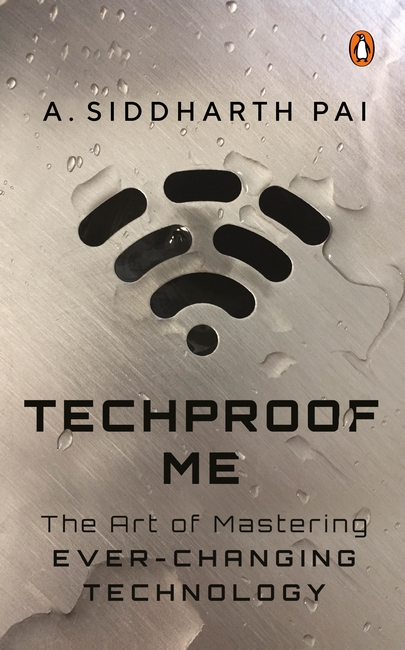
Today, we depend on technology for fulfilling almost all our needs. One thing that can be easily predicted about technology is that it is dynamic and the speed of change is intense. This book is about the new roles we need to play in our technology-oriented world. Discussing themes such as AI, machine learning and the Internet
of Things, among others, the book prepares readers for massive technology-led disruption. It provides
them with information and observations on a variety of technology-related subjects so that they can pivot
on a space as small as a coin when they need to. This book is the ultimate guide that can help readers remain relevant in the fast-changing world of technology.