



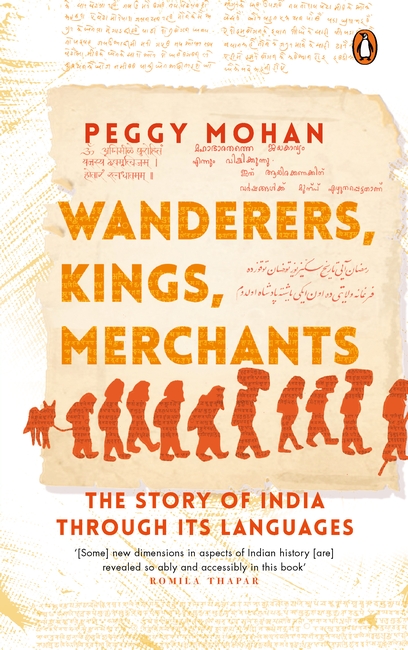
One of India’s most incredible and enviable cultural aspects is that every Indian is bilingual, if not multilingual. Delving into the fascinating early history of South Asia, this original book reveals how migration, both external and internal, has shaped all Indians from ancient times. Through a first-of-its-kind and incisive study of languages, such as the story of early Sanskrit, the rise of Urdu, language formation in the North-east, it presents the astounding argument that all Indians are of mixed origins.It explores the surprising rise of English after Independence and how it may be endangering India’s native languages.
Catagory: Non Fiction
non fiction main category
Makers of Modern Dalit History
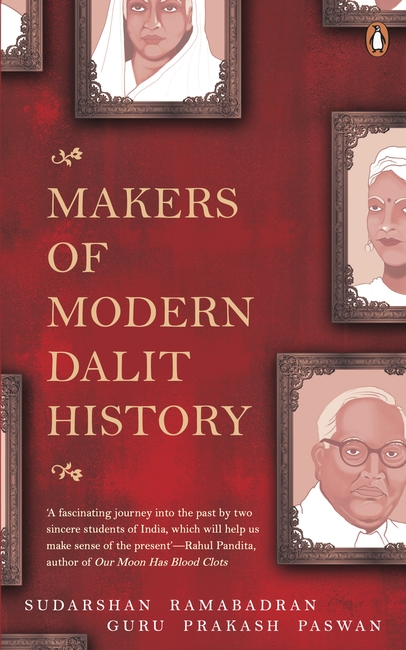
In late-nineteenth-century Kerala, a man flamboyantly rode a villuvandi (bullock cart) along a road. What might sound like a mundane act was, at that time, a defiant form of protest. Riding animal-pulled vehicles was a privilege enjoyed only by the upper castes. This man, hailing from the untouchable Pulaya community, was attacking caste-based discrimination through his act. He was none other than Ayyankali, a social reformer and activist.
Featuring several such inspiring accounts of individuals who tirelessly battled divisive forces all their lives, this book seeks to enhance present-day India’s imagination and shape its perception of
the Dalit community. Based on original research on historical and contemporary figures such as
B.R. Ambedkar, Babu Jagjivan Ram, Gurram Jashuva, K.R. Narayanan, Soyarabai and Rani Jhalkaribai, among many others, Makers of Modern Dalit History will be a significant addition to the Dalit discourse. This definitive volume on some of the foremost Dalit thinkers, both past and present, promises to initiate a much-needed conversation around Dalit identity, history and politics.
Karma
“Full of valuable insights to guide you.”-WILL SMITH
“Thoughtful and life-affirming . . . a must-read.”-TONY ROBBINS
“Forget what you think you know about karma-Sadhguru shows us it’s not a punishment for bad behavior, but a vehicle for transformation and empowerment. This book will put you back in charge of your own life.”-Tom Brady
“Pursuing your truth. Understanding this human experience. Embodying the divine is such an ongoing process of unveiling, adapting, and redesigning. The words in this book are the key to unlocking your truth, to see with no eyes, to hear the truth that lies in silence, and to connect with your inner wisdom. Thank you, Sadhguru, for such an enlightening creation, an offering to all seekers.”-HRH Princess Noor bint Asem of Jordan
“At last, a book about karma that can be trusted. I have never found a book that explains-and solves-the mystery of karma with the simplicity, clarity, and hopefulness of this invaluable book.”-Deepak Chopra
“Sadhguru here offers an easy read on a difficult subject: karma, or the volition to perform action. A truly captivating view from a renowned yogi and mystic on free will and the destiny of the human mind.”-Prof. Dr. Steven Laureys, neurologist, University Hospital of Liège, Belgium
“The tools Sadhguru provides in Karma bring me to a place of peace within myself. Thank you for your wisdom and transformational guidance.”-Rosanna Arquette
“In Karma, Sadhguru brilliantly demystifies the concept of karma and how we can harness our perceptions to change our own futures and, in doing so, create a more sustainable, just, and spiritually enlightened world. If you want to be the change you want to see in the world, read Karma and begin the journey.”-Terry Tamminen, Secretary of the California Environmental Protection Agency for Governor Arnold Schwarzenegger
“This five-letter word that has baffled humans for thousands of years is finally explained in 272 pages. It’s a compass for navigating life. Thank you, Sadhguru.”-Jay Naidoo, Minister in President Nelson Mandela’s cabinet, recipient of the Chevalier de la Légion d’Honneur, France
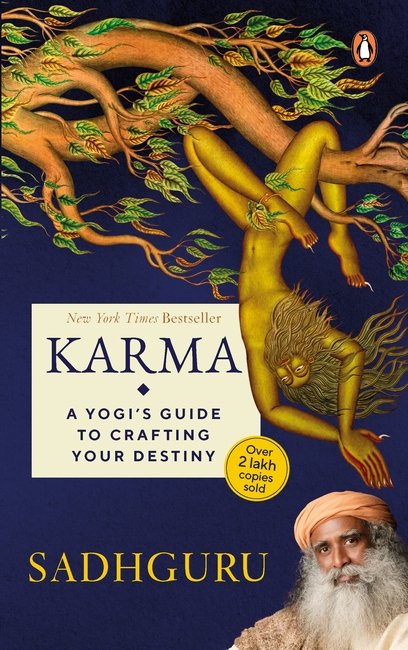
A much-used word, Karma is loosely understood as a system of checks and balances in our lives, of good actions and bad deeds, of good thoughts and bad intentions. A system which seemingly ensures that at the end of the day one gets what one deserves. This grossly over-simplified understanding has created many complexities in our lives and taken away from us the very fundamentals of the joy of living.
Through this book, not only does Sadhguru explain what Karma is and how we can use its concepts to enhance our lives, he also tells us about the Sutras, a step-by-step self help & self improvement guide to navigating our way in this challenging world. In the process, we get a deeper, richer understanding of life and the power to craft our destinies.
Gods and Ends (Shortlisted for the JCB Prize for Literature, Tata Lit Live First Book Prize)

Philomena Sequeira knows what she wants by the time she turns fourteen. Her father wants something else. Life is unyielding for tenants of the rundown Obrigado Mansion in Orlem, a Roman Catholic parish in suburban Bombay. They grapple with love, loss and sin, surrounded by abused wives and repressed widows, alcoholic husbands and dubious evangelists, angry teenagers and ambivalent priests, all struggling to make sense of circumstances they have no control over.
Gods and Ends takes up multiple threads of individual stories to create a larger picture of darkness beneath a seemingly placid surface. It is about intersecting lives struggling to accept change as homes turn into prisons. This is a book about invisible people in a city of millions, and the claustrophobia they rarely manage to escape from.
Escaped
LONDON CALLING
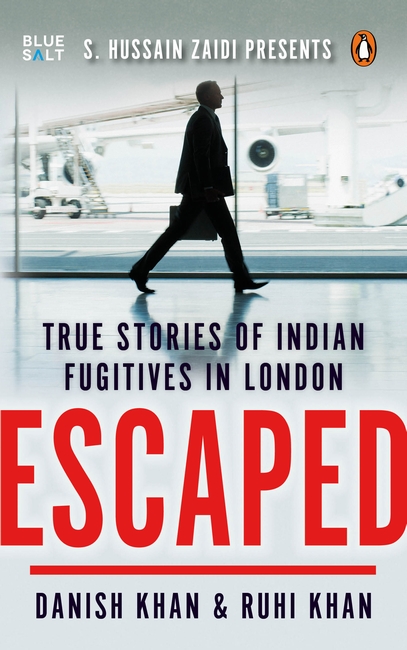
London has emerged as a safe haven for those who want to escape the law in India. Through eyewitness accounts and archival records, DANISH KHAN and RUHI KHAN delve into twelve extraordinary cases of extradition over seven decades to unravel the legal quagmire that has caused much debate in Her Majesty’s courts, and consternation in New Delhi’s corridors of power.
Escaped examines the extradition of billionaire VIJAY MALLYA and diamantaire NIRAV MODI, throws a spotlight on their ultra-luxe world, uncovers the complex ownership of their UK assets and brings to life the intense courtroom battles. The book also chronicles the saga of cricket bookie SANJEEV CHAWLA, now dispatched to India, and that of
music director NADEEM SAIFI, who has been exonerated but can never return home. It explores how drug lord IQBAL MIRCHI and terror accused HANIF PATEL evaded extradition, and investigates the loopholes that saved convicted paedophile RAYMOND VARLEY and NRI parents ARTI DHIR and KAVAL RAIJADA, accused of murdering their adopted child. The book reveals the inside story of how RAVI SHANKARAN, the alleged spy, was set
free, and how the famed NARANG BROTHERS were snagged for trading in stolen Indian artefacts. Taking a trip through history, the book recounts how a newly independent India managed to bring back two powerful
industrialists, DHARMA JAYANTI TEJA and MUBARAK ALI AHMED, who were involved in financial crimes.
Escaped decodes why London is an irresistible
siren for Indian fugitives.
The book by Danish Khan and Ruhi Khan is based on in-depth research of 12 cases of fugitives from India who reached the United Kingdom. For anyone who is interested in knowing how extradition proceedings are really conducted and what kind of scrutiny is done before granting extradition this is an extremely useful and easy to read book. The poor rate of success is largely due to shoddy paperwork and the unhygienic conditions of Indian prisons. The lesson for Indian policy makers is to make the Indian criminal justice system more humane. – Faizan Mustafa, law expert and vice-chancellor, NALSAR University of Law
An exhaustive and meticulously researched study of the Indian rogues and fraudsters who have sought shelter behind Britain’s complicated extradition laws, which is entertaining as it is illuminating. – Mick Brown, Journalist, The Telegraph, UK
Escaped has 12 gripping accounts of Indian fugitives who have found shelter in the UK. London residents and authors Danish Khan and Ruhi Khan craft a book that offers more than a deep-dive into how the famous fugitives made their great escape. It also offers rare insights into their lives before and after their fall. The book covers a wide gamut of issues surrounding the crime – from the loopholes that allowed the criminals to escape, to the ineffective foreign policy…what made Escaped come alive are cases that are now lost in dusty files, crimes that were staged long ago. – MoneyControl
To the Bravest Person I Know
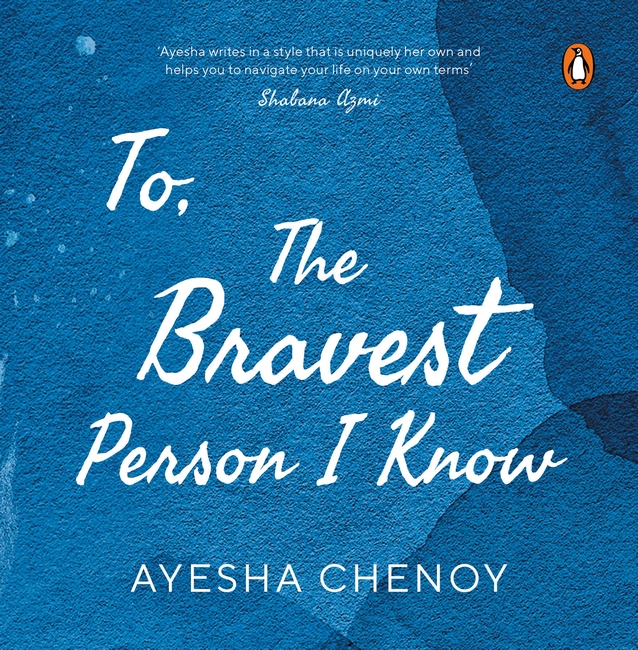
To the Bravest Person I Know is a book on poems that help us deal with difficult challenges we face in life. It explores mental health situations/issues like depression, anxiety, and other insecurities to help overcome them.
“Through her work, she hopes readers understand that they are not alone in their struggles and it is not difficult to navigate life on your own terms.” – The Hindu
From growing up with dysfunctional families to coming of age, from dealing with heartbreak, pain and grief to learning to accept and forgive, To, the Bravest Person I Know is your guide through every difficult situation. It is modern therapy delivered to you through a series of poems and a letter in verse that runs as a footnote from the beginning to the end of the book.
The poems explore the whole construct of ‘normal’, of that which was created to make people feel less normal if they don’t fit in, to make them feel ‘abnormal’. The book tells us that depression is normal, as is fear; feeling insecure is normal, as is hurting people. And bravery is about facing all of this-it’s about facing everything life
throws at you every day.
To, the Bravest Person I Know cuts through rainbows and self-righteous dross to provide a vaccine of truth, liberating and reminding us that we are all in a tunnel, and that it’s normal to feel like we may never get out. But there is light at the end of it.
Budhini
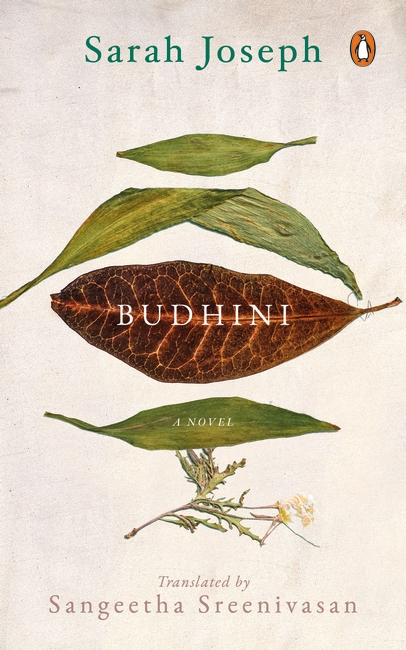
On 6 December 1959, Prime Minister Jawaharlal Nehru went to Dhanbad district in Jharkhand to inaugurate the Panchet Dam across the Damodar river. A fifteen-year-old girl, Budhini, chosen by the Damodar Valley Corporation welcomed him with a garland and placed a tikka on his forehead. When these ceremonial gestures were interpreted as an act of matrimony, the fifteen-year-old was ostracized by her village and let go from her job as a construction worker, citing violation of Santal traditions. Budhini was outlawed for ‘marrying outside her community’.
Budhini Mejhan’s is the tale of an uprooted life, told here through the contemporary lens of Rupi Murmu, a young journalist distantly related to her and determined to excavate her story. In this reimagined history, Sarah Joseph evokes Budhini with vigour, authority and panache, conjuring up a robust and endearing feminine character and reminding us of the lives and stories that should never be forgotten.
Translated by her daughter, Sangeetha Sreenivasan, a fiercely individualistic novelist herself, Sarah Joseph’s Budhini powerfully invokes the wider bio-politics of our relentless modernization and the dangers of being indifferent to ecological realities.
Winning in the Digital Age
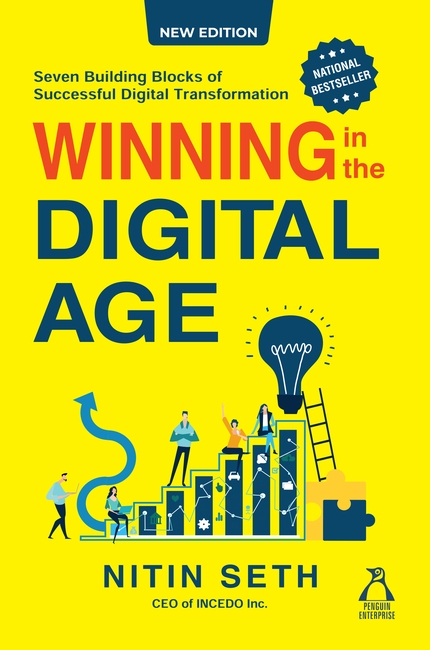
The New Edition of Winning in the Digital Age builds on the original book with new chapters on India’s opportunity to emerge as a Digital Superpower, how most of the digital initiatives don’t deliver targeted results and enhancements in the chapter Future of Work with AI.
Winning in the Digital Age is the practical handbook for understanding and winning in the post-COVID digital age and becoming a 21st century leader. For every enterprise and its leaders, the digital age is a roller-coaster ride with more than its fair share of thrills and spills. It presents them with great opportunities to leapfrog and grow. However, success is not easy in the digital age. It requires a complete overhaul of the business model and organizational design, and the mind-sets of professionals. Such a large and complex change is not easy to manage, and enterprises often lose their way in their digital transformation attempts.
Nitin brings in this book his 25+ years of experience in leadership roles in world-class firms like McKinsey and Fidelity and Digital natives like Flipkart and Incedo. He presents compelling insights and practical examples and answers key questions on how enterprises can win in the digital age:
- Why do firms fail at digital transformation?
- How are the rules of business changing in the digital age?
- What disruptive opportunities does digital present in various industries?
- How to best leverage the potential of digital technologies like AI and the Cloud?
- How do organizational capabilities and culture need to change?
- What new skills do leaders and young professionals need to build?
The book is a practitioner’s guide for people across all age groups—students, young professionals, experienced professionals, and senior executives—on how they can realize the amazing opportunities the digital age offers them and achieve their true potential at work and in personal life.
COVID-19
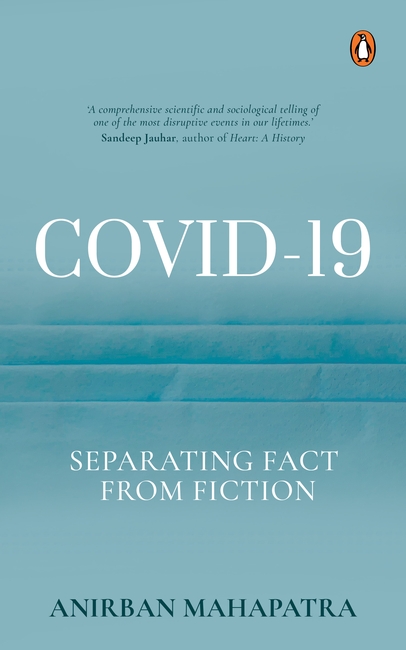
In early 2020, our lives were upended by a new virus that caused the most severe pandemic in over a century. In the span of a few weeks, even visiting a grocery store became a task in risk assessment. Cities and countries across the world closed their borders for their own citizens, as well as foreigners. Newspapers carried alarming accounts of rapidly rising numbers of COVID-positive cases, patients dying and migrant labourers desperately trying to reach home. One was struck every single day with the realization that the pandemic was not just a biological phenomenon, but also a social one.
Where did this virus, first called the novel coronavirus and later SARS coronavirus-2, come from? Did we see it coming? If so, why weren’t we better prepared for it? How lethal is it really? How can we protect ourselves from it? How will the pandemic end? What will life be like once it is over?
In this meticulously researched book, Anirban Mahapatra demystifies the virus and offers us a historical perspective. He charts the scientific progress made in understanding how the virus infects us and how we fight back, and also looks at the social tensions it has uncovered. In doing so, he offers us a clarity that enables us not only to understand the virus but also live with it.
Her Right to Equality
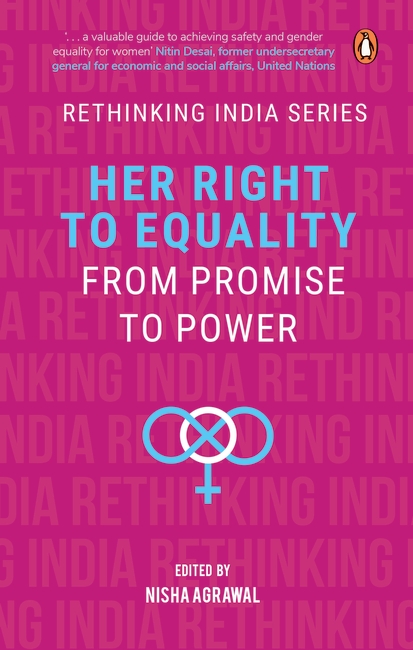
“I echo [the authors’] siren call for urgent disruptive change that will shatter patriarchal norms”–Winnie Byanyima, Executive Director of UNAIDS
“…a valuable guide to achieving safety for women and gender equality at home and in social, political and economic life.”-Nitin Desai, former Under-Secretary General for Economic and Social Affairs, United Nations
“A must-read for anyone who believes that women in India deserve better…”-Alankrita Shrivastava, film director, Lipstick Under My Burkha
“Harvesting existent knowledge as a way of shaping the future is a valuable idea… [This book] fulfills exactly this need…”-Devaki Jain, feminist economist and author of The Brass Notebook
The sixth volume in the Rethinking India series, in collaboration with the Samruddha Bharat Foundation, looks at the reality of gender equality in the country against the promises of justice and equality made in the Constitution of India. What it finds is that even today, India remains an unequal country and that women control, at best, about 10-15 per cent of economic and political resources. While there has been progress in some areas, in many other areas there has been very little and uneven change.
One of the main reasons for this slow progress is that social norms that assign particular roles and identities to men and women are ‘sticky’ and hard to change. In India, a highly patriarchal society, these norms give very little power to women and, consequently, they have little control or influence over decisions taken within their households, in markets or in political spaces.
Challenging the status quo can cause a backlash, leading to high levels of violence against women in the domestic sphere, the workplace and in public places. If we are to see a more safe, just and equal society by 2047, a hundred years after Independence, it cannot be business as usual. Her Right to Equality argues that what we require is disruptive change through individual and collective leadership and action.
Essays by Flavia Agnes, Rajini R. Menon, Amita Pitra, Sumitra Mishra, Shubhika Sachdeva, Poonam Muttreja, Sanghamitra Singh, Swarna Rajagopalan, Ashwini Deshpande, Archana Garodia Gupta, Sushmita Dev, Kanimozhi Karunanidhi, Tara Krishnaswamy, Bina Agarwal.