



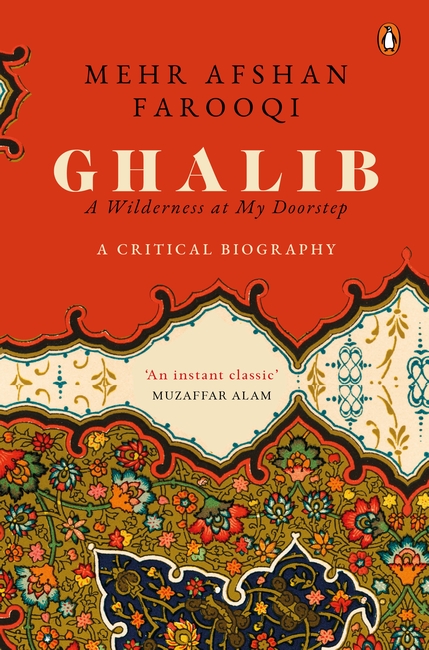
Mirza Asadullah Khan Ghalib was born in Agra in the closing years of the eighteenth century. A precocious child, he began composing verses at an early age and gained recognition while he was still very young. He wrote in both Urdu and Persian and was also a great prose stylist. He was a careful, even strict, editor of his work who took to publishing long before his peers. His predilection for writing difficult, obscure poetry peppered with complex metaphors produced a unique commentarial tradition that did not extend beyond his work. Commentaries on his current Urdu divan have produced a field of critical writing that eventually lead to the crafting of a critical lens with which to view the classical ghazal.
The nineteenth century was the height of European colonialism. British colonialism in India produced definitive changes in the ways literature was produced, circulated and consumed. Ghalib responded to the cultural challenge with a far-sightedness that was commendable. His imagination sought engagement with a wider community of readers. His deliberate switch to composing in Persian shows that he wanted his works to reach beyond political boundaries and linguistic barriers.
Ghalib’s poetic trajectory begins from Urdu, then moves to composing almost entirely in Persian and finally swings back to Urdu. It is nearly as complex as his poetry. However, his poetic output in Persian is far more than what he wrote in Urdu. More important is that he gave precedence to Persian over Urdu. Ghalib’s voice presents us with a double bind, a linguistic paradox. Exploring his life, works and philosophy, this authoritative critical biography of Ghalib opens a window to many shades of India and the subcontinent’s cultural and literary tradition.
Catagory: Non Fiction
non fiction main category
The Little Book of Encouragement
His Holiness The Dalai Lama, a perennial source of inspiration, is one of the most eminent spiritual leaders in the world. Recipient of the Noble Peace Prize, His Holiness’s life and works have inspired millions of lives throughout the world. In this specially curated companion volume, His Holiness shares words of encouragement to deal with new realities in a pandemic stricken world.
The Hidden Garden
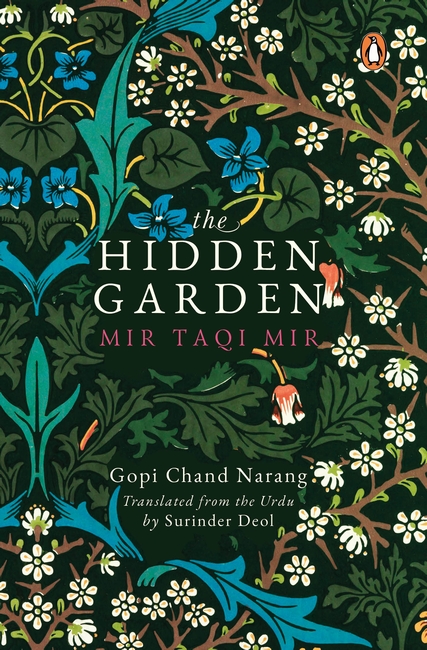
Mir Taqi Mir (1723-1810), known as the god of Urdu poesy (Khuda-e Sukhan), is widely admired for his poetic genius. The most prolific among all Urdu poets, he produced six divans. His deceptively simple poetry had an unusual mellowness and natural flow.Mir was the first poet to demonstrate the hidden beauty and genius of the Urdu language. From the raw Braj of Agra to the sophisticated Persian of Delhi and the mellow Awadhi of Lucknow, he wove them all into his verse. He took the half-baked Rekhta of the mid-eighteenth century to new heights, reaching the pinnacle of literary Urdu’s poetic and creative journey.
With a substantial selection of Mir’s most memorable ghazals, The Hidden Garden introduces readers to the life and poetry of the grossly misunderstood poet. This book is the perfect read for lovers of poetry and Urdu alike.
I Am No Messiah
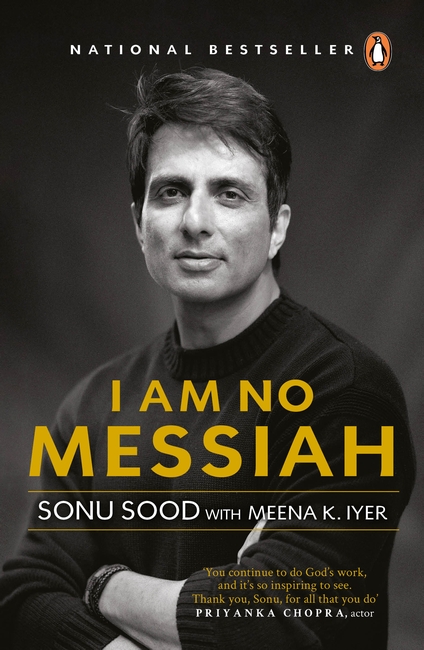
Sometimes, a little nudge from the universe pushes one to find his raison d’etre in life. If actor Sonu Sood had given in to the celebrity syndrome of sitting in his ivory tower and expressing his generosity by remote control, he would have never come face to face with the trauma of India’s migrant labourers or understood that a food packet was a woefully inadequate substitute for a ride back home.
During the nationwide lockdown, imposed in the wake of the COVID-19 pandemic, when a wave of poverty-stricken migrants set out on foot to make their arduous journey back home, the value of seva, service to mankind, instilled in him by his parents, spurred Sonu Sood into action. From taking to the streets and reaching out to the stranded, to setting up a dedicated team and making arrangements for national and international transport, Sonu managed to help thousands of helpless and needy workers. Thus, began his ‘Ghar Bhejo’ programme, carried out like a humanitarian mission. Chartered flights, buses and trains were sanitized and paid for. Distress calls from all over the world were answered. Soon, the movement snowballed into a campaign for providing jobs, medical facilities and educational aid to workers. The silver-screen villain transitioned into a real-life superhero.
In his memoir, I Am No Messiah, Sonu Sood combines the extraordinary experiences of his journey from Moga to Mumbai with the writing skills of veteran journalist and author Meena K. Iyer. Honest, inspirational and heart-warming, this is the story of Sonu Sood and of the people whose lives he continues to transform.
Still Life

Pinky is a recluse who rarely leaves the suburbs. When her husband, Pasha, goes missing-everyone assumes the worst, but she sets off to find him. In her search, she encounters a dream-like landscape: the ancient interior of the city she was born in; the bright farms and fields of Pasha’s childhood and the dark wilderness of the mountains, she must finally confront her fears.
Still Life is an experiment with visual storytelling, using pictures and words to create a world that is unsettling and extraordinary. Part road trip, part existential thriller, it seeks new ways to look at love, isolation, memory and loss, asking what connects us to each other and to the natural world, and how we are governed by impulses we barely understand.
Bike Ambulance Dada
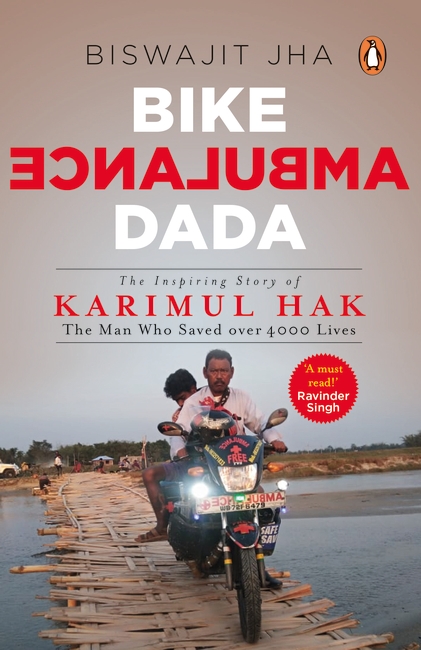
Twenty-five years ago, Karimul Hak lost his mother because he could not afford an ambulance and there was no other way to take her to a hospital. However, when his co-worker fell sick, Karimul resolved to ensure that history did not repeat itself.
Bike Ambulance Dada, the authorized biography of Padma Shri awardee Karimul Hak, is the most inspiring and heart-warming story you will read this year. It documents the extraordinary journey of a tea garden worker who saved thousands of lives by starting a free bike-ambulance service from his village to the nearest hospital in an attempt to fill the gap the insufficient rural healthcare created.
This book, about the extraordinary life of a man who has devoted his entire life to helping those around him and putting others before himself, is a must-read today, serving as an inspiration for us to do and be better.
The Good Girls
One night in the summer of 2014, two teenagers disappeared from their home in the village of Katra Sadatganj in Uttar Pradesh. The next morning, India woke up to the devastating image of their dead bodies hanging from a tree in a mango orchard.
The girls’ names were Padma and Lalli, but they were so inseparable that people in the village called them Padma Lalli. Sixteen-year-old Padma sparked and burned. Fourteen-year-old Lalli was an incorrigible romantic. Who were they and what had happened to them? In the ensuing months, the investigation into their deaths would implode everything that their small community held to be true and instigate a national conversation about sex and violence.
Slipping deftly behind political manoeuvring, caste systems and codes of honour in a village in northern India, The Good Girls returns to the scene of Padma and Lalli’s short lives and tragic deaths, and dares to ask: What is the human cost of shame?
Indian Economy’s Greatest Crisis
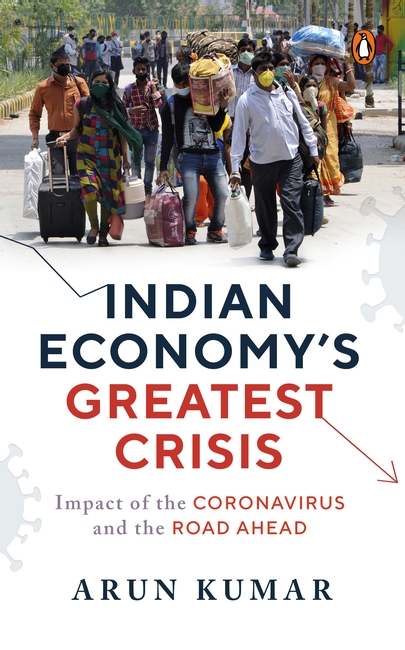
‘Desperate times call for desperate measures.’ The outbreak of COVID-19 aptly justifies this expression as the world faces an unprecedented situation. But what is so unusual about the coronavirus, especially since viral attacks-H1N1, Ebola and Nipah-have taken place earlier as well? How has it affected India and the world? What are the socio-economic implications for India? How has India’s response been to the coronavirus? What is more important-life or livelihood? How can India recover from the sudden economic shock caused by the pandemic?
This book is an attempt to answer these and many more such questions.
The coronavirus hit the world in December 2019 like a hurricane. What started as a medical emergency soon turned into an economic one. No global financial crisis has ever hit humanity as hard as COVID-19. The world, therefore, was caught ill prepared when the pandemic struck. The situation, to say the least, is worse than a war. The situation in India is no different: In terms of the number of cases reported, it is second only to the United States.
This book highlights the enormity of the impact of the coronavirus pandemic on India. It critically examines the government’s efforts to control the disease and mitigate its adverse effects on Indian economy and society. Making a compelling argument that an economy is not like a rubber ball, which, if dropped on a hard surface, will bounce back to its original position, the author provides incisive reasons to why economic recovery will be slow and not ‘V-shaped’. He, however, cogently suggests that good governance, a robust public-health system, and clean and representative politics are key to bringing India’s economy back on track.
Pakistan’s Terror Conundrum
Pakistan was born amid communal violence and a collective consciousness of danger. Right from the outset, democracy was up for debate between the politicians nurtured by the British Raj and an orthodox clergy that advocated a utopia in which Islam was to be the ideological guide. Today, the threat of religion as an extra-legal force is causing many Pakistanis to think if the state can move forward into the future with Islam as its credo.
In this carefully curated collection of his writings in several publications, senior journalist Khaled Ahmed examines Pakistan’s policies regarding terrorism against the backdrop of increasing pressure from international organizations. Despite joining the US in its war against terror after 9/11, the country has been perceived as a safe haven and breeding ground for terrorists. Ahmed looks at the origins and activities of the various terrorist organizations, the role of the state and the ideology of its founding figures, some of whom seem to have been forgotten.
The Mahabharata
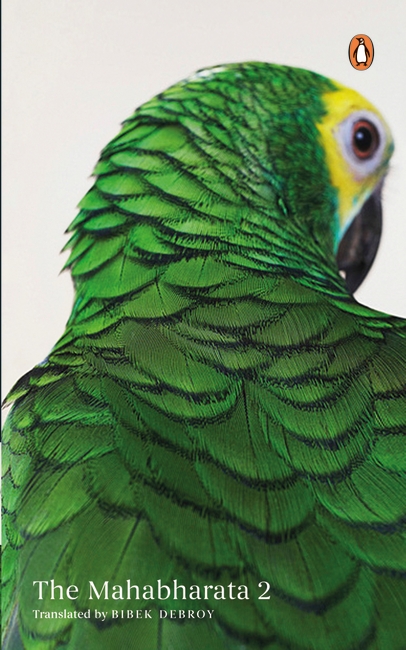
This definitive and magnificent 10-volume unabridged translation is one of the rare English translations of full of the epic. Bibek Debroy makes the Mahabharata marvelously accessible to contemporary readers. Dispute over land and kingdom may lie at the heart of this story of war between cousins-the Pandavas and the Kouravas-but the Mahabharata is about conflicts of dharma. These conflicts are immense and various, singular and commonplace. Throughout the epic, characters face them with no clear indications of what is right and what is wrong; there are no absolute answers. Thus every possible human emotion features in the Mahabharata, the reason the epic continues to hold sway over our imagination.
In this superb and widely acclaimed translation of the complete Mahabharata, Bibek Debroy takes on a great journey with incredible ease. This is the second volume in the series.