“I have always felt that life is a solitary journey, that we are each on a train, riding through our hours, our days, our years. We get on alone, we leave alone, and the decisions we made as we travel on the train are our responsibility alone.”
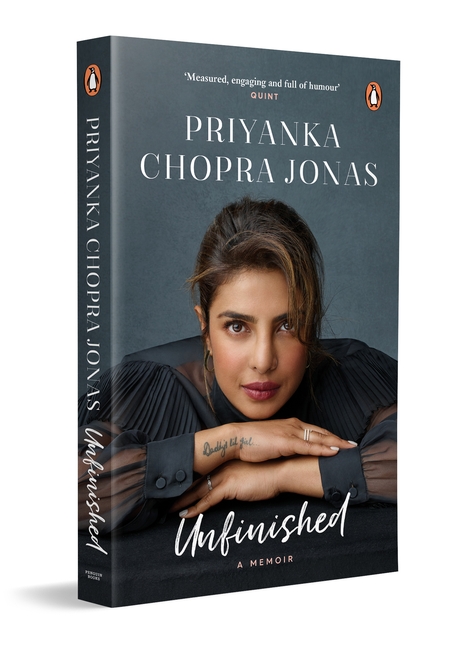
In this thoughtful and revealing memoir, readers will accompany one of the world’s most recognizable women on her journey of self-discovery. A remarkable life story rooted in two different worlds, Unfinished offers insights into Priyanka Chopra Jonas’s childhood in India; her formative teenage years in the United States; and her return to India, where against all odds as a newcomer to the pageant world, she won the national and international beauty competitions that launched her global acting career. Whether reflecting on her nomadic early years or the challenges she’s faced as she’s doggedly pursued her calling, Priyanka shares her challenges and triumphs with warmth and honesty. The result is a book that is philosophical, sassy, inspiring, bold, and rebellious. Just like the author herself.
From her dual-continent twenty-year-long career as an actor and producer to her work as a UNICEF Goodwill Ambassador, from losing her beloved father to cancer to marrying Nick Jonas, Priyanka Chopra Jonas’s story will inspire readers around the world to gather their courage, embrace their ambitions, and commit to the hard work of following their dreams.

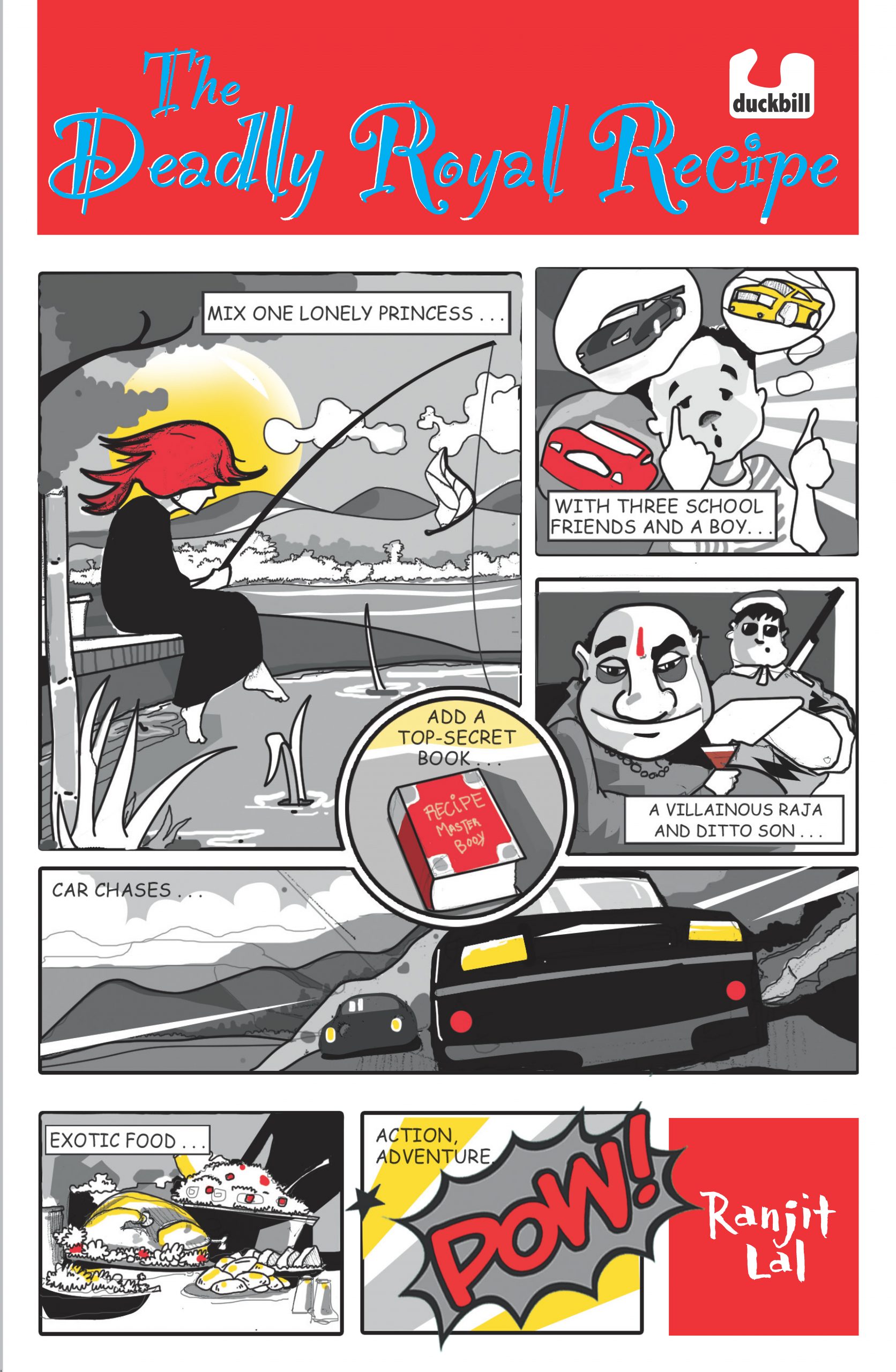
Mix one lonely princess with a bunch of school friends and a little boy.
Add a top-secret recipe Masterbook, lots of exotic food, a villainous raja and his even more villainous son.
Garnish it with action, adventure, car-chases and elephant rides and cook it all to perfection with a fast-paced plot!
What you get is a wacky, racy adventure, which will have you burping with satisfaction!

“The range and depth of this amazing anthology convey the conflicted and conflicting emotions of our times. It provides the consolations of poetry and the solace of art as balm to troubled souls.” NAMITA GOKHALE, author, and director, Jaipur Literature Festival
“…Although it may seem that devoting poetic energy to an invisible enemy that is pushing the world towards a terrifying future is too closely tied to social duty, the truth is entirely different: it is not death that the poets are celebrating, it is life.” EVALD FLISAR, Slovenian author and playwright
While the benumbed world is struggling to combat the apocalyptic devastation it has wreaked, a choral spectrum of poetry has emerged to rekindle the spirit of hope. Has poetry not always spelt hope in dark times? Over a hundred voices of unparalleled resilience have gathered here to speak… It is a word of love, solace and bonding; the word the world today is sorely in need of hearing. GULAMMOHAMMED SHEIKH, artist and author
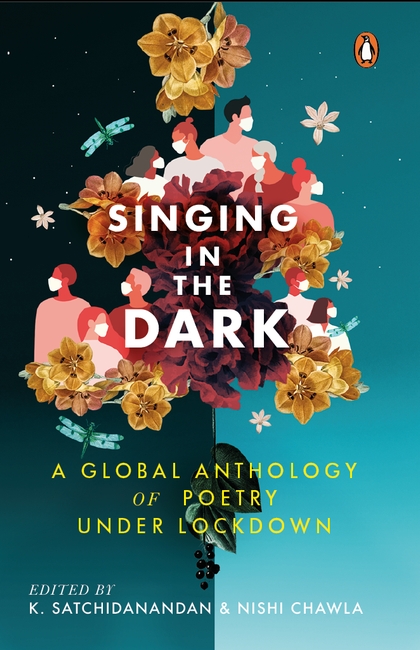
Singing in the Dark brings together the finest of poetic responses to the coronavirus pandemic. More than a hundred of the world’s most esteemed poets reflect upon a crisis that has dramatically altered our lives, and laid bare our vulnerabilities. The poems capture all its dimensions: the trauma of solitude, the unexpected transformation in the expression of interpersonal relationships, the even sharper visibility of the class divide, the marvellous revival of nature and the profound realization of the transience of human existence. The moods vary from quiet contemplation and choking anguish to suppressed rage and cautious celebration in an anthology that serves as an aesthetic archive of a strange era in human history.

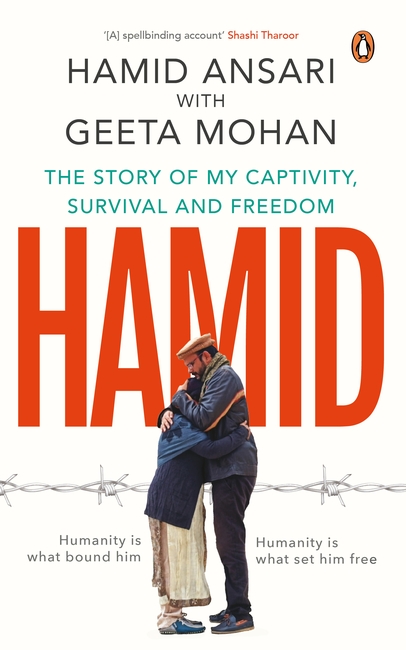
In November 2012, Hamid, a 27-year-old Mumbai-based techie, disappeared into thin air. What happened? Where did he go? All his parents knew was that he had gone to Kabul, Afghanistan, to explore a job opportunity. Upon some investigation, they found out that their son had been chatting online with some Pakistani friends, in particular a girl, across the border.
Authored by Hamid Ansari and Geeta Mohan, this is the definitive insider account of the man who saw no boundaries when it came to saving a girl from forced marriage under the wani custom. Nothing scared or stopped him; until he was betrayed by his friends in Pakistan. He became embroiled in a whirlwind of allegations made by the Pakistani authorities to break him and label him a spy. What followed were years of suffering during the investigations, along with long periods of solitary confinement and a struggle for survival.
In India, his mother, Fauzia Ansari, led a relentless fight, knocking on as many doors as it took, eventually moving three nations, India, Pakistan and Afghanistan, to get him back home, with the help of the then external affairs minister, Sushma Swaraj. On 18 December 2018, Hamid finally touched India soil again. Gritty, heart-wrenching and moving, this is s story of humanity, love, betrayal and hope against all odds.

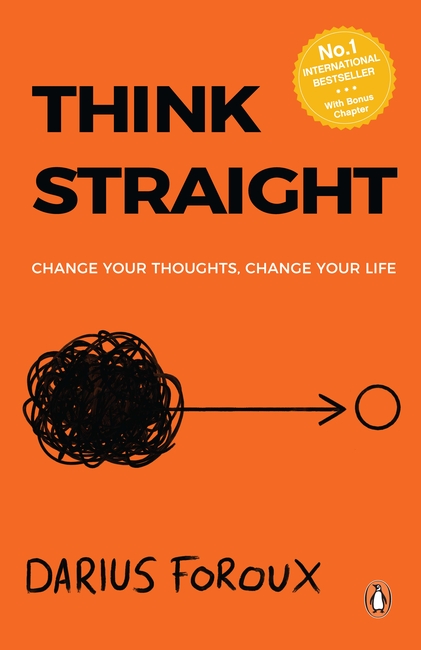
This international bestseller, featuring a bonus chapter previously available only to Darius’ online subscribers, is available in India for the first time.
I know something about you without knowing you. I bet you spend A LOT of time in your head-thinking, worrying, stressing, freaking out-call it whatever you want. I call it a preoccupied mind. And with what? 99% of your thoughts are useless. William James, once the leading psychologist in America, and one of the founders of the philosophical school of pragmatism, put it best: “A great many people think they are thinking when they are merely rearranging their prejudices.”
Pragmatism believes that the mind is a tool. Your mind should work for you, not against you. People who don’t master their mind, don’t believe it’s possible. They say: “I can’t help but thinking these things.” Well, you can TAKE CONTROL of your mind with enough practice. I’ve done it. And in THINK STRAIGHT, I share exactly how. It’s a quick read and you can use it to immediately to improve your thinking. You have the ability to decide what you think. Or, you can choose NOT to think. And that is one of the most important and most practical things you can learn in life. Before I learned that skill, I would spend hours and hours inside my head.
Just think about how much you think. – “I wonder what my boss thinks?” – “What happens if I screw up and lose my job?” – “What if my business never takes off?” – “Does she love me?” – “Why does my life suck?” – “What if I get cancer?” – “I can’t finish anything. What’s wrong with me? And the list goes on.
THINK STRAIGHT reveals the recipe for taking control of your mind so you can improve your life, career, relationships, business. I wrote this little book in a way that you can read it more than once. And I hope that this book serves as an anchor to you-especially during trying times. The mind is the most powerful tool on earth. Change the way you think. And you’ll change your life.

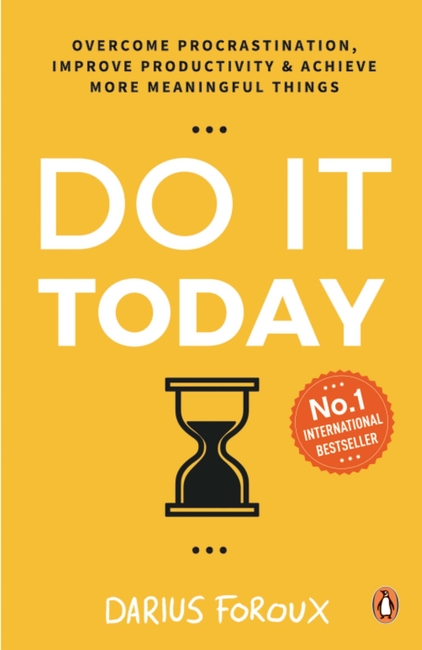
The International Bestseller: DO IT TODAY
Are you also tired of putting off your dreams until “tomorrow?” Guess what! Tomorrow never comes. Am I right?
I’ve procrastinated and putt off my desire to write a book for a decade. I always came up with excuses like, “it’s not the right time.” Or, “I need to do more research.”
But in 2015 I got tired of this endless procrastination, and finally took action. Six months later, my first book was published.
Look, we all have limited time on our hands. And we’re getting closer to death every single minute. That shouldn’t scare. That should motivate you!
Time is limited, that’s why we must do the things we want: Today.
In this “best of” collection, I’ve handpicked 30 of my best articles that help you to overcome procrastination, improve your productivity, and achieve all the things you always wanted.
Plus, I’ve written an extensive introduction about my life and work philosophy.
And I’ve made many improvements and edits to the articles. So the content of this book is different from the articles on my site.
In Do It Today, you’ll learn:
1.Why we procrastinate and how we can overcome it
2.How to increase your productivity without being stressful
3.How to achieve more meaningful things in your life so you can enjoy it more
Are you ready to start reading this book?
If so: Do it today-not tomorrow.

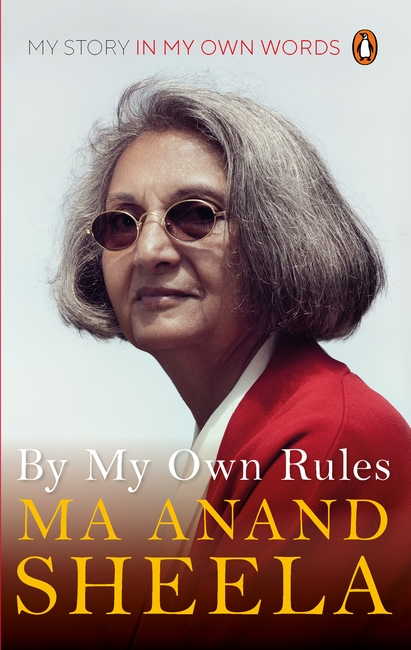
‘Everyone in the world has an opinion of me! I do not expect them to change. I accept life as it comes!’
There are few who can claim to have lived life on their own terms like the irrepressible, honest, bold and charming Ma Anand Sheela. Yet, controversy continues to follow her even today. Whether it be her portrayal in Wild Wild Country, or the Osho International Foundation’s take on the Netflix series, a wide spectrum of opinions has cloaked the real Sheela for too long. In the 1980s, she was the personal secretary of Bhagwan Shree Rajneesh and the manager of the Rajneesh commune in Wasco County, Oregon, USA. She was eventually sentenced to prison, where she served her time and walked out after three years. Adored and vilified at the same time by the world, she has seen it all-from rebuilding her life from scratch to being interviewed by Karan Johar on her grand return to India in 2019. More than three decades later, she is still in love with Bhagwan and his teachings. In By My Own Rules, Ma Anand Sheela bares it all-her lessons, her beliefs, her inspiration and the eighteen rules that define her life.

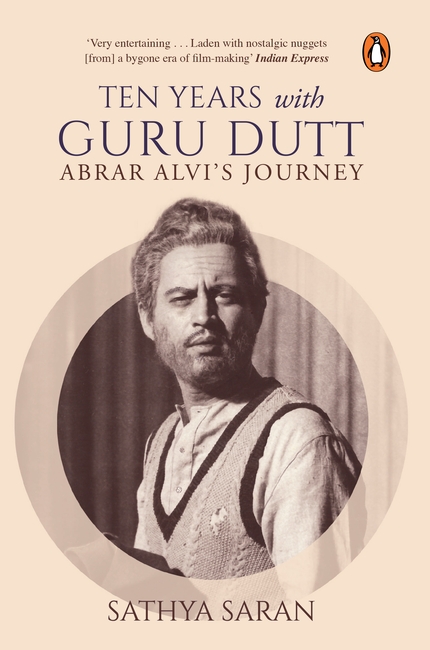
Guru Dutt is probably the only Indian film-maker who, within the parameters of the box office, made a personal statement with his cinema. His films stand testimony not only to his own genius but also to the creativity of his team, comprising stalwarts like cameraman V.K. Murthy, music director S.D. Burman and writer Abrar Alvi, among others. In Ten Years with Guru Dutt: Abrar Alvi’s Journey, Sathya Saran looks at the tumultuous yet incredibly fecund relationship between the mercurial director and his equally talented, albeit unsung, writer-a partnership that evolved over a decade until Dutt’s tragic death in 1964. Starting his career as a driver and chaperone to Dutt’s producer on the sets of Baaz, Abrar soon caught the attention of the director with his sharp ear for and understanding of film dialogue. With Aar Paar in 1954, Abrar rewrote the rules of dialogue-writing in Hindi cinema, until then marked by theatricality and artificiality. He followed it up with masterpieces like Mr and Mrs 55, Pyaasa and Kaagaz Ke Phool, before donning the director’s mantle with great success in Sahib Bibi Aur Ghulam. Brimming with lively anecdotes on how Abrar honed his skills by writing more than 300 love letters; how an accident involving a buffalo led to the discovery of Waheeda Rehman; and Guru Dutt’s visit to a kotha to get the ambience right for Pyaasa, this acclaimed book is a warm and insightful look at two remarkable artistes who inspired each other to create movie magic.
There is a kind of brotherhood between man and mountains…. The inescapable logic of desire leaves the mountain traveller no choice but to plan his next expedition to the very peak that may have just rejected vociferously the most singleminded of advances.’ In his thirty-year sojourn in India, Bill Aitken has had two serious affairs”one, essentially spiritual in nature, with the country’s rivers, the other more earthy and passionate, with her mountains. In this sequel to his first book for Penguin, Seven Sacred Rivers, he talks of his second great obsession”Nanda Devi, patron Goddess of Kumaon and Garhwal. Spanning more than a decade, from the Seventies to the Eighties, Aitken’s attempts to explore the sanctuary of this most beautiful of Himalayan peaks were not, he admits, those of a professional mountaineer, but of a romantic. Accordingly, what he gives us is, in his own words, -neither a book about Himalayan climbing nor a treatise on hill theology but a diary of mountain relish.’ Aitken’s deep-seated study of the cult of the Goddess and the folklore and customs of the Kumaon Himalayas is chequered with deliciously acerbic asides on bumptious bureaucrats, the bane of Indian mountaineering, while the true nature lover’s concern for the environment is manifest in his anger over the destruction wrought by political motivations and the ambitions of so-called professional mountaineers.
Comprising Three Novellar And Four Short Stories, To Be Read As Stand-Alone Or Inter-Linked Pieces, This Is An Engaging Piece Of Literary Non-Fiction Rich In Memories And Insights.