A lucid analysis of the ‘revolutionary’ changes in the Indian economy
Faced with a major economic crisis in 1990-91, the government responded by initiating far-reaching policy reforms aimed at opening up the country’s economy. Since then there has been little discussion on key issues and much political posturing. In this important book two of India’s leading economists rescue the current economic debate from jargon and dogma and present it in language accessible to ordinary Indians who, finally, must bear the brunt of the reforms. Cutting through the euphoria and hype that prevent any serious appraisal of liberalization, they highlight the advantages of a free market as also the grave dangers of unquestioning reliance on market forces in a developing country which is home to the largest number of the world’s poor. They argue for a flexible system that will adapt to changes in society and polity, a system where both the market and the State must play a role.
Eschewing the extreme positions of both the left and the right, this book seeks to encourage a serious reappraisal of the country’s bold experiment with privatization, for, as the authors put it, ‘doubt is as important as knowledge in the design of economic policy’.
A vision for progress in the North East through peaceful means
On 4 July 1997, Sanjoy Ghase, head of the non-governmental organizationAVARD in the North East, was abducted. The United Liberation Front of Assam (ULFA) claimed responsibility for this act. Sanjay never returned, and mystery still shrouds his disappearance.
This exceptional collection of Sanjoy’s writings and diaries, put together by his wife and colleague, Sumita Ghose, vividly portrays his journey of self-discovery as an activist. It speaks of San joy’s early commitment to social work, which found expression in his pursuit of rural management studies at IRMA, Anand, and led to his setting up the Uttar Rajasthan Milk Union Limited (URMUL) in Bikaner. After nine years in Rajasthan, in April 1996, Sanjoy moved with his family and seven like-minded colleagues to live and work in Majuli, Assam, the world’s largest river island, situated on the mighty Brahmaputra. Despite being Assam’s spiritual centre, Majuli is plagued by extensive and rapid land erosion, dismal communications, and lack of employment opportunities, health care and educational facilities. The group’s success in providing the people information, flood relief and in mobilizing over 30,000 women, children and men to protect a 1.7 kilometre stretch of their island from erosion drew grear public support, much to the discomfort of the ULFA and the local contractors.
While he analyses the problems of the North East-ranging from the alienation of the educated unemployed youth to the tensions created by the influx of Bangladeshi immigrants-Sanjoy also evokes the incredible richness of the society and culture of the region and of Assam in particular. Sensitive and insightful, Sanjoy’s Assam affirms the groundswell for constructive and dynamic social action, and becomes an indictment of the use of terrorism as a means to achieve social justice.

The Definitive Biography of Laurie Baker
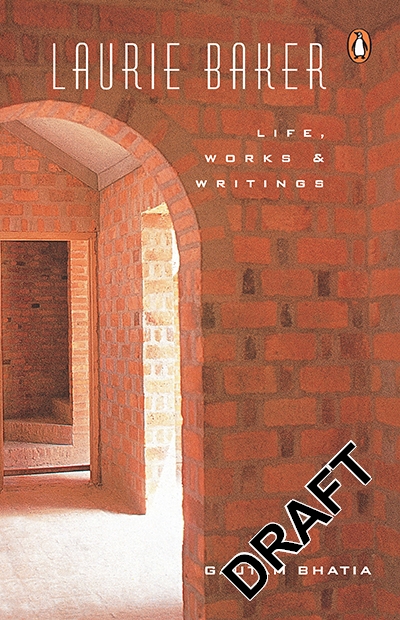
Laurie Baker has worked in India for over forty years and is renowned for being one of the very few architects in the world to have designed and built buildings as diverse as fishermen’s huts, computer institutes, auditoriums, film studios and tourist centres. His distinctive brand of architecture, usually moulded around local building traditions (especially those of Kerela, his adopted home state in south India), is instantly identifiable and has, unsurprisingly, revolutionized traditional concepts of architecture in India. Baker’s architecture is responsive, uses local materials and lays stress on low-cost design.
This biograpy of Laurie Baker, like his work, is direct, simple and comprehensive; further embellished with sketches, plans, photographs and some of Baker’s own writings, the book offers the professional architect view of the life, methods and thoughts of an unorthodox genius.
Shashi Deshpande’s latest novel explores the lives of two women, one obsessed with music and the other a passionate believer in Communism, who break away from their families to seek fulfillment in public life. Savitribai Indorekar, born into an orthodox Hindu family, elopes with her Muslim lover and accompanist, Ghulaam Saab, to pursue a career in music. Gentle, strong-willed Leela, on the other hand, gives her life to the Party, and to working with the factory workers of Bombay. Fifty years after these events have been set in motion, Madhu, Leela’s niece, travels to Bhavanipur, Savitribai’s home in her last years, to write a biography of Bai. Caught in her own despair over the loss of her only son Aditya, Madhu tries to make sense of the lives of Bai and those around her, and in doing so, find a way out of her own grief.
The Funniest Jokes in the World brings together hundreds of jokes and epigrams—collected over several decades from all around the world—that are guaranteed to tickle the funny bone and brighten up the dullest of days.

Caste, and caste-based discrimination, are not just Indian issues. They are experienced throughout the world, from Britain to Bahrain, Canada to South Africa. This is a global phenomenon, demanding global solutions.
Leading scholar Suraj Milind Yengde shines a light on the Dalit experience internationally, from indentured labourers in the nineteenth-century Caribbean to present-day migrant workers in the Middle East. Combining history, ethnography and archival research, he offers a compelling, comparative approach to caste and race from ancient times to today. What have been the impacts of colonialism, religion and nationalism on caste-based hierarchies worldwide? What can we learn from caste-related movements in India and internationally? Why hasn’t the South Asian diaspora embraced the anti-caste struggles of the homeland? And what are the limits of Dalit–Black solidarity?
Exploring the global footprint of the anti-caste struggle—from its links with Black Lives Matter to the work of international Ambedkarite organisations—this is a powerful analysis of world politics from the perspective of one of the most oppressed communities on Earth. Asking probing questions about the nature of inequality, Yengde issues an energetic call for a cosmopolitan Dalit universalism, as a vital part of today’s fight for social justice and equality.

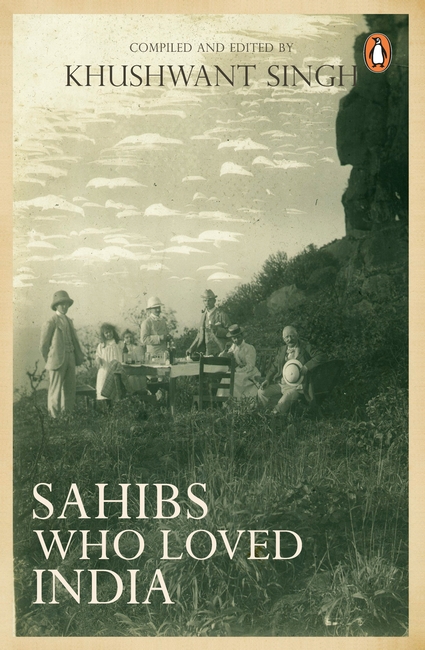
A rare collection of essays that invites the reader to revisit a
vanished era of sahibs and memsahibs. From Lord Mountbatten to Peggy Holroyde to Maurice and Taya Zinkin, Britishers who lived
and worked in India reminisce about topics and points of interest as varied as the Indian Civil Service and the Roshanara Club, shikar
and hazri, the Amateur Cine Society of India and the Doon School,
Rudyard Kipling and Mahatma Gandhi.
Selected from a series of articles commissioned by Khushwant Singh when he was the editor of the Illustrated Weekly of India, these
delightfully individualistic and refreshingly candid writings reveal
a fascinating array of British attitudes, experiences, observations, fond memories, the occasional short-lived grouse and, above all, a deep and abiding affection and respect for India.
The women in this book are not extraordinary or famous, and yet their stories and testimonies, narrated here by one of India’s best-known women journalists, provide a passionate, often deeply touching, revelation of what it means to be a woman in India today.
The women tell of marriage and widowhood, unfair work practices, sexual servitude, the problems of bearing and rearing children in poverty, religion, discrimination, other forms of exploitation…Yet they also talk of fulfilling relationships, the joys of marriage and children, the exhilaration of breaking free from the bonds of tradition, ritual, caste, religion…Interwoven with all this isi the story of one woman’s journey—-of how Anees Jung, the author, brought up in Purdah, succeeded in shaking off the restricting influences of her traditional upbringing to become a highly successful, independent career woman, still a comparatively rare phenomenon in India.
As such, the book is essential reading for anyone wishing to understand the women of India—the silent majority that is now beginning to make itself heard.
The women in this book are not extraordinary or famous, and yet their stories and testimonies, narrated here by one of India’s best-known women journalists, provide a passionate, often deeply touching, revelation of what it means to be a woman in India today.
The women tell of marriage and widowhood, unfair work practices, sexual servitude, the problems of bearing and rearing children in poverty, religion, discrimination, other forms of exploitation…Yet they also talk of fulfilling relationships, the joys of marriage and children, the exhilaration of breaking free from the bonds of tradition, ritual, caste, religion…Interwoven with all this isi the story of one woman’s journey—-of how Anees Jung, the author, brought up in Purdah, succeeded in shaking off the restricting influences of her traditional upbringing to become a highly successful, independent career woman, still a comparatively rare phenomenon in India.
As such, the book is essential reading for anyone wishing to understand the women of India—the silent majority that is now beginning to make itself heard.
A lucid and brilliantly-argued book on India’s recent economic reforms Nearly fifty years after independence, India remains a very poor country. It ranks near the bottom in terms of per capita income, and is similarly placed in the Human Develoent Index which measures social well-being. Economic growth in India has been less than half that of China or even other countries in Asia. And governments, at the Centre as well as in the states, are close to insolvency. The reason for our spectacular underachievement lies in the continuation of policies which had a certain validity as a response to the colonial experience, but which have long outlived their usefulness. The global economic scene has changed dramatically since they were formulated, and we must respond to the new realities. Bimal Jalan, the well known economist and present Governor of the RBI, in this lucid and well-argued book, makes a case for governments doing what they alone can best do, and less of what they cannot do effectively.
A brilliant biography of one of India’s greatest poets
Mirza Mohammad Asadullah Khan Ghalib began writing poetry in Persian at the age of nine and the pre-eminent poet of the time, Mir, predicted a great future for the precocious genius when he was shown his verse. But success and material rewards did not come to Ghalib easily, for the times were against him, and he did not suffer fools gladly even if they occupied positions of importance.
Ghalib was at the height of his powers when events took a turn for the worse. First came the decline of the Mughal court, then the rise of the British Empire and, finally, the Revolt of 1857. Though Ghalib lived through the upheavals and purges of the Revolt, in which many of his contemporaries and friends died and his beloved Delhi was irrevocably changed, he was a broken man and longed for death. When he died, on 15 February 1869, he left behind some of the most vivid accounts of the events of the period ever written. In this illuminating biography Pavan K. Varma evocatively captures the spirit of the man and the essence of the times he lived in.