



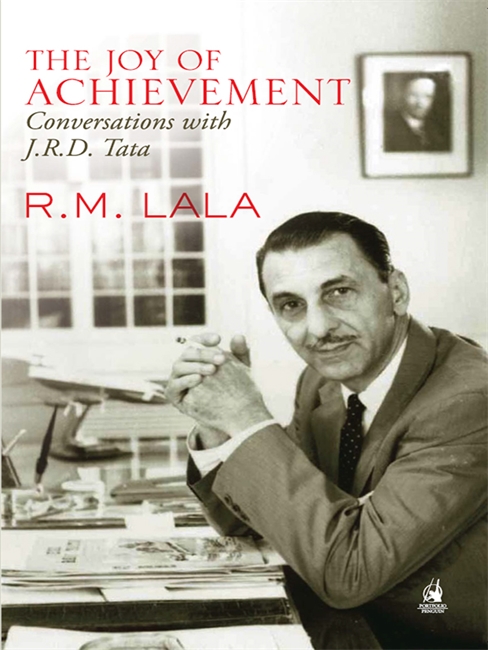
An entertaining, intimate and deeply moving portrait of the legendary industrialist. For six decades J.R.D. Tata headed India’s largest industrial conglomerate with uncommon success. This was only one aspect of his life. He was also a man of great sensitivity who suffered at the loss of friends and was pained by the poverty he saw around him: a philanthropist who wanted India to be -a happy country’ and did all that he could to make it so: a man with a passion for literature, fast cars, skiing and, of course, flying. This book, by the author of the best-selling The Last Blue Mountain, records JRD’s thoughts on a variety of subjects. In these pages he speaks of the House of Tatas and his style of management, about how he nearly joined the freedom struggle in the early 1940s, about the -thrill of living a little dangerously’, his love of music and wine, and the writers he likes to read. He speaks also, with striking candour and insight, about the failures of socialism, the future of India and his association with stalwarts like Jawaharlal Nehru. Jayaprakash Narayan, Vallabbhai Patel, Indira Gandhi and Henry Kissinger. Towards the end of the book, in the final year of his life, we see him come to terms with death, God and the afterlife.
Catagory: Non Fiction
non fiction main category
J. Krishnamurti
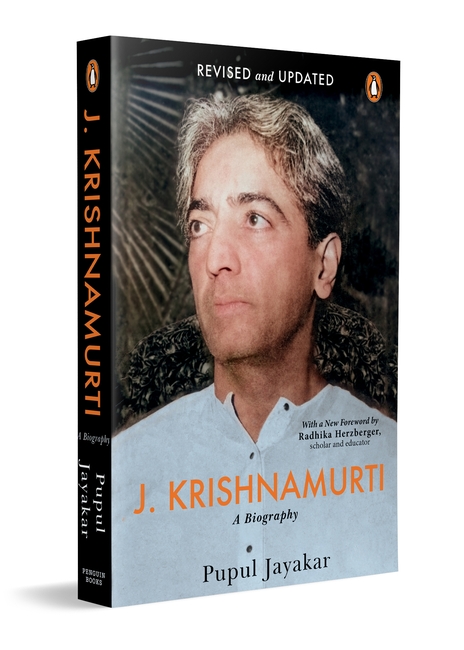
REVISED AND UPDATED WITH A NEW FOREWORD
A classic biography of one of the greatest spiritual teachers of our times
In 1909, when he was just fourteen, Krishnamurti was proclaimed the world teacher in whom Maitreya, the Bodhisattva of compassion, would manifest. The proclamation was made by Annie Besant, then president of the Theosophical Society, a movement that combined Western occult philosophy with Buddhist and Hindu teachings. Besant trained Krishnamurti in his role as the chosen one but twenty years later he chose to disband the order he was head of and set out alone on his endless journey.
As a contemporary of Krishnamurti and one of his closest associates, Pupul Jayakar offers an insider’s view of the fascinating life and thought of an extraordinary individual.
Calcutta Cookbook
The Calcutta Cookbook Is Much More Than A Cookery Book&Mdash;It Is A Culinary Chronicle Of Travellers And Traders Who Built The City That Job Charnock Founded.
Calcutta ‘S Chronicle Began On A Hot, Wet August Afternoon In 1690 When A Hungry Charnock Climbed Off His Ship On To The Steps Of A Muddy Ghat. The River Was Hooghly And The Place Sutanati&Hellip; The Story Of Calcutta Is Told By Three Food Lovers&Mdash;The Late Gourmet Chef And Author Of Bangla Ranna, Minakshi Das Gupta, And Feature Writers Bunny Gupta And Jaya Chaliah&Mdash;Who Have Collected Recipes From All Over The World. Many Of These Are Family Secrets Of Calcuttans Who Have Recreated Armenian, Jewish, Arabian, European, Chinese And Tibetan Dishes With Distinct Calcutta Flavour. Through Over Two Hundred Tried And Tested Recipes Ranging From The Delicious Bengali Chingri Maacher Malai Curry To The Biryani And Kebabs Of Kabul, And The Temperado, Vindaloo And Sorpotel Of Goa, Calcutta Unfolds As A Gourmet&Rsquo;S Paradise
Anglo Indian Food And Customs
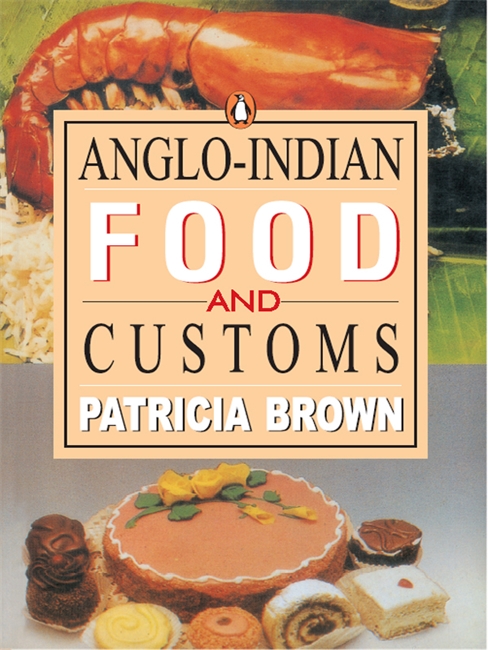
East meets West to create a unique cuisine of mixed European and Indian parentage, the Anglo-Indians adopted the religion, manners and clothing of their European forefathers. Yet, over the years, those of them who made India their home successfully integrated into the mainstream of Indian society. And some of the most glorious results of this assimilation took shape in the kitchen, the territory of the memsahib and her trusted khansamah. Anglo-Indian cuisine is a delicious blend of East and West, rich with the liberal use of coconut, yogurt and almonds, and flavoured with an assortment of spices. Roasts And Curries, Pulaos And Breads, Cakes And Sweetmeats, All Have A Distinctive Flavour. The Western Bias For Meats And Eggs Is Offset By The Indian Fondness For Rice, Vegetables, Curds, Papads, Pickles And Chutneys. And There Is A Great Deal Of Innovation And Variety In Soups, Entrees, Side Dishes, Sauces, Salads And Desserts.
The Other Side Of Silence
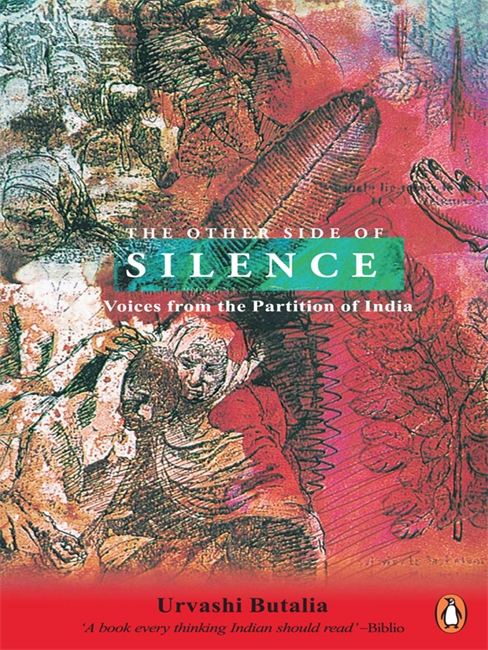
The Partition of India in 1947 caused one of the great human convulsions of history. The statistics are staggering. Twelve million people were displaced; a million died; seventy-five thousand women are said to have been abducted and raped; families were divided; properties lost; homes destroyed. In public memory, however, the violent, disturbing realities that accompanied Partition have remained blanketed in silence. And yet, in private, the voices of Partition have never been stilled and its ramifications have not yet ended. Urvashi Butalia’s remarkable book, the outcome of a decade of interviews and research, looks at what Partition was intended to achieve, and how it worked on the ground, and in people’s lives. Pieced together from oral narratives and testimonies, in many cases from women, children and dalits- marginal voices never heard before- and supplemented by documents, reports, diaries, memoirs and parliamentary records, this is a moving, personal chronicle of Partition that places people, instead of grand politics, at the centre. These are the untold stories of Partition, stories that India has not dared to confront even after fifty years of independence.
Stallion Of The Sun
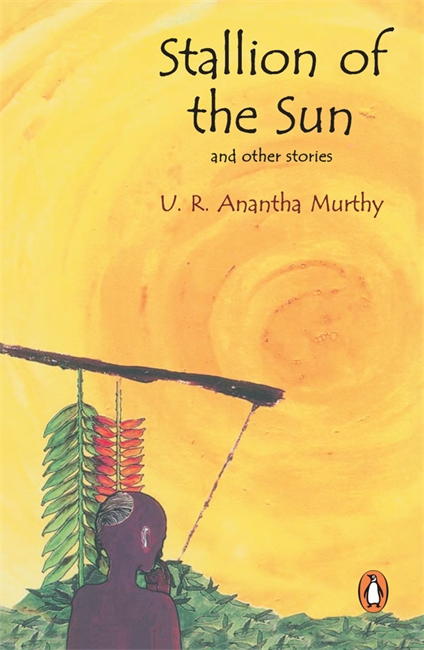
A collection of finely crafted stories that challenge our political, social and cultural beliefs. One of the leading exponents of the Modernist school in Kannada and Jnanpith award winner, U.R. Anantha Murthy has been a writer for nearly five decades. This excellent anthology brings together stories from his five collections. Spanning thirty-five years from 1955-89, they represent his journey from ‘an angry young radical to an intensely humanist conservative’ `Clip Joint’ explores the conflict and confluence of Indian and Western values through an encounter between an Indian student in England and his English classmate. ‘Ghatashradhha’ is a severe indictment of the brahminical system where a priest performs a mock funeral for his child-widow daughter, Yamunakka, who has become pregnant. The critique of unquestioning belief in tradition is pursued in ‘Akkayya’ but resolved with a touch of humour through the protagonist’s singular life story. In the crowning story, ‘Stallion of the Sun’, which is typical of Anantha Murthy’s later, self-reflexive phase, the dissonance between tradition and modernity settles in favour of simple faith. The seven masterful stories in this collection, many of which have been translated into English for the first time, affirm Anantha Murthy as one of India’s foremost fiction writers.
Spit And Polish
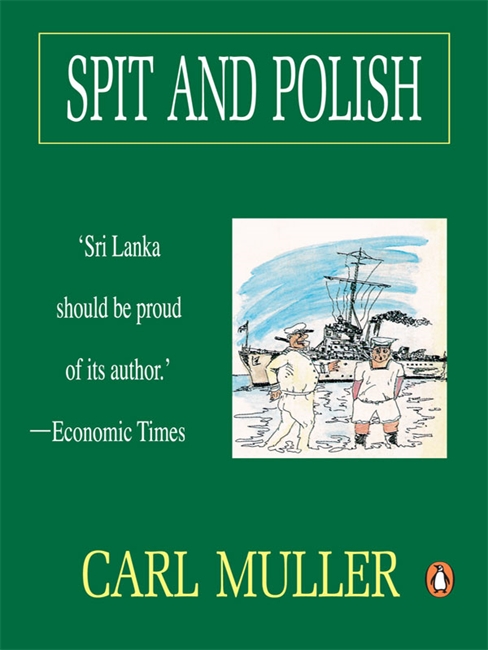
See here, first take a little polish on the finger and rub into the leather. Then spit. and rub.’ – boasts one recruit of his boot polishing skills. sadly, the only reward this gets him is thirty pairs of shoes to shine. This is only one of the hilarious episodes in Carl Muller’s continuation of the von Bloss family saga. Carloboy von Bloss is back, now a robust young man of eighteen, spending four eventful years in the one-ship Royal Ceylon Navy. Carloboy and his fellow recruits get up to the weirdest capers: painting their boots black; posing as Italian ghosts; planning to wink at.
Rediscovering Dharavi
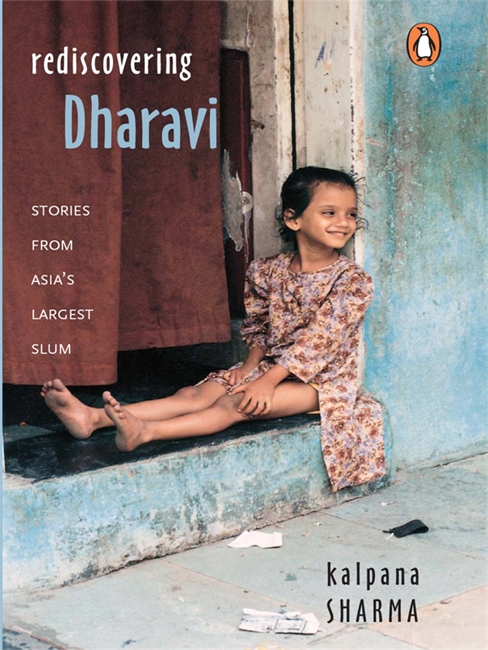
A book that challenges the conventional notion of a slum. Spread over 175 hectares and swarming with one million people, Dharavi is often called ‘Asia’s largest slum’. But Dharavi is much more than cold statistic. What makes it special are the extraordinary people who live there, many of whom have defied fate and an unhelpful State to prosper through a mix of backbreaking work, some luck and a great deal of ingenuity. It is these men and women whom journalist Kalpana Sharma brings to life through a series of spellbinding stories. While recounting their tales, she also traces the history of Dharavi from the days when it was one of the six great koliwadas or fishing villages to the present times when it, along with other slums, is home to almost half of Mumbai. Among the colourful characters she presents are Haji Shamsuddin who came to Mumbai and began life as a rice smuggler but made his fortune by launching his own brand of peanut brittle; the stoic Ramjibhai Patel, a potter, who represents six generations from Saurashtra who have lived and worked in Mumbai; and doughty women like Khatija and Amina who helped check communal passions during the 1992-93 riots and continue to ensure that the rich social fabric of Dharavi is not frayed. It is countless, often anonymous, individuals like these who have helped Dharavi grow from a mere swamp to a virtual gold mine with its many industrial units churning out quality leather goods, garments and food products. Written with rare sensitivity and empathy, Rediscovering Dharavi is a riveting account of the triumph of the human spirit over poverty and want.
Reaping The Whirlwind
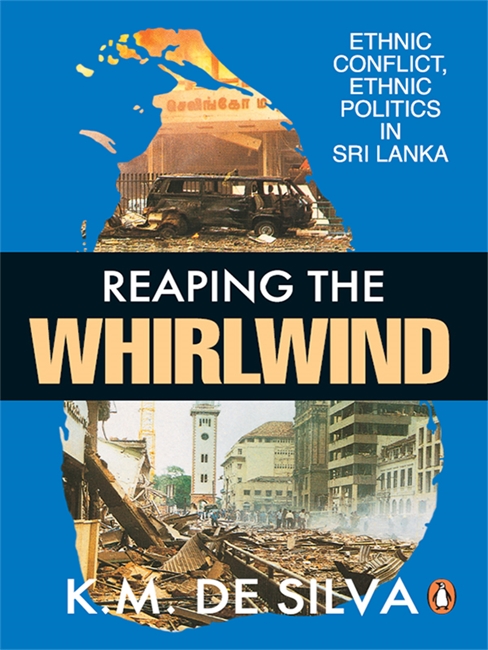
A critical analysis of the ethnic conflict in Sri Lanka In the eighties, Sri Lanka, once considered the ‘model’ colony, was torn apart by ethnic strife between the predominantly Buddhist Sinhalas, constituting almost threequarters of the island’s inhabitants, and the numerically fewer Tamils, who were a mix of Hindus, Christians and Muslims. Massacres occurred after the riots of May 1983, and over time about 1,25,000 Tamils entered India as refugees, fleeing from a virtual civil war which still afflicts the north of the island. The author, a renowned Sri Lankan analyst of global ethnic conflict, discusses the historical reasons behind the ethnic violence, especially the growth of the Sinhalas’ feeling of being a beleagured minority despite their numerical strength. Analysing the present conflict, he shows how the language policy of ‘Sinhala Only’, followed by the government in the sixties, supplanted religion as a divisive factor and how rivalry over educational and employment opportunities fuelled the schism. Bringing the story up to the present, de Silva examines the role played by Indian and Tamil Nadu politicians, and President Kumaratunga’s efforts towards a devolution of power to the Tamil Provinces. But given the LTTE’s acceptance of nothing less than Eelam, he sees little hope of an early end to the violence that has racked Sri Lanka for almost two decades now.
Light On Life

Light on Life brings the insight and wisdom of Indian astrology to the Western reader. Jyotish or Indian astrology is an ancient and complex method of exploring the nature of time and space and its effect upon the individual. Formerly a closed book to the West, the subject has now been clarified and explained by Hart deFouw and Robert Svoboda, two experts and long-term practitioners. In Light on Life they have created a complete and thorough handbook that can be appreciated and understood by those with very little knowledge of astrology. Jyotish states that by considering the state of the cosmos when an event occurs, we can begin to understand its nature- and to prepare an appropriate response. Although there are similarities with Western astrology there are also profound differences. Jyotish is, above all, infused with the religious, psychological and physical spirit of India. This comprehensive and enlightening book on the subject will prove a necessity to every astrologer or student of Indian thought.