Malice. The word is synonymous with Khushwant Singh; his pen has spared no one. For over four decades as India’s most widely-read columnist, he has commented on just about everything: religion, politics, our future, our past, prohibition, impotency, presidents, politicians, cricket, dog-haters, astrologers, the banning of books, the secret of 1ongevity…the list is endless. Candid to the point of being outrageous, Khushwant Singh makes both his reader and subject wince. He writes unabashedly on nose picking, wife-bashing, bribing journalists, gender wars and the desires of an octogenarian; on Nehru and Edwina, Laloo, Bal Thackeray, Chandraswami and Sonia Gandhi, among host of others.
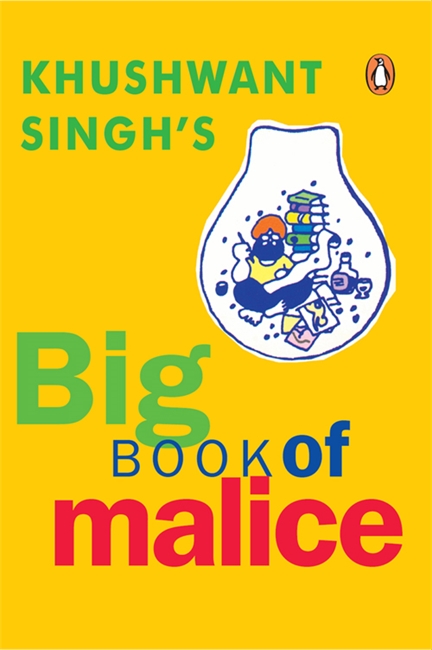
Khushwant Singh’s Big Book of Malice brings together some of his nastiest and most irreverent pieces. Witty, sharp and brutally honest, this collection is certain to delight and provoke readers of all ages.
‘Good people can be crashing bores. Evil men who combine evil-doing with drunkenness, debauchery and making illicit money make more interesting characters because they pack their lives with action. They do what most of us would like to do but do not have the guts to.’
-Khushwant Singh

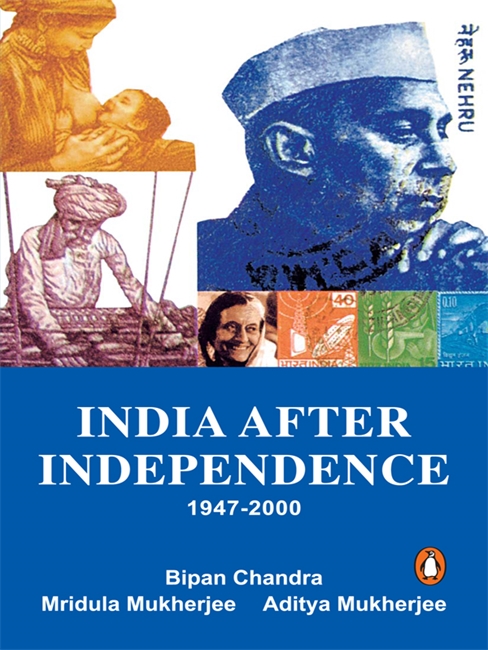
This volume, a sequel to the best-selling India’s Struggle for Independence, analyses the challenges India has faced and the successes it has achieved over the last five decades, in the light of its colonial legacy and the century-long struggle for freedom. The book describes how the Constitution was framed, as also how the Nehruvian political and economic agenda and basics of foreign policy were evolved and developed.
In this impressionistic and often darkly funny account of the sixteen months he spent in a small town in Bihar, Vijay Nambisan tries to understand what drives-or thwarts-perhaps the most talked about state in the Indian Union. Vicious poverty and caste wars, messy politics, corruption and lawlessness-the worst of modern India is in full display here. Yet, how different is Bihar from the rest of the country? And is it really on the brink of a spectacular collapse? Looking beyond clichés and statistics, Vijay Nambisan has produced a remarkably perceptive and balanced portrait of the ‘hole in the heart of India’.

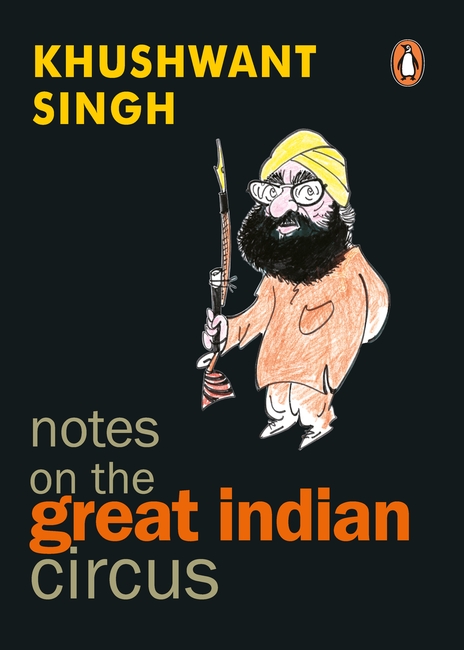
Khushwant Singh, India S Most Widely-Read Columnist, Has Been A Keen Observer Of Life In India Its Politics, Economics, Religion, Habits, Customs, Events And Personalities. Notes On The Great Indian Circus Is A Chronicle Of The State Of The Nation As It Was And As It Is, And The Way It Is Going To Be. It Also Reflects The Indian Psyche The Way We Are. This Selection Brings Together The Best Of Khushwant Singh S Articles From A Wide Variety Of Magazines And Newspapers, And Documents His Inimitable Perceptions On Parliament, Filmstar Mps, Censorship And Communalism. Containing Pieces On Subjects Ranging From Kentucky Fried Chicken To The Kumbh Mela, The Golden Temple To The Assassination Of Rajiv Gandhi, Osho To Bhindranwale, And Pornography To Family Planning, This Is An Insightful, Candid And Provocative Collection.
Hindi Litterateur Harivansh Rai Bachchan was born in Allahabad in 1907, and acquired immense popularity in the 1930s through Madhushala, a long poem inspired by the Rubaiyat of Omar Khayyam. Some three decades later, by now well established as a major figure on the Hindi literary scene, Bachchan wrote the first of four volumes of his autobiography, which was to earn widespread praise from critics and readers alike. In the Afternoon of Time is creative abridgement of these four volumes, translated into English for the first time.
These intensely personal memoirs span several generations, tracing the history of Bachchan’s forebears, who came to live in Allahabad from a small village in Uttar Pradesh. With a bittersweet tone that recalls the lyricism of Madhushala, the author draws a portrait of provincial life in the first decades of the century, and describes with remarkable candour the struggles, joys and heartbreak of his early life. The narrative dwells at length on the death of his young wife and the ensuing trauma; remarriage, and a teaching assignment in the English department of Allahabad University; his Ph.D work on W.B. Yeats in Cambridge; a long stint as Hindi officer in the Ministry of External Affairs; an interlude in the Rajya Sabha; and the meteoric rise of his elder son Amitabh in the world of Hindi cinema.
In his brilliant translation, Rupert Snell has succeeded in communicating the power and intensity that made the original work a classic in the genre of autobiographical writing in India.
Frontline Reports From Sri Lanka And Other South Asian Flashpoints.
Island Of Blood Is A Distillation Of The Experiences And Insights Of One Of The Finest Journalists India Has Ever Produced. During The Eighties And Nineties, When The Indian Media Rarely Ventured Into Flashpoints Like Sri Lanka And Afghanistan, Anita Pratap Braved The Odds To Send In Reports From The Front, Over And Over Again. War, Ethnic Conflict, Earthquakes, Cyclones And Droughts, Wherever There Was A Story To Be Told, She Would Track It Down. First In India, Then In Sri Lanka, Anita Managed To Gain Access To Ltte Chief Pirabhakaran, And Her Interviews With Him Made Headlines Around The World. In Afghanistan, She Eluded The Taliban Militia To Discover The Frightening Reality Of Women&Rsquo;S Lives Under A Terrifying Fanatical Regime.
Wherever She Went, Anita Saw And Faithfully Reported The Consequences Of Racial And Historical Prejudice, Religious And Sexual Discrimination, And Mindless Hatred And Fear. And Each Time, She Returned To The Comfort Of Home And Family With A Renewed Determination To Appreciate And Celebrate The Ordinary.

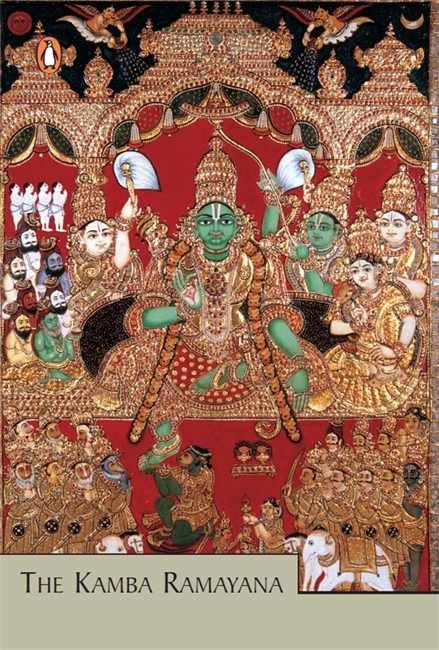
A masterly translation of the Tamil version of Ramayana The epic story of Rama, which is part of the Indian collective consciousness, has been retold in many regional languages. Pre-eminent among the many vernacular retellings of the Ramayana is the twelfth-century Tamil version by Kamban. The son of a temple drummer, Kamban is reputed to have had an impressive mastery of Tamil and Sanskrit classics. Fascinated by the lore of Ramayana, he immersed himself totally in it. Though Kamban acknowledges his indebtedness to the Sanskrit version of the Ramayana by Valmiki, his is an independent work, enriched by various religious, philosophical and literary influences. The Kamba Ramayana differs from Valmiki’s in significant ways. Though cast in the heroic mould of a Purushotama or ‘the best among men’, Valmiki’s Rama is still a man. Kamban, on the other hand, never allows the reader to forget the godhood of Rama. His Ravana too, though flawed, is a heroic figure. While Valmiki’s diction is sparse and direct, Kamban’s exuberant prose sparkles with wit and inventiveness. Translated into English by the late P.S. Sundaram, this edition has been abridged and edited by his long-time friend N.S. Jagannathan. Though pared down from the original six volumes to a single one, this translation retains the magic and poetry of the original.

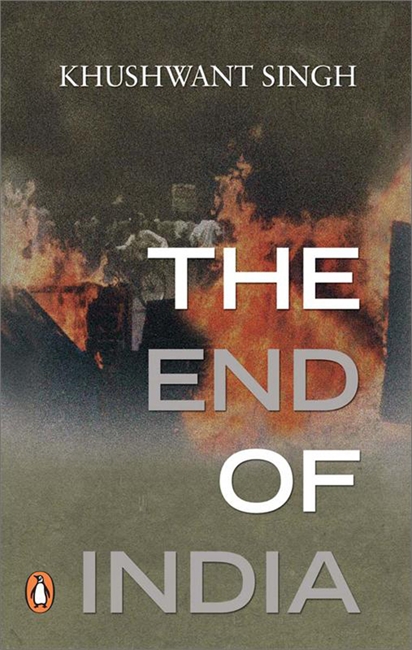
‘I thought the nation was coming to an end,’ wrote Khushwant Singh, looking back on the violence of Partition that he witnesses over half a century ago. He believed then, and for years afterwards, that he had seen the worst that India could do to itself. Over the last few years, however, he has had reason to feel that the worst, perhaps, is still to come.
In this fierce, uncompromising book, he shows us what few of us wish to see: why it is entirely likely that India will come undone in the foreseeable future. Analysing the communal violence in Gujarat in 2002, the anti-Sikh riots of 1984, the burning of Graham Staines and his children, the targeted killings by terrorists in Punjab and Kashmir, Khushwant Singh forces us to confront the absolute corruption of religion that has made us among the most brutal people on earth. He also points out that fundamentalism has less to do with religion than with politics. And communal politics, he reminds us, is only the most visible of the demons we have nurtured and let loose upon ourselves.
Insurgencies in Kashmir and the North-East, caste wars in Bihar, scattered Naxalite movements, and the ghettoization of minorities are proof that our obsession with caste and regional and racial identity has also splintered the nation, perhaps beyond repair. A brave and passionate book, The End of India is a wake-up call for every citizen concerned about his or her own future, if not the nation’s.
An invaluable guide for women of all ages
This book addresses every health concern that a woman may have about her body. Beginning with an exhaustive description of the female anatomy, it discusses a variety of subjects-common and complex-related not only to a woman’s body, but also to her emotional and psychological responses. Dr Shelly Batra, gynaecologist and leading expert on women’s health, draws on twenty years of medical experience to demonstrate concrete steps that a woman can take towards identifying and solving her problems in order to lead a healthy and satisfying life. Full of interesting anecdotes, wise advice and shared experience, this book encourages every woman to be fully informed about her body and celebrate her potential.
Supplemented with detailed illustrations, ‘The Intimate Self: A Guide to Women’s Sexual Health includes up-to-date information on:
Puberty, sex and contraception
Infertility
Menopause
Abortion and miscarriage
Effects of smoking and alcohol
Cancer risks

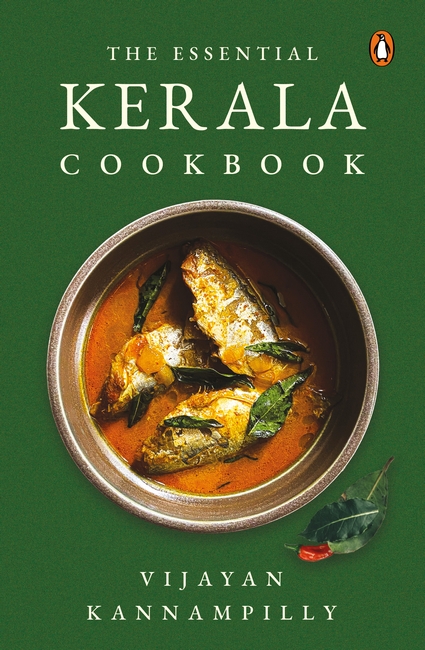
In recent times, the coconut-flavoured cuisine of the Malayalis has gained immense popularity. Appam and Istoo, Avial and Olan, Irachi Biryani and Pathiri, all these and more are now served in restaurants and homes all over India. As the author explains in his introduction to the book, the ancient association of food with religion, the influence of foreign trade and the intermingling of different communities have all combined to make Kerala cuisine what it is today. Interestingly, even though a variety of spices grow literally in their backyards, Malayalis abstain from an overpowering use of these, rendering their cuisine different from other Asian cuisines. Instead, there is a range of delicately spiced dishes, harmoniously balanced and simple to prepare, neither too rich nor too bland, and always delicious. The recipes in this volume cover the entire range of vegetables, meat, seafood, pickles, sweets and snacks, served both as daily fare and as part of the sadya on festive occasions, taking in the specialities of the different regions and communities of the state.