Consider the following: Eleven out of twelve abortions in India are illegal. The 2001 Census showed a decline in the number of females per thousdand males in the most literate and prosperous states, especially in the 0-5 age group. The Private sector has more doctors and fewer beds than government hospitals, thereby emphasizing out-patient care. And while Indian traditions sanctify fertility and motherhood, government policies and health care services are focused on controlling fertility.
These are some of the paradoxes of India’s health care system Mrinal Pande encountered when she set out on her journry across several states to put together information on the health of Indian women. She soon realized it could not be a mere documentation of teh history of reproductive health in India and the state of India’s public health care system. Through listening to women’s perspectives on their bodies when they came for treatment and conversations with dedicated health workers, she gained an insight into larger realities. The result is a patchwork quilt of narratives about women’s lives- how they are affected by their environment, their perspectives on male and female sexuality, the mystery of pregnancy, the joy of birth, the fear of infertility and pain of backroom abortions and the often bleak world of adolescent girls.
Mrinal Pande also discusses important issues like the population policies followed by the government over a half a century and the consequences of a welfare state abdicating its obligation to provide basic health for all in its pursuit of globalization and market economics. Through it all she reveals enormous faith in the role of non-governmental organizations in providing betetr health care services- the dedicated doctors and attendants who are making a difference, helping women step out from the dark bylanes and silences of their lives to create a socio-cultural milieu which restores their basic dignity and rights.
Muhammad is the Prophet; the messenger of God. But for the vast majority of people outside the Islamic faith; he remains a mystery; and myths and misconceptions about him abound.
Born in a time of moral despondency and despair; Muhammad spent his entire life trying to transcend human pettiness; searching for absolute values; the meaning of life and what it meant to be a human being. The Book of Muhammad recounts this journey-Muhammad’s early struggles to bring his message to the people in Mecca; the Revelation; his flight to Medina and the establishment of Islam and an ideal city-state there; and his triumphant return to Mecca. Mehru Jaffer’s own search to understand the teachings of Islam inform this lucid yet profound retelling of the life of one of the most mesmerizing figures to walk this earth; thereby making his teachings and spiritual significance accessible to all.
In this short biography; Mehru Jaffer presents Muhammad as an extraordinary prophet and leader; a man of God who succeeded in uniting all of Arabia through his new faith and exerted enormous influence over centuries of human history. In her detailed introduction to the book she also examines why the fundamental tenet of his teachings-that to be a good human being is to be kind; compassionate and charitable-is particularly relevant in our troubled times today.

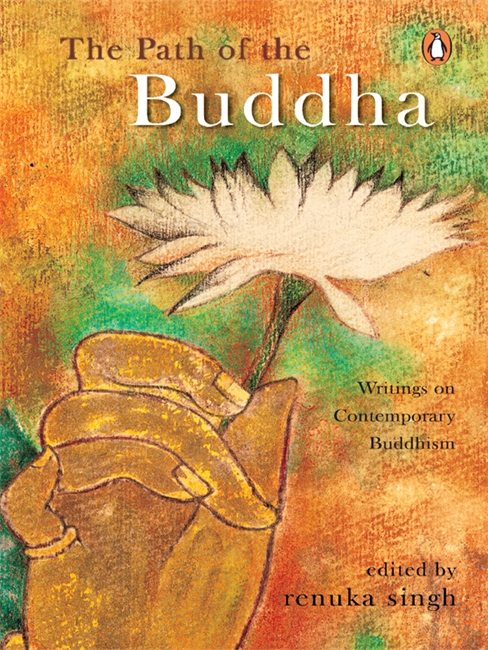
Buddha Shakyamuni tells us that a practitioner should think in terms of eons, not just days and hours. From a Buddhist viewpoint, life has no beginning. What we do have is the desire to overcome suffering. But desire alone is not enough to achieve the goal. What we need is the correct method to help us achieve this aim.’— His Holiness the Dalai Lama So compelling is the story of Prince Siddhartha Gautama that it loses none of its sheen with a retelling. Impelled by a desire to deal with the sorrows of human existence, he renounces the world when barely twenty-nine and finds Buddhism. Giving Buddha’s spiritual journey a contemporary dimension, this anthology contains essays by spiritual leaders like His Holiness the Dalai Lama, Lama Zopa Rinpoche and Lama Thubten Yeshe on the impact of Buddhist philosophy on them. Equally poignant are the accounts of others who, dissatisfied with the present world, embark on a search for salvation. Urged by a seemingly simple notion, Donna Brown starts her quest to find a really ‘good’ person; a journey which takes her from the heart of Canada to Nepal’s remote Kopan monastery. An inexplicable restlessness takes Robina Courtin from dabbling in drugs, political activism and martial arts to finding truth as a Buddhist nun. Though born into a Sikh family, Dharmakirti grows up in Sikkim amidst Buddhist monasteries, maroon-robed monks and monastic rituals, and eventually chooses the philosophy of Tibetan Buddhism over science. For Kabir Saxena, Buddhism offers a practical path in this broken, imperfect world. Varied and meaningful, The Path of the Buddha provides a rare glimpse into Buddhism.
From the author of The Last Mughal and Nine Lives: the classic stories he gathered during the ten years he spent journeying across the Indian subcontinent, from Sri Lanka and southern India to the North West Frontier of Pakistan. As he searched for evidence of Kali Yug, the “age of darkness” predicted by an ancient Hindu cosmology in a final epoch of strife and corruption, Dalrymple encountered a region that thrilled and surprised him. Venturing to places rarely visited by foreigners, he presents compelling portraits of a diverse range of figures—from a Hindi rap megastar through the Tamil Tigers to the drug lords of Pakistan. Dalrymple’s love for the subcontinent comes across in every page, which makes its chronicles of political corruption, ethnic violence and social disintegration all the more poignant. The result is a dark yet vibrant travelogue, and a unique look at a region that continues to be marked by rapid change and unlimited possibilities as it struggles to reconcile the forces of modernity and tradition.
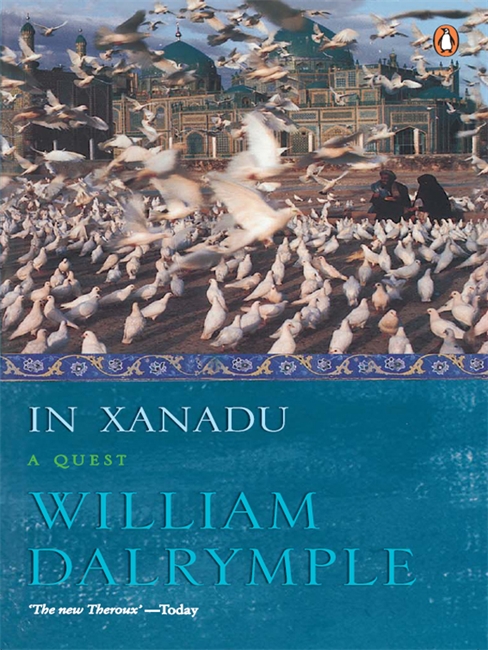
In Xanadu is, without doubt, one of the best travel books produced in the last 20 years. It is witty and intelligent, brilliantly observed, deftly constructed and extremely entertaining. Dalrymple’s gift for transforming ordinary humdrum experience into something extraordinary and timeless suggests that he will go from strength to strength. The book leavens adventure story and scholarly history with farcical dialogue with high-spirited buffoonery. It is a fast, furious read, clearly the stuff bestsellers are made of.
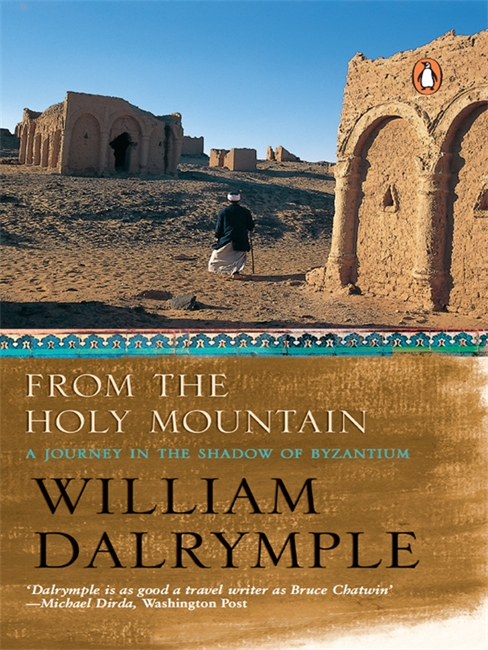
A Journey in the Shadow of Byzantium
‘In his third book William Dalrymple has dug deep to present the case of the Middle East’s downtrodden Christians. More hard-hitting than either of his previous books, From the Holy Mountain is driven by indignation. While leavened with his characteristic jauntiness and humour, it is also profoundly shocking. Time and time again in the details of Dalrymple’s discoveries I found myself asking: why do we not know this?
The sense of unsung tragedy accumulates throughout the chapters of this book…From the Holy Mountain is the most rewarding sort of travel book, combining flashes of lightly-worn scholarship with a powerful sense of place and the immediacy of the best journalism. But more than that it is a passionate cri de coeur for a forgotten people which few readers will be able to resist’—Philip Marsden, Spectator.

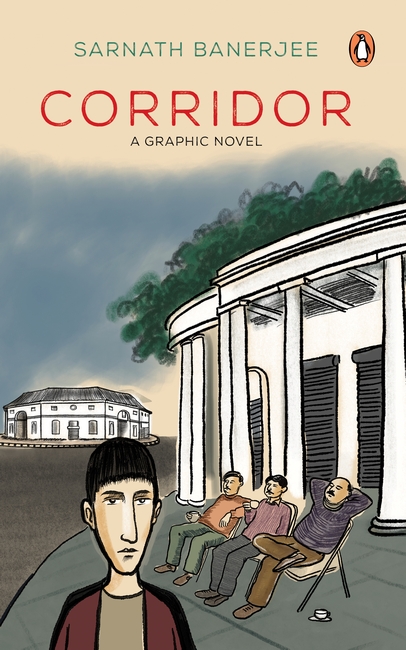
The story of Corridor revolves around an enlightened dispenser of tea, Jehangir Rangoonwalla, who has a shop in the heart of Lutyens’ Delhi, Connaught Place. He also sells second-hand books and dispenses wisdom to his customers. All of the main characters of the novel have this shop as their common local haunt and Mr Rangoonwalla interacts with these residents of Delhi when they visit his shop and at times gives them his words of wisdom. They come to him for tea, books, conversation and advice.
The story is about a plethora of characters, each from a different strata of society and different background. These customers are Brighu, passionate for obscure collectibles and a real love life, Shintu, the newly married on a quest of the ultimate aphrodisiac, and Digital Dutta, a person mostly torn between an H-1B visa and Karl Marx. Dutta is portrayed as a man who lives in his head.
Each of these characters has a story of his own and the author ties them together in a brilliant manner for his book. While narrating their stories, Banerjee subtly touches the greyer shades of their lives and presents them vividly to the reader. The entire novel has been captured in the corridors of contemporary Connaught Place in Delhi and Calcutta. Various pictures and objects have been shown in the background frame and the author ensures to refer them, thereby touching upon the different cultural references.
Sarnath Banerjee presents a different flavour to the art of storytelling by mixing various other art forms such as sketches, illustrations, and photographs. These heighten the impact on the reader in a beautiful way. The author uses an imaginative alchemy of words and images, of a script and artwork, to present the alienation and fragmented reality of the Indian urban life. Thus, the novel presents a delightful tale with interesting twists and turns.
Being a diabetic does not mean you have to eat boring or insipid food, and here are some interesting and unusual recipes to prove it. Not only are these recipes simple to follow, they also use ingredients readily available in a regular kitchen. The end result is healthy food that is so delicious that non-diabetic members of the family will also enjoy it, thus doing away with the need to prepare `special’ food for a diabetic person. And to help monitor calorie intake, a crucial aspect of diabetic care, every recipe is supplemented with a list of the protein, fat and carbohydrate content as well as the total calories per serving. The introduction, by a dietician specialized in diabetics, clears many myths and fears concerning the disease. It explains lucidly how and why diabetes occurs, what its side effects are and what causes them, and how to control diabetes. So, if you are a diabetic or know one in search of a healthy yet adventurous diet plan, this is the perfect book for you.
The Indian Economy: Problems and Prospects, first published in 1992, looks at the country’s economy and the resolved fiscal crisis from a historical perspective. Edited and updated with a new Introduction by Bimal Jalan, the book retains the thirteen essays written by eminent economic thinkers in 1991 and 1992 in their original form as they provide a comprehensive overview of India’s economic development since Independence and answer questions on key economic issues that are as relevant today as they were at that time. Bipan Chandra conducts a historical survey of fiscal developments during the colonial period, the late V.M. Dandekar evaluates India’s economic performance from 1950 to 1990, and Rakesh Mohan traces the history of industrial controls from the pre-independence era. Also included are essays by C.H. Hanumantha Rao, C. Rangarajan and Narendra Jadhav, Raja Chelliah, Sudipto Mundle and M. Govinda Rao, Jyoti and Kirit Parikh, Pravin Visaria, T.S. Papola, Pranab Bardhan and Kaushik Basu. In his revised Introduction, Bimal Jalan assesses the country’s economic progress since 1991, examines crucial events and their relative significance. Exploring diverse aspects of the Indian economy as well as the political, institutional and legal implications of economic reforms, these insightful and revelatory essays will be of enormous interest to experts and the general reader alike.

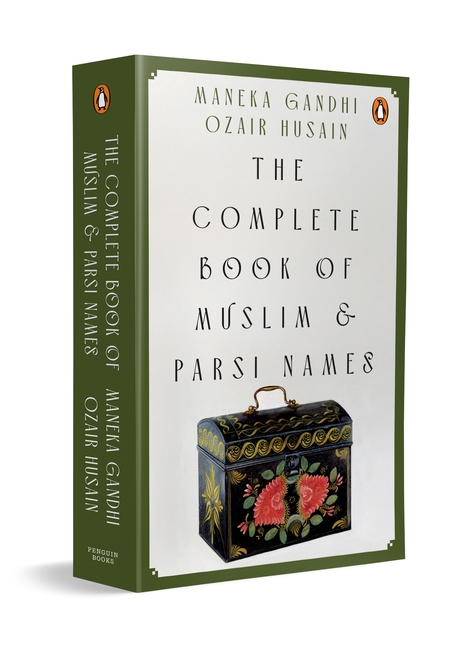
`On the day of Qayamat you will be called by your names and the names of your fathers. Therefore keep good names.’—The Prophet The Complete Book of Muslim and Parsi Names is a practical guide for choosing the perfect name for your child. The result of several years of research; it is an erudite and thorough compilation of approximately 30;000 names taken from ten languages. With the actual and the construed meanings and the history or mythology associated with the name given against each entry; this is a precise and invaluable sourcebook for scholars and lay readers alike.