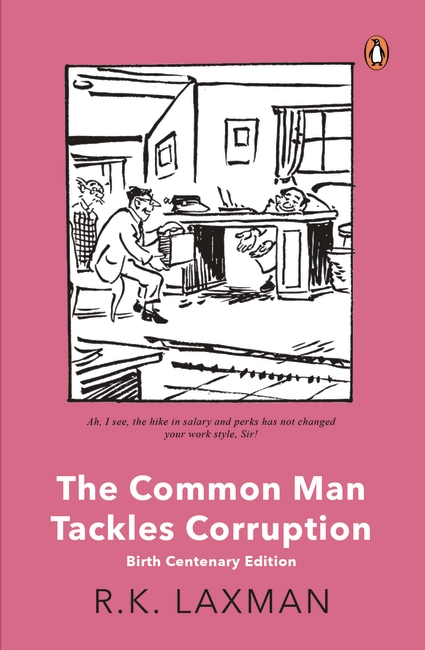
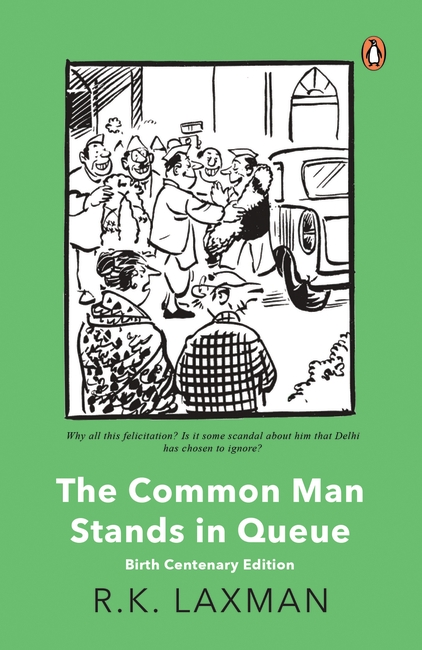
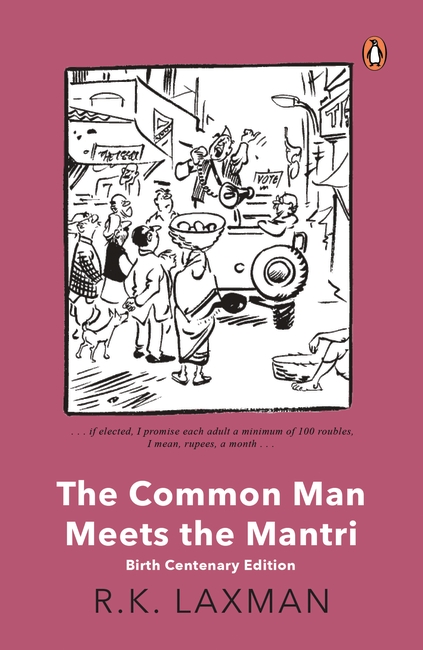
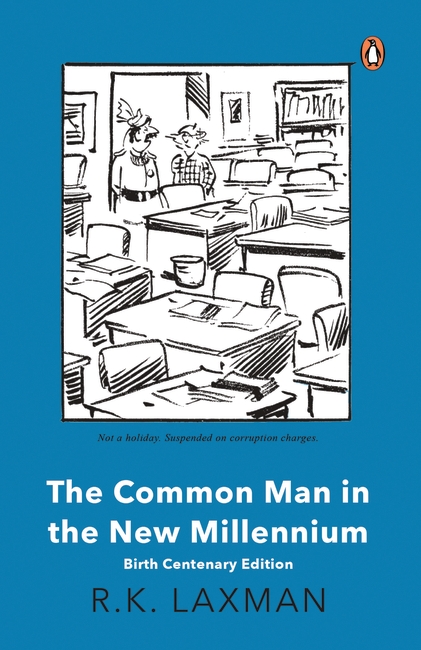
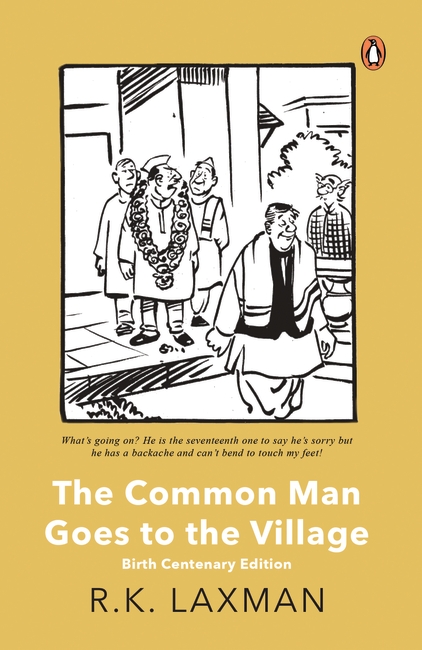
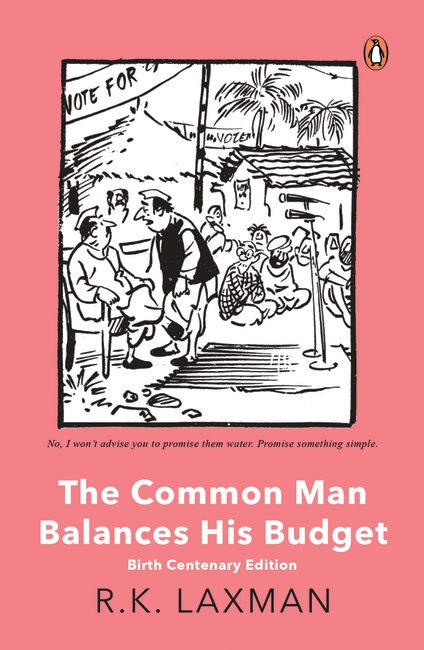
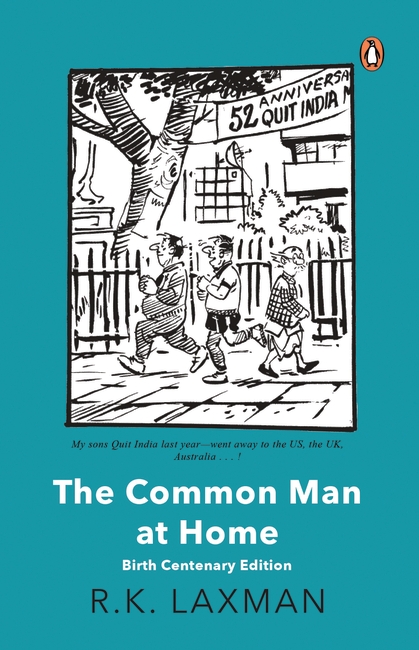
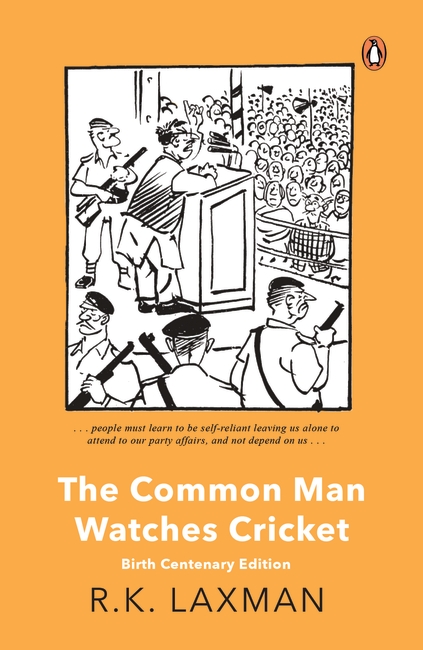
A collection of gems by our best-loved cartoonist, R.K. Laxman
From financial crises to the woes of householders, from political instability to rampant corruption, these cartoons capture the entire gamut of contemporary Indian experience. Hilarious and thought-provoking at the same time, this is a treasure house of humour from one of the most striking voices commenting on Indian sociopolitical life today.

A collection of gems by our best-loved cartoonist, R.K. Laxman
‘For half a century, the Times of India has thoughtfully provided an antidote to all the bad news brimming on its front pages. It is a sketch, a single box, inked by R.K. Laxman, the . . . sharpest cartoonist and political satirist [of the country]. Each morning, [the] frazzled character, known as the Common Man, confronts [the] latest heartbreak with a kind of wry resignation. Meek, doddering, and with a moustache that bristles like an electrocuted mongoose, he is a witness to everything: scheming politicians, rapacious bureaucrats and gossiping housewives. What is common about this character is that like most Indians, he sees his country being forced through endless indignities by its leaders and yet does not even whimper in protest.’ ~ TIME
From financial crises to the woes of householders, from political instability to rampant corruption, these cartoons capture the entire gamut of contemporary Indian experience. Hilarious and thought-provoking at the same time, this is a treasure-house of humour from one of the most striking voices commenting on Indian sociopolitical life today.

A collection of gems by our best-loved cartoonist, R.K. Laxman
From financial crises to the woes of householders, from political instability to rampant corruption, these cartoons capture the entire gamut of contemporary Indian experience. Hilarious and thought-provoking at the same time, this is a treasure house of humour from one of the most striking voices commenting on Indian sociopolitical life today.

A collection of gems by our best-loved cartoonist, R.K. Laxman
‘For half a century, the Times of India has thoughtfully provided an antidote to all the bad news brimming on its front pages. It is a sketch, a single box, inked by R.K. Laxman, the . . . sharpest cartoonist and political satirist [of the country]. Each morning, [the] frazzled character, known as the Common Man, confronts [the] latest heartbreak with a kind of wry resignation. Meek, doddering, and with a moustache that bristles like an electrocuted mongoose, he is a witness to everything: scheming politicians, rapacious bureaucrats and gossiping housewives. What is common about this character is that like most Indians, he sees his country being forced through endless indignities by its leaders and yet does not even whimper in protest.’ ~ TIME
From financial crises to the woes of householders, from political instability to rampant corruption, these cartoons capture the entire gamut of contemporary Indian experience. Hilarious and thought-provoking at the same time, this is a treasure house of humour from one of the most striking voices commenting on Indian sociopolitical life today.
A collection of gems by our best-loved cartoonist, R.K. Laxman
‘For half a century, the Times of India has thoughtfully provided an antidote to all the bad news brimming on its front pages. It is a sketch, a single box, inked by R.K. Laxman, the . . . sharpest cartoonist and political satirist [of the country]. Each morning, [the] frazzled character, known as the Common Man, confronts [the] latest heartbreak with a kind of wry resignation. Meek, doddering, and with a moustache that bristles like an electrocuted mongoose, he is a witness to everything: scheming politicians, rapacious bureaucrats and gossiping housewives. What is common about this character is that like most Indians, he sees his country being forced through endless indignities by its leaders and yet does not even whimper in protest.’ ~ TIME
From financial crises to the woes of householders, from political instability to rampant corruption, these cartoons capture the entire gamut of contemporary Indian experience. Hilarious and thought-provoking at the same time, this is a treasure house of humour from one of the most striking voices commenting on Indian sociopolitical life today.

A collection of gems by our best-loved cartoonist, R.K. Laxman
From financial crises to the woes of householders, from political instability to rampant corruption, these cartoons capture the entire gamut of contemporary Indian experience. Hilarious and thought-provoking at the same time, this is a treasure house of humour from one of the most striking voices commenting on Indian sociopolitical life today.

A collection of gems by our best-loved cartoonist, R.K. Laxman
From financial crises to the woes of householders, from political instability to rampant corruption, these cartoons capture the entire gamut of contemporary Indian experience. Hilarious and thought-provoking at the same time, this is a treasure house of humour from one of the most striking voices commenting on Indian sociopolitical life today.
A collection of gems by our best-loved cartoonist, R.K. Laxman
From financial crises to the woes of householders, from political instability to rampant corruption, these cartoons capture the entire gamut of contemporary Indian experience. Hilarious and thought-provoking at the same time, this is a treasure house of humour from one of the most striking voices commenting on Indian sociopolitical life today.
A witty look at the strange world of politics by our best-loved cartoonist
This exhilarating collection by R.K. Laxman takes a humorous look at the colourful personalities, peculiar codes of conduct and bombastic rhetoric that characterize the inimitable world of politics.
A Vote for Laughter contains a hundred of the classic Common Man cartoons that have to do with political subjects, from party meetings, election campaigns and VVIP movements to cabinet reshuffles, horse trading and foreign tours, not to forget the activity that for Laxman defines the Indian politician: the impulse to rush to the well of the House. These are accompanied by a hundred of the funniest jokes about politics and politicians, collected from all over the world.
A Vote for Laughter will entertain everyone who enjoys seeing the farcical streak in our contemporary politics, even as we take pride in being the largest democracy in the world.
A humorous look at doctors and their ilk by India’s best-loved cartoonist
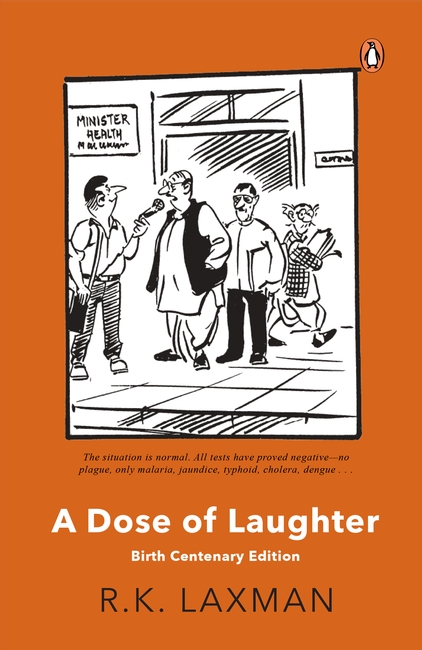
Laughter, they say, is the best medicine. It is therefore fitting that the world’s most honourable profession should have a great deal of fun made at its expense. Humour directed at physicians and medicine has sustained many a suffering patient through the bleakest of times. A Dose of Laughter is an exhilarating collection of cartoons and jokes about doctors and their practices that will bring a smile to the lips of those who wield the stethoscope as well as those who yield to it.
This book contains 100 cartoons about the world of doctors, hospitals, laboratories, ailments, maladies, health schemes and hygiene that show R.K. Laxman at his inimitable best. These are accompanied by a hundred of the funniest jokes about doctors and the medical profession collected from all over the world. Together, these make for a witty, perceptive look at the unequal effort doctors make to combat disease and bring succour to their fellow humans. This is a book that can be dipped into at random, or read from cover to cover. In either case, it is guaranteed to provide a great deal of unadulterated merriment and laughter.