An insider’s account of how politics is practised in India, and to what effect?
In India’s Politics: A View from the Backbench, Bimal Jalan, ex-Governor of the Reserve Bank of India and best-selling author of The Future of India, turns his gaze to the complex mechanics of the political system in the country. As a member of Parliament, Bimal Jalan has watched the workings of India’s politics closely. While there is much to be proud of in India’s achievements as a vibrant democracy, there are some areas of concern which require attention. In particular, Jalan finds that the emergence of multi-party coalitions as a regular form of government-and their relatively short life expectancy at birth-has brought about a sea change in political dynamics. The search for power and the compulsions of coalition politics are increasingly the primary drivers of political behaviour in India today.??This development, combined with the need to cope with global terrorism, lawlessness and economic disparities during a period of high growth, calls for some urgent reforms in the working of India’s vital political institutions.?
Jalan puts forward a ten-point programme to make India’s parliamentary democracy more stable, transparent and accountable. According to him, constant vigilance is indeed the price of liberty and if some of the emerging trends are not reversed, India’s democracy ‘by the people’ could become more and more oligarchic-‘of the few and for the few’. India’s Politics is one of the most important studies of India’s political system to have been written. This paperback edition features a new Preface by the author on emerging political trends.

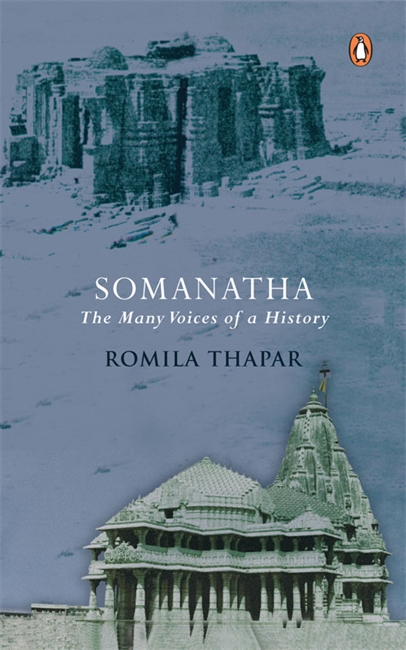
It was first depicted as a trauma for the Hindu population not in India, but in the House of Commons. The triumphalist accounts of the event in Turko-Persian chronicles became the main source for most eighteenth-century historians. It suited everyone and helped the British to divide and rule a multi-millioned subcontinent. In her new book, Romila Thapar, the doyenne of Indian historians, reconstructs what took place by studying other sources, including local Sanskrit inscriptions, biographies of kings and merchants of the period, court epics and popular narratives that have survived. The result is astounding and undermines the traditional version of what took place. What makes her findings explosive is the fact that the current Hindu nationalist regime in India constantly utilizes a particular version of history

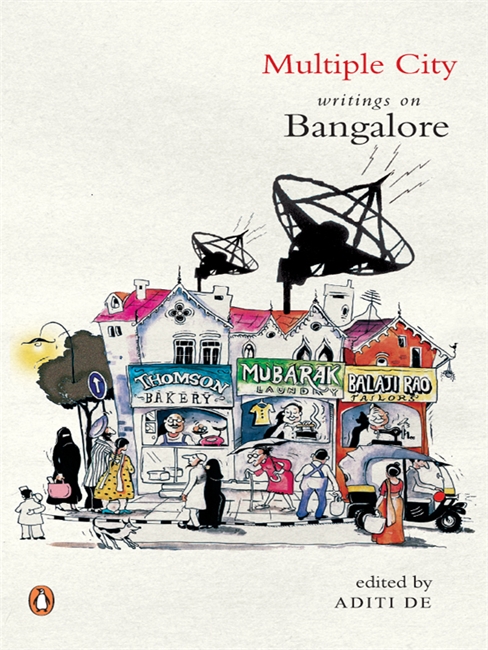
Founded by the chieftain Kempe Gowda around 1537, the story of Bangalore has no grand linear narrative. The location has revealed different facets to settlers and passers-through. The city, the site of bloody battles between the British and Tipu Sultan, was once attached to the glittering court of Mysore. Later, it became a cantonment town where British troops were stationed. Over time, it morphed into a city of gardens and lakes, and the capital of PBI – Indian scientific research. More recently, it has been the hub of PBI – India’s information technology boom, giving rise to Brand Bangalore, an PBI – Indian city whose name is recognized globally. Hidden beneath these layers lies a cosmopolitan city of sub-cultures, engaging artists and writers, young geeks and students. People from every corner of PBI – India and beyond now call it home.
In this collection of writings about a multi-layered city, there are stories from its history, translations from Kannada literature, personal responses to the city’s mindscape, portraits of special citizens, accounts of searches for lost communities and traditions, among much more. U.R. Ananthamurthy writes about Bangalore’s Kannada identity; Shashi Deshpande maps the city through the places she has lived in since she was a young girl; Anita Nair draws a touching portrait of a florist who celebrates the glories of the Raj; Ramachandra Guha describes his close bond with Bangalore’s most unusual bookseller; and Rajmohan Gandhi recounts the Mahatma’s trysts with the city. From traditional folk ballads to a nursery rhyme about Bangalore, from poems to blogs, from reproductions of turn of the twentieth century picture postcards to cartoons, Multiple City is the portrait of a metropolis trying to retain its roots as it hurtles into the future.
Mani Shankar Aiyar looks back to the changes that have taken place during the -Time of Transition’ “the two decades since Prime Minister Rajiv Gandhi left office after the Lok Sabha elections of November 1989. Rajiv Gandhi was the fourth prime minister of India in four decades of independence, but the last twenty years have seen as many as eight prime ministers and several more governments. Accompanying the change from single-party governance to the instability of coalition politics are major transformations in the pace, trajectory and even the goals of nation-building. It is these contentious transitions that are reflected in the five major themes of this volume: Democracy, Secularism, Socialism, Nonalignment, and Neighbourhood Policy. Mani Shankar Aiyar was both a witness to, and a reluctant participant in, these processes of change: as joint secretary in Rajiv Gandhi’s prime minister’s office, as an MP since 1991, and today as a cabinet minister in the United Progressive Alliance government. His columns for the Indian Express are analytical and vivid commentaries on their times, written in the author’s inimitable style. This collection sheds light on a critically significant era in contemporary India.

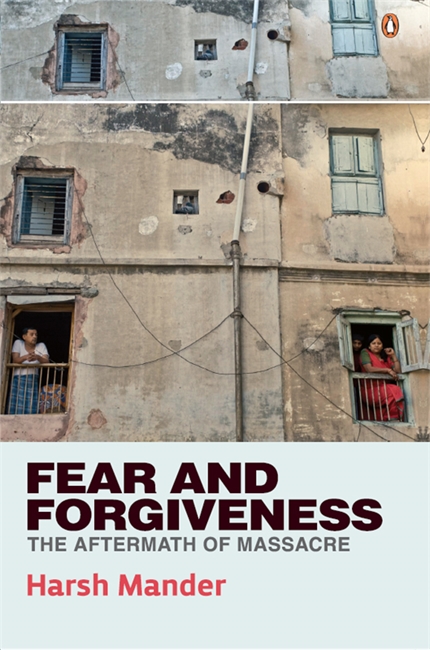
‘Human history is not just a history of cruelty, but also of compassion, sacrifice, courage, [and] kindness. What we choose to emphasise in this complex history will define our lives…’-Howard Zinn In February 2002, a violent storm of engineered sectarian hatred broke out and raged for many months in Gujarat; blood flowed freely on the streets and tens of thousands of homes were razed to the ground. An estimated 2000 men, women and children, mostly from the Muslim community, were raped and murdered, and more than two hundred thousand people fled in terror as their homes and livelihoods were systematically destroyed. However, Gujarat abounds with thousands of untold stories of faith and courage that endured amidst the fear and hate-Dhuraji and Babuben Thakur who sheltered 110 Muslims for ten days in their home; of Rambhai Adivasi who restored his Muslim neighbour’s roof in the face of local opposition, Rabiya of Ratanpur who waits in the hope that the people from her village will call her back one day and then every thing will be all right, Bilkis Bano and Niyaz Bibi whose perseverance and determination have made them symbols of courage in the face of adversity. Harsh Mander’s Fear and Forgiveness: The Aftermath of Massacre, written over the past six years, is not just about the grim events of 2002, of the state’s lack of accountability and the failure of justice, of the numerous commissions and their reports, of the indiscriminate use of the draconian Prevention of Terrorism Act 2002, of police brutality and the trauma of relief camps. It is about the acts of compassion and courage, of the hundreds who risked their own lives and those of their families and their homes to save innocent men, women and children, and even today help the betrayed and shattered minority heal and rebuild. The book compels us to acknowledge the flaws in our judicial, social and rehabilitative structures while showing that the way forward must be one of sympathy, understanding and forgiveness.

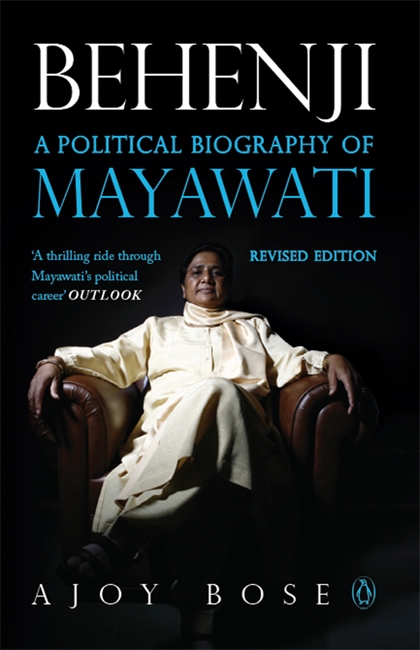
Does her loss in the 2017 UP elections mean the end of Mayawati? What kind of legacy does she leave behind for Dalit politics?
First published in 2008, this revised edition pinpoints the reasons behind BSP’s fall in the 2009 Lok Sabha polls, loss of power in the 2012 assembly elections, the humiliating zero in the 2014 national polls and her most recent electoral debacle. Also scrutinized in concise detail is Mayawati’s performance as an administrator in the face of rampant corruption charges, the leader who brought a Dalit party to power for the first time on its own, and the failure of her social engineering project during her years in power.
Through an astute mix of political analysis and extensive briefings from those close to her as well as her critics and opponents, Ajoy Bose gives us an insight into the amazing saga of Mayawati, examining her political journey over four decades-from her humble beginnings as a disciple of Kanshi Ram to becoming the chief minister of the largest state and political heartland of India, to her decline.

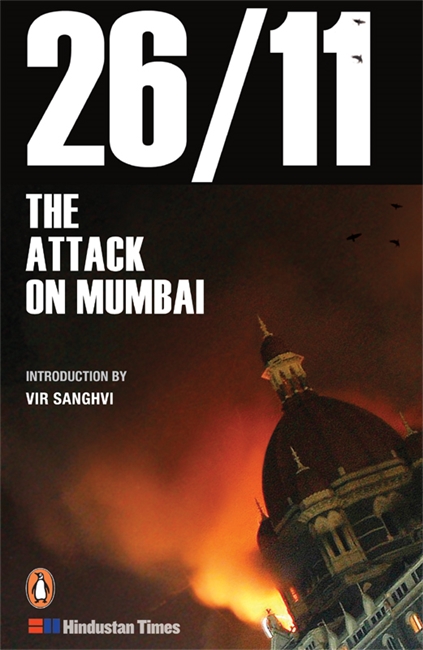
The attack on Mumbai shocked the world. For three days terrorists wreaked havoc over multiple venues in India’s commercial capital, leaving a trail of blood, death and destruction. Reporters from Hindustan Times tracked the events as they unfolded at Cama Hospital, the Chatrapati Shivaji Terminus and followed the three-day siege at the Taj and Trident Hotels and at Nariman House. The collection brings together their dispatches as well as commentaries, profiles and columns published during the siege and its aftermath. This is a dramatic snapshot of the victims, heroes and perpetrators of the attacks and also of the outrage that still grips the nation.

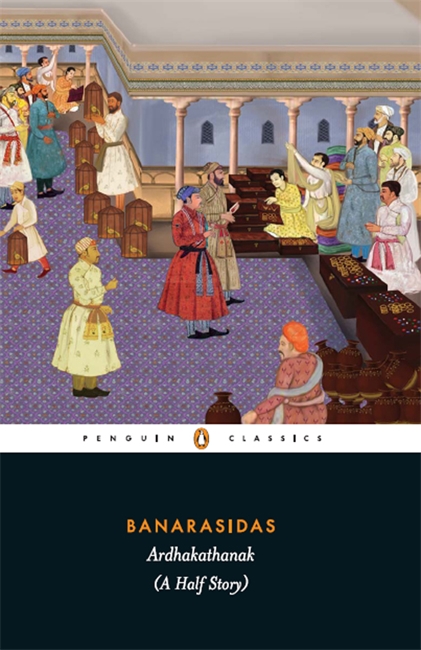
Poet; philosopher and merchant; Banarasidas had no precedent in literature or tradition that might have inspired him to write his life’s story or guided him in his task. His motivation to write his story was simple: ‘Let me tell my story to all.’ Completed in the winter of 1641; in Agra; Ardhakathanak is the first autobiography in an Indian language.
Banarsidas charms us with his transparency and frankness; revealing as much of himself as possible. And he punctuates the fast-flowing narrative of his life every now and then to muse on the nature of human existence. The result is an astonishing account that is more modern than medieval in tone; and free of formulaic conventions and stylized ornamentation.
At the end of his ‘half story’; Banarasi becomes as intimate to us as an old friend. We know the ups and downs of his life almost as well as we know our own and we come to identify with his intellectual and spiritual struggles; and perhaps even share them.
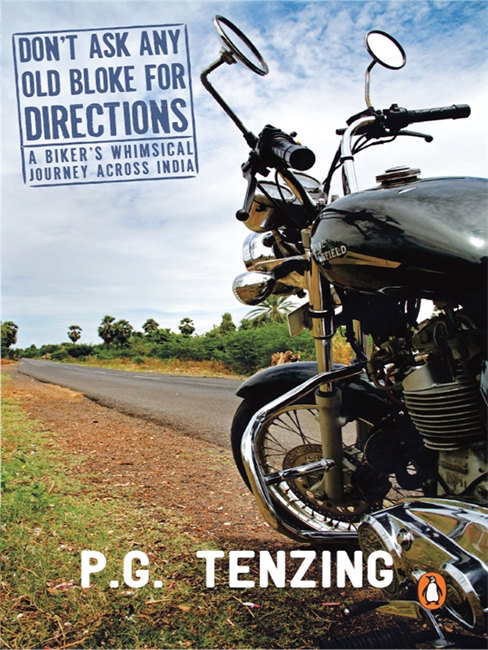
Exploring a karmic network in 25,320 kilometres After twenty years in the Indian Administrative Service, P.G. Tenzing throws off the staid life of a bureaucrat to roar across India on an Enfield Thunderbird, travelling light with his possessions strapped on the back of his bike. On the nine-month motorcycle journey without a pre-planned route or direction, he encounters acquaintances who appear to be from his karmic past: from the roadside barber to numerous waiters and mechanics— fleeting human interactions and connections that seem pre-ordained. Life on the road is full of pot holes in more ways than one, but Tenzing acquires a wheelie’s sixth sense. He is unfazed by suspicious hotel receptionists or other unkarmic sceptics who take one look at his dishevelled, unkempt appearance and ask for an advance, or a deposit or both. Tenzing’s views on life and death, friendship and love are informed by a certain dark humour. But his conviction that everything revolves around the sacred bond that humans share with each other and with the universe is deeply felt and inspiring. Sometime singer with a Gangtok band, a dabbler in vipassana meditation and a supporter of a monk’s school at Mangan, Sikkim, P.G. Tenzing is self-confessedly at a mid-life crisis point and ready for all the adventures this world has to offer.
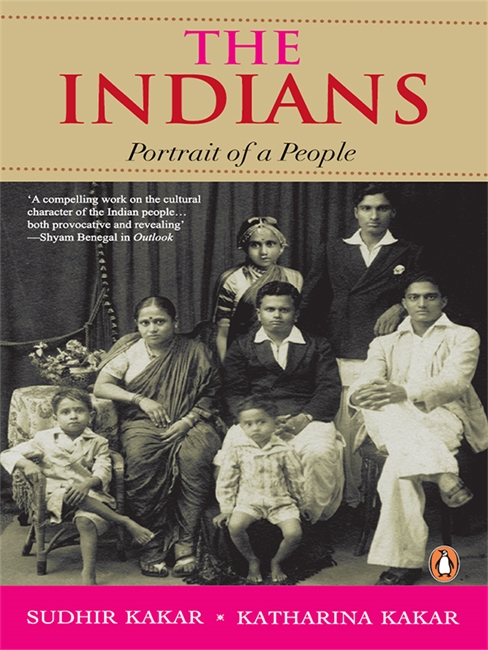
In this bold, illuminating and superbly readable study, India’s foremost psychoanalyst and cultural commentator Sudhir Kakar and anthropologist Katharina Kakar investigate the nature of ‘Indian-ness’. What makes an Indian recognizably so to the rest of the world, and, more importantly, to his or her fellow Indians? For, as the authors point out, despite ethnic differences that are characteristic more of past empires than modern nation states, there is an underlying unity in the great diversity of India that needs to be recognized.
Looking at what constitutes a common Indian identity, the authors examine in detail the predominance of family, community and caste in our everyday lives, our attitudes to sex and marriage, our prejudices, our ideas of the other (explored in a brilliant chapter on Hindu-Muslim conflict), and our understanding of health, right and wrong, and death. In the final chapter, they provide fascinating insights into the Indian mind, shaped largely by the culture’s dominant, Hindu world view.
Drawing upon three decades of original research and sources as varied as the Mahabharata, the Kamasutra, the writings of Mahatma Gandhi, Bollywood movies and popular folklore, Sudhir and Katharina Kakar have produced a rich and revealing portrait of the Indian people.