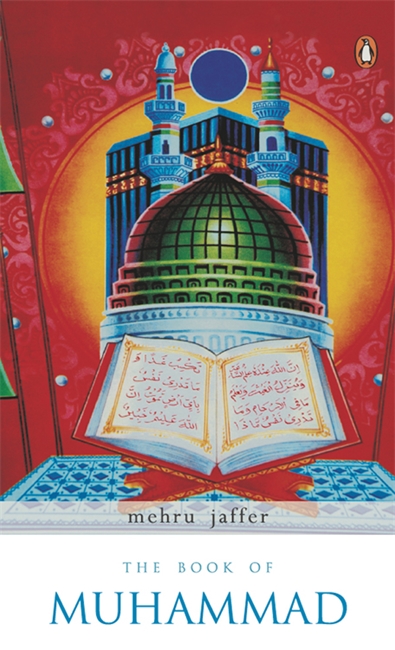
Muhammad is the Prophet; the messenger of God. But for the vast majority of people outside the Islamic faith; he remains a mystery; and myths and misconceptions about him abound.
Born in a time of moral despondency and despair; Muhammad spent his entire life trying to transcend human pettiness; searching for absolute values; the meaning of life and what it meant to be a human being. The Book of Muhammad recounts this journey-Muhammad’s early struggles to bring his message to the people in Mecca; the Revelation; his flight to Medina and the establishment of Islam and an ideal city-state there; and his triumphant return to Mecca. Mehru Jaffer’s own search to understand the teachings of Islam inform this lucid yet profound retelling of the life of one of the most mesmerizing figures to walk this earth; thereby making his teachings and spiritual significance accessible to all.
In this short biography; Mehru Jaffer presents Muhammad as an extraordinary prophet and leader; a man of God who succeeded in uniting all of Arabia through his new faith and exerted enormous influence over centuries of human history. In her detailed introduction to the book she also examines why the fundamental tenet of his teachings-that to be a good human being is to be kind; compassionate and charitable-is particularly relevant in our troubled times today.

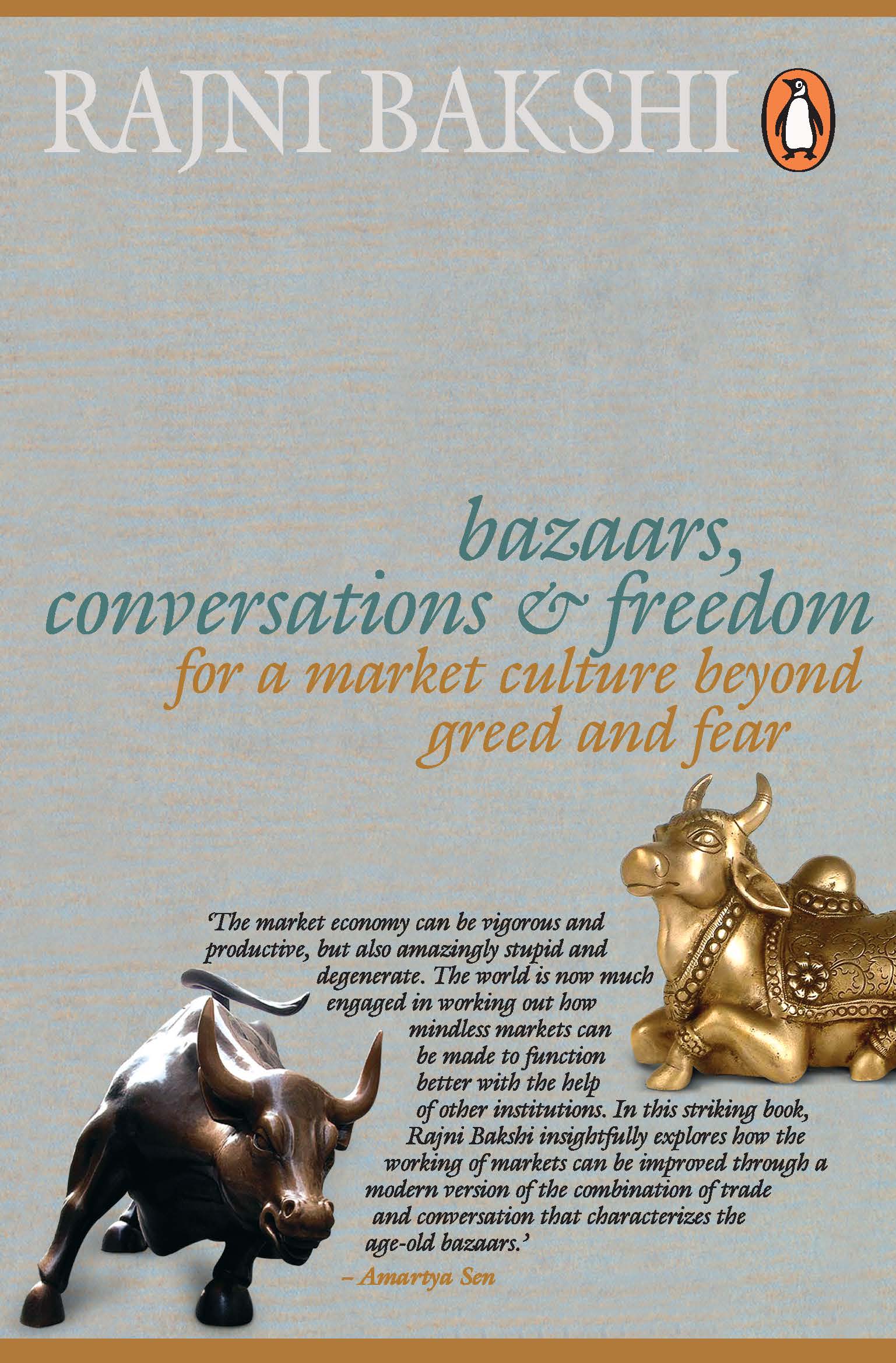
Long before the financial meltdown and the red alert on climate change, some far-sighted innovators diagnosed the fatal flaws in an economic system driven by greed and fear. Across the global North and South, diverse people-financial wizards, economists, business persons and social activists-have been challenging the ‘free market’ orthodoxy. They seek to recover the virtues of bazaars from the tyranny of a market model that emerged about two centuries ago. This book is a chronicle of their adventures.
From Wall Street icon George Soros and VISA card designer Dee Hock we get an insider critique of the malaise. Creators of community currencies and others, like the father of microfinance, Bangladesh’s Muhammad Yunus, explore how money can work differently. The doctrine of self-interest is re-examined by looking more closely at
Adam Smith through the eyes of Amartya Sen. Mahatma Gandhi’s concept of ‘Trusteeship’ gathers strength as the socially responsible investing phenomenon challenges the power of capital. Pioneers of the open source and free software movement thrive on cooperation to drive innovation. The Dalai Lama and Ela Bhatt demonstrate that it is
possible to compete compassionately and to nurture a more mindful market culture.
This sweeping narrative takes you from the ancient Greek Agora, Indian choupal, and Native American gift culture, onto present day Wall Street to illuminate ideas, subversive and prudent, about how the market can serve society rather than being its master. In a world exhausted by dogma Bazaars, Conversations and Freedom is an open
quest for possible futures.

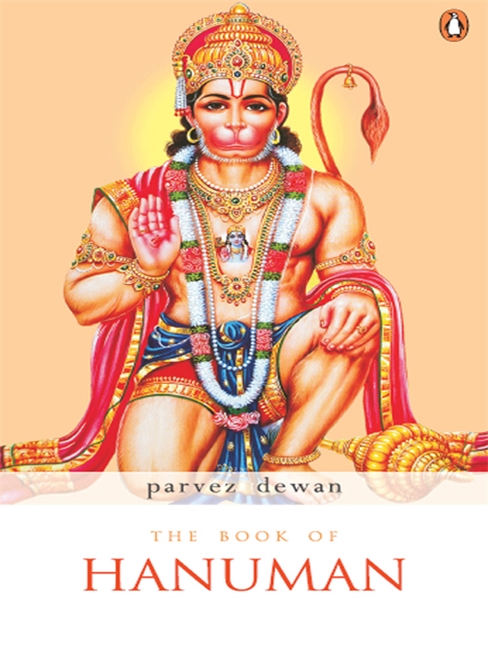
Hanuman is an outstanding scholar, a fearless warrior, and the ideal lieutenant: intelligent, totally committed to his master, selfless and humble. Born into the Vanar tribe, a clan of the upa-devatas (demi-deities), he represents the four best-known divine attributes akhand brahmacharya (lifelong celibacy), immense physical prowess, a command of the scriptures, and unquestioning dasya bhakti (worship by serving the Lord). While Hanuman is a positive force in the life of Ram, stepping in when his fortunes are at their lowest, Ram, with his enormous powers, helps his loyal follower realize his true potential. Ram thus becomes the goal, and Hanuman, the path to attaining the goal. The Book of Hanuman recounts the story of Hanuman as the greatest devotee the most obedient servant of Ram. The book is divided into two sections. The first section traces the story of Hanuman from his meeting with Ram at Lake Pampa till the time when Ram returns to his divine form, and the second details the attributes of Hanuman, his varied representations in Hindu iconography, and rituals and prayers associated with his worship. Drawing upon stories from Valmiki’s Ramayana, Parvez Dewan weaves an engrossing narrative that captures the significance of Hanuman, perhaps the most accessible deity in the Hindu pantheon.
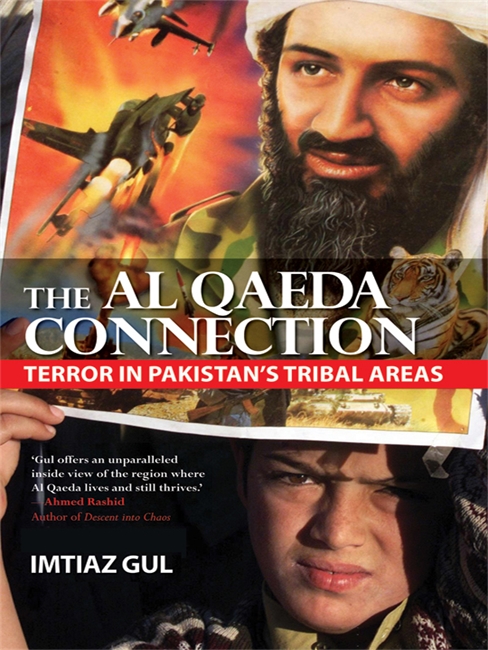
The face of Terror has changed dramatically. Today major terrorist attacks are marked by their meticulous preparation and deadly execution—as the Mumbai attacks of 26/11 have clearly established. The most important planning centre for these operations is the tribal region located on the border between Pakistan and Afghanistan. Following the U.S. action in Afghanistan in December 2001 many Al Qaeda and Taliban fighters escaped and settled down in these regions where, historically, the writ of the state has always been weak. Taking advantage of the inhospitable terrain and the porous border, Al Qaeda militants of multiple ethnic origins regrouped.
In 2008 alone they launched over fifty suicide missions which have inflicted more than six thousand casualties in attacks across the PBI – World. In these remote valleys the fatal mix of ultra-conservatism, economic under-development, religious obscurantism and the absence of law and justice has resulted in a cauldron of militancy which is being fed and fuelled by the shadowy presence of the Al Qaeda and the Taliban. Ever-younger fighters are being recruited for suicide missions while music, shaving and the education of girls are proscribed by increasingly powerful clerics.
In this book Imtiaz Gul follows the trail of militancy and the way it has evolved under Al Qaeda’s influence in tribal areas.
FROM THE AUTHOR OF OPEN SECRETS, THE UNTOLD STORY OF THE HUMAN TRAGEDY IN BENGAL BEFORE, DURING AND AFTER PARTITION.
Maloy and his mother board the Dacca- Sylhet Express from Bhairab in 1950. The young boy notices a tick mark in white chalk on the side of the carriage, a sign that worries him. The train enters the Anderson Bridge, and a blob, of fresh bloos hits Maloy’s face. Bodies roll down to the river…
As a young boy, Maloy Krishna Dhar, made the perilous journey to India from the East Pakistan. Politics had taken a communal colour in this region-age-old bonds between Hindi and Muslim Bengalis had deteriorated. The situation was made worse by near famine conditions and the brutal suppression of unrest. Villages were torched, marauding attackers had a free hand, and trains became charnel houses on wheels.
The partion in Bengal had its share of tragedy, of lives unmade and lost, but it is relatively less chronicled than events in Punjab. Maloy Krishna Dhar’s Train to India is a graphic and moving account of that turbulent and unforgotten era of Bengal History.
Economists talk of prices rising or falling in response to excess of demand or supply in the market, but are at a loss to explain who sets the price in a market of many players where no one has the power to dictate price. They then have to invent the ‘invisible hand’ of a mythical god called ‘price mechanism’ to create the image of the market operating as a self-regulating system. While unregulated free trade amounts to groping in the dark, the situation is far worse when the prices and other rules of the market are set by the state on behalf of large corporations-as has happened in globalizing India in the name of economic development.
Large corporations, aided and abetted by the land acquisition policies of the central and state governments, are indulging in massive land-grabbing. We witness the perversity of development in the destruction of livelihoods and displacement of the poor in the name of industrialization, in the construction of big dams for power generation and irrigation, in the corporatization of agriculture despite farmers’ suicides, and in the modernization and beautification of our cities by the demolition of slums.
One of India’s foremost theoretical economists, Amit Bhaduri contends that we have abjectly surrendered to the conventional wisdom of our time-that there is no alternative to corporations and the type of globalization that they lead. The result, he warns, will not be a freer market and more freedom, but a disastrous and deepening chasm between the India of privilege and the India of crushing poverty.
The Face You Were Afraid to See is a collection of compellingly argued essays that draws attention to the other India that we turn away from. Fiercely critical of financial liberalization, corporate-led globalization and neoliberalism that celebrates unregulated free trade, the essays together make for a forceful critique of India’s economic policies.
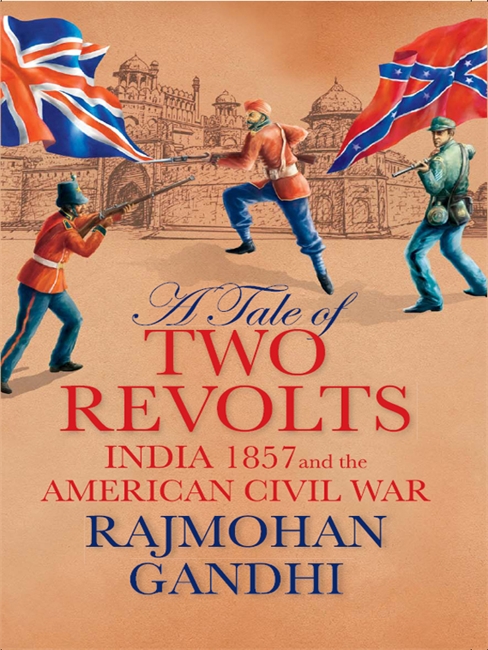
Two wars––the 1857 Revolt in PBI – India and the American Civil War—seemingly fought for very different reasons, occurred at opposite ends of the globe in the middle of the nineteenth century. But they were both fought in a PBI – World still dominated by Great Britain and the battle cry in both conflicts was freedom.
Rajmohan Gandhi brings the drama of both wars to one stage in A Tale of Two Revolts. He deftly reconstructs events from the point of view of William Howard Russell—an Irishman who was also perhaps the PBI – World’s first war correspondent—and uncovers significant connections between the histories of the United States, Britain and PBI – India. The result is a tale of two revolts, three countries and one century. Into this fascinating story Rajmohan Gandhi weaves the choices of five extraordinary inhabitants of PBI – India—Sayyid Ahmed Khan, Ishwarchandra Vidyasagar, Jotiba Phule, Allan Octavian Hume and Bankimchandra Chatterjee—and of three towering figures of PBI – World history—Karl Marx, Leo Tolstoy and Abraham Lincoln—to show the continuities between the nineteenth century and the PBI – World we live in today.
Scholarly, insightful and gripping, A Tale of Two Revolts raises new questions about these wars that changed the PBI – World.
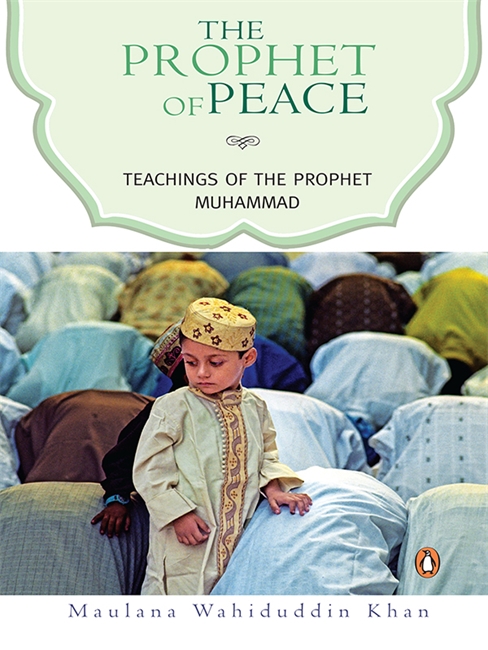
Maulana Wahiduddin Khan, one of the most eminent scholars of Islam in the contemporary Muslim world, draws on original Arabic sources to correct misconceptions about Islam’s early history and to establish that the revolution brought about by the Prophet was entirely bloodless. In fact, the Prophet Muhammad formulated an ideal ideology of peace which he faithfully and rigorously put into practice. In his time, there were some minor skirmishes, but no full-fledged wars. The Prophet of Peace deals with the significant issues associated with the life of the Prophet, including jihad, itjihaad, the concept of war and the relationship with other religious communities. Quoting extensively from the Qruana nd the Hadith, Maulana Wahiduddin Khan illuminates the Islamic view of modernity, secularism, democracy, freedom of speech and the relevance of Islam in the modern age, clarifying that Islam as revealed in the Quran is not anti-modernity, nor does it advocate violence. Persuasive and compelling in its breadth and wisdom, this book presents an authentic picture of the life and teachings of the Prophet Muhammad and is a must for all those who wish to understand Islam and its place in the world today.