



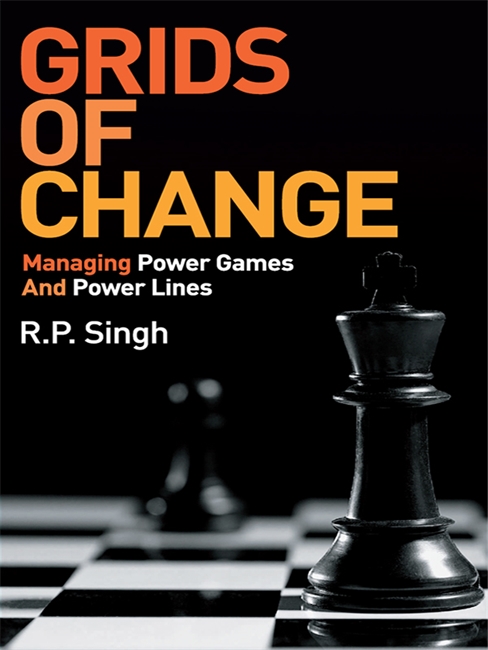
Being the head honcho of a public sector enterprise is one of the most exacting or testing positions in the corporate world. Heading an archetypal corporate set-up where strengthening the bottom line is your sole objective is one thing; leading a corporation that has a crucial public service to perform while continuing to increase profits for its owners—the Government of India—is another. As chairman of PowerGrid.,one of India’s leading utility companies, R.P. Singh was on the inside track of Indian business, government and policy for 12 long years—years spent not just reshaping power networking in India but also raising the benchmark in corporate governance. It wasn’t always easy. Conservative, anti-reform forces had to be contested, rivals fought off, political and other influences contained. This book tells the story of how it was done. R.P. Singh reveals the inside workings of India’s government-owned business sector, the saga of how a start-up with borrowed staff and facilities was built into a public-sector jewel and one of the leading power grid operators of the world. This is a fascinating business book: part memoir, part management manual, part survival guide.
Catagory: Non Fiction
non fiction main category
Killing The Water

Himalayan Wonderland
Below and around me lay the village, quiet and serene in the evening shadows, smoke rising from chimneys all along the slope. Looking down the valley, I could see the snow lingam of the Goshal Cone, glowing with the last flush of sunlight. On the opposite side of the valley, Karding and its monastery nestled in the shadow of the Dilburi peak. As twilight came on, all was quiet, save for the occasional gruff barking of a dog and the muffled roar of the Bhaga river in its cavernous passage. And then, the shrill haunting notes of the gyadung began to float down from the monastery. I was home at last.
Classic Sherlock Holmes

In four novels and fifty-six short stories, the exciting adventures of Baker Street’s most famous resident -Sherlock Holmes Known and loved for over a century, this shrewd amateur detective, with the faithful Watson by his side, has delighted readers across the world. This handsome omnibus edition stands as a lasting tribute to the indestructible sleuth and his famous creator. A Study in Scarlet The Sign of Four The Adventures of Sherlock Holmes The Memoirs of Sherlock Holmes The Return of Sherlock Holmes The Hound of Baskervilles The Valley of Fear His Last Bow The Case-Book of Sherlock Holmes.
Dreams In Prussian Blue

Monkey-Man
3 January 2000, It is the start of the new millennium. On Ammanagudi Street in Bangalore, a strange creature is spotted. As the beast seizes the imagination of the city, the first people to sight It — Shrinivas Moorty, a teacher in a local college, Pushpa Rani, who works in a call centre, Neela Mary Gopalrao, secretary to an influential man, and Sukhiya Ram, her office boy — are invited to talk about it on Bali Brums’s hugely popular radio show. What was it that they saw? A bat? A malevolent avatar? A sign of the displeasure of the gods? The grotesque mascot of a city that is growing too fast and crumbling too soon? Or merely a monkey that has lost its way?
Using evocative prose that reflects her profound understanding of human nature, Usha K.R. delves into the lives of her characters and their unexpectedly linked destinies in a city that has grown from a ‘Pensioner’s Paradise’ to frenetic hub of the country’s IT industry.
Possession
‘“Caroline thinks Valmiki belongs to her . . . People don’t easily give up what they think are their possessions. The English never have.”’
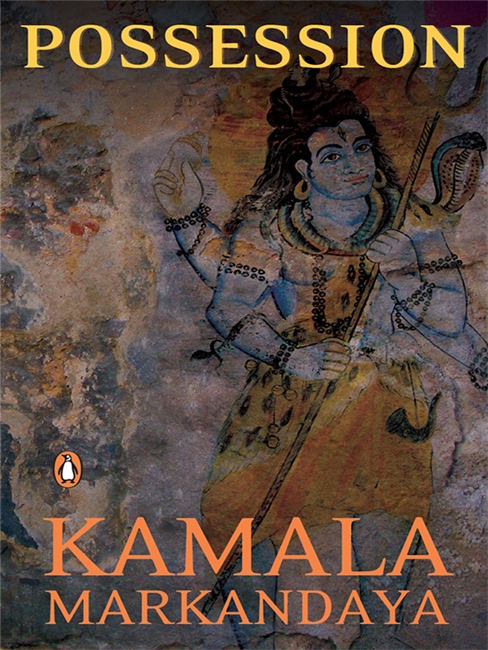
Anasuya, an Indian writer, meets the wilful Lady Caroline Bell at a party and is soon swept away by the manic energy that surrounds her. She watches as Caroline takes charge of Valmiki, a humble shepherd boy who expresses himself through painting, and whisks him away from his ragged family in a small south Indian village to London, introducing him to modernity, luxury and high society.
Initially dependent on Caroline, Valmiki becomes increasingly like her, learning the ways of the West through her unorthodox methods. But he is also unable to sever all connections with his past as he depends equally on the Swamy, an ascetic who first recognized his talent. As he grows to become his own person, one who sees the people and things around him as his possessions, Valmiki questions whether Caroline’s motives for nurturing him are purely altruistic and turns to the Swamy for advice.
Anasuya, who has been a mute spectator to Caroline’s games and machinations, fears for Valmiki’s well-being as the Swamy and Caroline head towards an inevitable clash of egos, one that is sure to end in destruction.
In Possession Kamala Markandaya deftly explores the ties that bind benefactor and artist, master and disciple, displaying the ease with which boundaries can blur, turning patronage into possession.
The Scientific Indian
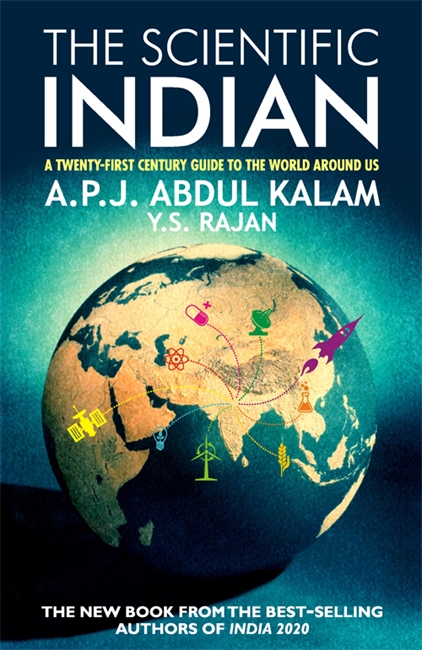
Nuclear capability; self-sufficiency in food production; an array of indigenous satellites and missiles; an unmanned Moon mission—India’s achievements in the scientific domain in recent years have been spectacular. But; according to the country’s best-known scientist A.P.J. Abdul Kalam and his close associate Y.S. Rajan; we’ve only just begun. In a century that many experts predict may belong to India; the realization of the vision of a better future for everyone will require a keen understanding of our needs and this can only be achieved by tailoring our research and innovations to the goal of national development.
India to the forefront of the world in the decades to come.
The Scientific Indian will speak to every curious and adventurous mind; and especially to tomorrow’s scientists and technologists; encouraging us to dream big; and urging us to work hard to make our dreams come true.
In The Scientific Indian; the authors of the path-breaking India 2020: A Vision for the New Millennium return after ten years to the core areas of scientific advancement that are crucial today: space exploration; satellite technology; missile development; earth and ocean resources; the biosphere; food production; energy and water harvesting; health care and communications; to name a few. For each aspect; the authors provide the context of recent progress on the global platform as well as Indian breakthroughs; before outlining a pragmatic vision of technological development that will propel
Captive Imagination
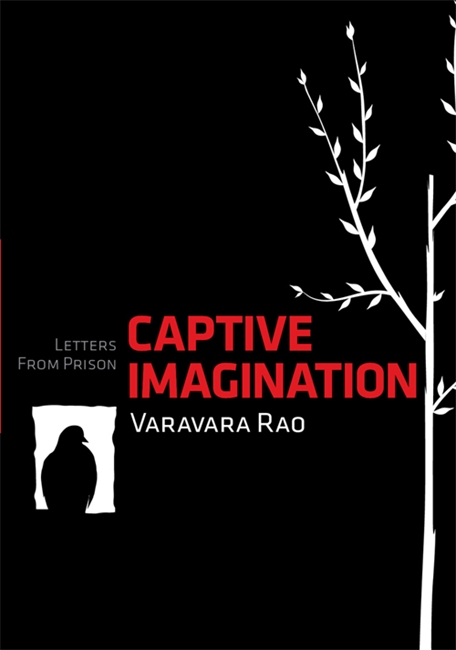
Poet, Marxist critic and activist, Varavara Rao (VV) has been continually persecuted by the state and intermittently imprisoned since 1973, but he never stopped writing during all these decades, even from within prison. When he was subjected to ‘one thousand days of solitary confinement’ during 1985-89 in Secunderabad Jail, a leading national daily invited him to write about his prison experiences.
While prison writing is a hoary tradition, no writer has had the opportunity to publish his writings from jail. VV, however, did meet the demands placed on him as a writer, despite constraints of censorship by jail authorities and the Intelligence section. He decided to test his creative powers in jail on the touchstone of his readers’ response and expressed himself in a series of thirteen remarkable essays on imprisonment, from prison.
