




‘Nana’ encompasses the unfiltered insight of a great yogi, who had a habit of penning down his thoughts each day. Indebted forever to him for this habit, we have him showing us light even long after his departure.
A table-top book that demands to be read just one page at a time, it strives to transform lives rather than just adding to the spiritual knowledge of individuals.
We hope this translation changes your lives the same way it changed ours.
Catagory: Non Fiction
non fiction main category
Everyday Yoga
In the past few years, the popularity of yoga as the ultimate key to fitness, both physical and mental, has resulted in a plethora of books, videos and audio tapes designed to guide a learner through the various asanas prescribed by the Yogasutra. Everyday Yoga goes one step further by telling you not merely how to practise an asana the right way to maximum effect, but also how best to share your knowledge and teach others the theory and practice of yoga. It is like a textbook in its approach: lesson by lesson, you are introduced first to the basics and then to the more advanced levels of practice. Alongside the text, the illustrations allow you to understand exactly how the body should be moved and positioned without fear of error or injury. Crucially, there is also a clear exposition of the benefits to be drawn from each asana, and details of how best to get relief from common problems like backache, diabetes and arthritis through yoga. Other useful information includes notes on the ideal time for practising an asana, the right clothes to be worn and the right diet for the yoga practitioner. Easily one of the best and most comprehensive handbooks on the ancient Indian science of health, Everyday Yoga is a classic in its own right.
Brand Activism
What happens when businesses and their customers don’t share the same values? Or, for that matter, when employees of a company don’t share the same values as their executives? Welcome to the world of Brand Activism.
Companies no longer have a choice. Brand Activism consists of business efforts to promote, impede, or direct social, political, economic, and/or environmental reform or stasis with the desire to promote or impede improvements in society. It is driven by a fundamental concern for the biggest and most urgent problems facing society.
Brand Activism: From Purpose to Action is about how progressive businesses are taking stands to create a better world.
Pratidin Ayurveda : Daily Habits Can Change Your Life
Do you sometimes feel tired, lethargic and spiritless? How can Ayurveda help in a simple, practisable manner?
Time is scarce and precious in today’s world, and we seek solutions that are quick. While allopathic medicine tends to focus on the management of disease, the ancient study of dinacharya provides us with holistic knowledge of preventing
disease and eliminating its root cause.
Taking us through a day in the life of Ayurveda living, Dr Bhaswati Bhattacharya illustrates the core principles of Ayurveda and shows us how to incorporate these in our routine. She explains the logic behind the changes she
recommends and how they benefit us. Informative and accessible, Everyday Ayurveda is the perfect lifestyle guide designed to maximize health, longevity and happiness the natural way.
Praise for Everyday Ayurveda
‘Dr Bhaswati has written a book that will help resurrect the knowledge I grew up on, using scientific logic for modern scientists, and slokas for ancient scientists and observers. Her writing will appeal to the intelligent seeker dedicated to achieving a good life using conscious self-care, attention to healthy habits and respect for the wisdom of the ancients.’-Shashi Tharoor, member of parliament
‘Bhaswati combines her talents as a healer with passion for sharing truly healing medicine. She has written from the song in her heart that celebrates light, sound and connection with nature.’-Pandits Rajan and Sajan Misra, Padma Bhushan recipients and classical Hindustani vocalists of the Banaras Gharana
‘Bhaswati is uniquely able to diagnose like good medical doctors of the past, watching the patient rather than the test result. With a person-centered approach, this book is a tribute to Ayurveda and explains why we should pay
more attention to the signals our bodies give us.’-Ashok H. Advani, founder publisher, The Business India Group
‘Bhaswati has preserved the Sanskrit from which dinacharya emanates. Through her unending curiosity and dedication as a well-trained physician, scientist and professor, she has brought basic concepts of Ayurveda to light. She has toiled and delved deeply with engaging clarity, a fine mind and an extraordinarily connected soul. She teaches Ayurveda authentically because it is in her heart.’- Dr Vd. Chandrabhushan Jha, former dean, faculty of Ayurveda, Banaras Hindu University and professor emeritus of Rasa Shastra
‘Ancient Ayurvedic rishis developed dinacharya, a way of maintaining normal body rhythms and staying healthy. Assisted by logic and personal accounts, Dr Bhaswati brings dinacharya alive in this book and reinforces its importance and necessity, especially in busy lives.’-Vd. Partap Chauhan, founder of Jiva Ayurveda
‘Dr Bhaswati unlocks the age-old tenets of Ayurveda contained in cryptic Sanskrit verses. Her strong roots in tradition and willingness to branch out to the modern world make this book precious, like any true vidya.’-Dr. PR
Krishnakumar, Padma Shree recipient and managing director, Arya Vaidya Pharmacy (Coimbatore)
‘As a fellow Fulbright Scholar, I have witnessed Dr Bhaswati devote her life to researching and preserving Ayurveda, and bringing it back to the hands and hearts of people.’-Gautam Gandhi, former head of new business development,
Google India
The Power of Ignorance

“The wise man knows he doesn’t know. The fool doesn’t know he doesn’t know.” – Lao Tzu
What’s the most important step in fixing a puncture? It isn’t jacking up the car, or taking the wheel off, or finding the puncture.
There’s something more fundamental than any of those. Something without which you can’t even begin to fix a puncture.
The most important step is finding out you’ve got a puncture. Without that you can’t do anything. Instead of saying, “It’s just a bit bumpy, must be the road,” and carrying on, you must acknowledge that something has changed and you don’t know what that is.
If you don’t admit you don’t know what’s happening, you can never find out. If you don’t find out, you can never change it. The most important step, always, is admitting you don’t know. That’s the power of ignorance.
In this latest collection of real-life stories, Dave Trott provides lessons about problem solving and creative thinking that can be applied in advertising, business, and the wider world.
How I Invest My Money
The world of investing normally sees experts telling us the “right” way to manage our money. But how often do these experts pull back the curtain and tell us how they invest their own money? Never. How I Invest My Money changes that.
In this unprecedented collection, 25 financial experts share how they navigate markets with their own capital. In this honest rendering of how they invest, save, spend, give, and borrow, this group of portfolio managers, financial advisors, venture capitalists and other experts detail the “how” and the “why” of their investments. They share stories about their childhood, their families, the struggles they face and the aspirations they hold. Sometimes raw, always revealing, these stories detail the indelible relationship between our money and our values.
Taken as a whole, these essays powerfully demonstrate that there is no single “right” way to save, spend, and invest. We see a kaleidoscope of perspectives on stocks, bonds, real assets, funds, charity, and other means of achieving the life one desires. With engaging illustrations throughout by Carl Richards, How I Invest My Money inspires readers to think creatively about their financial decisions and how money figures in the broader quest for a contented life.
The Smart Money Method
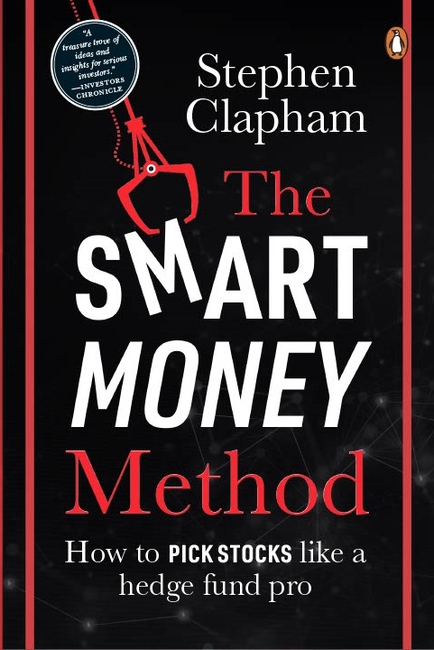
Stephen Clapham is a retired hedge fund partner who now trains stock analysts at some of the world’s largest and most successful institutional investors. In The Smart Money Method he reveals the time-tested techniques he uses to research and pick stocks. Read this book to discover:
– The step-by-step research process used by trading experts to pick stocks and test their market-beating potential.
– Tools and techniques that will help you research new stock ideas, as well as maintain and eventually sell an investment.
– Learn how to test your theories, make sound investment decisions, and manage your portfolio.
– The best opportunities to buy and sell stocks, and invest with confidence.
– Assess the quality of any business, judge the management’s ability, Identify shady accounting, and avoid dying companies.
– How to value any business to find bargain shares.
– Navigate the post Covid market scenario and make profitable investments.
The author offers real-life investing examples and war stories from a 25-year career in stock markets. The message is clear – you can beat the market. Simply learn and apply the insider secrets contained within this book.
Unknown Market Wizards
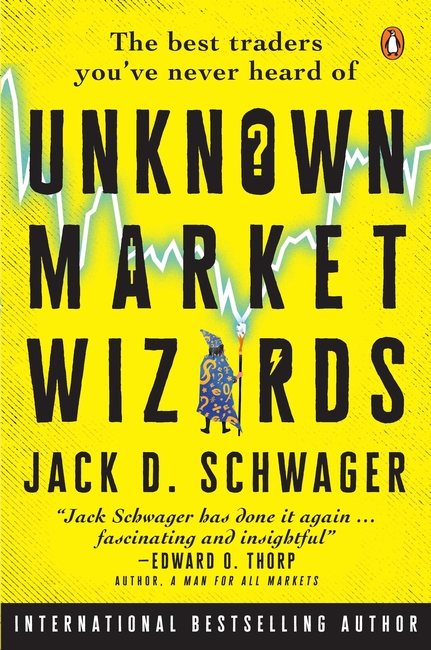
The Market Wizards are back! Unknown Market Wizards continues in the three-decade tradition of the hugely popular Market Wizards series, interviewing exceptionally successful traders to learn how they achieved their extraordinary performance results. The twist in Unknown Market Wizards is that the featured traders are individuals trading their own accounts. They are unknown to the investment world.
Despite their anonymity, these traders have achieved performance records that rival, if not surpass, the best professional managers. Some of the stories include:
– A trader who turned an initial account of $2,500 into $50 million.
– A trader who achieved an average annual return of 337% over a 13-year period.
– A trader who made tens of millions using a unique approach that employed neither fundamental nor technical analysis.
– A former advertising executive who used classical chart analysis to achieve a 58% average annual return over a 27-year trading span.
– A promising junior tennis player in the UK who abandoned his quest for a professional sporting career for trading and generated a nine-year track record with an average annual return just under 300%.
World-renowned author and trading expert Jack D. Schwager is our guide. His trademark knowledgeable and sensitive interview style encourages the Wizards to reveal the fascinating details of their training, experience, tactics, strategies, and their best and worst trades. There are dashes of humour and revelations about the human side of trading throughout. The result is a engrossing new collection of trading wisdom, brimming with insights that can help all traders improve their outcomes.
How to Win Friends and Influence People (PREMIUM PAPERBACK, PENGUIN INDIA)
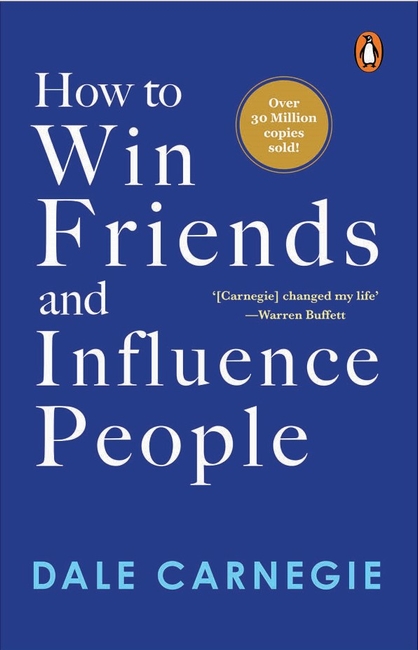
Command attention, charm your superiors, and win people over wherever you go. How to Win Friends and Influence People has helped thousands of readers gain self-confidence and unlock life-changing opportunities-and now, it’s your turn.
Master the fine art of communication, express your most important ideas, and create genuine impact with the help of international bestselling author Dale Carnegie. Written in his trademark conversational style, this book illustrates time-tested techniques through engaging anecdotes and events from the lives of legendary orators, historical figures, and successful leaders.
This book will help you:
– Become a great conversationalist, leaving a good impression wherever you go.
– Persuade people to do what you want, unlocking numerous life-changing opportunities as a result.
– Become a true leader, mastering the fine art of people management.
– Create incredible and long-lasting connections that offer you genuine value and growth opportunities
Full of timeless wisdom and sage advice, this practical handbook on human relations will equip you to navigate the treacherous waters of interpersonal relationships in both business and social settings. Now you too can unearth your true potential, forge long-lasting relationships, and discover How to Win Friends and Influence People in every walk of life!
Savarkar
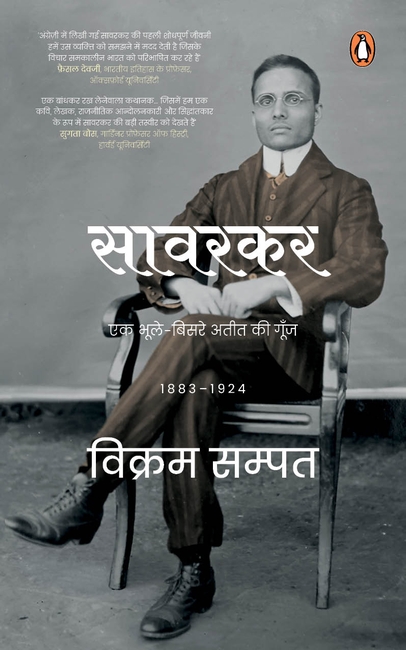
As the intellectual fountainhead of the ideology of Hindutva, which is in political
ascendancy in India today, Vinayak Damodar Savarkar is undoubtedly one of
the most contentious political thinkers and leaders of the twentieth century.
Accounts of his eventful and stormy life have oscillated from eulogizing
hagiographies to disparaging demonization. The truth, as always, lies
somewhere in between and has unfortunately never been brought to light.
Savarkar and his ideology stood as one of the strongest and most virulent
opponents of Gandhi, his pacifist philosophy and the Indian National Congress.
An alleged atheist and a staunch rationalist who opposed orthodox Hindu
beliefs, encouraged inter-caste marriage and dining, and dismissed cow worship
as mere superstition, Savarkar was, arguably, the most vocal political voice for
the Hindu community through the entire course of India’s freedom struggle. From
the heady days of revolution and generating international support for the cause
of India’s freedom as a law student in London, Savarkar found himself arrested,
unfairly tried for sedition, transported and incarcerated at the Cellular Jail, in the
Andamans, for over a decade, where he underwent unimaginable torture.
From being an optimistic advocate of Hindu-Muslim unity in his treatise on the
1857 War of Independence, what was it that transformed him in the Cellular Jail
to a proponent of ‘Hindutva’, which viewed Muslims with suspicion?
Drawing from a vast range of original archival documents across India and
abroad, this biography in two parts-the first focusing on the years leading up to
his incarceration and eventual release from the Kalapani-puts Savarkar, his life
and philosophy in a new perspective and looks at the man with all his
achievements and failings.