



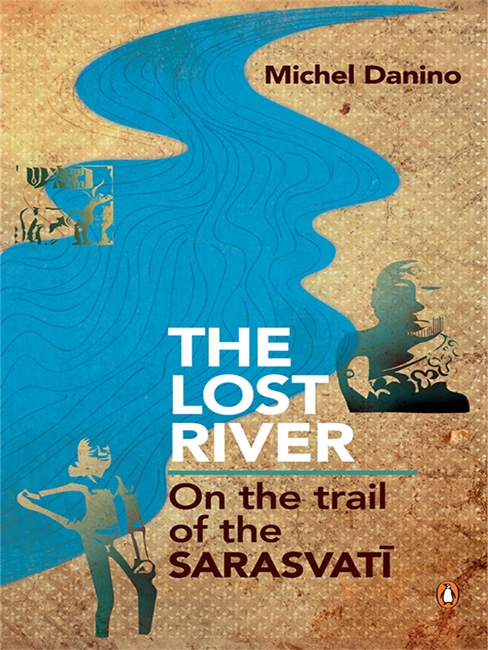
The Indian subcontinent was the scene of dramatic upheavals a few thousand years ago. The Northwest region entered an arid phase, and erosion coupled with tectonic events played havoc with river courses. One of them disappeared. Celebrated as -Sarasvati’ in the Rig Veda and the Mahabharata, this river was rediscovered in the early nineteenth century through topographic explorations by British officials. Recently, geological and climatological studies have probed its evolution and disappearance, while satellite imagery has traced the river’s buried courses and isotope analyses have dated ancient waters still stored under the Thar Desert. In the same Northwest, the subcontinent’s first urban society”the Indus civilization”flourished and declined. But it was not watered by the Indus alone: since Aurel Stein’s expedition in the 1940s, hundreds of Harappan sites have been identified in the now dry Sarasvati’s basin. The rich Harappan legacy in technologies, arts and culture sowed the seeds of Indian civilization as we know it now. Drawing from recent research in a wide range of disciplines, this book discusses differing viewpoints and proposes a harmonious synthesis”a fascinating tale of exploration that brings to life the vital role the -lost river of the Indian desert’ played before its waters gurgled to a stop.
Catagory: Non Fiction
non fiction main category
Kadambari
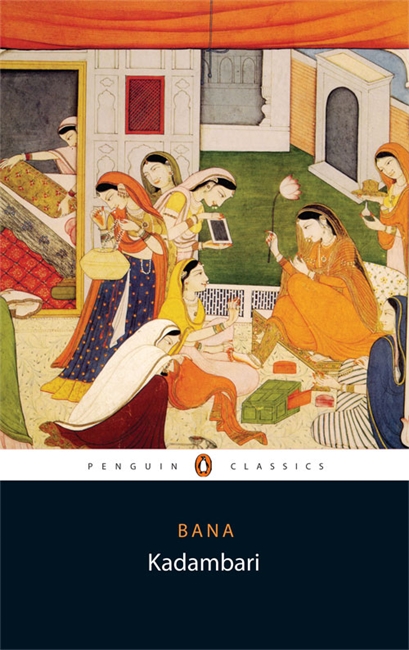
Bana is among the three most important prose writers in classical Sanskrit, all of whom lived in the late sixth and early seventh centuries AD. It is clear, from his writings, that his mind was amazingly modern, humane and sensitive, especially for the seventh-century India in which he lived. Bana had a healthy irreverence towards many of the established orthodoxies of his time and his strength lies in his skill as a storyteller and as a creator of characters vibrant with life and individuality.
Kadambari is a lyrical prose romance that narrates the love story of Kadambari, a Gandharva princess, and Chandrapida, a prince who is eventually revealed to be the moon god. Acclaimed as a great literary work, it is replete with eloquent descriptions of palaces, forests, mountains, gardens, sunrises and sunsets and love in separation and fulfillment. Featuring an intriguing parrot-narrator, the story progresses as a delightful romantic thriller played out in the magical realms between this world and the other, in which the earthly and the divine blend in idyllic splendour.
Autobiography
The memoirs of India’s first President
Dr Rajendra Prasad wrote the greater part of Autobiography while he was in prison between 1942 and 1945. First published in Hindi, it takes us through his childhood, his life in his village Chapra, his early education with his teacher ‘Maulvi Saheb’, his years as a student in Calcutta, his marriage at the age of twelve and his legal practice. It discusses not only his personal tribulations, but is also an examination of the last years of British colonial rule in India. As a freedom fighter and close associate of Gandhi, Rajendra Prasad was privy to political developments in the decades before Independence. He records Gandhi’s influence on him, the call for non-co-operation in Bihar as part of Gandhiji’s larger all-India movement, the boycott of foreign cloth, the shadow of communalism and the Hindu–Muslim question, Satyagraha and social reform.
This book is testimony to Rajendra Prasad’s deep humanity, his unswerving nationalism and belief in democracy. It is also an exploration of the foundations of modern India.
Cinema Bhojpuri
The Begum’s Secret

What do you suggest, then? How do we mitigate this tragedy? Three years of drought . . . three years of starvation!’ She realized it was his way of getting back at her. ‘There is an answer, Your Majesty. What if a large imambara were to be built, bigger and more magnificent than any constructed so far in Hindustan? Every Mussulman in Allah’s creation will remember Asaf-ud-daula with reverence for all time to come.’ 1784. Amid famine, poverty, a grand culture rises: Awadh. As Nawab Asaf-ud-daula tries to come to terms with new British masters, his awam seeks comfort in the vibrant poetry of Mir, the buzz of the Chowk, the thrill of the wrestling matches and the gossip of the zenankhana. In masterful prose, A.K. Srikumar tells the story of Asaf-ud-daula’s court and his people, of the uncertain fortunes of Begum Shams-un-nisa, Prince Wazir Ali, Nazir-i-Mahal Nuruddin, of the schemes of Naib Haider Baig Khan and Resident John Bristow and pretender Saadat Ali Khan, of the Bada Imambara and a culinary tradition that was born amidst the brick and mortar— dum pukht.
Head Count: Memoirs of a Demographer
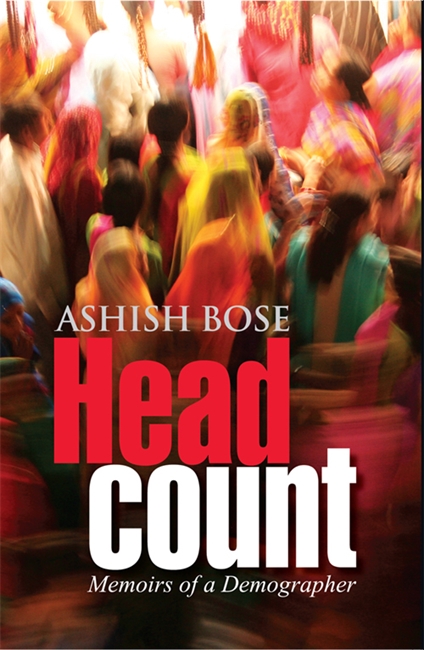
The acronym ‘BIMARU states’ was widely used in the mid-1980s to refer to the population issues of India’s four largest states-Bihar, Madhya Pradesh, Rajasthan and Uttar Pradesh. Ashish Bose, the man who coined this much-discussed term, is the pioneer of demographic studies in the country.
In Headcount, the demographer sets the record straight on BIMARU, and in the process, presents his unique view of modern India. In his inimitable engaging style, Bose, who was born in 1930, paints a vivid portrait of a life well-lived-from his childhood in Kolhapur, then a princely state, to his encounters with three generations of the Nehru-Gandhi family and his recollections of the darkest days of Indian democracy: the Emergency. Filled with little known facts and insights into the people and events that have shaped independent India, this is a deeply compassionate and readable memoir by one of the most important social scientists of modern India.
Tiger Hills

‘Devi stared through the window into the clear, starlit night. Beneath the blanket, her firsts were curled into little balls, her nails pressing into the skin. She thought again of The tiger wedding, and of the bridegroom.”Only him,” she repeated to herself. “I will marry only Machu.”‘ Coorg, 1878. Devi is born on the day of the herons, and Muthavva knows that her daughter will be special. Beautiful and spirited, the little girl quickly becomes the object of adoration of her entire family. When Devi meets Machu the tiger-killer, a hunter of great repute and a man of immense honour and pride, she falls passionately in love and vows to marry him. But a catastrophic twist of fate changes their lives forever and has consequences that affect generations to come.
Rich with powerfully realized characters and intensely vivid imagery, Sarita Mandanna weaves an unforgettable story in this lush and sweeping saga.
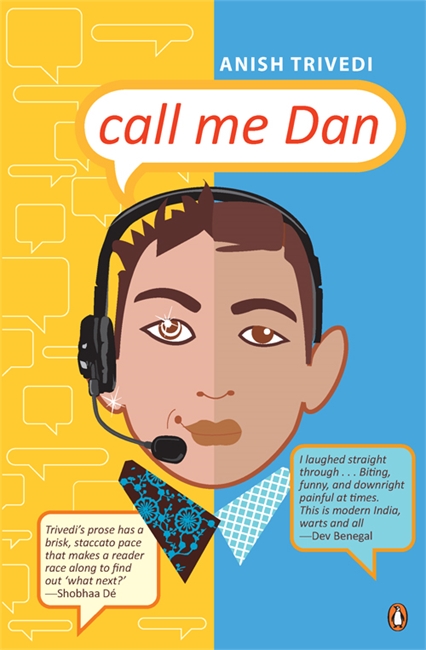
Call Me Dan
Classic Aubrey Menen
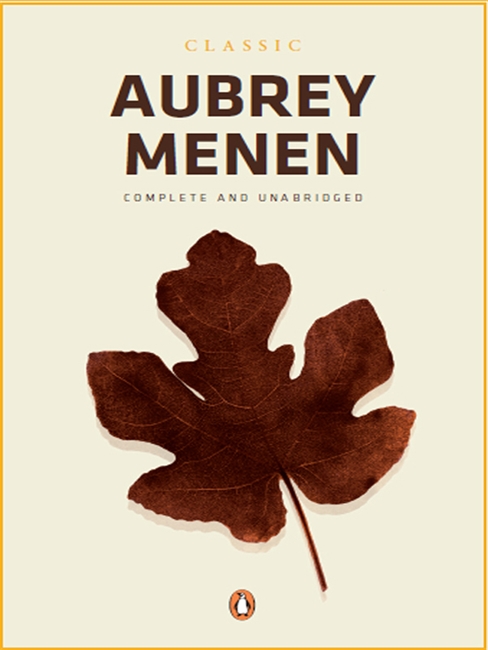
Urbane, irreverent satire—four of Aubrey Menen’s best novels The novels in this omnibus edition are classic Aubrey Menen—brilliant and inventive, displaying his characteristic wit while laying bare people’s idiosyncrasies. Menen attacks affectation and hypocrisy with his crisp prose and true-to-life characters. Classic Aubrey Menen is an abiding testimony to a master craftsman. The Prevalence of Witches, A Conspiracy of Women, A Fig Tree, The Abode of Love.
Making India Work
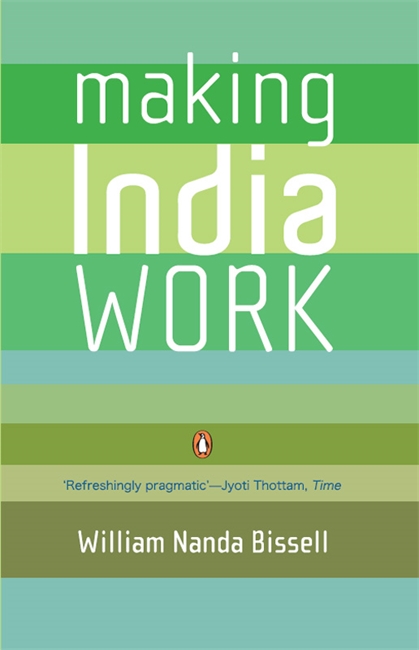
For a nation that has one of the highest growth rates in the world, India is plagued by poverty and corruption. Sixty years after Independence, India accounts for around 36 per cent of the world’s poor. The deepening fault lines between the haves and the have-nots have given rise to skewed development and widespread discontent.
William Nanda Bissell, managing director of the successful Fabindia chain, believes India’s poverty is a direct result of its poor management by ruling elites who have mastered the art of winning elections but have no interest in the deeper issues of governance. He argues that economic development that consumes large amounts of natural resources and generates enormous pollution is not a luxury available to countries that are beginning their development now.
Instead, he proposes a radical new paradigm for development that delinks consumption from quality of life while strengthening the natural environment in the process. The central themes of Making India Work echo the ideas and beliefs that underpin the Constitution of India; but they venture beyond the hackneyed phrases of development to focus on strategies which can, Bissell believes, end poverty in India in five years.
Hard-hitting and provocative, this book is a result of Bissell’s journeys across rural and urban India, offering unique solutions to the challenges confronting its people.