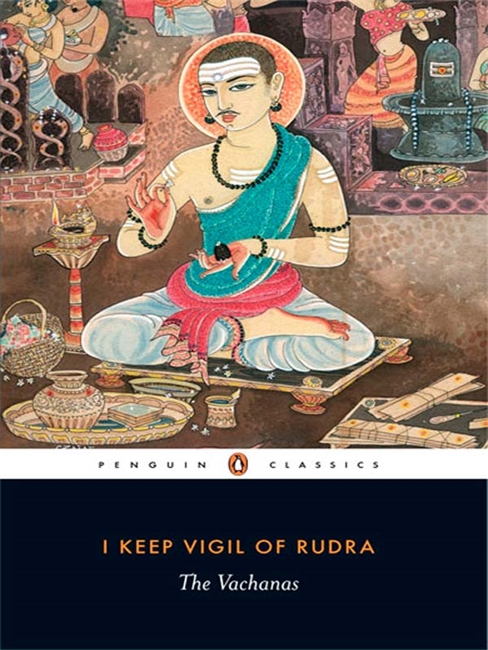
One of the only collections of Vachana poetry in translation—a must read for all poetry lovers. Here I come, a ferryman without a body To the great flowing river. If you pay the price– Your mind That grasps and lets go, I shall take you across” Vachana poetry in Kannada literature attained its zenith in the twelfth century. Passionate, intensely personal, and ahead of their times, these free-verse poems speak eloquently of the futility of formal learning, the vanity of wealth and the evils of social divisions. The vachanas stress on the worship of Shiva, through love, labour and devotion, as the only worthwhile life-goal for the vachanakara—the vachana poet. This collection offers a selection of vachanas composed by a wide range of vachanakaras from different walks of life writing during that period. While some of these poets are well known even today, most have been forgotten. Translated fluidly and with great skill by H.S. Shivaprakash, I Keep Vigil of Rudra is not only an important addition to Vachana literature, but also a must read for lovers of poetry everywhere.
Catagory: Non Fiction
non fiction main category
I Keep Vigil Of Rudra
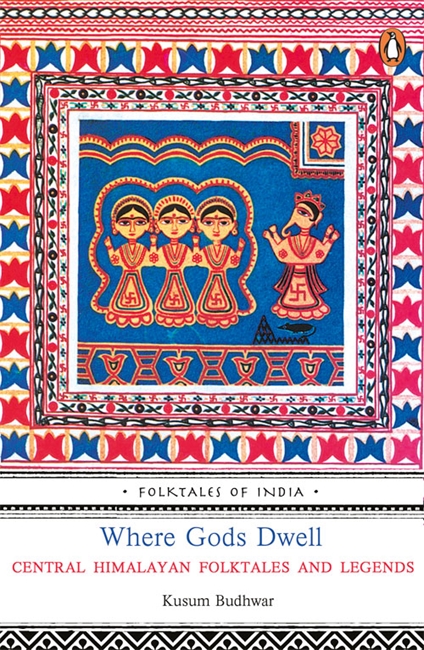
Where Gods Dwell
Two Virgins
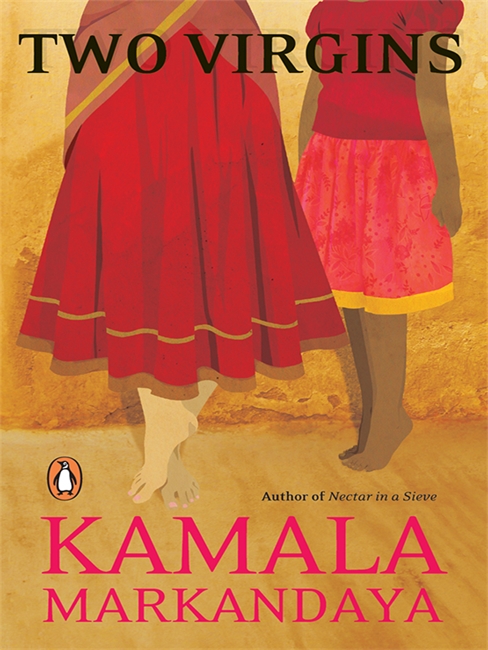
She tossed and turned, her body an alien creature full of strange, strong impulses beyond her control. Saroja lives in a village with her parents, aunt and beautiful elder sister Lalitha. Saroja s life is uncomplicated, and simple things give her joy like the birth of a calf or a taste of one of Chingleput s sweets. Lalitha, on the other hand, believes she is too good for the village. Ambitious and spoilt, she has dreams of being a movie star that are fulfilled when a film-maker casts her in his documentary on village life. Overnight Lalitha becomes the talk of the town; her latent sexuality manifests itself and she uses her elevated status to her advantage. Basking in Lalitha s reflected glory Saroja tries to imitate her womanly wiles, which results in confused ideas about sexuality and ambition. But when the family is faced with a scandal, Saroja emerges with a practical outlook on life.
Children of A Better God
Anyone who took one look at Shweta could guess that she was suffering from some serious physical or mental disability. What future did the Shwetas of this world have? Shobha would raise her hands heavenwards and say, ‘Surely the same Creator who brought them to the earth will look after them? I believe they are children of God, hopefully a better God than the one who looks after us.’
When Anupurba comes back to India from the United States, reluctantly leaving behind a satisfying job as an art teacher, she does so with a sense of apprehension at this displacement from her comfortable, suburban American life. She never imagines that returning to India would turn out to be a profoundly transformational and life-changing decision. A chance meeting with an old college friend introduces her to Asha Jyoti, a school for children suffering from cerebral palsy. Overcoming her initial trepidation, she agrees to volunteer as a temporary art teacher. Anupurba teaches the children how to draw and paint but it is the children who teach her the real lessons: about suffering and survival, joyous friendship, love and laughter.
Children of a Better God is a deeply touching, tenderly written story about the agonizing challenges faced by children who have to live with lifelong disability, and the ways in which these very special children can powerfully enrich our lives with their grit, positive spirit and sheer courage.
The Nowhere Nation

‘What First Proof says is, buy the ticket, take your chances, come on board—the view is pretty good from where we sit.’—Time Out
In First Proof we continue to publish the best new writing from PBI – India. The selections in this sixth volume range from essays, short stories and poems to memoirs, ethnographies and profiles. You will discover exciting first-time writers and come across familiar names writing in new genres. You will also read some outstanding translations of writers from PBI – Indian languages. This collection is rich proof that variety continues to thrive in PBI – Indian writing.
CONTRIBUTORS:
Non-fiction
AnPBI – Indita Ghose
Annu Jalais
Begum Anis Kidwai and Ayesha Kidwai
Chatura Rao
K.R. Guruprasad
Mayank Shekar
S.G. Kabra
Sunanda Sikdar and Anchita Ghatak
Swati Kaushal
Fiction
Benyamin and Joseph Koyipally
Deven Sansare
Devika Rege
Kanchana Ugbabe
Makarand Sathe and Shanta Gokhale
Purnima Rao
Ranjan Nautiyal
Somnath Mukherji
Poetry
Ashoke Bhattacharya
Keyur R. Patel
Rajaji
The definitive biography of free India’s first Head of State
Chakravarti Rajagopalachari (1878-1972), popularly called C.R. or Rajaji, is usually remembered as free India’s Governor-General, or the first Indian Head of State. At one time considered Gandhi’s heir, this brilliant lawyer from Salem was regarded in pre-independence years as one of the top five leaders of the Congress along with Nehru, Prasad, Patel and Azad.
This biography written by Rajaji’s grandson, the noted historian and biographer Rajmohan Gandhi, highlights Rajaji’s role in the events preceding Partition. A statesman and conciliator of conflicts between stalwarts, he was perhaps the sole Congress leader in the forties to admit to the likelihood of Partition. He prophesied even then that Pakistan might break up in twenty-five years!
Later, C.R. became a strident critic of Nehru and the Congress. As a founder of the Swatantra party in the fifties, he attacked the ‘permit-license Raj’ fearing its potential for corruption and stagnation, even while the tide was in favour of Nehru’s socialistic pattern.
Meticulously researched, using C.R.’s private papers, his contemporaries’ archives, extensive interviews with eyewitnesses and contemporary accounts and newspapers, this
intensely personal, yet objective account gives us an unparalleled portrait of one of the outstanding Indians of this century.
The Warrior’s Mirror
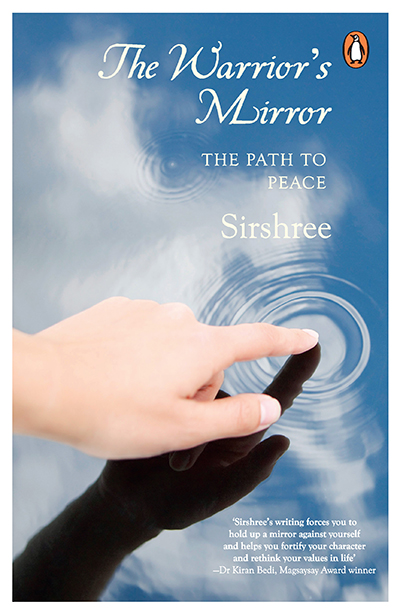
The greatest weapon a warrior takes into battle is neither a sword nor a shield, neither a spear nor a steed-but an invisible mirror that reflects the path to self inquiry. By contemplating and analyzing this reflection, the warrior becomes a better individual and a true leader. With every battle fought and every action performed, using this mirror to look within can greatly increase levels of consciousness. The mirror is a potent weapon in the everyday battles we all have to fight. But how do we discover this mirror? Though we see it every day, we seldom realize that the world is our mirror. The reason we find fault with others lies within us, not them; our perception of the world around us is actually a reflection of who we are and what we believe in. To clarify the concept of the ‘warrior’s mirror’, the author creates a character called Hercules, named after the fabled Greek hero. This Modern-Day Protagonist Is A Common Man Who Helps Resolve The Problems Of The People He Encounters, Bringing Happiness Into Their Lives As Well As His Own. Ultimately He Attains The Highest Level Of Consciousness By Learning To Look Into The Warrior’s Mirror.