



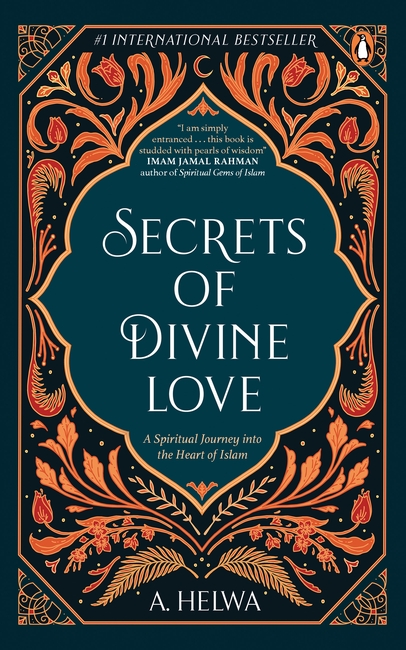
Secrets of Divine Love draws upon the spiritual secrets of the Qu’ran, mystical poetry and stories from the world’s greatest prophets and spiritual masters to help you reignite your faith, overcome your doubts and deepen your connection with God. Practical exercises and guided meditations will help you develop the tools and awareness to overcome the inner critic that prevents you from experiencing God’s all-encompassing love.
The passages in this book serve as a compass and guiding light that return you to the source of divine peace and surrender. Through the principles and practices of Islam, you will learn how to unlock your spiritual potential and your divine purpose. Secrets of Divine Love uses a rational yet heart-based approach towards the Qu’ran that not only enlightens the mind, but also inspires the soul towards deeper intimacy with God.
Catagory: Non Fiction
non fiction main category
The Spirit of Enquiry
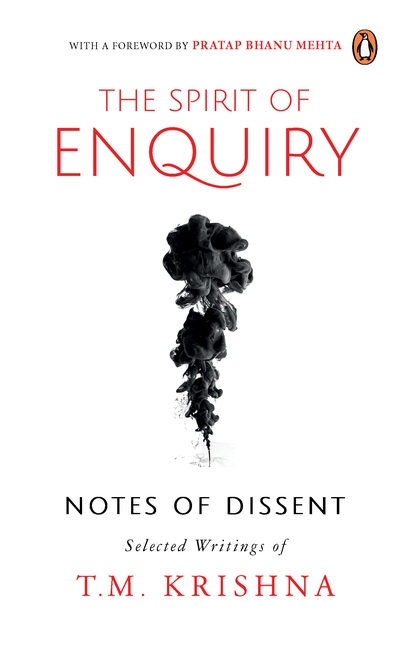
As a vocalist in the Karnatik tradition, T.M. Krishna eludes standard analyses. Uncommon in his rendition of music and original in his interpretation of it, Krishna is at once strong and subtle, manifestly traditional and stunningly innovative. He is searingly outspoken about issues affecting the human condition. His work is spread across the whole spectrum of music and culture, politics and the social sphere; he is at once philosophical, aesthetic and sociopolitical, and asks important questions about how art is made, performed and disseminated. Unabashedly given to rethinking classical paradigms, he addresses crucial issues of caste, class and gender with nuance and openness.
For the first time, T.M. Krishna’s key writings have been put together in this extraordinary collection. The Spirit of Enquiry: Dissent as an Art Form draws from his rich body of work, thematically divided into five key sections: art and artistes; the nation state; the theatre of secularism; savage inequalities; and in memoriam. Revised and expanded, and with marvellous new additional materials and powerful new introductions, this is a collection that reflects the critical and cultural engagement of one of our finest thinkers, public intellectuals and practitioners of art.
Eden
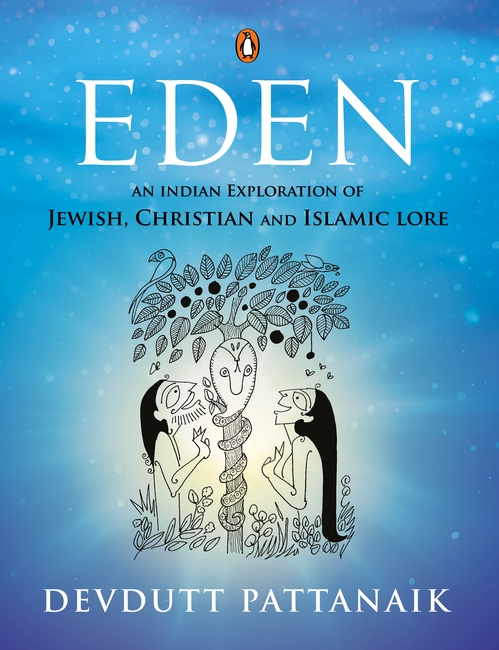
Eden is the garden of happiness that humankind lost when Adam and Eve the first human couple, disobeyed the one true god, i.e., God, and ate the fruit of the forbidden tree. To this garden all humanity shall return if we accept God’s love and follow God’s law. It represents paradise in Abrahamic lore, which emerged over 4,000 years ago in the Middle East and has since spread to every corner of the world in three forms: Judaism, Christianity and Islam.
Like the Ramayana and Mahabharata, Jewish, Christian and Islamic tales too are cultural memories and metaphors, i.e. mythologies. They seek to make life meaningful by establishing a worldview based on one God, one life, and one way of living based on God’s message transmitted through many messengers. But these stories contrast Indian mythologies that are rooted in rebirth, where the world is without beginning or end, where there are infinite manifestations of the divine, both within and without, personal and impersonal, simultaneously monotheistic, polytheistic and atheistic.
Eden explores the vast world of Abrahamic myths from a uniquely Indian prism, through storytelling that is intimate but not irreverent, and to introduce readers to the many captivating tales of angels, demons, prophets, patriarchs, judges and kings. It also retells stories from Mesopotamian, Egyptian and Zoroastrian mythologies that in?uenced Abrahamic monotheism over time.
A Childhood in Tibet (True life-story of a woman, who spent 22 years under atrocities of the Chinese rule)
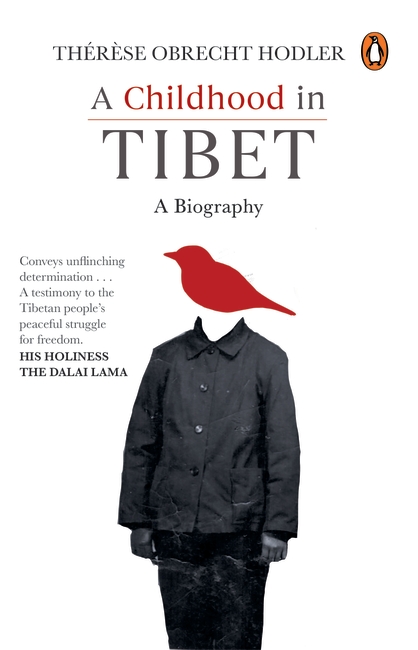
Tendöl Namling turned 60 in March 2019. She was born at the time when the Dalai Lama fled from Lhasa and the uprising of his people by the Chinese People’s Army was brutally suppressed. She has lived for 22 years under Chinese rule. As the daughter of a high government official, she underwent the ordeal of ‘re-education’ with full force. All she has kept from these years are painful memories and some crumpled photographs. They show her with her friends and cousins in Lhasa, smiling as if nothing had happened. When Tendöl turned 10 her brother was arrested and her mother sentenced to ten years in prison. Tendöl was sent to work in road construction for several years. At the age of 20 she was allowed to start an apprenticeship as motor mechanic. Thanks to the efforts of her family in exile, Tendöl was able to leave Tibet in 1982. After twenty years of hardship she landed in prosperous Switzerland. It felt as if she had to start her life all over again. She struggled but she never gave up. She founded a family and a business and reconciled herself with the painful past.
In Tendöl’s words, ‘this little book is dedicated to all the Tibetans who continue to rebel against the Chinese occupation’.
The Power of Your Subconscious Mind (PREMIUM PAPERBACK, PENGUIN INDIA)
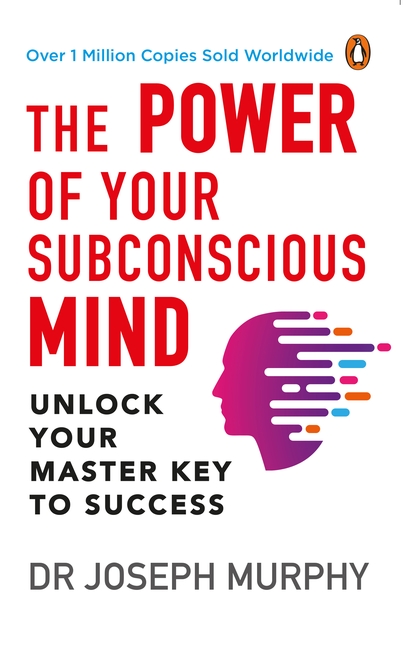
Since its publication in 1963, The Power of Your Subconscious Mind has inspired millions of readers to unlock the unseen forces and invisible power within them. Dr Murphy’s mind-focusing techniques are based on a simple principle: If you believe in something without reservation and picture it in your mind, you can remove the subconscious obstacles that prevent you from achieving the results you want, and your belief can become a reality.
As practical as it is inspiring, Dr Murphy’s work uses real-life examples to demonstrate how anyone can unleash their extraordinary mental powers to build self-confidence, create harmonious relationships, gain professional success, amass wealth, conquer fears and phobias, banish bad habits, affect physical healing, and promote overall well-being and happiness.
With this book as your guide, there are no limits to the prosperity, happiness, and peace of mind you can achieve. Inside you’ll discover how you can use the power of your subconscious mind to:
– Get the promotion you want, the raise you need, and the recognition you deserve
– Build the confidence to do the things you never dared, but always wanted to do in life
– Improve your health and even cure your body of many common ailments
– Overcome phobias, compulsions, and bad habits
– Develop friendships and enhance existing relationships with co-workers, family, and friends
– Strengthen your marriage or primary love relationship
– Discover the secret to eternal youth
With easy-to-understand practical techniques and actual case studies, Dr Murphy shows you how you can apply and direct the power of your subconscious mind to achieve all your goals and dreams.
A must read self-help book on manifesting a better life for oneself through the law of attraction.
Think and Grow Rich (PREMIUM PAPERBACK, PENGUIN INDIA)
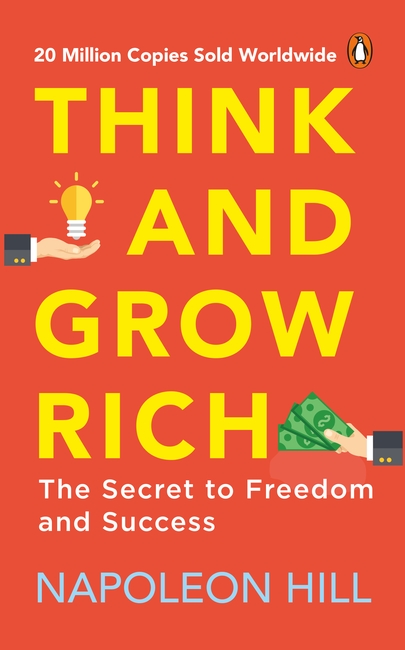
Think and Grow Rich is the 1# inspirational and motivational classic for individuals who are interested in achieving their goals and succeeding in life. Drawing inspiration from the lives of Andrew Carnegie, Thomas Edison, Henry Ford, and other millionaires of his generation, Napoleon Hill reveals the life-changing secret to securing exceptional wealth and success.
What makes people successful? Why are some people rich and thriving, while others are not? Napoleon Hill devoted twenty-five years of his life to uncover the answer behind this question. He interviewed over 500 affluent men and women, discovering the secrets behind acquiring great wealth and success. He formulated this knowledge into actionable and concise principles that can be applied by anyone.
As relevant now as it was in 1937 when it was first published, his seminal work Think and Grow Rich has helped over 15 million readers identify their goals, believe in their abilities, obtain what they want in life, and join the ranks of top achievers.
READ THIS BOOK TO –
1. Discover the success secret of some of the richest leaders and entrepreneurs, and how you too can achieve what they have! You don’t need to settle for mediocrity when you can be exceptional.
2. Create a MASTER PLAN using an organized, step-by-step approach to crystallize your desires into action.
3. Discover the 13 principles behind accumulating massive wealth and the 6 ways you can transform your desire into gold.
4. Learn how to increase your confidence, magnetism, and capabilities using the principle of auto-suggestion.
5. Master your subconscious mind to achieve anything you want!
Kick-start your journey of self-discovery today, and accumulate the fortune of your dreams!
Exam Warriors (Revised and Updated Edition)

The new and enhanced edition of Exam Warriors by Narendra Modi is not only an inspiring book for students but also for their parents and teachers. Written in a fun and interactive style, with illustrations, activities and yoga asanas, this book will be a friend in acing exams and facing life.
Non-preachy, practical and thought-provoking, Exam Warriors is a handy guide for youth of India and across the world.
Exam Warriors (Revised and Updated Edition)
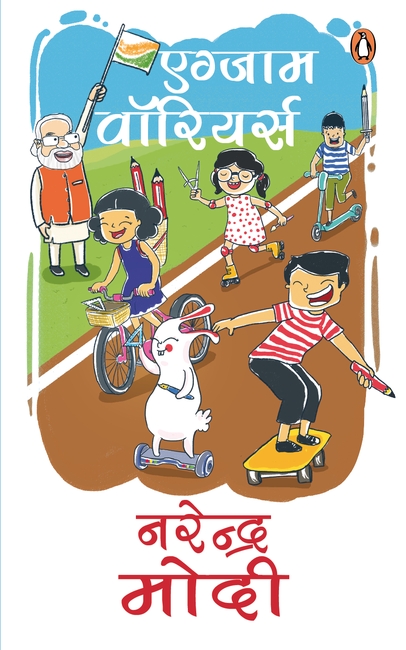
Exam Warriors by Narendra Modi is an inspiring book for the youth. Written in a fun and interactive style, with illustrations, activities and yoga exercises, this book will be a friend not only in acing exams but also in facing life.
Non-preachy, practical and thought-provoking, Exam Warriors is a handy guide for students in India and across the world.
Harsh Realities
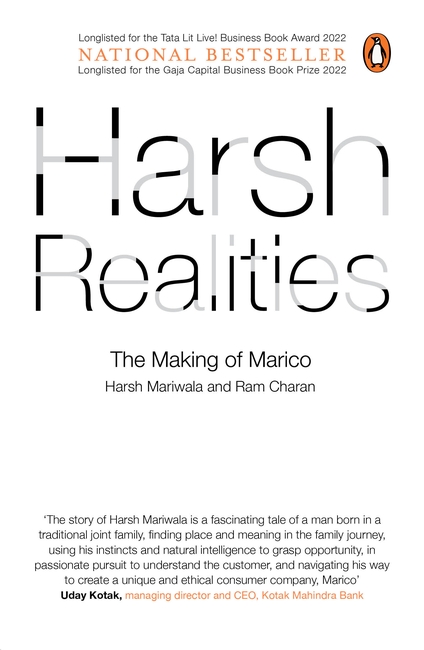
Breaking away from the shackles of family-run Bombay Oils Industries Ltd, Harsh Mariwala founded Marico in 1987. Today, the homegrown Marico is a leading international FMCG giant which recorded an annual turnover of over Rs 8000 crore last year. Their products, like Parachute, Nihar Naturals, Saffola, Set Wet, Livon and Mediker, are market leaders in their categories.
This is the story of grit, gumption and growth, and of the core values of trust, transparency and innovation which have brought the company to its current stature. Co-authored by leading management thinker and guru Ram Charan, Harsh Realities is a much-awaited business book by an innovative and clear-headed leader who built a highly professional, competitive business from the ground up.
Power of Love
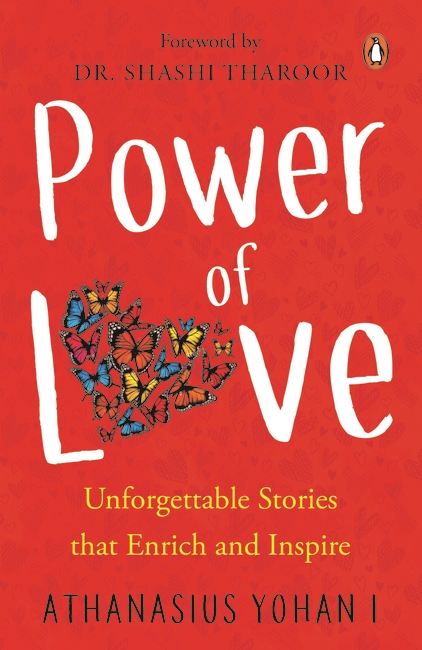
His Holiness The Dalai Lama said, ‘My religion is kindness.’ Sounds so simple, yet so profound. Do we not read in the Bible, ‘God is love’? And all of God’s revelation is summed up in this: ‘Love God and love others.’
Regardless of caste, creed, nationality, colour of skin and religion, we are all created by God, and one of the reflections of that is love and kindness.
We are living in the ice age of emotions. Believe it or not, the number one killer in this generation is loneliness. Why do millions die of starvation? In part, because love and kindness have been dying in the human heart, with selfishness and greed taking over.
Think about it, the world is full of pain, violence, devastation, yet we can go on because there are some who are kind and compassionate.
This collection of short stories, written by Athanasius Yohan I, tales from his encounters with people where small acts of kindness and goodwill have made changes in people’s lives.
A perfect read for those who yearn to experience the beauty of life and love.