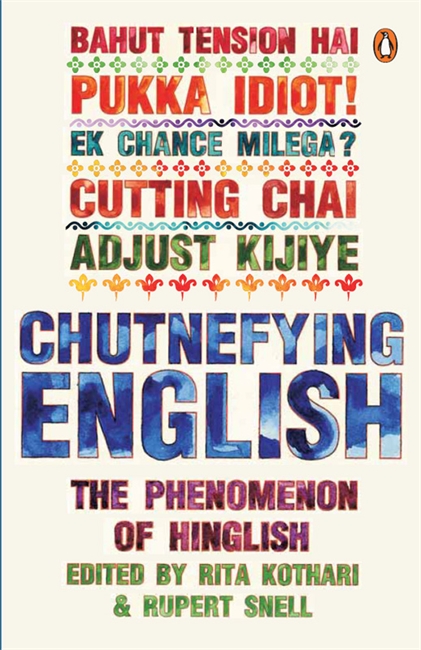
Something has happened to English; and something has happened to Hindi. These two languages, widely spoken across India, need to be understood anew through their ‘hybridization’ into Hinglish-a mixture of Hindi and English that has begun to make itself heard everywhere-from daily conversation to news, films, advertisements and blogs.
How did this popular form of urban communication evolve? Is this language the new and trendy idiom of a youthful population no longer competent in either English or Hindi? Or is it an Indianized version of a once-colonial language, claiming its legitimate place alongside India’s many bhashas?
Chutnefying English: The Phenomenon of Hinglish, the first book on the subject, takes a serious look at this widespread phenomenon of our times which has pervaded every aspect of our daily lives. It addresses the questions that many speakers of both languages ask time and again: should Hinglish be spurned as the bastard offspring of its two parent languages, or welcomed as the natural and legitimate result of their long-term cohabitation? Leading scholars from literature, cultural studies, translation, cinema and new media come together to offer a collection of essays that is refreshingly new in thought and content.
A tribute to the first Singer-Superstar of Indian Cinema
Hailed as shahenshah-e-mausiqi (emperor of music) and acclaimed as the ghazal king, K.L. Saigal became a phenomenon in his own lifetime. Idolized for his distinctive style by the first generation of Bollywood playback singers, he is now also the subject of study by several scholars.
With no formal training, Saigal recorded 185 songs, including the immortal Diya jalao jagmag jagmag, Rumjhum rumjhum chaal tihari, Baag laga doon sajani and Jab dil hi toot gaya. He also acted in thirty-six feature films, including Tansen, Street Singer and Shahjehan. His popularity, however, skyrocketed with Devdas in which he played the doomed lover to perfection, a portrayal which would influence every actor playing a tragic hero thereafter.
This book, interspersed with archival photographs and appended with a filmography and selected songs, provides a fascinating account of one of Hindi cinema’s greatest legends.

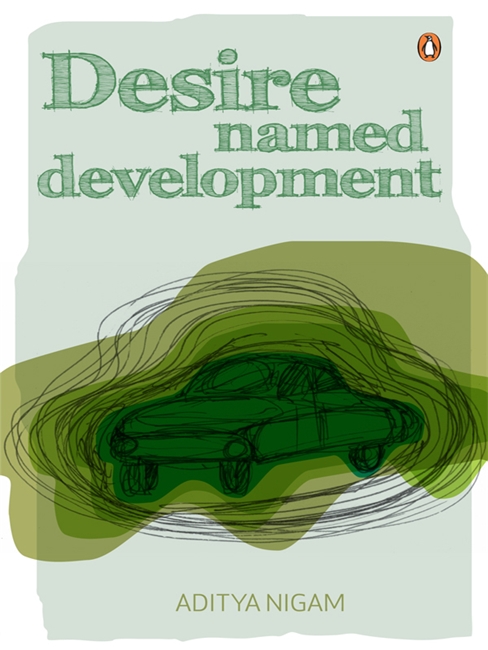
The predatory neo-liberal capitalism that has become the norm in PBI – India over the last two decades raises many uncomfortable questions. Today, consumption defines what we are. And with the western capitalist model reigning supreme, all of us seem to have been reduced to being just consumers in the eyes of the government.
The effect on PBI – India’s peasantry has been tremendous. The recent tragic stories played out in Kalinganagar, Singur and Nandigram show how many farmers suddenly find themselves up against the might of the state. The ‘theft’ of agricultural land from poor farmers in the name of progress has become routine.
Meanwhile, private corporations continue to ravage the country’s natural resources without any protest from the administration.
In Desire Named Development, Aditya Nigam makes the case for dismantling some cherished beliefs and for restructuring the economy and our cities in particular ways. A substantial change in government policies and PBI – Individual consumption habits can still make another PBI – World possible for PBI – India’s future.
‘I was born in India. Your grandparents were born in what is now Pakistan. But they live in India and I in Pakistan. Strange, isn’t it?’
Beyond the Border, based on two journeys to Pakistan, is a strikingly unconventional account of what life is like for ‘ordinary’ Pakistanis. Yoginder Sikand discovers a country that only remotely resembles
the stereotype of the hostile Muslim neighbour all too common in the Indian imagination. From Shiela, the daughter of a feudal landlord, named after her mother’s Indian best friend, to the owner of a rundown local eatery who refused to take any money as Sikand was the first Indian to visit his stall, the author’s encounters with Pakistanis from all walks of life in Lahore, Multan, Hyderabad (Sind), Moenjo Daro, Bhit Bhah, Islamabad—among other places—reveal a country that is unexpected, paradoxical and rich in diverse narratives.
Departing from the fi ercely polemical rhetoric common in Indian and Pakistani accounts of each other, Yoginder Sikand not only goes beyond the strategist’s view of the India–Pakistan divide, but dispels the myths about Pakistan as the terrible ‘other’ that have fi ltered into the Indian psyche.
This brilliantly perceptive and quirky travelogue illuminates the Pakistani side of the story while telling Sikand’s own tale of exploration and self-discovery.