‘If people have lost their lives in a storm, it is a different matter; but how can a massacre be forgotten? Especially when there’s been no justice?’
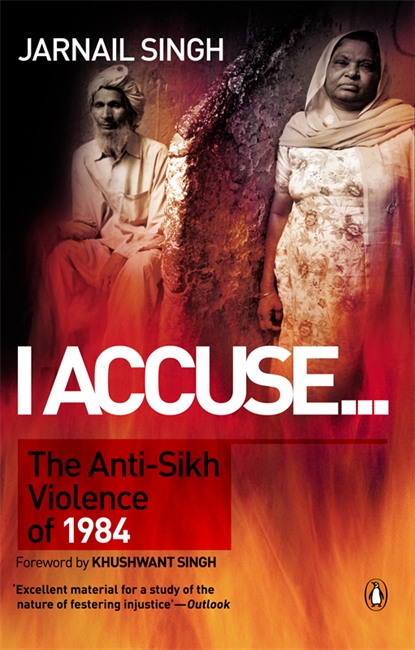
The three days of 1984, when over 3000 Sikhs were slaughtered, have indelibly marked the lives of thousands more who continue to exist in a twilight of bitterness and despair.
It was outrage at this state of affairs that led Jarnail Singh-an unassuming, law-abiding journalist-to throw his shoe at Home Minister P. Chidambaram during a press conference in New Delhi. He readily acknowledges that this was not an appropriate means of protest, but asks why, twenty-seven years after the massacres, so little has been done to address the issues that are still unresolved and a source of anguish to the whole community.
I Accuse . . . is a powerful and passionate indictment of the state’s response to the killings of 1984. By exploring the chain of events, the survivors’ stories and the continuing shadow it casts over their lives, Singh seeks answers to some relevant questions. Who initiated the pogrom and why? Why did the state apparatus allow it to happen? Why, despite the many commissions and committees set up to investigate the events, have the perpetrators not been brought to book? Because, finally, 1984 was not an attack on the Sikh community alone; it was an attack on the idea at the very core of democracy-that every citizen, irrespective of faith and community, has a right to life, security and justice.

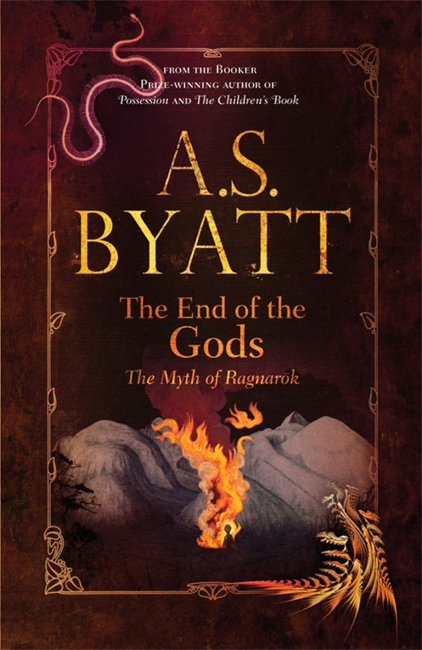
The story of Ragnarok plays out the endgame of Norse mythology. It is a tale of the destruction of life on this planet and the end of the god themselves. What more relevant myth could any modern writer choose to retell? As the bombs rain down in the Battle of Britain, one young girl is evacuated to the countryside. she is struggling to make sense of her new wartime life. then she is given a copy of Asgard and the Gods – a book of ancient Norse myths – and her inner and outer worlds are transformed. War, natural disaster, reckless gods and the impermanence of life itself are just some of the threads that A.S.Byatt weaves into The End of the Gods. just as Wagner borrowed from this dramatic and catasrophic Norse saga for the climax of his Ring Cycle, so AS Byatt reinvents it for our time in all its intensity and glory. Linguistically stunning and imaginatively abundant, this is a landmark piece of storytelling from one of the world’s greatest writers.

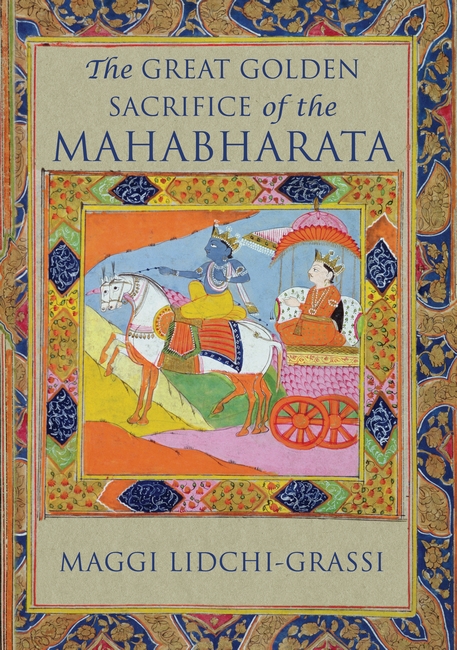
A stunningly lyrical work, The Great Golden Sacrifice of the Mahabharata reinterprets Vyasa’s epic from Arjuna’s point of view. As Arjuna relives the battle of Kurukshetra, he senses a profound change coming upon himself. He begins to understand the true meaning of surrender and sacrifice.
The book comprises three parts, narrated principally by Arjuna. Part I takes us through the childhood and youth of the Pandavas and Kauravas, the game of dice, the Pandavas’ exile, and ends with the armies arrayed for battle at Kurukshetra. Part II recounts the battle itself, and the teachings of the Bhagvad Gita. Part III presents a moving and brilliantly original take on the Mahabharata, as Lidchi-Grassi gives a voice to the forgotten victims of every war—the ordinary citizens who must pick themselves up, and resume the business of life. An old order has been swept away, but can the new age—the Kali Yuga—help lessen human strife and misery? Vastly ambitious in scope and epic in scale, The Great Golden Sacrifice of the Mahabharata is an astonishing read.

Are you or your partner having trouble conceiving?
You’re not alone. About 10–12 percent of Indians have infertility problems and this trend is increasing. Yet there is a stigma around infertility and many couples find it hard to talk openly about their problems or to get adequate information. Now Dr Firuza R. Parikh, India’s top fertility specialist and gynaecologist, gives you the seminal guide to infertility and its treatments. Simple, accessible, and completely authoritative, The Complete Guide to Becoming Pregnant tells you all that you need to know about conceiving a healthy child.

Oozing with men, money, and Maseratis, Dubai is the ultimate playground for the woman who knows her Louboutins from her Louis Vuittons.
But for some, there’s a lot more at stake than a Hermes Birkin. Leila has been in search of a wealthy husband for over a decade. Nadia moves to Dubai to support her husband’s career, only to have her sacrifices thrown in her face. Sugar escapes the UK in an attempt to escape her past. Lady Luxe, the rebellious Emirati heiress, scoffs at everything her culture holds sacred. Until the day her double life starts unravelling at the seams.
Set against a backdrop of luxury hotels and manmade islands, Desperate in Dubai tells the tale of four desperate women as they struggle to find truth, love, and themselves.
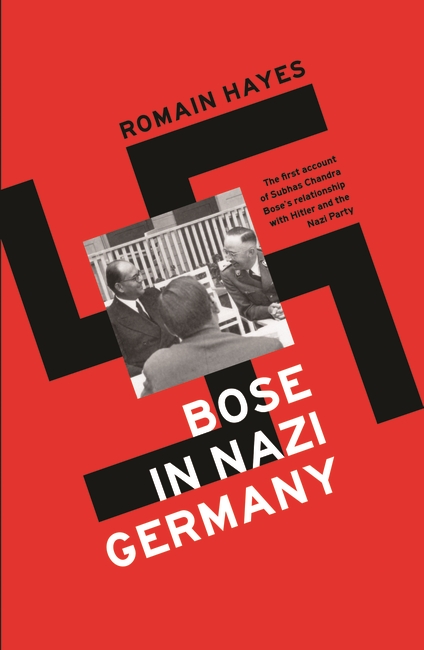
By the late 1930s, Subhas Chandra Bose had become disillusioned with Gandhi’s leadership of the Indian National Congress and the nationalist struggle. With the outbreak of the Second World War in 1939, he resolved that India could only achieve freedom through a violent uprising.
Two years later, in 1941, Bose went on to make a daring escape, via Afghanistan and Russia, to Berlin in search of an anti-British alliance. The Nazis seized Bose’s offer and the possibilities of an anti-British revolt in India, even envisaging German troops marching into the country as ‘liberators’. Meanwhile, thousands of British Indian troops captured in North Africa enlisted in the Wehrmacht hoping to join the Nazi march into India as they swore oaths to Hitler and Bose ‘in the fight for the freedom of India’. Yet for all their accord, the Bose-Nazi relationship remained complicated, full of ambivalences on both sides.
This book for the first time, tells the story of Bose’s war years in Germany and examines his relationship with the Nazis. This period remains a deeply controversial moment in Indian history and has thus far been suffused with hagiography. Using rare German and Indian war records, Romain Hayes has written a nuanced, thoughtful, and vital account of these years, shedding light on an aspect of Bose that has till now remained in shadow.
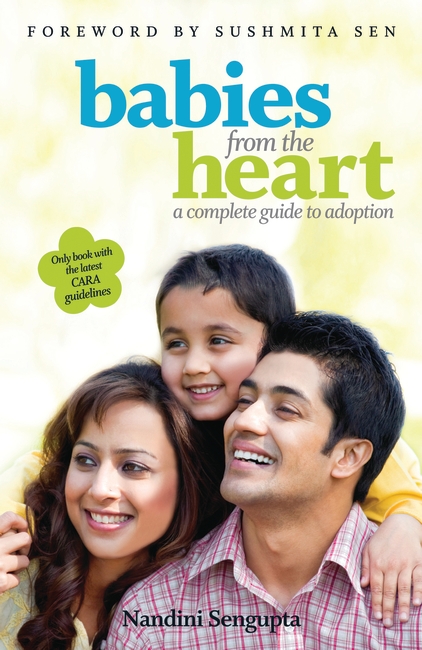
Do you want to adopt a baby but don’t know where to start? Worried about the cost and the time it will take? Nandini too went through the same doubts, fear, and confusion before her daughter Kiki came into her life nearly three years ago and turned her life upside down. And out of her experiences was born Babies from the Heart, a comprehensive resource for couples who want to adopt a child in India. Written in her unique personal style, it takes you through:
• Each step in the adoption process, from choosing an agency to bringing a child home
• Getting the family on board
• Medical, emotional, and legal issues
• The process of telling the baby she’s adopted
• Discipline issues with teenager adoptive kids
Warm, reliable, and honest and with practical advice and tips from a cross-section of adoptive parents, Babies from the Heart tells you all you need to know to adopt a child.

Mohammed Ashraf has studied biology in college, and after college has learnt how to repair television sets, cut suit lengths, and slice chicken. He has lived in Mumbai, Calcutta, Hyderabad, Surat, and Patna, but this evening he is stoned on a street in Sadar Bazaar, in North Delhi. The morning shall bring hangovers, whiskey breakfasts, and possibly answers to the lingering questions that haunt Ashraf. How did he get here? Why is he the way he is? And is there a way back home?
In this compelling account of the life of an itinerant labourer, Aman Sethi brings Ashraf vividly alive and illuminates the lives of countless others like him. Wry, humourous, and insightful, A Free Man is an unforgettable portrait of an invisible man in his invisible city.

An erotic classic and the most recognized work of an celebrated nineteenth-century poet and courtesan
‘Last night, I dreamt of Hari
With that melodious-voiced woman.
He seemed impatient with me,
And now even
The song of the nightingale seems shrill.’
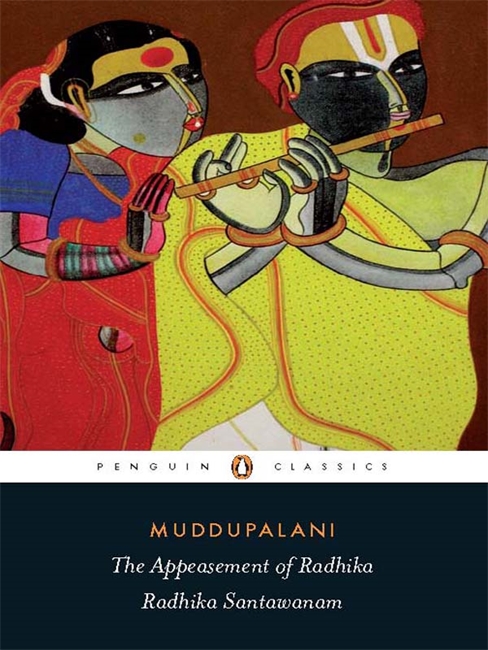
An erotic narrative poem that explores desire and jealousy, love experienced and love lost, Radhika Santawanam is the most recognized work of nineteenth-century poet and courtesan Muddupalani.
Celebrated as a literary masterpiece in Muddupalani’s lifetime, Radhika Santawanam was banned by the British in 1910 when it was published again, a century and a half later, with critics panning its graphic descriptions of lovemaking. And, after another hundred years, this epic is now available in its entirety for the first time in English translation

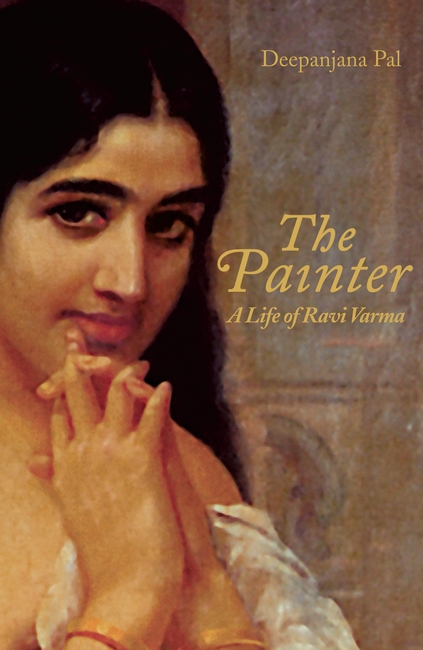
On April 29, 1848, in a small estate in Travancore, was born a boy destined to become more famous than the ruler of his kingdom. His uncle, noticing his precocious talent at art, took the teenager to the royal court at the invitation of the king to learn painting there. Ravi Varma’s debut was to come seven years later when a Danish painter arrived in court to paint the Maharaja and his wife. The twenty-year-old boldly upstaged the experienced artist, presenting the king with a more flattering painting of the royal couple at the same time as the official portrait was unveiled.
Jensen, the painter, never forgave Ravi Varma, but for the young man there was no looking back. His reputation grew with each painting. For the first time, an Indian artist was using the realism and sensuality of the European oil painters and applying them to not just ordinary Indians, but to the deities as well. The artist-prince became India’s first celebrity painter. The lines to see his exhibition of mythological paintings in Bombay in 1890—the first public showing by any Indian artist—were endless; the prices he commanded were astronomical; then, when he started his own printing press, producing oleographs of his work, Raja Ravi Varma became a household name. Soon, every home had a Ravi Varma print.
For the first time, comes a beautifully told, gripping account of Ravi Varma: the man who was the darling of the royal courts, but who hardly gave his own wife and children any time; the nobleman who took the revolutionary step of being an artist, yet who insisted on using the false title of raja; and the idealistic entrepreneur who bankrupted himself running a printing press, yet whose dream of bringing art to the masses became a reality. Blending fact with imagination, writing with wit and lyricism, Deepanjana Pal takes you into the life of an extraordinary man and brings him vividly alive.