Among the greatest novels of the twentieth century, A Passage to India is set in pre-Independence India. A compelling portrait of a society in the grip of imperialism, this classic depicts the fate of individuals caught in the great political and cultural conflicts of their age. It begins when Adela and her elderly companion Mrs Moore arrive in the Indian town of Chandrapore, and feel trapped by its insular and prejudiced British community. Determined to explore the ‘real India’, they seek the guidance of the charming and mercurial Dr Aziz. But a mysterious incident occurs while they are exploring the Marabar caves, and the well-respected doctor soon finds himself at the centre of a scandal.
The introduction by Harish Trivedi provides the required scholarly context for the English literature course.
Did you know that there will be more plastic than fish in the seas by 2050? Did you know that it takes 20,000 litres of water to make a pair of jeans? Did you know that we have a massive food-wastage problem, and yet millions die of hunger each day?
In this world full of waste, how can you help save the planet?
Bare Necessities is your one-stop guide on how to move towards a more sustainable lifestyle in India. Filled with activities, insights, recipes, tips and how-to guides, it is a must-read for anyone wanting to make a positive change in their life and in the environment.

In compliance with the order of the Ld. ADJ, Karkadooma Court passed on 22.12.2021 we have ceased to publish, republish, distribute, and/or sell the title “The Bank Who Crushed his Diamonds: The Yes Bank Story” by Furquan Moharkan. However, we are pursuing remedies in law available to us in this respect

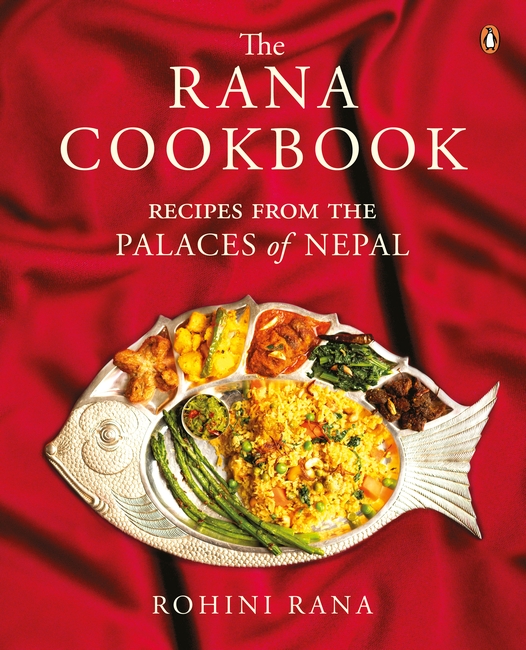
The Rana name has been synonymous with the history and culture of Nepal for centuries. The beautiful palaces of Nepal were known not only for their glamour and architecture but also for their royal feasts. The recipes of the food served were exclusively with the cooks of the palaces and a lucky few who inherited them from earlier generations. In this exquisite book, for the first time ever, the doors to the palace kitchens are opened and we get a glimpse into the mouthwatering cuisine of the royals. Nepali food is famous for its fresh and light flavours in the staple rice, daals, meat and vegetables. The food of the Ranas, however, is vastly influenced by Indian flavours. While Indian food is renowned for its rich, thick gravies, Nepali cuisine tends to prefer lighter jhols and dry bhutans and kawafs. Though raw materials such as meat and vegetables can easily be found in the Indian kitchen, the style of preparation and spices such as jimbu and timur are unique in their Nepali flavour. With help and inputs from numerous family members, Rohini Rana has collected and documented the recipes precious to each Rana prime minister’s family. Showcasing magnificent food from the palaces, this luxurious and beautifully illustrated cookbook attempts to preserve these recipes for future
generations, and posterity.

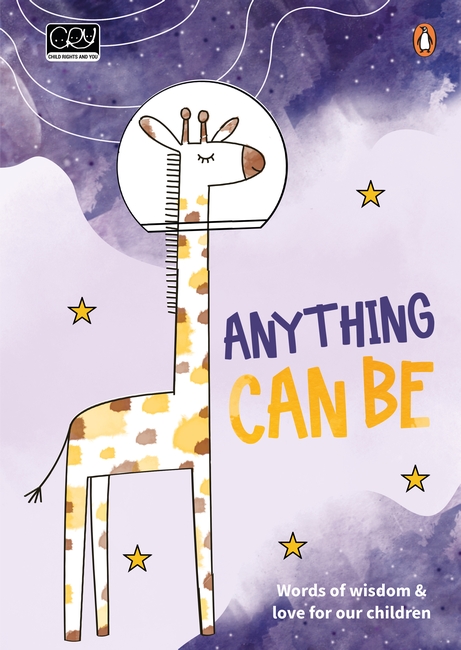
This book commemorating 40 years of CRY, India’s most trusted NGO, is inspired by a Treasure Trove of dreams.
Dreams woven by children, with their bright smiles and infinite potential, who brave the odds every day. Children who often don’t make it past their 5th birthday. This grim situation has worsened with the Coronavirus pandemic as the loss of livelihoods has deprived underprivileged children of proper nutrition, timely immunisation and healthcare. The first 1000 days of a child’s life are extremely important but never have they been more critical for survival. With this book, we are raising funds that are urgently needed to give every child a healthier start to life.
But what makes this book truly special is that our hope is not ours alone. We believe that it’s shared by each and every one of you – our contributors and our readers. That we are all united in our dreams for children as India’s future. May we come together to help them rise; today and forevermore.
Includes letters of love by Ustad Amjad Ali Khan, Zia Mody, Sangita Jindal, Hema Malini, Boman Irani, Sameera Reddy and others.
The earthly King Pururavas rescues the celestial nymph Urvashi from a demon, and thus begins a majestic love story that brings heaven and earth together. Both are struck with Kama’s arrow in their very first meeting, but each shies away from saying anything because the distance between them seems insurmountable. Even when they do confess their love, magical transformations and heavenly curses keep the lovers apart. Will Pururavas succeed in his quest for Urvashi?
A magnificent drama based on an episode from the Rig Veda, Vikramorvashiyam is filled with dramatic turns of event, music and dance. The scenes, characters and dialogues are at once lively and theatrical as well as sensitive and speculative. Believed to be the second of Kalidasa’s three plays, Vikramorvashiyam is an undisputed classic from ancient Indian literature. A.N.D. Haksar’s brilliant new translation gives contemporary readers an opportunity to savour this delightful tale.

Sanjay de Silva lives in Colombo, under the thumb of a controlling Sri Lankan father, having lost his English mother at an early age. When his father is diagnosed with cancer, he feels the ground shifting under his feet, the balance of power realigning. Though it is something he has dreamed of all his life, he is uneasy when it happens. Learning that he is entitled to live in England-thanks to his half-English parentage-he arrives in south London.
It is 1980, the start of the glorious blue-rinsed Thatcher years, when every girl looks like Princess Diana but not every boy looks like Prince Charles. He meets and falls in love with a fellow Sri Lankan, Janine, who is old enough to be his mother and famous within the acid-tongued Sri Lankan community as ‘a hooker of the very highest class, with royal connections’.
Sanjay manages to buy an old wreck of a house in Brixton and succeeds, against all odds, in converting it into two flats. But all is not well with that house. At night there are voices . . .
This is the story of south London’s first Asian builder who in eight years developed and sold eighty-four flats, cashing in his winnings just before the crash of 1988. But at its heart it is about grief: how each of us copes in our inimitable way with the hidden mysteries of family and the loss of loved ones. Because, as Sanjay is about to find out, grief is only the transmutation of love, of the very same chemical composition-liquid, undistilled-the one inevitably turning to the other like ice to water.

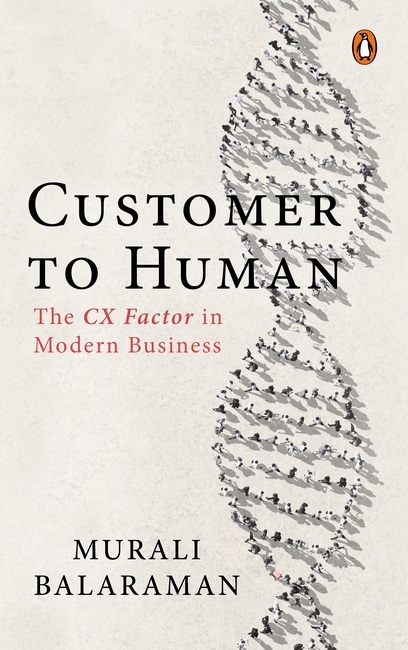
Customer to Human stems from Murali Balraman’s extensive experience in customer experience and customer centricity. Murali took a pledge to give back his life’s lessons many years ago and this book marks a step in that direction. It is filled with stories and experiences, to evoke the reader’s interest and ideas that impact an organization or business. Every business has a customer, big or small, and that customer is the business’s most important asset.
Whether you are a startup or an established business there is something for you in this book. It contains trends, insights, methods and technologies laid out in an easy-to-read format and is relevant for anyone seeking well-researched information in this field. It is also filled with invaluable stories on inspirational customer experiences (CX), agnostic to which industry you belong to.

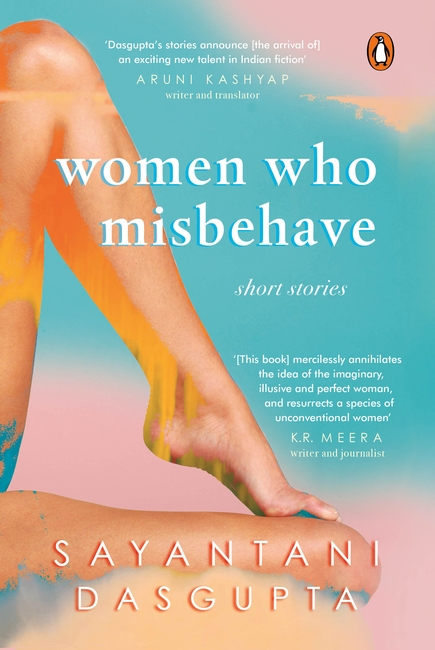
Women Who Misbehave, much like the women within its pages, contains multitudes and contradictions-it is imaginative and real, unsettling and heartening, funny and poignant, dark and brimming with light.
At a party to celebrate her friend’s wedding anniversary, a young woman spills a dangerous secret. A group of girls mourns the loss of their strange, mysterious neighbour. A dutiful daughter seeks to impress her father even as she escapes his reach. A wife weighs the odds of staying in her marriage when both her reality and the alternative are equally frightening. An aunt comes to terms with an impulsive mistake committed decades ago.
In this wildly original and hauntingly subversive collection of short stories, Sayantani Dasgupta brings to life unforgettable women and their quest for agency. They are violent and nurturing, sacred and profane. They are friends, lovers, wives, sisters and mothers. Unapologetic and real, they embrace the entire range of the human experience, from
the sweetest of loves and sacrifices to the most horrific of crimes.

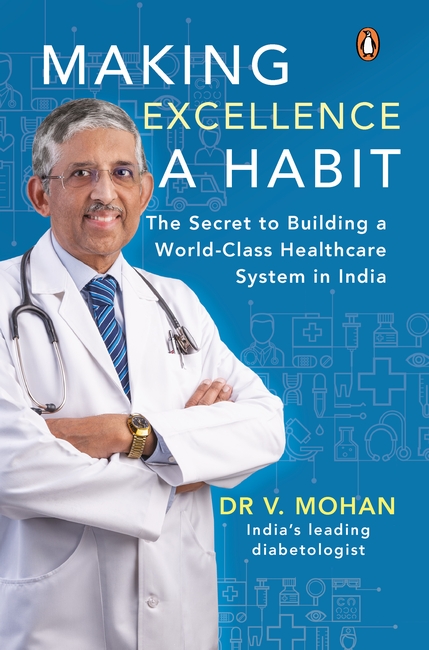
One of the few practising doctors in India who contributed to research, education and charity in such a large measure, the book documents the fundamentals of what makes a person achieve meaningful success. While hard work, passion and focus emerge as winning lessons, delicate and tender learnings from Dr Mohan’s life, such as empathy or spirituality, are not forgotten.
Written in Dr Mohan’s sagacious and affable voice, and peppered with examples of his bold and unusual ideas such as planning a diabetes expo or conducting a country-wide diabetes study, this book is a behind-the-scenes account of a person honoured internationally for delivering path-breaking care to hundreds of thousands of people with diabetes.