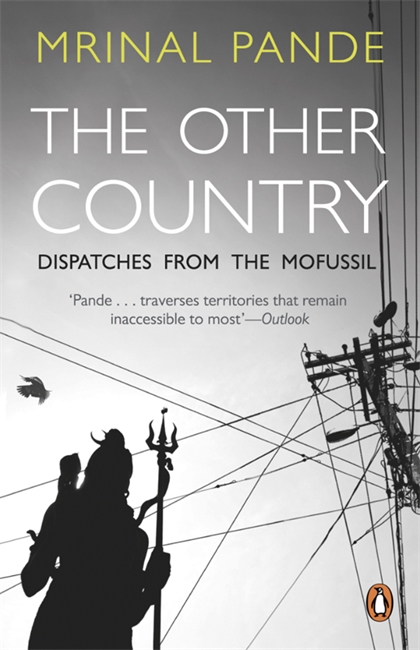
The Other Country brings together a wide-ranging selection of essays by Mrinal Pande; one of India’s most respected journalists. Through chronicle; anecdote and hard-hitting reportage; Mrinal traces the many; ever-widening fault lines between Bharat and shining India; the small town and the metropolis.
Mrinal describes the Great Language Divide between Hindi and English; traces its origin; the role globalization has had in its spread; and the effect of this divide on contemporary literature and media. She vividly describes the anti-outsider movement in Mumbai and analyses the role that inequitable development; and the lack of opportunities in villages and small towns; has played in it. Mrinal tells the story of Prabha Devi of Tehri; Uttarakhand; who picked up scissors and comb to become village barber in the face of opposition and thus came to represent the enormous change in attitudes and stances that are now sweeping Indian society everywhere. And through a hilarious profile of the Mineral Water Baba of Faridabad; who can heal any ailment with a sealed bottle of mineral water; she analyses one of the big issues facing India’s villages and metropolises: its water-management systems.

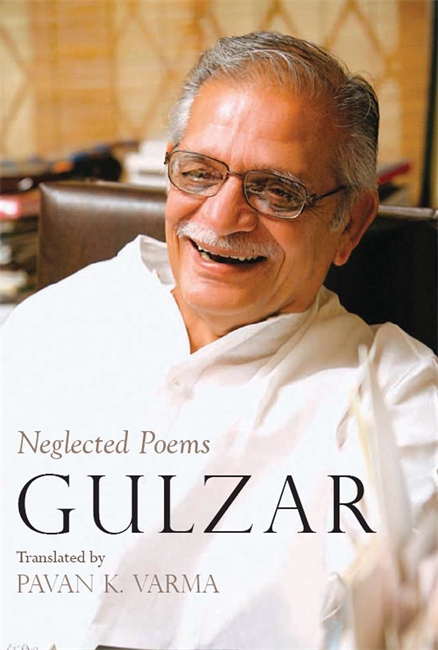
Gulzar is regarded as one of India’s foremost Urdu poets today, renowned for his unusual perspectives on life, his keen understanding of the complexities of human relationships, and his striking imagery. After Selected Poems, a collection of some of his best poetry translated by Pavan K. Varma was extremely well received, Gulzar has chosen to present his next sixty poems in an inimitable way: labelling them Neglected Poems.
‘Neglected’ only in name, these poems represent Gulzar at his creative and imaginative best, as he meditates on nature (the mountains, the monsoon, a sparrow), delves into human psychology (when a relationship ends one is amazed to notice that ‘everything goes on exactly as it used to’), explores great cities like Mumbai, Chennai, Kolkata, Delhi and New York (‘In your town, my friend, how is it that there are no homes for ants?’), and confronts the most telling moments of everyday life.

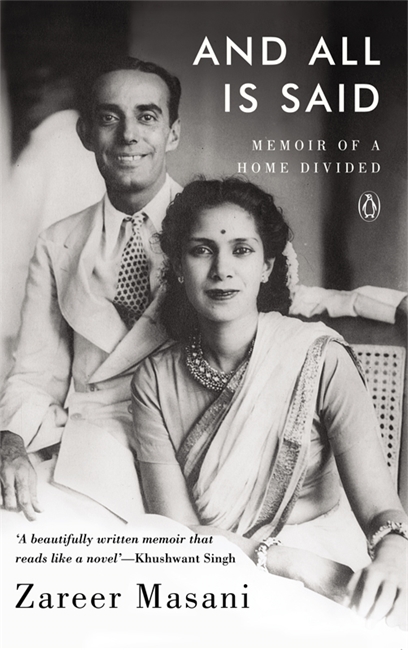
In this unflinchingly candid memoir, Zareer Masani draws on the letters and diaries of his parents, charismatic politician Minoo Masani and his gifted wife Shakuntala, to paint an intimate portrait of two remarkable individuals and their prominent but very different families-the Masanis, Bombay Parsis, and the Srivastavas, UP Kayasths-united by marriage but divided by temperament, lifestyle and political affiliation. Minoo’s father Sir Rustom Masani was an ascetic scholar who scorned wealth and all the comforts it could buy. Shakuntala’s father, Sir J.P. Srivastava, arch-loyalist of the British Raj and viceregal councillor, made a fortune as a mill owner and brought up his daughter in the lap of hedonistic luxury. When the two fell in love and eloped, Minoo was a twice-divorced, left-wing Congress activist. Later, he became a founder of the pro-free-market Swatantra Party-a figure whom Prime Minister Manmohan Singh has described as his ideological inspiration-leader of the Opposition in Parliament and a tireless campaigner against global Communism.
The author writes of his turbulent upbringing as an only child torn between the rival influences and attractions of his parents and grandparents; of the struggle to express his own sexuality in 1960s India; and of the stormy and agonizing breakdown of his parents’ marriage, which was closely interwoven with the political drama of Indira Gandhi’s rise to power and the Emergency she imposed.

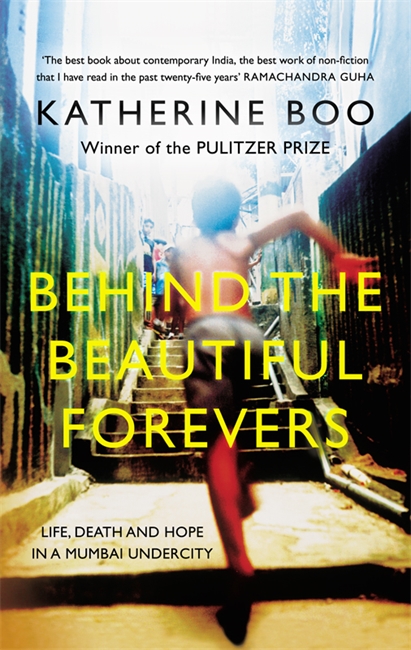
Annawadi is a slum in the shadow of luxury hotels near the Mumbai airport, and as the Indian economy booms, Annawadians are electric with hope. Abdul, a reflective teenager, sees ‘a fortune beyond counting’ in the recyclable garbage that the city’s richer people throw away. He is so fast, sorting waste, that he’s close to lifting his whole family out of the slum. Asha, a woman of formidable wit and deep scars from a childhood in rural poverty, is eyeing an alternate route to the middle class: political corruption. With a little luck and the right connections, her sensitive, beautiful teenaged daughter might soon become the first female college graduate in the slum. And even the poorest Annawadians, like Kalu, a homeless 15-year-old scrap-metal thief, feel themselves inching closer to the good lives and good times they call ‘the full enjoy.’
But then Abdul the teenaged garbage sorter is falsely accused in a shocking tragedy; a terrorist attack and a global recession rock Mumbai; and suppressed tensions over religion, caste, sex, power and economic envy turn brutal. As the tenderest human hopes intersect with the harshest realities of life in an Indian megacity, the true contours of a desperately competitive age are revealed. And so, too, are the resilience and ingenuity of the people of Annawadi.
In Katherine Boo’s fast-paced and riveting book—beautifully written, rigorously researched and intimately reported—the impact of poverty, inequality, corruption and global change is made human through breathtaking, sometimes heartbreaking, stories that will stay with you forever.