




They think they’re invincible. After seventeen very ordinary years of life in small-town America, Amit Pillai suddenly finds himself on a red-eye flight to Kerala. An NRI, he is forced to join the posh Ananthapuri International School, the only school in town that accepts ‘soft boys’ like him. But this Kerala is faux Americana where it’s all loud music and lined pockets, and there is never enough time to stop and look around. Amit quickly discovers that life here is anything but soft. Struggling with love and identity, he is never quite sure where to draw the line, when his fragile existence at school is rocked by a series of shocking events. What have they done? What are the consequences? And can they live with them? A roller-coaster ride through the real-time experiences of an Indian teenager, Wicked Games is contemporary school life told like never before.
Catagory: Non Fiction
non fiction main category
Shikhandi
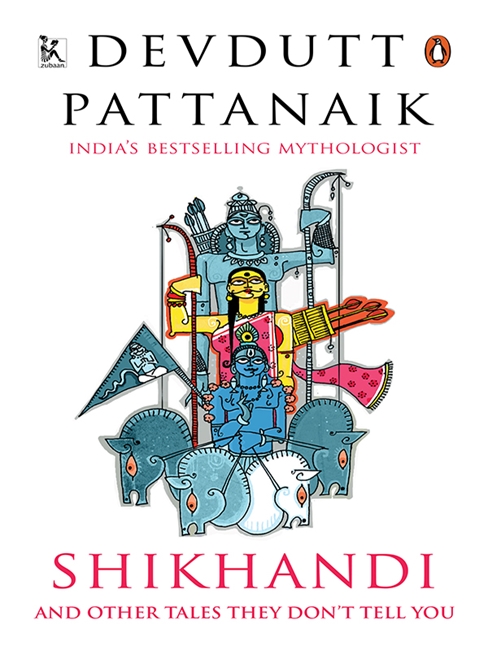
Patriarchy asserts men are superior to women
Feminism clarifies women and men are equal
Queerness questions what constitutes male and female
Queerness isn’t only modern, Western or sexual, says mythologist Devdutt Pattanaik. Take a close look at the vast written and oral traditions in Hinduism, some over two thousand years old, and you will find tales of:
Shikhandi, who became a man to satisfy her wife
Mahadeva, who became a woman to deliver a devotee’s child
Chudala, who became a man to enlighten her husband
Samavan, who became the wife of his male friend
and many more . . .
Playful and touching—and sometimes disturbing—these stories when compared with tales of the Mesopotamian Gilgamesh, the Greek Ganymede, the biblical Sodom or the Chinese ‘cut sleeve’ Emperor reveal the unique Indian way of making sense of queerness.
Devdutt Pattanaik’s new book builds on profound ideas that our ancestors shared but which we have rarely inherited.
This book has content for mature audiences. Discretion advised.
Defying The Odds
Defying the Odds is about the new Dalit identity. It profiles the phenomenal rise of twenty Dalit entrepreneurs, the few who through a combination of grit, ambition, drive and hustle—and some luck—have managed to break through social, economic and practical barriers. It illustrates instances where adversity compensated for disadvantage, where working their way up from the bottom instilled in Dalit entrepreneurs a much greater resilience as well as a willingness to seize opportunities in sectors and locations eschewed by more privileged business groups.
Traditional Dalit narratives are marked by struggle for identity, rights, equality and for inclusion. These inspiring stories capture both the difficulty of their circumstances as well as their extraordinary steadfastness, while bringing light to the possibilities of entrepreneurship as a tool of social empowerment.
Highway on my Plate – II
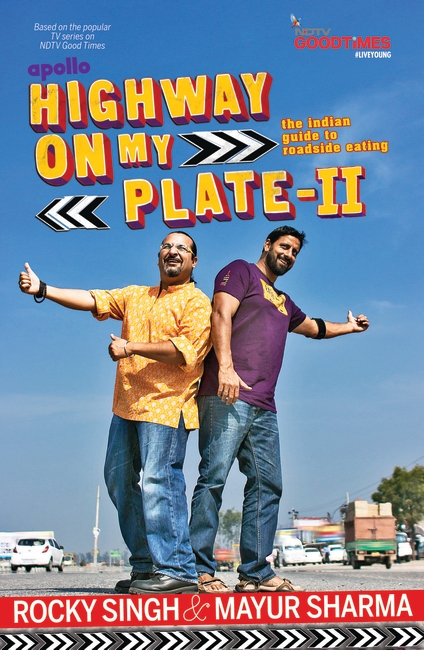
The boys are back!
And this time, they are hungrier than before. Travelling the length and breadth of the country in search for gastronomical perfection, India’s original street food connoisseurs Rocky and Mayur promise to take you on a culinary road trip like no other.
Based on the highly acclaimed NDTV Good Times TV series, this second edition of the book which won the BEST IN THE WORLD Gourmand World Cookbook Award 2012 covers more than two hundred new food joints, over 1500 different food items, and provides indispensable information on the best dhabas and street stalls in the country.
With authentic food reviews, interesting visuals from the show, and even maps for directions, Highway on my Plate-II is the ultimate foodie’s guide to Indian roadside eating.
The Truth Always Prevails
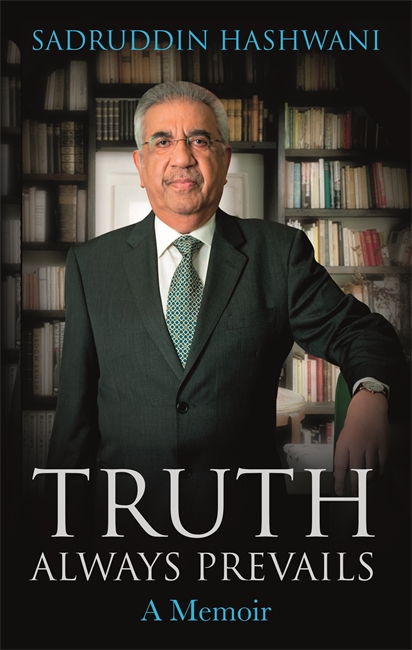
The memoir of one of Pakistan’s most prominent businessmen in exile
‘I reached to see not the beautiful hotel that we had so lovingly built, but a war zone. . . . We found bodies of our dear guests, colleagues, friends: faces I recognized, faces I had worked with and smiled at. The sight that stunned me was the crater-60 feet wide and 20 feet deep. It had been created by over 1000 kg of RDX. The hotel had not been attacked, it had been brutalized. Dead bodies and dismembered limbs, little pools of blood-it was a massacre. I had thought of myself as a hardened man who had seen violence and gristly sights-but what I saw that day left me shaken.’
Truth Always Prevails is the memoir of one of Pakistan’s most prominent businessmen, Sadruddin Hashwani, chairman of the internationally renowned Hashoo Group.
From sleeping in the back of trucks in the cold deserts of Balochistan to now owning a brand of luxury hotels as well as numerous other businesses, Sadruddin Hashwani has led a remarkable life. He has struggled against corrupt politicians and uncooperative government officials to build and sustain an extensive business empire. He has faced near-death experiences, most remarkably the 2008 bombing of his own hotel, the Marriott Islamabad, and has overcome seemingly insurmountable odds.
Filled with fascinating anecdotes and telling sketches of prominent Pakistani personalities, his is an extraordinary story that will inspire and entertain readers.
Happiness Is…

This is THE new happiness book
From Ralph Lazar and Lisa Swerling, famed illustrators and the authors of Me Without You, this adorable gift book illustrates 500 things to be happy about. Happiness is . . . an unexpected bouquet, cheese, fixing something, a good high-five, and so much more! The charming, make-you-smile illustrations hit just the right note-not too sappy, not too sweet-and remind us that there are dozens of things to be happy about every day.
Nonalignment 2.0
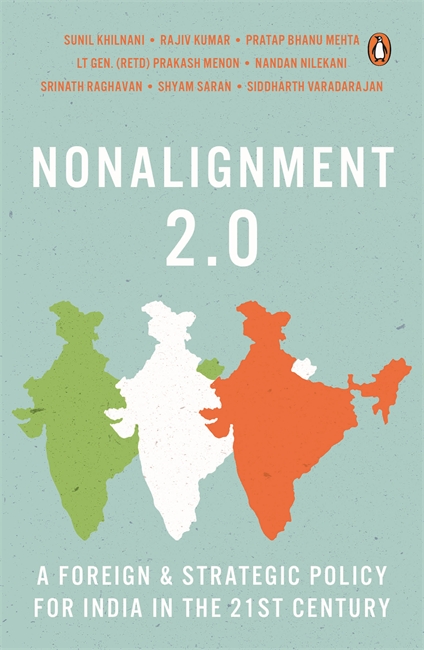
‘Eight distinguished authors have joined together in singular public service’ Business Standard
From India’s most brilliant thinkers and analysts, comes a prescription for India’s foreign and strategic policy over the next decade. The book identifies the threats and challenges India is likely to confront, the approach it should adopt to successfully pursue its national development goals and its international interests in a changing global environment, and thus assume its rightful place in the world.
‘Many points raised in NonAlignment 2.0 hit the nail on the head’ Pioneer
‘One of the most important foreign policy and strategic approach ideas in a long, long time’ Firstpost.com
Beyond The Goal
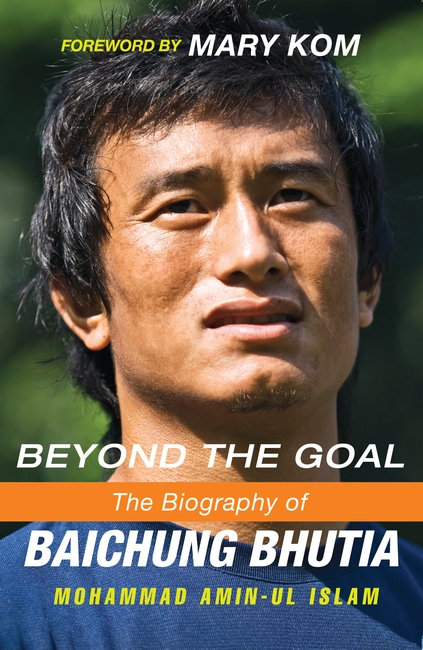
Baichung Bhutia—dubbed the Sikkimese Sniper for his amazing shot accuracy—has been winning young and old hearts alike with his rare skill and boyish charm since 1993. He serves as a benchmark not only for Indian football, but also for Asian football, as he has been one of the best players for over a decade. In fact, even today, he remains the only iconic face of Indian football to the outside world.
Baichung’s career has not been without controversy and Beyond the Goal delves into the footballers relationships with his coaches, the clubs he played with, and his much debated retirement. Md Amin takes us through the good, the bad, and the ugly of football in India by doggedly retracing Baichung’s own highs and lows.
Gifted
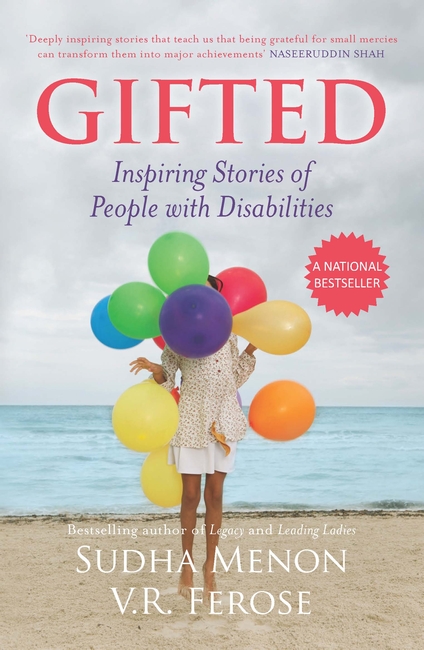
While the rest of the world has taken great strides in mainstreaming the differently abled into the larger contours of their society, life continues to be an uphill struggle for the differently-abled in India. They continue to be burdened with their ‘handicapped’ status and live a life on the fringes, largely forgotten by a society which is galloping ahead at a fast pace. Born ‘different’ from the rest of us, they have been put in a position of disadvantage in a world where being ‘normal’ is at such a premium.
Written by the bestselling author of Legacy and Leading Ladies, Sudha Menon, and the MD of SAP Labs India, V.R. Ferose, Gifted celebrates the journeys of these very Indians who are neither CEOs nor part of any influential power clubs, but special in their own way. These are stories that can inspire even the most ‘abled’ among us.
India Becoming
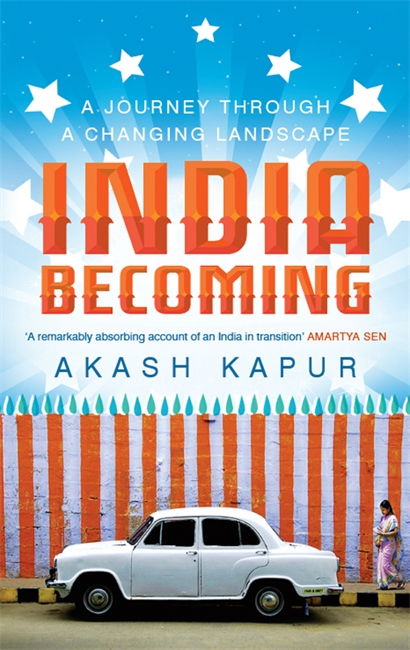
India has changed dramatically in recent years, but what does all this change mean for the lives of ordinary Indians? In this gripping and often moving book, Akash Kapur follows a handful of men and women in the villages and small towns of South India as they confront the ups and downs of life in a nation in transition.