



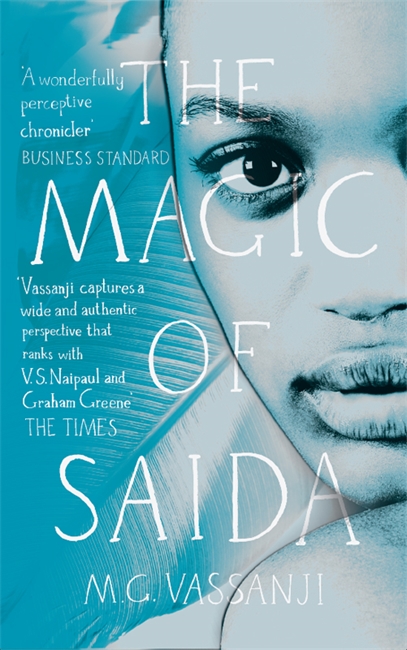
Descendant of an African slave and a Gujarati trader, Kamal Punja grew up in the ancient town of Kilwa, on the coast of East Africa. Kamal, who never knew his father, is given away by his mother to better his prospects. Years later, after a flourishing career as a doctor in Canada, he returns in search of Saida, his childhood sweetheart. But where is Saida, and why are his efforts to find her being thwarted? Feverish, delirious, and perhaps delusional, Kamal is haunted by the past as he struggles to trace the woman he thinks he betrayed. Along the way, he must face the truth of his mixed lineage and be accountable for a chain of events he had unwittingly set off.
Set in the vivid world where Africa, Arabia and India meet, where history, poetry and magic combine, The Magic of Saida is a haunting story of enduring love and lost childhood.
Catagory: Non Fiction
non fiction main category
The Insider’s View
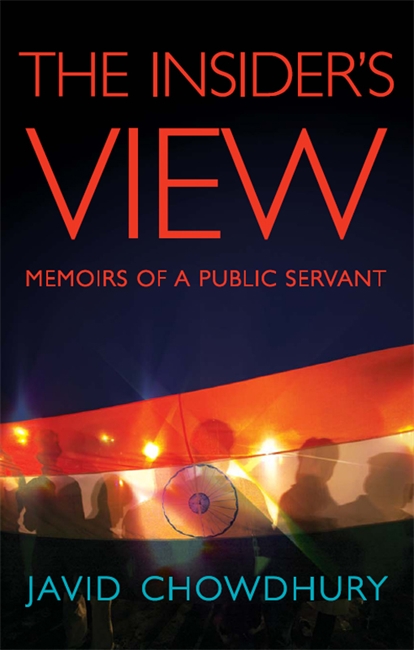
In this illuminating memoir Javid Chowdhury shares his varied experiences over four decades in the IAS: the years in training when he imbibed the service’s ethos and values; his initiation into the rural universe as the District Development Officer and the District Magistrate; and further on, to his handling of the infamous Bank Securities and Jain Hawala scams as Director of Enforcement and Union Revenue Secretary.
With a light pen, Chowdhury describes the changing social profile and attitudes of entrants to the higher civil services; the nepotism, in many garbs, that he encountered as Establishment Officer; and the stranger-than-fiction tortuous investigations of crimes. He also offers his nuanced reflections on the dubious legacy Gujarat acquired as a result of the communal carnage in 2002.
Chowdhury further examines how policymaking within government came to be whittled away under the neo-liberal theology, with key scrutiny being left to external expert think tanks and ad hoc groups. As a consequence, he perceives that public accountability came to be inordinately diffused, resulting in the roller-coaster governance that we witness today.
Sharp and insightful, replete with telling anecdotes and amusing sketches of icons, colleagues and ministers, The Insider’s View is a compelling portrait of the author, a self-confessed welfare socialist, besides being an X-ray of the innards of the bureaucracy.
In Search Of Oneness
The Naive And The Sentimental Novelist
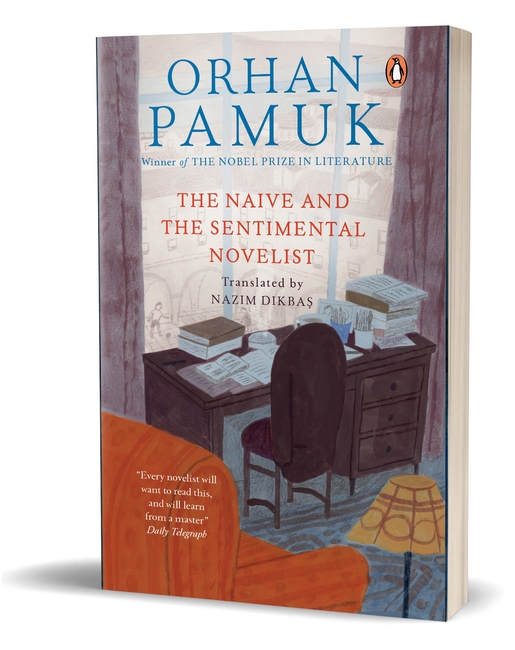
What happens within us when we read a novel? And how does a novel create its unique effects, so distinct from those of a painting, a film, or a poem?
In this fascinating set of essays, based on the talks he delivered at Harvard University as part of the distinguished Norton Lecture series, Pamuk presents a masterful theory of the novel. Drawing on Friedrich Schiller’s famous distinction between ‘naïve’ writers-those who write spontaneously-and ‘sentimental’ writers-those who are reflective and aware-Pamuk reveals two unique ways of processing and composing the written word. He takes us through his own literary journey and looks at the works of writers such as Tolstoy, Dostoevsky, Stendhal, Flaubert, Proust, Mann, and Naipaul to describe the singular experience of reading. Unique, nuanced, and passionate, this book will be beloved by readers and writers alike.
The Man Before The Mahatma
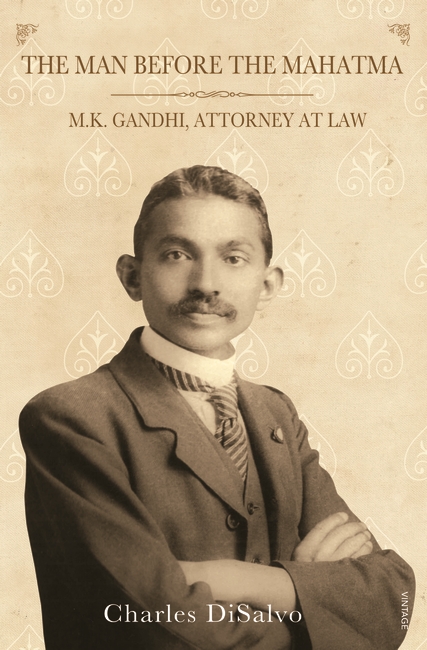
At the age of eighteen, a shy and timid Mohandas Gandhi leaves his home in Gujarat for a life on his own. At forty-five, a confident and fearless Gandhi, ready to boldly lead his country to freedom, returns to India.
What transforms him?
The law.
The Man before the Mahatma is the first biography of Gandhi’s life in the law. It follows Gandhi on his journey of self-discovery during his law studies in Britain, his law practice in India and his enormous success representing wealthy Indian merchants in South Africa, where relentless attacks on Indian rights by the white colonial authorities cause him to give up his lucrative representation of private clients for public work—the representation of the besieged Indian community in South Africa.
As he takes on the most powerful governmental, economic and political forces of his day, he learns two things: that unifying his professional work with his political and moral principles not only provides him with satisfaction, it also creates in him a strong, powerful voice. Using the courtrooms of South Africa as his laboratory for resistance, Gandhi learns something else so important that it will eventually have a lasting and worldwide impact: a determined people can bring repressive governments to heel by the principled use of civil disobedience.
Using materials hidden away in archival vaults and brought to light for the first time, The Man before the Mahatma puts the reader inside dramatic experiences that changed Gandhi’s life forever and have never been written about—until now.
Sri Lanka And The Defeat Of The Ltte
Lal Singh Dil is a legend in Punjab, famed as much for his rousing poetry as for the brew of his tea stall. Born into the ‘untouchable’ Dalit community in the years before partition, he bravely challenged deep-rooted social prejudices through his crisp and stirring verses. His struggle led him to join the Naxalite movement – an experience that culminated in three horrifying years of torture at the hands of the police. In his later years, much to the dismay of his comrades, he converted to Islam because he believed that its tenets could be reconciled with theegalitarian and inclusive principles of communism. A powerful indictment of caste violence and discrimination, Poet of the Revolution describes dil’s most turbulent years in his clear, fiery voice. Translated into English for the first time, this book also includes a selection of his most memorable poems.
Mistakes Like Love And Sex
Cheated by her young and handsome Spanish boyfriend, Kaveri is back in India to follow a career as an artist and to find her dream man. However, getting involved with an older man,
making out with the hottest star in Bollywood, teaching a hot, upcoming actress Hindi . . . her goals seem nowhere in sight.
Starting afresh seems to have thrown her off completely and she begins to see the superficial life that she’s been leading. It’s time to take some hard decisions. With fresh hope and a new philosophy, Kaveri begins to focus on her goals.
Things begin to look up when there is a kindling of romance across Twitter and she’s starts to understand her true calling. She might finally be moving in the right direction!
The Mysterious Mr Jacob
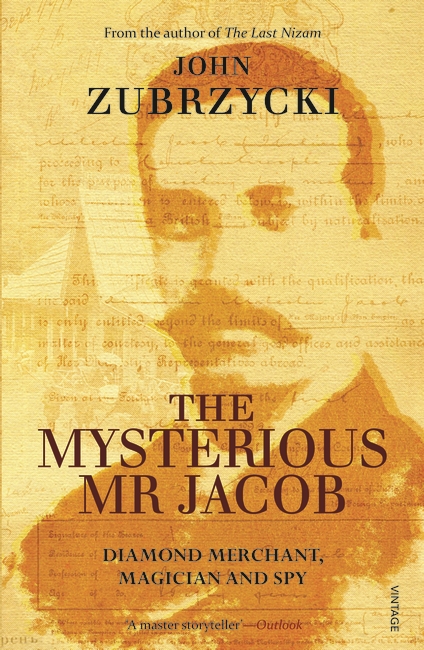
The scandal that rocked the Raj
IIn 1891, a notorious curio-dealer from Simla offered to sell the world’s largest brilliant-cut diamond to the Nizam of Hyderabad. If the audacious deal came through, the merchant would have been set up for life. But the transaction went horribly wrong. The Nizam accused him of fraud, triggering a sensational trial in the Calcutta High Court that made headlines around the world.
The dealer was Alexander Malcolm Jacob, a man of mysterious origins and colourful infamy. He was India’s most successful purveyor of precious stones and was rumoured to be ‘rich almost beyond the dreams of Aladdin’. Hailed as a celebrity in his own lifetime, he was the inspiration for the shadowy Lurgan Sahib in Rudyard Kipling’s Kim. A confidant of viceroys and maharajahs, he dabbled in magic and was a player in the Great Game. Yet he died in obscurity, carrying many of his secrets to his grave.
In this meticulously researched account of Jacob’s life, John Zubrzycki reconstructs events through long-lost letters, court records and annotations on secret files, bringing us a riveting study of a man whose obituary in a leading daily fittingly described him as the most ‘romantic and arresting figure in our time’.
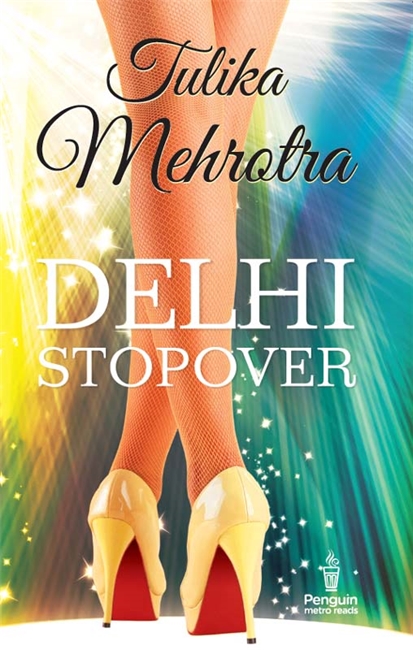
Delhi Stopover
The River Speaks
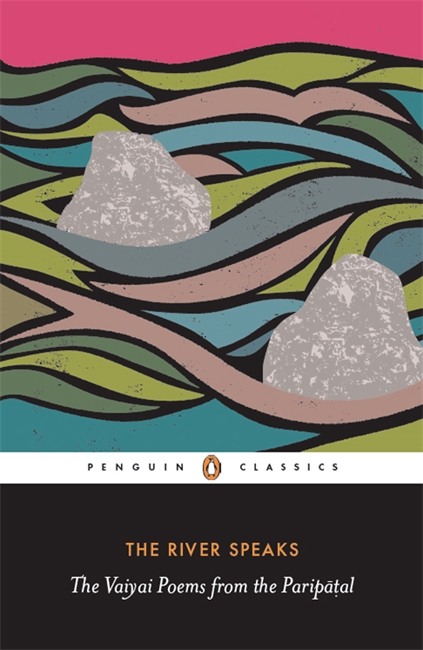
In the ancient Tamil country, the Vaiyai was much more than a mighty river rushing towards the sea. People knew the river intimately and lived their lives upon its banks. In these exquisite poems from the distant past (second to eighth century CE), we glimpse the ebb and flow of everyday life: the bathing, the water games, the lovers’ quarrels and the sacred rituals. Breathtaking in their descriptive power and graceful in their celebration of sensuality, the Vaiyai poems from the Paripa?al anthology delight our senses and give us insight into a world long past. In V.N. Muthukumar and Elizabeth Segran’s radiant new translation, the Vaiyai River comes alive to a new generation of readers.