The journey of a business-from a small start-up to a large company ready for an initial public offering (IPO)-is fraught with pitfalls and landmines. To scale a company, one needs to do more than just expand distribution and ramp up revenue. Scale entails a long-term vision that includes putting in place a timeline to achieve anticipated milestones, hiring and managing the right talent, sourcing capital to support expansion and building in simple yet effective processes as well as technology. Scaling requires the founders and the leadership team to understand the different pieces of the puzzle of scale and the components of organization-building.
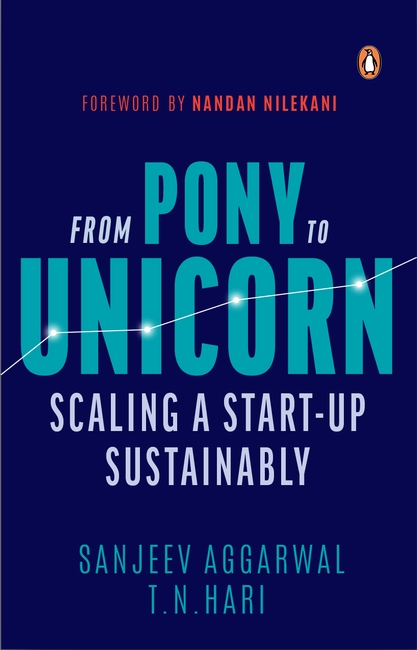
From Pony to Unicorn lucidly describes the X-to-10X journey that every start-up aspiring to become a unicorn has to go through. The book effortlessly narrates the fundamental principles behind scaling. Peppered with anecdotes, insights and practical wisdom, the book is a treasure trove of lessons derived from the authors’ rich personal experiences in both building and guiding several start-ups that went on to attain the ‘unicorn’ status and became public-listed companies. Guaranteed to make for a very interesting read, the book will be useful to entrepreneurs, leaders and investors involved in scaling start-ups.

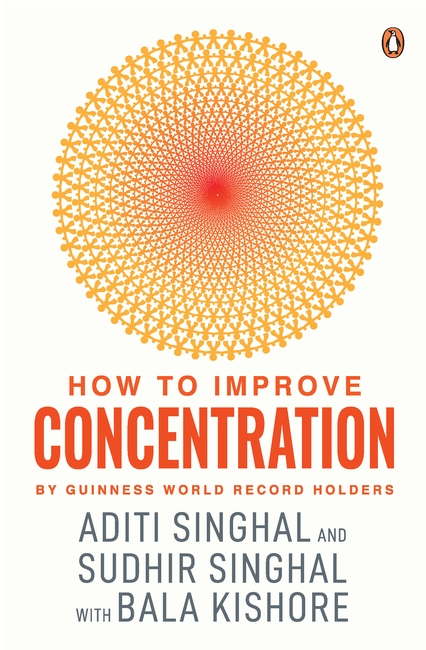
Our world today is filled with distractions that demand our attention every few seconds. The constant messages, notifications and pop-ups have a huge impact on our physical and mental health, making it difficult for us to concentrate on any task. In such a fast-paced world, attention is our most important resource. But we are largely unaware of the key role it plays in shaping our everyday lives.The book aims to help you harness the power of concentration for personal and professional growth, and overcome distractions through simple, research-based and time-tested exercises. It showcases various techniques used by maths and memory experts Aditi and Sudhir Singhal, and digital wellness coach Bala Kishore, in their own lives.

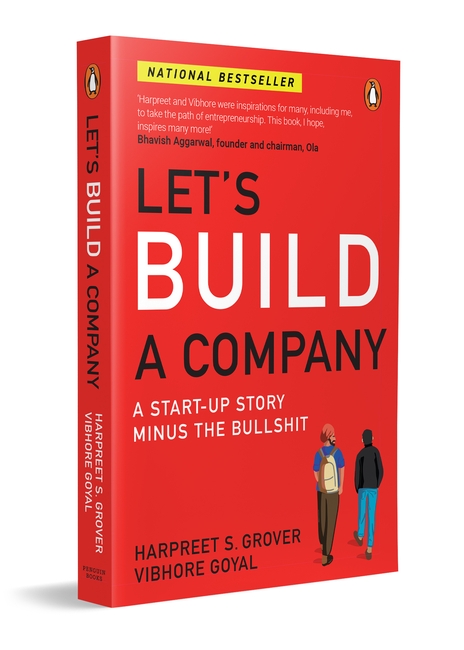
Harpreet Grover and Vibhore Goyal met in college and then spent the next decade of their lives building a company before exiting successfully.
One way to tell their story is this: they had a dream, they followed it and, then, through perseverance, they made it come true.
But that’s not really the truth. Like everything in life-at least everything worth having-it wasn’t that simple. There was blood, sweat and tears, there was loss of capital, loss of friendship and even a loss of faith along the way.
It started with a phone call from Harpreet’s mother introducing him to an uncle who wanted some help. Or maybe it started when Vibhore and Harpreet met as roommates in Room 143 at IIT Bombay. What remains true is that soon both had quit their jobs and launched CoCubes. From no money in their bank accounts for eight years after graduating to becoming dollar millionaires two years later in 2016, this is a tale of grit-of a company built in India by two Indian-middle-class-twenty-somethings-turned-entrepreneurs-written in the hope that you can avoid the mistakes they made and learn from what they did right.
This is that story-the story that you don’t always hear. But if you want to be an entrepreneur, and you prefer straight talk to sugar-coating, it’s one you should read.
“I have always felt that life is a solitary journey, that we are each on a train, riding through our hours, our days, our years. We get on alone, we leave alone, and the decisions we made as we travel on the train are our responsibility alone.”
In this thoughtful and revealing memoir, readers will accompany one of the world’s most recognizable women on her journey of self-discovery. A remarkable life story rooted in two different worlds, Unfinished offers insights into Priyanka Chopra Jonas’s childhood in India; her formative teenage years in the United States; and her return to India, where against all odds as a newcomer to the pageant world, she won the national and international beauty competitions that launched her global acting career. Whether reflecting on her nomadic early years or the challenges she’s faced as she’s doggedly pursued her calling, Priyanka shares her challenges and triumphs with warmth and honesty. The result is a book that is philosophical, sassy, inspiring, bold, and rebellious. Just like the author herself.
From her dual-continent twenty-year-long career as an actor and producer to her work as a UNICEF Goodwill Ambassador, from losing her beloved father to cancer to marrying Nick Jonas, Priyanka Chopra Jonas’s story will inspire readers around the world to gather their courage, embrace their ambitions, and commit to the hard work of following their dreams.

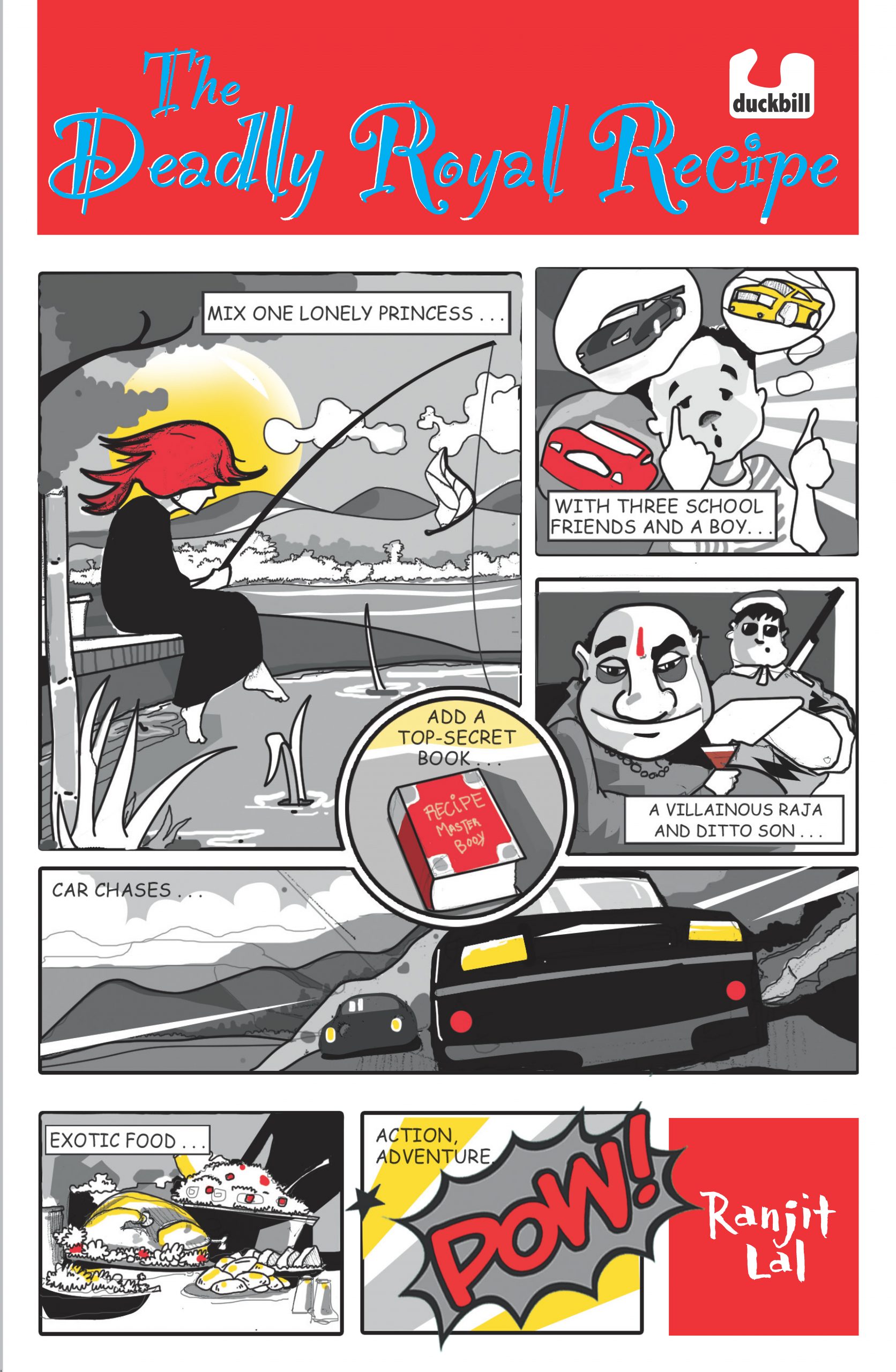
Mix one lonely princess with a bunch of school friends and a little boy.
Add a top-secret recipe Masterbook, lots of exotic food, a villainous raja and his even more villainous son.
Garnish it with action, adventure, car-chases and elephant rides and cook it all to perfection with a fast-paced plot!
What you get is a wacky, racy adventure, which will have you burping with satisfaction!

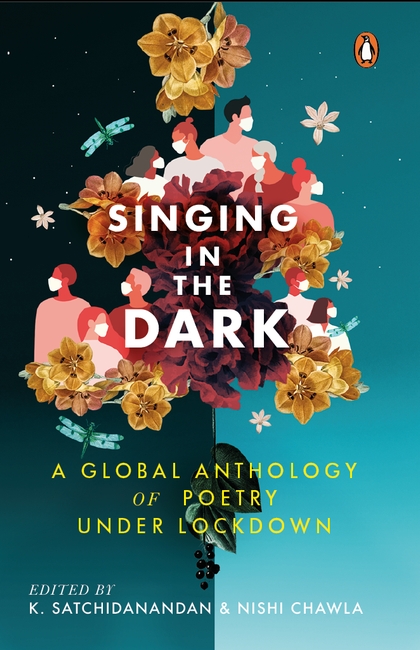
“The range and depth of this amazing anthology convey the conflicted and conflicting emotions of our times. It provides the consolations of poetry and the solace of art as balm to troubled souls.” NAMITA GOKHALE, author, and director, Jaipur Literature Festival
“…Although it may seem that devoting poetic energy to an invisible enemy that is pushing the world towards a terrifying future is too closely tied to social duty, the truth is entirely different: it is not death that the poets are celebrating, it is life.” EVALD FLISAR, Slovenian author and playwright
While the benumbed world is struggling to combat the apocalyptic devastation it has wreaked, a choral spectrum of poetry has emerged to rekindle the spirit of hope. Has poetry not always spelt hope in dark times? Over a hundred voices of unparalleled resilience have gathered here to speak… It is a word of love, solace and bonding; the word the world today is sorely in need of hearing. GULAMMOHAMMED SHEIKH, artist and author
Singing in the Dark brings together the finest of poetic responses to the coronavirus pandemic. More than a hundred of the world’s most esteemed poets reflect upon a crisis that has dramatically altered our lives, and laid bare our vulnerabilities. The poems capture all its dimensions: the trauma of solitude, the unexpected transformation in the expression of interpersonal relationships, the even sharper visibility of the class divide, the marvellous revival of nature and the profound realization of the transience of human existence. The moods vary from quiet contemplation and choking anguish to suppressed rage and cautious celebration in an anthology that serves as an aesthetic archive of a strange era in human history.

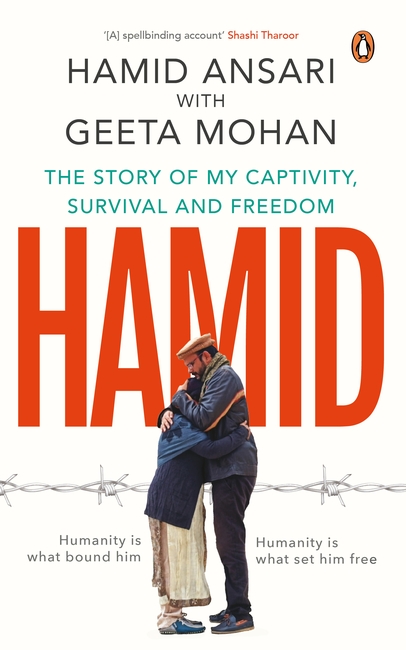
In November 2012, Hamid, a 27-year-old Mumbai-based techie, disappeared into thin air. What happened? Where did he go? All his parents knew was that he had gone to Kabul, Afghanistan, to explore a job opportunity. Upon some investigation, they found out that their son had been chatting online with some Pakistani friends, in particular a girl, across the border.
Authored by Hamid Ansari and Geeta Mohan, this is the definitive insider account of the man who saw no boundaries when it came to saving a girl from forced marriage under the wani custom. Nothing scared or stopped him; until he was betrayed by his friends in Pakistan. He became embroiled in a whirlwind of allegations made by the Pakistani authorities to break him and label him a spy. What followed were years of suffering during the investigations, along with long periods of solitary confinement and a struggle for survival.
In India, his mother, Fauzia Ansari, led a relentless fight, knocking on as many doors as it took, eventually moving three nations, India, Pakistan and Afghanistan, to get him back home, with the help of the then external affairs minister, Sushma Swaraj. On 18 December 2018, Hamid finally touched India soil again. Gritty, heart-wrenching and moving, this is s story of humanity, love, betrayal and hope against all odds.

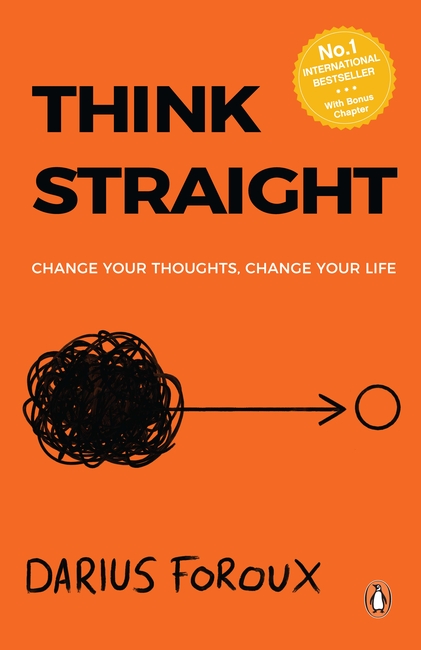
This international bestseller, featuring a bonus chapter previously available only to Darius’ online subscribers, is available in India for the first time.
I know something about you without knowing you. I bet you spend A LOT of time in your head-thinking, worrying, stressing, freaking out-call it whatever you want. I call it a preoccupied mind. And with what? 99% of your thoughts are useless. William James, once the leading psychologist in America, and one of the founders of the philosophical school of pragmatism, put it best: “A great many people think they are thinking when they are merely rearranging their prejudices.”
Pragmatism believes that the mind is a tool. Your mind should work for you, not against you. People who don’t master their mind, don’t believe it’s possible. They say: “I can’t help but thinking these things.” Well, you can TAKE CONTROL of your mind with enough practice. I’ve done it. And in THINK STRAIGHT, I share exactly how. It’s a quick read and you can use it to immediately to improve your thinking. You have the ability to decide what you think. Or, you can choose NOT to think. And that is one of the most important and most practical things you can learn in life. Before I learned that skill, I would spend hours and hours inside my head.
Just think about how much you think. – “I wonder what my boss thinks?” – “What happens if I screw up and lose my job?” – “What if my business never takes off?” – “Does she love me?” – “Why does my life suck?” – “What if I get cancer?” – “I can’t finish anything. What’s wrong with me? And the list goes on.
THINK STRAIGHT reveals the recipe for taking control of your mind so you can improve your life, career, relationships, business. I wrote this little book in a way that you can read it more than once. And I hope that this book serves as an anchor to you-especially during trying times. The mind is the most powerful tool on earth. Change the way you think. And you’ll change your life.

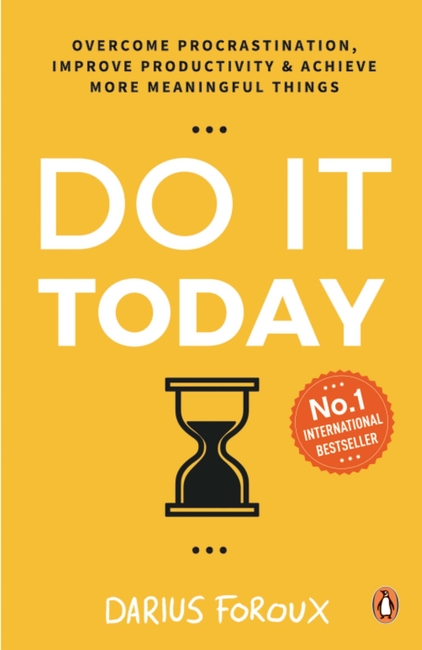
The International Bestseller: DO IT TODAY
Are you also tired of putting off your dreams until “tomorrow?” Guess what! Tomorrow never comes. Am I right?
I’ve procrastinated and putt off my desire to write a book for a decade. I always came up with excuses like, “it’s not the right time.” Or, “I need to do more research.”
But in 2015 I got tired of this endless procrastination, and finally took action. Six months later, my first book was published.
Look, we all have limited time on our hands. And we’re getting closer to death every single minute. That shouldn’t scare. That should motivate you!
Time is limited, that’s why we must do the things we want: Today.
In this “best of” collection, I’ve handpicked 30 of my best articles that help you to overcome procrastination, improve your productivity, and achieve all the things you always wanted.
Plus, I’ve written an extensive introduction about my life and work philosophy.
And I’ve made many improvements and edits to the articles. So the content of this book is different from the articles on my site.
In Do It Today, you’ll learn:
1.Why we procrastinate and how we can overcome it
2.How to increase your productivity without being stressful
3.How to achieve more meaningful things in your life so you can enjoy it more
Are you ready to start reading this book?
If so: Do it today-not tomorrow.

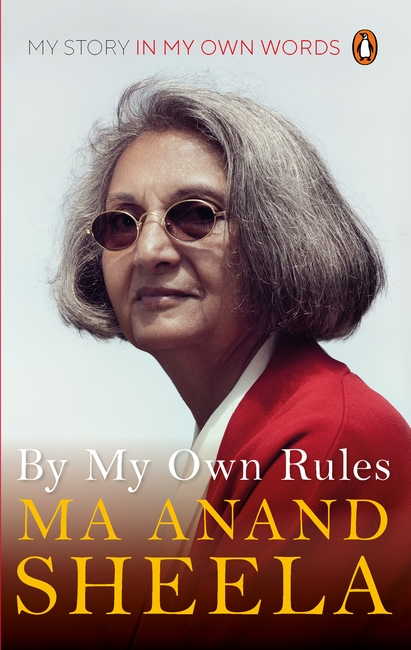
‘Everyone in the world has an opinion of me! I do not expect them to change. I accept life as it comes!’
There are few who can claim to have lived life on their own terms like the irrepressible, honest, bold and charming Ma Anand Sheela. Yet, controversy continues to follow her even today. Whether it be her portrayal in Wild Wild Country, or the Osho International Foundation’s take on the Netflix series, a wide spectrum of opinions has cloaked the real Sheela for too long. In the 1980s, she was the personal secretary of Bhagwan Shree Rajneesh and the manager of the Rajneesh commune in Wasco County, Oregon, USA. She was eventually sentenced to prison, where she served her time and walked out after three years. Adored and vilified at the same time by the world, she has seen it all-from rebuilding her life from scratch to being interviewed by Karan Johar on her grand return to India in 2019. More than three decades later, she is still in love with Bhagwan and his teachings. In By My Own Rules, Ma Anand Sheela bares it all-her lessons, her beliefs, her inspiration and the eighteen rules that define her life.