




Rinki has everything she needs to go crazy with: bickering boys, a bitchy grandma, boring books and the Biggest B of them all, Board Exams. Rinki and her wolf pack are back in action and they have company in the form of Google (Mr Know-it-all) and Adit (Mr Goody Two-shoes). At last, Rinki has her wish fulfilled. She has two boys fighting over her, er, mostly with her! Meanwhile, Rinki’s brand new grandmother, Mausiji, is raising hell at home. Her dad (lucky fellow!) is away in Coimbatore and it’s all up to Rinki to cool tempers down. At school, things are no better. Board Exams are looming large and Princy is making her feel smaller than ever. Her grades are shrinking and her waistline is growing. School life is about to get over, but not before things get a lot more crazy. Read the next instalment in the Rinki series and discover why turning seventeen is no walk in the park!
Catagory: Non Fiction
non fiction main category
Campaign Diary
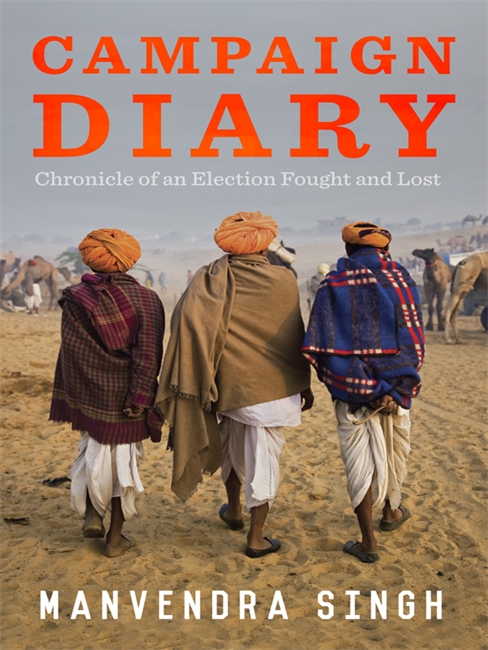
In March 2009 Manvendra Singh, the BJP’s candidate for the Barmer Lok Sabha constituency, launched his election campaign to retain the seat that he had won with a record margin in 2004 and lovingly nurtured as a member of Parliament for five years. Over two months, he criss-crossed his sprawling constituency straddling Rajasthan’s Thar desert, covering 34,000 kilometres in temperatures often nearing 50°C, to meet his constituents. They included herders and headmen; communities of traditional balladeers and craftsmen; youth groups and hoary old political fixers; Muslim pirs, Jain munis and Hindu priests. Campaign Diary, a daily record of those gruelling weeks of canvassing voters, is a compelling portrait of democracy in action in one corner of India, and shows the impact of local, national and international issues and policies at the grass-roots level. Vividly bringing to life the heat and dust, the intrigues and infighting, the moving personal encounters and comic episodes that make up the Great Indian Election Circus, Campaign Diary is also an honest and insightful account of the rewards— and the heartbreak—of a life in politics.
Waves
A superb collection of stories from a modern Indian master!
One of the most versatile and innovative among contemporary Tamil writers, Sundara Ramaswamy’s early stories, written between 1951 and 1966, focus on ordinary people leading ordinary lives and are full of gems by way of characterization: the policeman and the priest of the Nadi Krishna temple in ‘Prasadam’, and Varadan and Joswyn in ‘True Love’ remain unforgettable, in spite of their pedestrian lives. Written in the 1970s, clouded by the aftermath of the Bangladesh war and the Emergency, in the later stories—‘Intoxication’, ‘Waves’—the plots turn darker and more complex.
Surprising us with their twists and turns, raising uncomfortable questions, and yet touched by a fine sense of humour and humanity, the stories in this collection belong with the best in the genre.
The History Of Bhutan
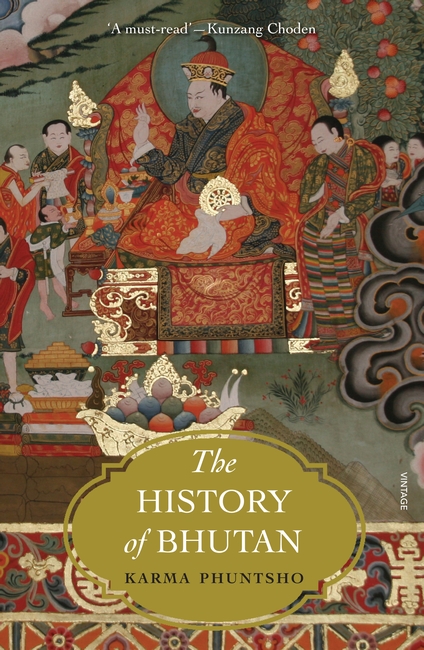
In recent years, the remote kingdom of Bhutan has increasingly attracted the attention of the world. In 2008, it emerged as the world’s youngest democracy and in the same year crowned the world’s youngest monarch. This was followed by the new King’s colourful wedding in 2011. Today, it continues to enchant the rest of the world with its policy of Gross National Happiness and has become a very popular destination for travel. But, despite its growing popularity and the rising scholarly interest in the country, Bhutan remains one of the most poorly studied places on earth.
Karma Phuntsho’s The History of Bhutan is the first-ever attempt to cover the entire history of Bhutan in some detail in English, combining both traditional perspectives and modern academic analysis. Written by a leading expert on the country, the book tells the story of Bhutan in a narrative style interspersed with some analytical and topical discussion, and numerous citations and translations from earlier writings. It is primarily a historical account, but it also includes substantive discussions of Bhutan’s geography, culture and society to give the readers an incisive introduction to the country.
Becoming Mrs Kumar
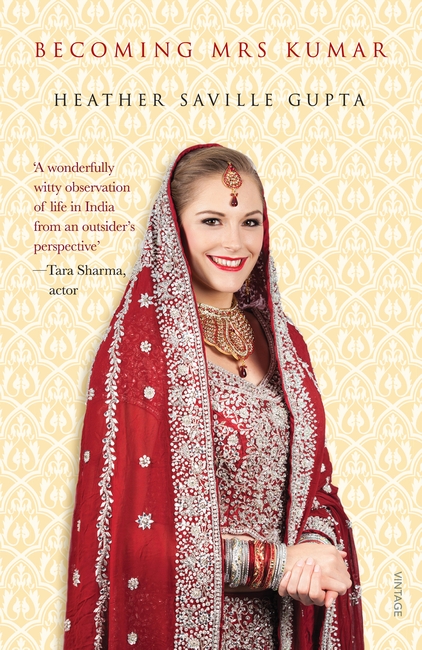
Julia Robinson’s bored. Her job at a top London ad agency is starting to feel a bit same-ish, her London rent is killing her and she’s been rained on one time too many to find the British weather amusing any longer. More importantly, everyone but her seems to be paired off in cosy twosomes.Julia wants to shake things up—and to the horror of friends and family jumps at the chance of a new job in Mumbai. Armed with nothing but a travel guide, fondness for curry and a vague awareness of Bollywood, she finds herself bang in the centre of one of the most chaotic, energetic cities in the world. But will she be able to navigate the potholes in the street, the glitzy nightlife of exclusive clubs and expensive cocktails, and the customs and traditions of a whole new world to find her way to Mr Right?
In The Body of the World
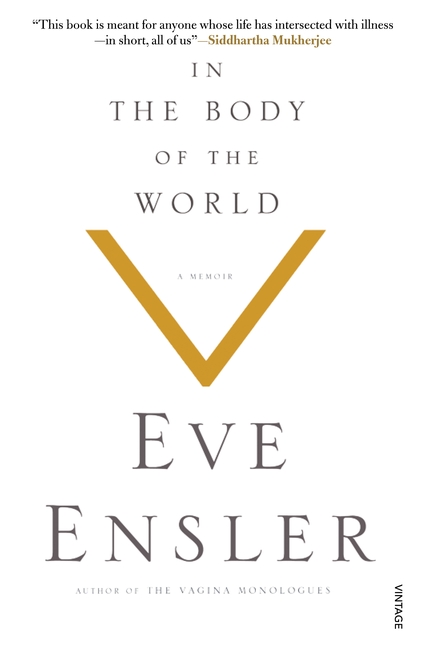
Playwright, author and activist Eve Ensler has devoted her life to the female body—how to talk about it, how to protect and value it. Yet she spent much of her life disassociated from her own body—a disconnection brought on by her father’s sexual abuse and her mother’s remoteness. “Because I did not, could not, inhabit my body or the Earth,” she writes, “I could not feel or know their pain.”
But Ensler is shocked out of her distance. While working in the Congo, she is shattered to encounter the horrific rape and violence inflicted on the women there. Soon after, she is diagnosed with uterine cancer and, through months of harrowing treatment, she is forced to become first and foremost a body—pricked, punctured, cut, scanned. It is then that all distance is erased. As she connects her own illness to the devastation of the Earth, her life force to the resilience of humanity, she is finally, fully—and gratefully—joined to the body of the world.
Unflinching, generous and inspiring, Ensler calls on us all to embody our connection to and responsibility for the world.
More Abcs Of Parenting
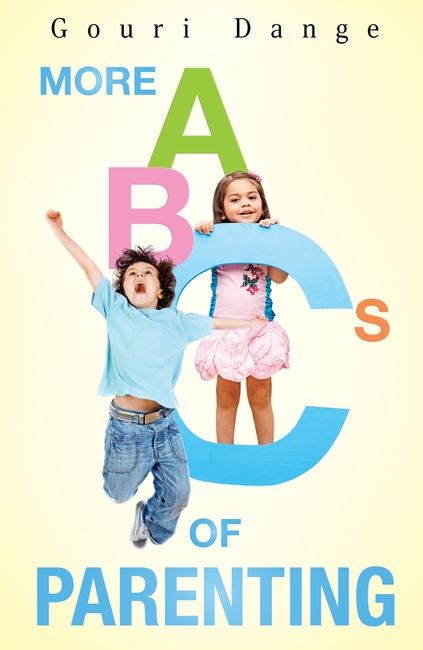
How do you get your 6-year-old to sleep on time?
How do you get your child to socialize?
How do you get your 5-year-old to stop throwing tantrums when she wants something?
When conventional approaches such as reward and punishment don’t work, what do you do? As much as being a joy and blessing to raise a child, parenting is a journey riddled with questions. As a parent, how do you know what’s right for your child and you?
Family counselor and columnist, Gouri Dange tackles all your parental woes with simple and reasoned answers and suggestions. Presented in an accessible question–answer format, More ABCs of Parenting provides practical solutions to demonstrate how there are answers to problems you thought were impossible.
War Journey By Malarvan
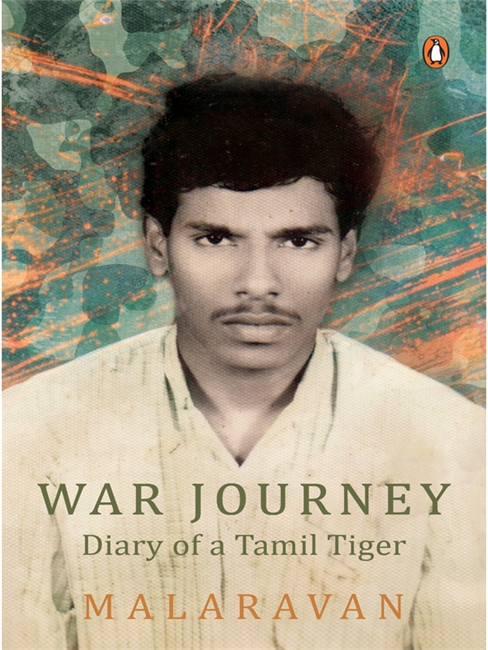
‘The child you threatened once, the young shoot you stepped on,
the Tamil you teased, is standing with a gun in front of you.’
This short diary was recovered from Malaravan’s kit after he was killed
in action in 1992, when barely twenty. In it, he recounts his unit’s journey
to Maankulam, the island’s granary, to fight a critical battle where they
routed the Lankan military. The LTTE’s planning and tactics, the fervour
and camaraderie of the young Tigers, and the actual combat are minutely
chronicled. As a foil to the violence, Malaravan brings out the beauty
of the Tamil forest and countryside and the humanity and support of the
common people for them, despite their suffering under army rule.
Bittersweet, fresh and lyrical at times, War Journey is a testament
to the Tamil longing for a homeland and the wider conflict
that once engulfed the island.
Children, Women, Men
This intricately woven narrative is one of the landmark novels of Indian modernism.
This ambitious novel, teeming with characters, focuses on the family of Srinivasa Aiyar or SRS, who moves from his ancestral house in Alapuzhai in Kerala, to the more modern Kottayam, before returning to his wife Lakshmi’s home in Nagercoil in Tamil Nadu. Set in the late 1930s and reflecting the political and social turmoil of the pre-war years, it chronicles the psychological conflict between SRS and his nine-year-old son, Balu; the moral struggle of a young widow, Anandam, as she considers remarriage; and the political journey of Sridaran, who chooses to break off his studies in England in order to join nationalist activities at home.
The Country Without A Post Office
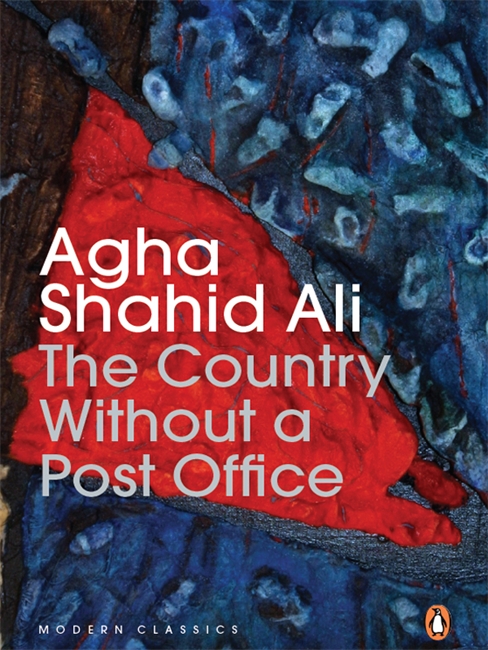
Amidst rain and fire and ruin, in a land of ‘doomed addresses’, a poet evokes the tragedy of his birthplace.
The Country Without a Post Office is a haunted and haunting volume that established Agha Shahid Ali as a seminal voice writing in English. In it are stunning poems of extraordinary formal precision and virtuosity, intensely musical, steeped in history, myth and politics, all merging into Agha Shahid Ali’s finest mode, that of longing.