



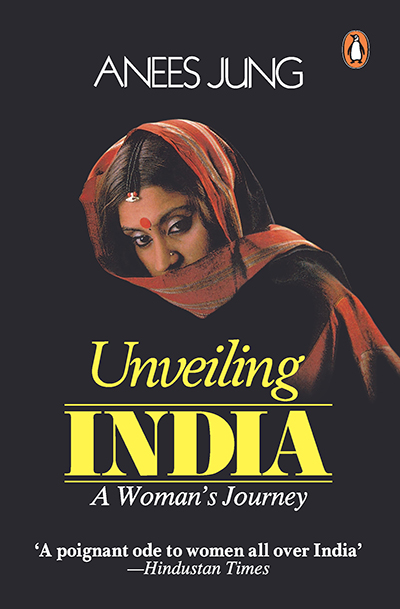
The women in this book are not extraordinary or famous, and yet their stories and testimonies, narrated here by one of India’s best-known women journalists, provide a passionate, often deeply touching, revelation of what it means to be a woman in India today.
The women tell of marriage and widowhood, unfair work practices, sexual servitude, the problems of bearing and rearing children in poverty, religion, discrimination, other forms of exploitation…Yet they also talk of fulfilling relationships, the joys of marriage and children, the exhilaration of breaking free from the bonds of tradition, ritual, caste, religion…Interwoven with all this isi the story of one woman’s journey—-of how Anees Jung, the author, brought up in Purdah, succeeded in shaking off the restricting influences of her traditional upbringing to become a highly successful, independent career woman, still a comparatively rare phenomenon in India.
As such, the book is essential reading for anyone wishing to understand the women of India—the silent majority that is now beginning to make itself heard.
The women in this book are not extraordinary or famous, and yet their stories and testimonies, narrated here by one of India’s best-known women journalists, provide a passionate, often deeply touching, revelation of what it means to be a woman in India today.
The women tell of marriage and widowhood, unfair work practices, sexual servitude, the problems of bearing and rearing children in poverty, religion, discrimination, other forms of exploitation…Yet they also talk of fulfilling relationships, the joys of marriage and children, the exhilaration of breaking free from the bonds of tradition, ritual, caste, religion…Interwoven with all this isi the story of one woman’s journey—-of how Anees Jung, the author, brought up in Purdah, succeeded in shaking off the restricting influences of her traditional upbringing to become a highly successful, independent career woman, still a comparatively rare phenomenon in India.
As such, the book is essential reading for anyone wishing to understand the women of India—the silent majority that is now beginning to make itself heard.
Catagory: Non Fiction
non fiction main category
India’s Economic Policy
A lucid and brilliantly-argued book on India’s recent economic reforms Nearly fifty years after independence, India remains a very poor country. It ranks near the bottom in terms of per capita income, and is similarly placed in the Human Develoent Index which measures social well-being. Economic growth in India has been less than half that of China or even other countries in Asia. And governments, at the Centre as well as in the states, are close to insolvency. The reason for our spectacular underachievement lies in the continuation of policies which had a certain validity as a response to the colonial experience, but which have long outlived their usefulness. The global economic scene has changed dramatically since they were formulated, and we must respond to the new realities. Bimal Jalan, the well known economist and present Governor of the RBI, in this lucid and well-argued book, makes a case for governments doing what they alone can best do, and less of what they cannot do effectively.
Ghalib
A brilliant biography of one of India’s greatest poets
Mirza Mohammad Asadullah Khan Ghalib began writing poetry in Persian at the age of nine and the pre-eminent poet of the time, Mir, predicted a great future for the precocious genius when he was shown his verse. But success and material rewards did not come to Ghalib easily, for the times were against him, and he did not suffer fools gladly even if they occupied positions of importance.
Ghalib was at the height of his powers when events took a turn for the worse. First came the decline of the Mughal court, then the rise of the British Empire and, finally, the Revolt of 1857. Though Ghalib lived through the upheavals and purges of the Revolt, in which many of his contemporaries and friends died and his beloved Delhi was irrevocably changed, he was a broken man and longed for death. When he died, on 15 February 1869, he left behind some of the most vivid accounts of the events of the period ever written. In this illuminating biography Pavan K. Varma evocatively captures the spirit of the man and the essence of the times he lived in.
Somadeva
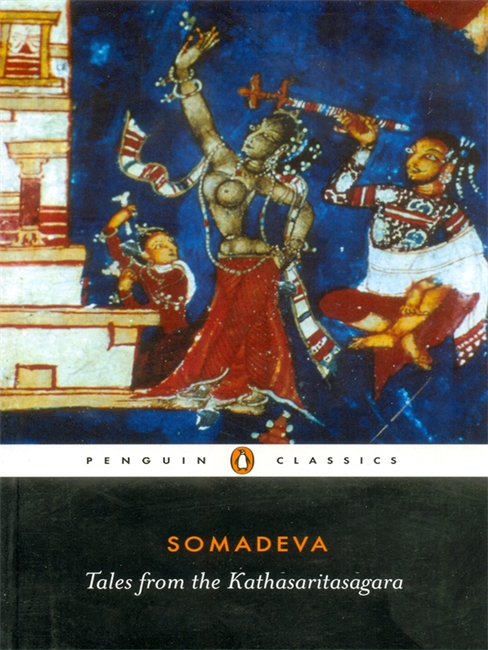
The vast ocean of stories that influenced storytelling the world over ‘The Kathasaritasagara’ is said to have been compiled by a Kashmiri Saivite Brahmin called Somadeva in AD 1070, although the date has not been conclusively established. Legend has it that Somadeva composed the Kathasaritasagara for Queen Suryavati, wife of King Anantadeva who ruled Kashmir in the eleventh century. The stories in this book are retold from ten of the eighteen books of the original Kathasaritasagara. The most remarkable feature of the Kathasaritasagara is that unlike other texts of the time, it offers no moral conclusions, no principles to live by and is throughout a celebration of earthly life. The tale of Naravahanadatta, the prince of the vidyadharas, the sky-dwellers with magical powers, comprises the main narrative and is used as an outer frame to introduce the stories in the text. Promiscuous married women and clever courtesans, imbecile Brahmins, incompetent kings and wise ministers, wicked mendicants and holy ascetics, cursed men and men who are granted boons, evil non-human creatures and friendly magical beings, all jostle for attention in Arshia Sattar’s masterful translation of this timeless collection of tales.
The Joy Of Achievement
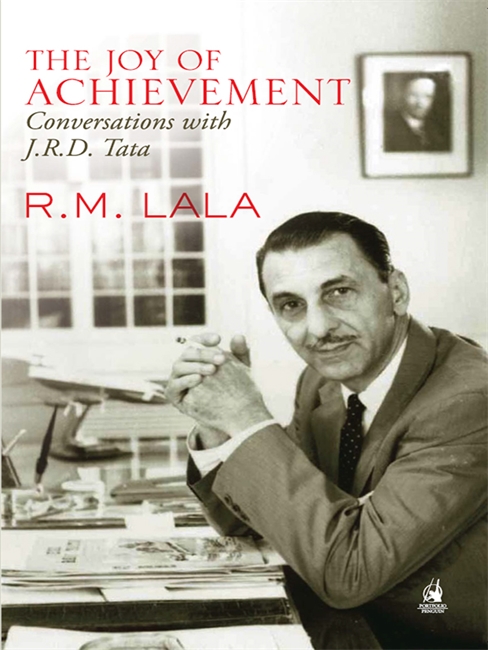
An entertaining, intimate and deeply moving portrait of the legendary industrialist. For six decades J.R.D. Tata headed India’s largest industrial conglomerate with uncommon success. This was only one aspect of his life. He was also a man of great sensitivity who suffered at the loss of friends and was pained by the poverty he saw around him: a philanthropist who wanted India to be -a happy country’ and did all that he could to make it so: a man with a passion for literature, fast cars, skiing and, of course, flying. This book, by the author of the best-selling The Last Blue Mountain, records JRD’s thoughts on a variety of subjects. In these pages he speaks of the House of Tatas and his style of management, about how he nearly joined the freedom struggle in the early 1940s, about the -thrill of living a little dangerously’, his love of music and wine, and the writers he likes to read. He speaks also, with striking candour and insight, about the failures of socialism, the future of India and his association with stalwarts like Jawaharlal Nehru. Jayaprakash Narayan, Vallabbhai Patel, Indira Gandhi and Henry Kissinger. Towards the end of the book, in the final year of his life, we see him come to terms with death, God and the afterlife.
J. Krishnamurti
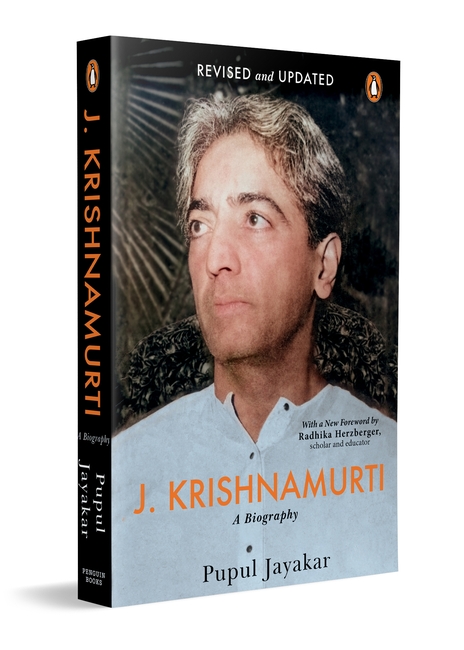
REVISED AND UPDATED WITH A NEW FOREWORD
A classic biography of one of the greatest spiritual teachers of our times
In 1909, when he was just fourteen, Krishnamurti was proclaimed the world teacher in whom Maitreya, the Bodhisattva of compassion, would manifest. The proclamation was made by Annie Besant, then president of the Theosophical Society, a movement that combined Western occult philosophy with Buddhist and Hindu teachings. Besant trained Krishnamurti in his role as the chosen one but twenty years later he chose to disband the order he was head of and set out alone on his endless journey.
As a contemporary of Krishnamurti and one of his closest associates, Pupul Jayakar offers an insider’s view of the fascinating life and thought of an extraordinary individual.
Calcutta Cookbook
The Calcutta Cookbook Is Much More Than A Cookery Book&Mdash;It Is A Culinary Chronicle Of Travellers And Traders Who Built The City That Job Charnock Founded.
Calcutta ‘S Chronicle Began On A Hot, Wet August Afternoon In 1690 When A Hungry Charnock Climbed Off His Ship On To The Steps Of A Muddy Ghat. The River Was Hooghly And The Place Sutanati&Hellip; The Story Of Calcutta Is Told By Three Food Lovers&Mdash;The Late Gourmet Chef And Author Of Bangla Ranna, Minakshi Das Gupta, And Feature Writers Bunny Gupta And Jaya Chaliah&Mdash;Who Have Collected Recipes From All Over The World. Many Of These Are Family Secrets Of Calcuttans Who Have Recreated Armenian, Jewish, Arabian, European, Chinese And Tibetan Dishes With Distinct Calcutta Flavour. Through Over Two Hundred Tried And Tested Recipes Ranging From The Delicious Bengali Chingri Maacher Malai Curry To The Biryani And Kebabs Of Kabul, And The Temperado, Vindaloo And Sorpotel Of Goa, Calcutta Unfolds As A Gourmet&Rsquo;S Paradise
Anglo Indian Food And Customs
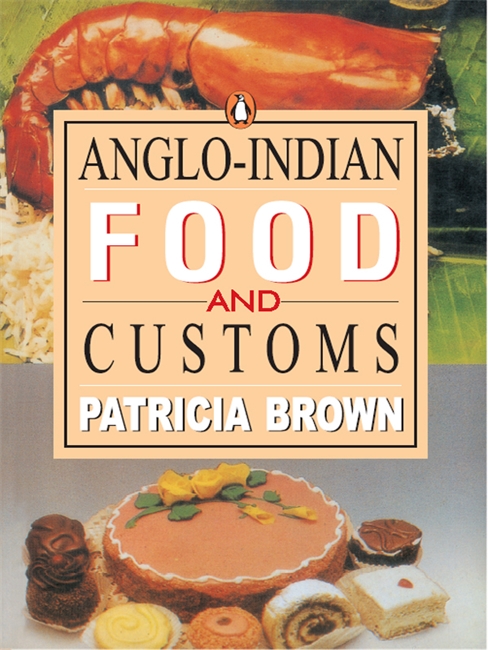
East meets West to create a unique cuisine of mixed European and Indian parentage, the Anglo-Indians adopted the religion, manners and clothing of their European forefathers. Yet, over the years, those of them who made India their home successfully integrated into the mainstream of Indian society. And some of the most glorious results of this assimilation took shape in the kitchen, the territory of the memsahib and her trusted khansamah. Anglo-Indian cuisine is a delicious blend of East and West, rich with the liberal use of coconut, yogurt and almonds, and flavoured with an assortment of spices. Roasts And Curries, Pulaos And Breads, Cakes And Sweetmeats, All Have A Distinctive Flavour. The Western Bias For Meats And Eggs Is Offset By The Indian Fondness For Rice, Vegetables, Curds, Papads, Pickles And Chutneys. And There Is A Great Deal Of Innovation And Variety In Soups, Entrees, Side Dishes, Sauces, Salads And Desserts.
The Other Side Of Silence
The Partition of India in 1947 caused one of the great human convulsions of history. The statistics are staggering. Twelve million people were displaced; a million died; seventy-five thousand women are said to have been abducted and raped; families were divided; properties lost; homes destroyed. In public memory, however, the violent, disturbing realities that accompanied Partition have remained blanketed in silence. And yet, in private, the voices of Partition have never been stilled and its ramifications have not yet ended. Urvashi Butalia’s remarkable book, the outcome of a decade of interviews and research, looks at what Partition was intended to achieve, and how it worked on the ground, and in people’s lives. Pieced together from oral narratives and testimonies, in many cases from women, children and dalits- marginal voices never heard before- and supplemented by documents, reports, diaries, memoirs and parliamentary records, this is a moving, personal chronicle of Partition that places people, instead of grand politics, at the centre. These are the untold stories of Partition, stories that India has not dared to confront even after fifty years of independence.
Stallion Of The Sun
A collection of finely crafted stories that challenge our political, social and cultural beliefs. One of the leading exponents of the Modernist school in Kannada and Jnanpith award winner, U.R. Anantha Murthy has been a writer for nearly five decades. This excellent anthology brings together stories from his five collections. Spanning thirty-five years from 1955-89, they represent his journey from ‘an angry young radical to an intensely humanist conservative’ `Clip Joint’ explores the conflict and confluence of Indian and Western values through an encounter between an Indian student in England and his English classmate. ‘Ghatashradhha’ is a severe indictment of the brahminical system where a priest performs a mock funeral for his child-widow daughter, Yamunakka, who has become pregnant. The critique of unquestioning belief in tradition is pursued in ‘Akkayya’ but resolved with a touch of humour through the protagonist’s singular life story. In the crowning story, ‘Stallion of the Sun’, which is typical of Anantha Murthy’s later, self-reflexive phase, the dissonance between tradition and modernity settles in favour of simple faith. The seven masterful stories in this collection, many of which have been translated into English for the first time, affirm Anantha Murthy as one of India’s foremost fiction writers.