



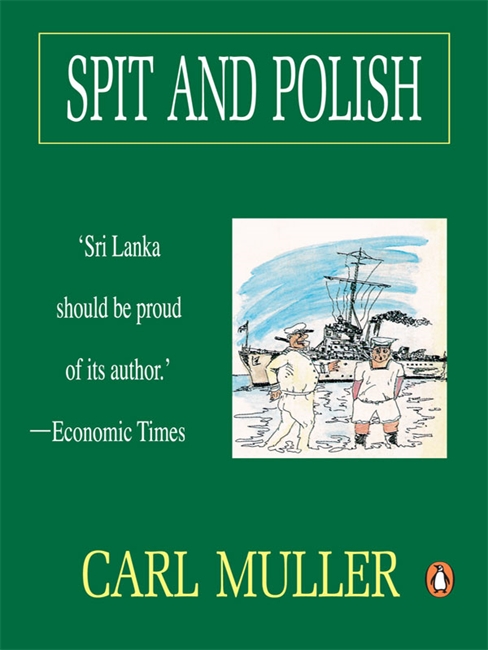
See here, first take a little polish on the finger and rub into the leather. Then spit. and rub.’ – boasts one recruit of his boot polishing skills. sadly, the only reward this gets him is thirty pairs of shoes to shine. This is only one of the hilarious episodes in Carl Muller’s continuation of the von Bloss family saga. Carloboy von Bloss is back, now a robust young man of eighteen, spending four eventful years in the one-ship Royal Ceylon Navy. Carloboy and his fellow recruits get up to the weirdest capers: painting their boots black; posing as Italian ghosts; planning to wink at.
Catagory: Non Fiction
non fiction main category
Rediscovering Dharavi
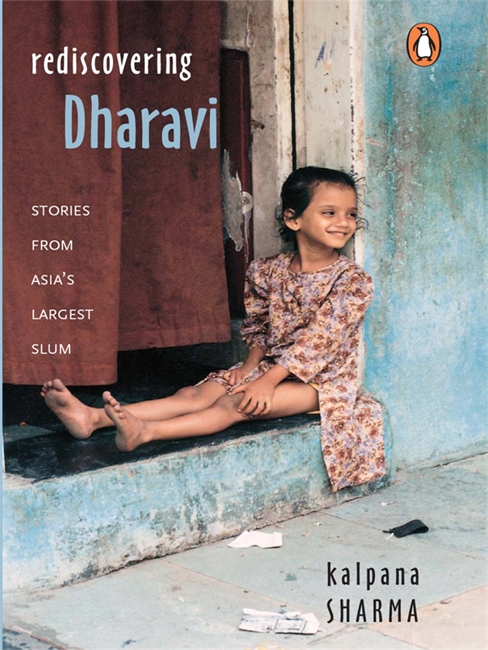
A book that challenges the conventional notion of a slum. Spread over 175 hectares and swarming with one million people, Dharavi is often called ‘Asia’s largest slum’. But Dharavi is much more than cold statistic. What makes it special are the extraordinary people who live there, many of whom have defied fate and an unhelpful State to prosper through a mix of backbreaking work, some luck and a great deal of ingenuity. It is these men and women whom journalist Kalpana Sharma brings to life through a series of spellbinding stories. While recounting their tales, she also traces the history of Dharavi from the days when it was one of the six great koliwadas or fishing villages to the present times when it, along with other slums, is home to almost half of Mumbai. Among the colourful characters she presents are Haji Shamsuddin who came to Mumbai and began life as a rice smuggler but made his fortune by launching his own brand of peanut brittle; the stoic Ramjibhai Patel, a potter, who represents six generations from Saurashtra who have lived and worked in Mumbai; and doughty women like Khatija and Amina who helped check communal passions during the 1992-93 riots and continue to ensure that the rich social fabric of Dharavi is not frayed. It is countless, often anonymous, individuals like these who have helped Dharavi grow from a mere swamp to a virtual gold mine with its many industrial units churning out quality leather goods, garments and food products. Written with rare sensitivity and empathy, Rediscovering Dharavi is a riveting account of the triumph of the human spirit over poverty and want.
Reaping The Whirlwind
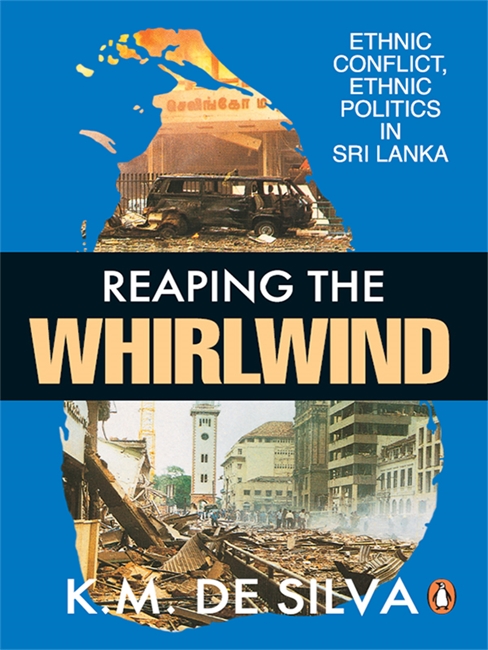
A critical analysis of the ethnic conflict in Sri Lanka In the eighties, Sri Lanka, once considered the ‘model’ colony, was torn apart by ethnic strife between the predominantly Buddhist Sinhalas, constituting almost threequarters of the island’s inhabitants, and the numerically fewer Tamils, who were a mix of Hindus, Christians and Muslims. Massacres occurred after the riots of May 1983, and over time about 1,25,000 Tamils entered India as refugees, fleeing from a virtual civil war which still afflicts the north of the island. The author, a renowned Sri Lankan analyst of global ethnic conflict, discusses the historical reasons behind the ethnic violence, especially the growth of the Sinhalas’ feeling of being a beleagured minority despite their numerical strength. Analysing the present conflict, he shows how the language policy of ‘Sinhala Only’, followed by the government in the sixties, supplanted religion as a divisive factor and how rivalry over educational and employment opportunities fuelled the schism. Bringing the story up to the present, de Silva examines the role played by Indian and Tamil Nadu politicians, and President Kumaratunga’s efforts towards a devolution of power to the Tamil Provinces. But given the LTTE’s acceptance of nothing less than Eelam, he sees little hope of an early end to the violence that has racked Sri Lanka for almost two decades now.
Light On Life

Light on Life brings the insight and wisdom of Indian astrology to the Western reader. Jyotish or Indian astrology is an ancient and complex method of exploring the nature of time and space and its effect upon the individual. Formerly a closed book to the West, the subject has now been clarified and explained by Hart deFouw and Robert Svoboda, two experts and long-term practitioners. In Light on Life they have created a complete and thorough handbook that can be appreciated and understood by those with very little knowledge of astrology. Jyotish states that by considering the state of the cosmos when an event occurs, we can begin to understand its nature- and to prepare an appropriate response. Although there are similarities with Western astrology there are also profound differences. Jyotish is, above all, infused with the religious, psychological and physical spirit of India. This comprehensive and enlightening book on the subject will prove a necessity to every astrologer or student of Indian thought.
Kashmiri Cooking
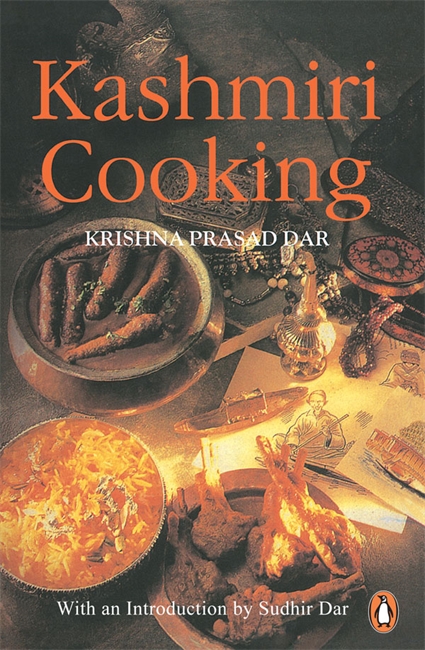
Krishna Prasad Dar’s collection of over a hundred Kashmiri recipes became a classic in its time. First published a decade ago. this new revised edition is beautifully illustrated by his son, cartoonist Sudhir Dar, with an informative introduction to Kashmir! food, one of the subcontinent’s most elaborate and interesting cuisines.
Intimate Relations
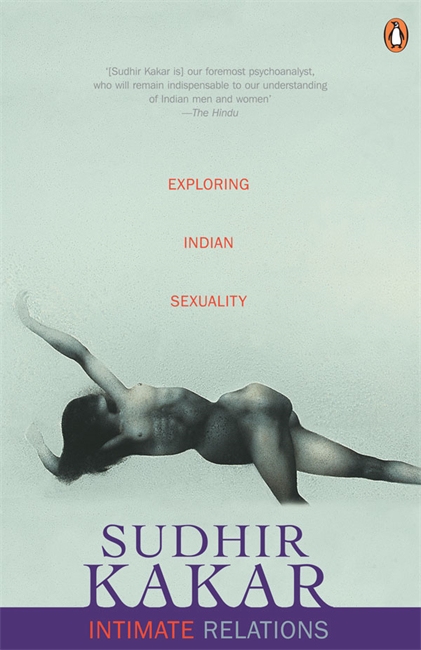
Plumbing the hearts of women and men in India and exploring the relations they engage in, Sudhir Kakar gives us the first full-length study of Indian sexuality. His groundbreaking work explores India’s sexual fantasies and ideals, the “unlit stage of desire where so much of our inner theater takes place.” Kakar’s sources are primarily textual, celebrating the primacy of the story in Indian life. He practices a cultural psychology that distills the psyches of individuals from the literary products and social institutions of Indian culture. These include examples of lurid contemporary Hindi novels; folktales; Sanskrit, Tamil, and Hindi proverbs; hits of the Indian cinema; Gandhi’s autobiography; interviews with women from the slums of Delhi; and case studies from his own psychoanalytic practice. His attentive readings of these varied narratives from a vivid portrait of sexual fantasies and realities, reflecting the universality of sexuality as well as cultural nuances specific to India.
Colours Of Violence
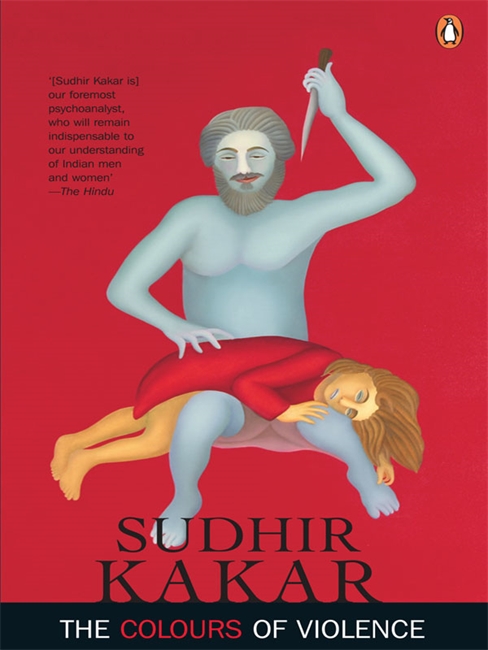
For decades India has been intermittently tormented by brutal outbursts of religious violence, thrusting thousands of ordinary Hindus and Muslims into bloody conflict. In this provocative work, psychoanalyst Sudhir Kakar exposes the psychological roots of Hindu-Muslim violence and examines with grace and intensity the subjective experience of religious hatred in his native land. With honesty, insight, and unsparing self-reflection, Kakar confronts the profoundly enigmatic relations that link individual egos to cultural moralities and religious violence. His innovative psychological approach offers a framework for understanding the kind of ethnic-religious conflict that has so vexed social scientists in India and throughout the world. Through riveting case studies, Kakar explores cultural stereotypes, religious antagonisms, ethnocentric histories, and episodic violence to trace the development of both Hindu and Muslim psyches. He argues that in early childhood the social identity of every Indian is grounded in traditional religious identifications and communalism.
Better Man
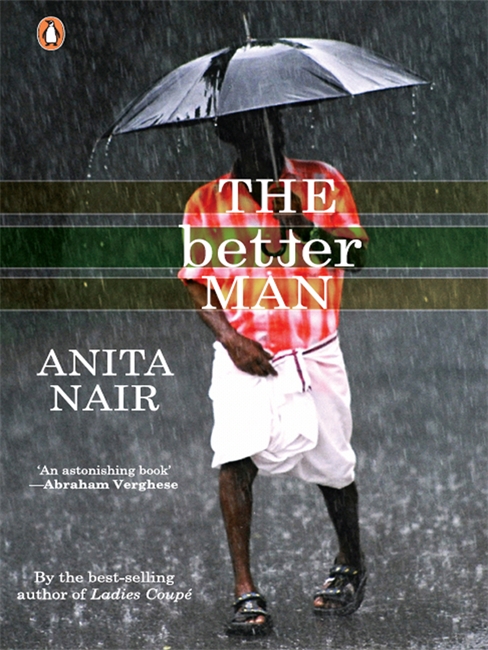
Mukundan, a middle-aged bachelor, is forced to return to his native Kaikurussi, a sleepy village in Kerala. Determined to conquer old ghosts, Mukundan decides to restore his childhood home and hires One-Screw-Loose Bhasi, an outcast painter, to oversee the renovations. A practitioner of a unique style of healing, Bhasi is intrigued by Mukundan’s unhappiness and sets about mending his troubled friend. But the durability of Mukundan’s transformation into a better man is soon called into question.
All Is Burning
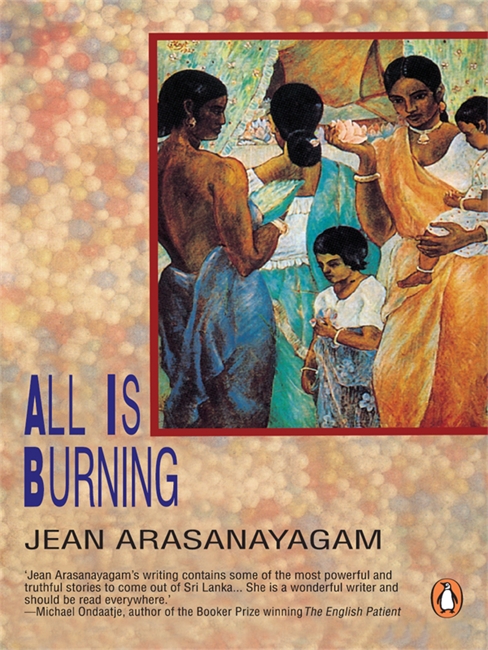
Nineteen stories of rare power from the heart of war-ravaged Sri Lanka. In these stories Jean Arasanayagam brings us voices that are not normally heard: those of anonymous men and women searching for order and reason in the midst of a ruthless civil war. While many succumb to the horror of their times, there are others who discover in themselves unexpected reserves that will help them survive. Thus a young Sinhala man turns his back on an aimless upper-class existence and joins a group of Tamil refugees smuggling themselves into Germany; a woman goes out alone to see the scene of a carnage to try and find her daughter’s lover among the dead and dying; a maid returns from the rich desert city of Doha to the green half-jungle of her village in northern Sri Lanka and rediscovers happiness despite the uncertain future… In addition to stories about the effects of war and violence, this collection also explores aspects of ethnicity and individual choice in a multicultural society. All is Burning is truth-telling at its poignant best.
Understanding The Muslim Mind
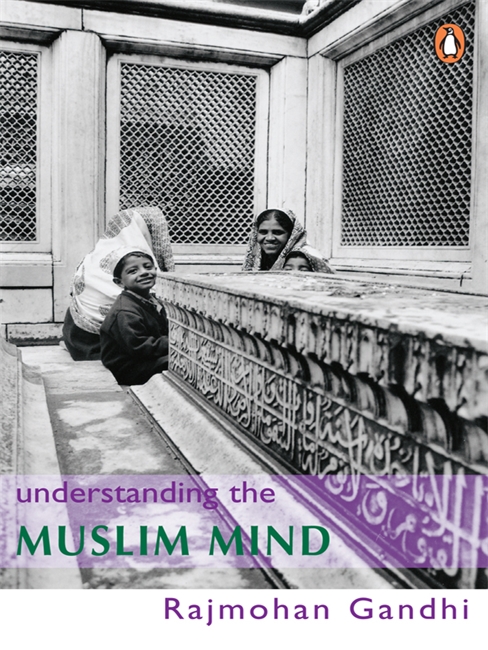
A fascinating account of the Muslims in twentieth-century India, Pakistan and Bangladesh through his biographical sketches of eight prominent Muslims- Sayyid Ahmed Khan (1817-1898), Fazlul Haq (1873-1962), Muhammad Ali Jinnah (1876-1948), Muhammad Iqbal (1876-1938), Muhammad Ali (1878-1931), Abul Kalam Azad (1888-1958), Liaqat Ali Khan (1895-1951) and Zakir Hussain (1897-1969) Rajmohan Gandhi, the grandson of Mahatma Gandhi, provides a deeply insightful and comprehensive picture of the community in the subcontinent today.