



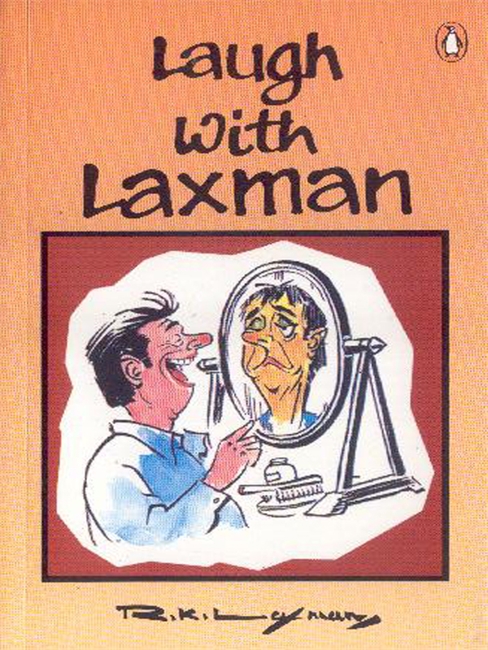
The author is best known for his common man cartoons, and has created cartoons as a world that even the ubiquitous common man is not privy to. It is here that Laxman’s sense of parody and satire find some of their finest expressions. A selection of these rare and masterly cartoons which comment caustically on our social and political character were together in the first volume of ‘Laugh with Laxman’, and proved to be immensely popular. This is the second volume in the series replete with timeless gems that continue to amuse.
Catagory: Non Fiction
non fiction main category
Fish Cookbook
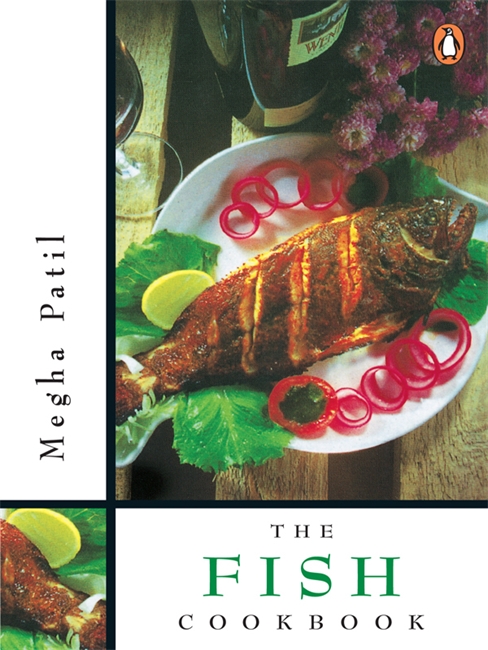
An exciting journey through India’s coastal regions for lovers of seafood… In this book, Megha Patil brings together a collection of exotic and delectable recipes which will appeal to every kind of cook-from the novice to the gourmet-and which bring out the versatility of fish. The wide variety of recipes range from quick pan-fires and unusual snacks to luscious pulaos and scrumptious speciality seafood dishes. Though Patil’s focus is on the rich tradition of seafood on the west coast, especially Maharashtra, there are also recipes from the south, east and north-east, as well as traditional Parsi and Goan dishes. Among the hundred-odd recipes are: Shellfish and tomatoes pulao, Fish-head tamarind curry, Prawns with mango slivers, sunny eggs on oysters, Crab in coconut cream, Fried spiced lampreys, Poached pomfret in feni, Goa fish curry, squid dry masala and Steamed hilsa with mustard
Aruna’s Story
A remarkable work of investigative reporting and non-fiction writing in the tradition of Truman Capote’s In Cold Blood.Journalist Pinki Virani recreates the real-life tragedy of Aruna’s Stories Shanbaug, who was attacked with a dog chain and brutally raped in the very hospital where she was a nurse, and abandoned by her family thereafter.Brain-dead for sight, speech and movement, yet hopelessly alive to pain, hunger and terror, she now lies, barely alive, in the hospital where she once treated patients back to health. Virani’s investigations also unearthed the crowning tragedy: while Aruna has been in coma for over twenty-five years, her rapist, a sweeper in the hospital, walked a free man after a mere seven years in prison for robbery and attempt to murder.Vivid and gut-wrenching, this is a book that will haunt the reader long after the final page has been turned.
The Big Fat Joke Book

Ribald, rib-tickling and outrageous, Khushwant Singh’s inimitable brand of humour has made him a legend in his own lifetime. This volume brings together the funniest and most memorable selections from his enormous repertoire, including some of the wackiest jokes ever cracked about sex, God and politics.
Big Book Of Malice

Malice. The word is synonymous with Khushwant Singh; his pen has spared no one. For over four decades as India’s most widely-read columnist, he has commented on just about everything: religion, politics, our future, our past, prohibition, impotency, presidents, politicians, cricket, dog-haters, astrologers, the banning of books, the secret of 1ongevity…the list is endless. Candid to the point of being outrageous, Khushwant Singh makes both his reader and subject wince. He writes unabashedly on nose picking, wife-bashing, bribing journalists, gender wars and the desires of an octogenarian; on Nehru and Edwina, Laloo, Bal Thackeray, Chandraswami and Sonia Gandhi, among host of others.
Khushwant Singh’s Big Book of Malice brings together some of his nastiest and most irreverent pieces. Witty, sharp and brutally honest, this collection is certain to delight and provoke readers of all ages.
‘Good people can be crashing bores. Evil men who combine evil-doing with drunkenness, debauchery and making illicit money make more interesting characters because they pack their lives with action. They do what most of us would like to do but do not have the guts to.’
-Khushwant Singh
India After Independence
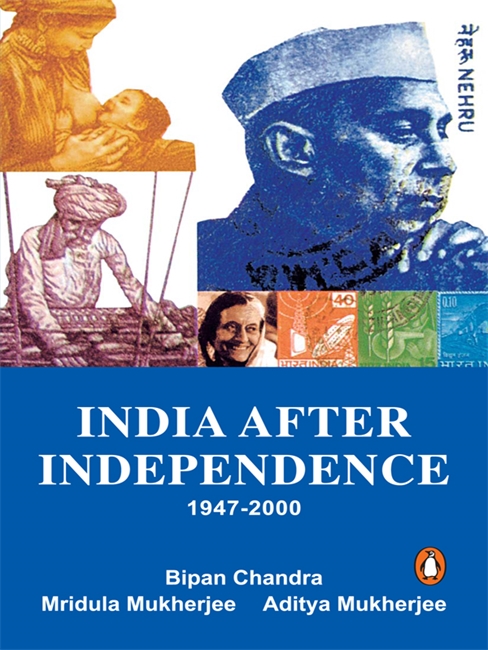
This volume, a sequel to the best-selling India’s Struggle for Independence, analyses the challenges India has faced and the successes it has achieved over the last five decades, in the light of its colonial legacy and the century-long struggle for freedom. The book describes how the Constitution was framed, as also how the Nehruvian political and economic agenda and basics of foreign policy were evolved and developed.
Bihar is in the Eye of the Beholder
In this impressionistic and often darkly funny account of the sixteen months he spent in a small town in Bihar, Vijay Nambisan tries to understand what drives-or thwarts-perhaps the most talked about state in the Indian Union. Vicious poverty and caste wars, messy politics, corruption and lawlessness-the worst of modern India is in full display here. Yet, how different is Bihar from the rest of the country? And is it really on the brink of a spectacular collapse? Looking beyond clichés and statistics, Vijay Nambisan has produced a remarkably perceptive and balanced portrait of the ‘hole in the heart of India’.
Notes On The Great Indian Circus
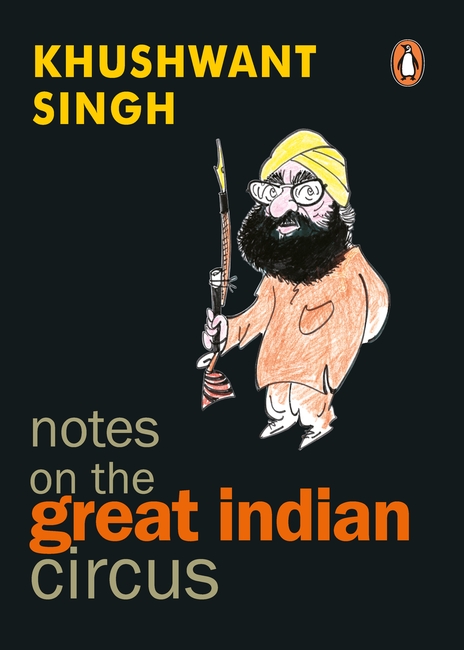
Khushwant Singh, India S Most Widely-Read Columnist, Has Been A Keen Observer Of Life In India Its Politics, Economics, Religion, Habits, Customs, Events And Personalities. Notes On The Great Indian Circus Is A Chronicle Of The State Of The Nation As It Was And As It Is, And The Way It Is Going To Be. It Also Reflects The Indian Psyche The Way We Are. This Selection Brings Together The Best Of Khushwant Singh S Articles From A Wide Variety Of Magazines And Newspapers, And Documents His Inimitable Perceptions On Parliament, Filmstar Mps, Censorship And Communalism. Containing Pieces On Subjects Ranging From Kentucky Fried Chicken To The Kumbh Mela, The Golden Temple To The Assassination Of Rajiv Gandhi, Osho To Bhindranwale, And Pornography To Family Planning, This Is An Insightful, Candid And Provocative Collection.
In The Afternoon Of Time
Hindi Litterateur Harivansh Rai Bachchan was born in Allahabad in 1907, and acquired immense popularity in the 1930s through Madhushala, a long poem inspired by the Rubaiyat of Omar Khayyam. Some three decades later, by now well established as a major figure on the Hindi literary scene, Bachchan wrote the first of four volumes of his autobiography, which was to earn widespread praise from critics and readers alike. In the Afternoon of Time is creative abridgement of these four volumes, translated into English for the first time.
These intensely personal memoirs span several generations, tracing the history of Bachchan’s forebears, who came to live in Allahabad from a small village in Uttar Pradesh. With a bittersweet tone that recalls the lyricism of Madhushala, the author draws a portrait of provincial life in the first decades of the century, and describes with remarkable candour the struggles, joys and heartbreak of his early life. The narrative dwells at length on the death of his young wife and the ensuing trauma; remarriage, and a teaching assignment in the English department of Allahabad University; his Ph.D work on W.B. Yeats in Cambridge; a long stint as Hindi officer in the Ministry of External Affairs; an interlude in the Rajya Sabha; and the meteoric rise of his elder son Amitabh in the world of Hindi cinema.
In his brilliant translation, Rupert Snell has succeeded in communicating the power and intensity that made the original work a classic in the genre of autobiographical writing in India.
Island of Blood
Frontline Reports From Sri Lanka And Other South Asian Flashpoints.
Island Of Blood Is A Distillation Of The Experiences And Insights Of One Of The Finest Journalists India Has Ever Produced. During The Eighties And Nineties, When The Indian Media Rarely Ventured Into Flashpoints Like Sri Lanka And Afghanistan, Anita Pratap Braved The Odds To Send In Reports From The Front, Over And Over Again. War, Ethnic Conflict, Earthquakes, Cyclones And Droughts, Wherever There Was A Story To Be Told, She Would Track It Down. First In India, Then In Sri Lanka, Anita Managed To Gain Access To Ltte Chief Pirabhakaran, And Her Interviews With Him Made Headlines Around The World. In Afghanistan, She Eluded The Taliban Militia To Discover The Frightening Reality Of Women&Rsquo;S Lives Under A Terrifying Fanatical Regime.
Wherever She Went, Anita Saw And Faithfully Reported The Consequences Of Racial And Historical Prejudice, Religious And Sexual Discrimination, And Mindless Hatred And Fear. And Each Time, She Returned To The Comfort Of Home And Family With A Renewed Determination To Appreciate And Celebrate The Ordinary.