“The elastic heart of youth cannot be compressed into one constrained shape long at a time.”
From tricking his friends into painting a fence (for fun!) to crashing his own funeral, Tom is never up to any good, much to Aunt Polly’s regret. He skips school to chase adventures and doesn’t like rules at all.
But a spooky night at a graveyard catapults him and his best friend Huck into a world a little more darker, a little less innocent.
Mark Twain transports us to a time of steamboats and straw hats, as Tom and his band of followers run past barefoot, plotting daring escapades and wrestling with pangs of conscience. The Adventures of Tom Sawyer is the enduring tale of learning to distinguish right from wrong in a fast-changing 19th century American town.
Suddenly, growing up isn’t just about pranks anymore.
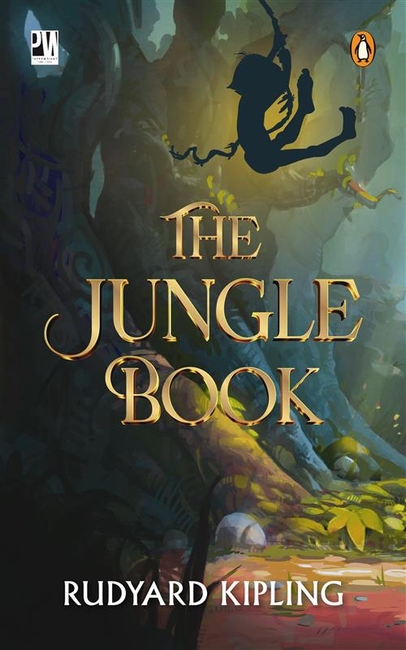
Enter a world where the jungle is alive with wonder, danger, and unforgettable friendships.
Little Mowgli shows up in tatters at the jungle, found by a wolf pack. Raised by the pack, he is no ordinary boy; he can climb trees like a monkey and even outrun a tiger. Adopted by the wolf-pack, he slowly grows up away from the world of humans. Along the way he makes lifelong friends: Baloo the brown bear and Bagheera the wise panther who help him learn the laws of the jungle. But the jungle can be a dangerous place. Together the trio face unforeseen dangers and find themselves caught up in exciting adventures; until Mowgli finally comes face-to-face with Shere Khan, the tiger, and the Bandar-Log. Mowgli’s world is full of joy and thrills, with fascinating creatures and the enchanting forest; a transportive and enjoyable read for everyone!
Rudyard Kipling’s classic tale is a transportive journey into a world of:
- Breathtaking adventure that keeps readers on the edge of their seats
- Timeless wisdom about courage, loyalty, and finding where you belong
- Unforgettable characters who feel like family
- A magical setting where every leaf whispers secrets and every creature has a story
Perfect for readers of all ages, The Jungle Book is more than a story—it’s an experience that stays with you long after the final page.
Discover why generations have fallen in love with the boy who ran with wolves.

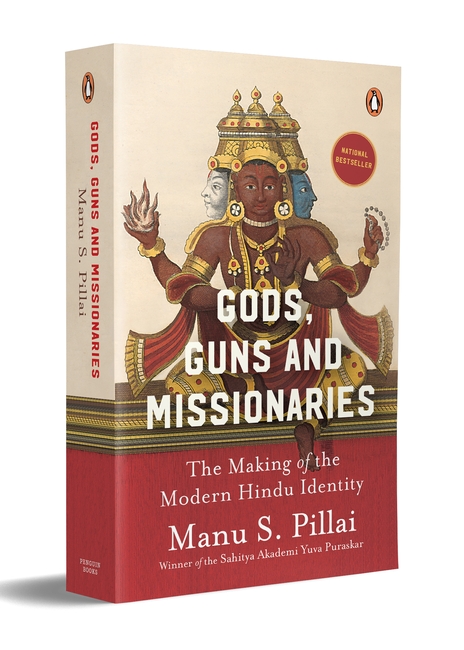
When European missionaries first arrived in India in the sixteenth century, they entered a world both fascinating and bewildering. Hinduism, as they saw it, was a pagan mess: the worship of devils and monsters by a people who burned women alive, performed outlandish rites and fed children to crocodiles. But soon it became clear that Hindu ‘idolatry’ was far more complex than white men’s stereotypes allowed, and Hindus had little desire to convert.
But then, European power began to grow in India, and under colonial rule, missionaries assumed a forbidding appearance. During the British Raj, Western frames of thinking gained ascendancy and Hindus felt pressed to reimagine their religion. This was both to fortify it against Christian attacks and to resist foreign rule. It is this encounter which has, in good measure, inspired modern Hinduism’s present shape. Indeed, Hindus subverted some of the missionaries’ own tools and strategies in the process, triggering the birth of Hindu nationalism, now so dominant in the country.
In Gods, Guns and Missionaries, Manu S. Pillai takes us through these remarkable dynamics. With an arresting cast of characters—maharajahs, poets, gun-wielding revolutionaries, politicians, polemicists, philosophers and clergymen—this book is ambitious in its scope and provocative in its position. Lucid and exhaustive, it is, at once, a political history, a review of Hindu culture and a study of the social forces that prepared the ground for Hindu nationalism. Turning away from simplistic ideas on religious evolution and European imperialism, the past as it appears here is more complicated—and infinitely richer—than popular narratives allow.
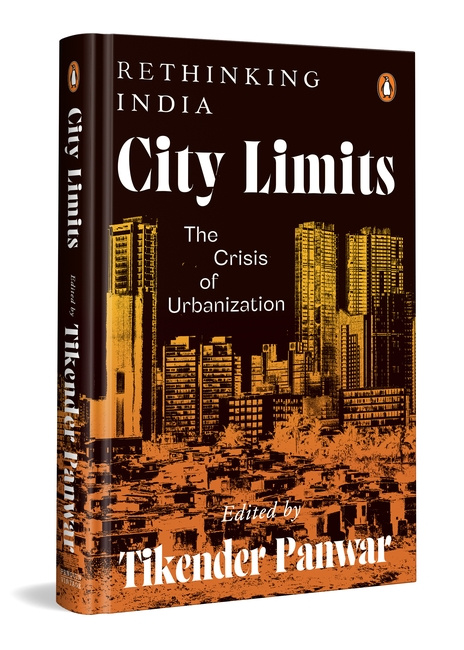
Part of the acclaimed Rethinking India series, the volume deals with the issue of unplanned and unchecked urbanization in Indian cities that has worsened the quality of life and widened the socio-economic divide. Through essays by some of our leading experts in policymaking and urban development, this book addresses the major problems and offers necessary solutions—serving as a guidebook on how to build sustainable and inclusive cities.
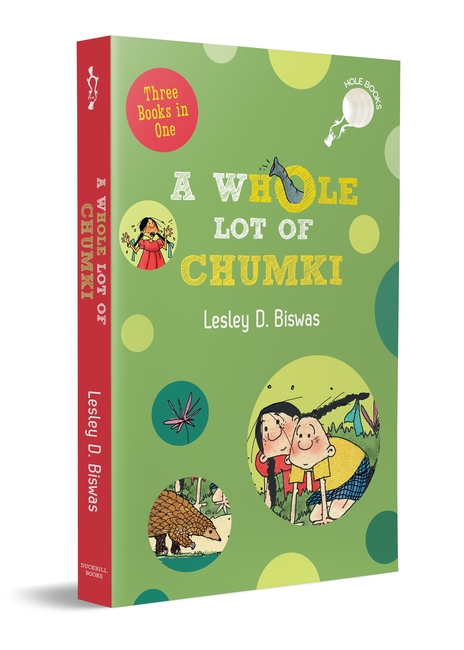
Chumki is brave and gutsy and faces all challenges with gusto (and some self-doubt), whether it is saving a pangolin, looking out for some runaway elephants, helping her grandmother who forgets everything, or dealing with people who think she is unlucky.
These funny adventure books are now in one delightful package, with a special note by the author for this edition.
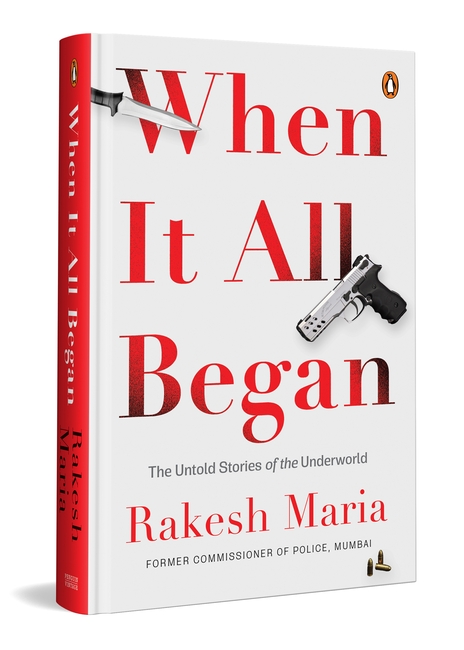
In the 1980s, the streets of Dongri, Pydhonie, Nagpada, Agripada and Byculla witnessed some of the bloodiest gang wars and reigns of terror India had ever seen. These neighbourhoods became the battlegrounds of crime. But when did it all begin?
Tracing it back to the 1930s, when Abdul Karim Sher Khan Pathan, aka Karim Lala—considered one of the first feared dons of Bombay—arrived in the city. He soon mastered the tricks of the trade with the Pathan lords Babul Khan and Jumma Khan, thus gradually establishing his dominance. As the Pathans grew in power, resentment against them simmered among the Pathans. Petty criminals from the city’s streets and markets began to evolve into ‘dadas’ and ‘bhais’, forming gangs of their own.
This gave rise to the first generation of dons—figures including Karim Lala, Haji Mastan and Dilip Aziz—who built empires through smuggling, extortion and other rackets. Over time, these groups diversified, regrouped and expanded into larger syndicates of organized crime.
But the next generation of gangsters were ruthless. Power struggles turned volatile, and many began to pose serious threats to one another. Dawood Ibrahim and his allies too emerged during this time. What followed was an era of bloody rivalries, gangsters eliminating their rivals with impunity, openly defying the police.
Rakesh Maria, the veteran Indian Police Service (IPS) officer, who led some of India’s most high-profile investigations, reflects on the tumultuous history in this extraordinary book, When It All Began. Replete with rare information, landmark cases and the full arc of gang wars at every turn, the account captures the rise and fall of Bombay’s underworld like never before. With its authoritative voice and an insider’s perspective, this book will grip you to the very end.

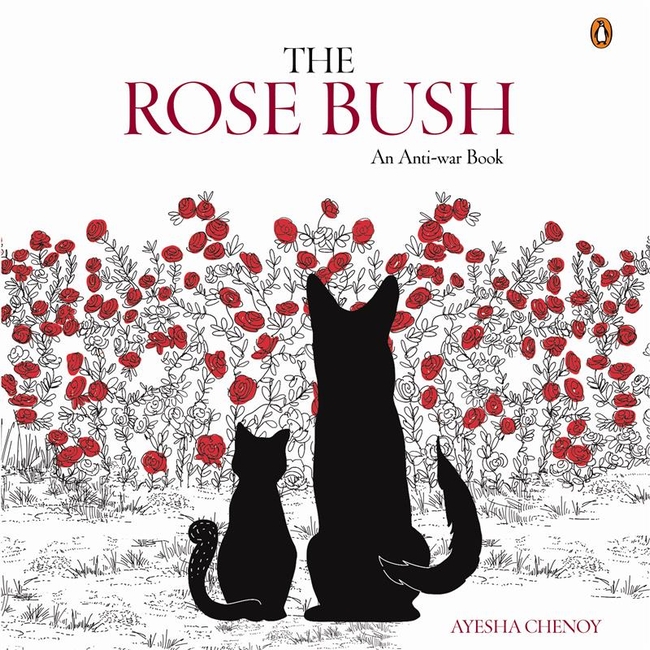
Two families. One shared garden.
And a rose bush growing right in the middle.
They played together, laughed, argued,
and made up—life was wonderful.
Until the parents had a fight. The garden was divided.
Can the children, with a little help from their pets,
bring back the peace?
A beautifully illustrated tale with a timeless message, The Rose Bush gently shows children that even when disagreements pull people apart, kindness and cooperation can bring them back together. With warmth and hope, this story helps young readers understand conflict, reconciliation, and the power of friendship, reminding us all that peace can bloom again, just like a rose.

They told you to hustle. They forgot to tell you how to survive.
DeepTech isn’t a sprint. It’s years in the lab before a single sale. It’s moonshot ambition colliding with marathon endurance. It’s investors who want speed and a mission that can’t be rushed.
Moonshots and Marathons is the unfiltered playbook for founders building the impossible—satellites, AI breakthroughs, climate solutions, life-saving biotech.
Three insiders who’ve invested in, scaled, and advised hundreds of DeepTech companies reveal the real rules: how to choose battles, protect your IP, survive the ‘valleys of death’, and exit without selling your soul.
If your ideas could change the world, this is the book that shows you how to last long enough to make it happen.
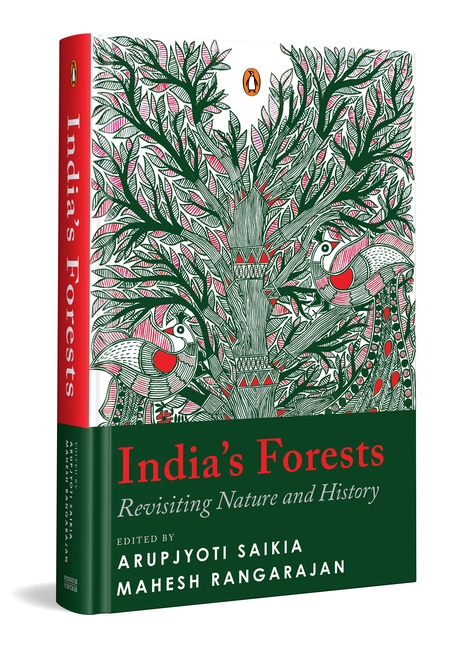
India’s Forests brings together essays by some of the country’s leading scholars with a fresh view of nature and history. These reappraisals of Indian forests and their many lives in past and present matter more than ever today.
Born of years of sustained reflection, the essays here view forests not as passive unchanging backdrops to the past but as living, contested spaces.
Forests were shaped and in turn deeply influenced by power, culture and society. They could mean very different things to different people who often were in contest over meaning as much as control of the space or the resource.
The volume spans from prehistory through ancient and early modern India into the present. It is also alive to the impact of the colonial era while tracing the changing fortunes of tribal and hill peoples.
They are ecological lifelines and sites of legend, memory, and scientific knowledge. Material remains and life cycles of animals and plants matter, so too do social and literary imaginations.
Forests have been continually redefined through conflict, negotiation, and care. Attentive to the changing meanings across time and place, the book asks us fundamental and unsettling questions: what are forests for?
India’s Forests will inform as well as stimulate thought for all who are concerned with the fate of forests now as much as about the country’s past.
On Thursday, 5 April 1877, thirty-year-old Annie Besant stood trial in London for daring to sell a small book on birth control—an act that shocked Victorian society and made her a household name. This was only the beginning of a lifetime spent defying authority.
Besant began as a devout Christian wife, only to renounce her faith and embrace atheism. She became a fiery socialist voice in the strikes and protests of the 1880s, then turned to Theosophy in search of spiritual truths. But it was in India that she found her greatest cause. Moving beyond religion and reform, she became a leader in the Indian movement for self-rule, edited nationalist newspapers, campaigned for self-rule and was even interned by the British government for her influence. To many Indians she was a heroine; to the colonial State, a dangerous agitator.
Annie Besant’s life was extraordinary and full of contradictions: from politics to mysticism, from the London suburbs to the heart of India’s freedom struggle, from Christian piety to Theosophical priestesshood. The Nine Lives of Annie Besant tells the complete story of a woman who broke all the rules.