



In Confessions of a Secular Fundamentalist, Mani Shankar Aiyar, crusader for a secular credo, calls for an unambiguous and decisive restoration of secularism to the core of our nationhood. In doing so, he revisits every dimension of our secular ethos and exposes the various myths perpetuated by communal elements of all hues. Putting under the scanner contentious issues like conversions, uniform civil code and Article 370, he nails the falsehood underlying terms like ‘pseudo-secularism’, ‘appeasement’ and ‘soft Hindutva’. And he places the domestic debate over secularism in India in the wider external dimension by discussing the experiences of countries like Pakistan, Sri Lanka, Israel and erstwhile Yugoslavia. Admitting to wearing his secularism on his sleeve, Aiyar reasons that only a determined and inflexible adherence to secularism can counter religious bigotry and fundamentalism. Clear in his convictions, with history, logic and persuasive argument at his command, this is Mani Shankar Aiyar at his best, on a subject that we can ignore only at our own peril.
Catagory: Non Fiction
non fiction main category
Book Of Muinuddin Chishti
The Book of Muinuddin Chishti introduces this ‘conqueror of conquerors’, revealing the life and teachings of a great saint who chose not to battle over God but to practise the love of God. Through the use of historical records and creative imagination, Mehru Jaffer brings to life the story of a human being who became a saint and the development of Chishti Sufism in India, examining the most important dynamic in the understanding of a phenomenon like Sufism: tension between the outsider’s point of view and the insider’s vision.Muinuddin Chishti spent his life reminding us that hidden behind the paraphernalia of rituals of all the diverse religions of the world is love and curiosity for the creator. The Book of Muinuddin Chishti takes forward his message of how to remain humane in hostile times, balance the material with the spiritual, and reach out and cement the foundations of love and mysticism that ultimately unite all of humanity.
Myth=mithya
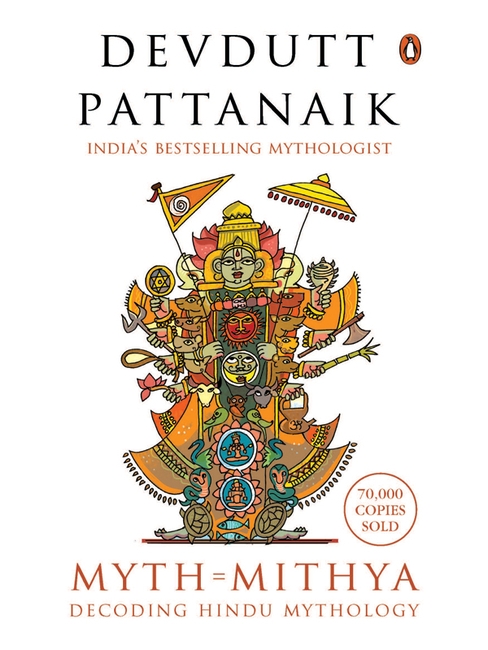
A decoding of Hindu mythology
Hindus have one God.
They also have 330 million gods: male gods; female gods; personal gods; family gods; household gods; village gods; gods of space and time; gods for specific castes and particular professions; gods who reside in trees; in animals; in minerals; in geometrical patterns and in man-made objects.
Then there are a whole host of demons.
But no Devil.
In this groundbreaking book Dr Devdutt Pattanaik; one of India’s most popular mythologists; seeks an answer to these apparent paradoxes and unravels an inherited truth about life and death; nature and culture; perfection and possibility. He retells sacred Hindu stories and decodes Hindu symbols and rituals; using a unique style of commentary; illustrations and diagrams. We discover why the villainous Kauravas went to heaven and the virtuous Pandavas (all except Yudhishtira) were sent to hell; why Rama despite abandoning the innocent Sita remains the model king; why the blood-drinking Kali is another form of the milk-giving Gauri; and why Shiva wrenched off the fifth head of Brahma.
Constructed over generations; Hindu myths serve as windows to the soul; and provide an understanding of the world around us. The aim is not to outgrow myth; but to be enriched and empowered by its ancient; potent and still relevant language.
The Barn Owl’s Wondrous Capers
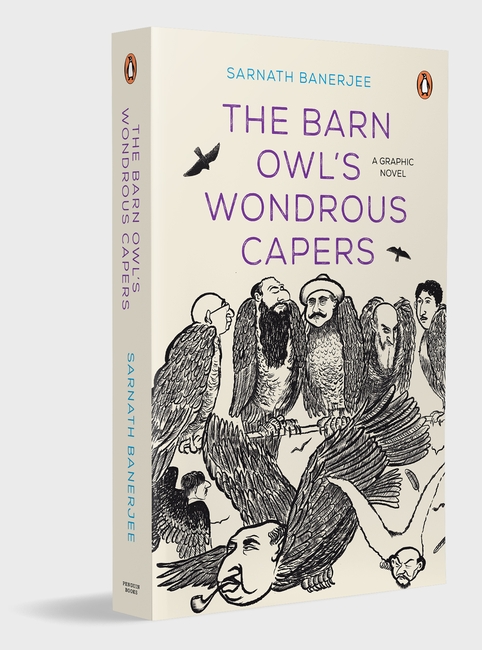
Eighteenth-century Calcutta. The second city of the Empire is teeming with scandalous gossip and rumour. Abravanel Ben Obadiah Ben Aharon Kabariti, Sephardic Jew from Syria and trader in novelties such as corsets, aphrodisiacs and zebras, befriends the British officers and the local elite by day and records their escapades by night in a leather-bound journal.
1950s Paris. A battered copy of the journal surfaces in a hole-in-the-wall antique shop in Montmartre.
London, 2002. A phone rings in the East End, late at night, announcing a death and an inheritance: a silver lighter, a vintage motorcycle, an ancient radio and The Barn Owl’s Wondrous Capers.
What follows is a bizarre chain of events involving eccentric zamindars, a decadent aristocrat with a passion for lady footballers, a psychic cartographer, a haunted office building and, at the centre of it all, Digital Dutta, neighbourhood historian and keeper of secrets.
Inspired by the legend of the Wandering Jew, this second work of fiction from India’s foremost graphic novelist is an irreverent tale of illicit sex and drunken religiosity, which unravels new riddles with each reading.
The Analyst And The Mystic
The Centrepiece Of The Analyst And The Mystic Is The Absorbing Story Of The Nineteenth-Century Bengali Mystic And Hindu Saint Sri Ramakrishna. Using Ramakrishna S Life As A Case Study, Sudhir Kakar Discusses In Depth Three Interacting Factors That He Feels May Be Essential In The Making Of An Ecstatic Mystic: Particular Life Historical Experiences, The Presence Of A Specific Artistic Or Creative Gift, And A Facilitating Cultural Environment.
Kakar Goes Beyond The Traditional Psychoanalytic Interpretation Of Ramakrishna S Mystical Visions And Practices. Going Beyond The Traditional Psychoanalytic Interpretation Of Ramakrishna S Mystical Visions And Practices, Kakar Clarifies Their Contribution To The Psychic Transformation Of A Mystic And Offers Fresh Insight Into The Relation Between Sexuality And Ecstatic Mysticism.
Through A Comparison Of The Healing Techniques Of The Mystical Guru And Those Of The Analyst, Kakar Highlights The Difference In Their Healing Objectives And Reveals The Positive Psychological Aspects Of The Religious Experience.
Indian Identity
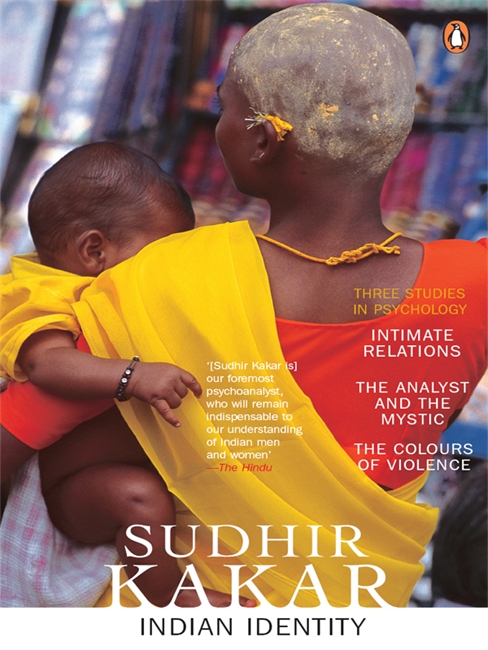
As A Commentator On The Worlds Of Love And Hate , India S Foremost Psychoanalyst Sudhir Kakar Has Isolated The Ambivalence, Peculiarly Indian, To Matters As Various And Connected As Sex, Spirituality And Communal Passions.
In Intimate Relations, The First Of The Well-Known Books In This Edition, He Explores The Nature Of Sexuality In India, Its Politics And Its Language Of Emotions. The Analyst And The Mystic Points Out The Similarities Between Psychoanalysis And Religious Healing, And The Colours Of Violence Is His Erudite Enquiry Into The Mixed Emotions Of Rage And Desire That Inflame Communalism.
The Great Uprising
‘The punishment for Mutiny,’ said John Nicholson, Commander of the Movable Column, ‘is death’.
As India marks 150 years of the 1857 Uprising, this meticulously researched and vivid work recounts a time both tragic and compelling. Many-staged and many-charactered, this volume searches for the key issues, causes and effects, figures and developments that culminated in the massacres of Cawnpore, Satichaura and Bibighar, the ensuing counter-massacres, and the gory retribution dealt out by the British on their subjects.
Beginning with an account of the state of the British Raj in 1857, Pramod Nayar moves on the ‘A Gathering Storm’, the strife that led to the Uprising, ‘The Summer of Discontent’, recounting the Mutiny, ‘The Retreat of the Native’ which tells us how the British won back lost ground, and ‘The Raj Rises Again’, explaining the repercussions the Mutiny had on the administrative plans of the empire. He also delves into the real causes of the Uprising, more complex than what conventional history upholds. Detailed descriptions of the Mutiny’s main figures, including Henry Lawrence, John Nicholson, Lord Canning, Nana Sahib, the Rani of Jhansi, and the tragic king of Delhi, Bahadur Shah Zafar, are interspersed with quotes, facts and anecdotes that reanimate the past.
An overview and analysis of the Mutiny is flavoured with references to the literature of the time and includes an appendix on how the events of 1857 influenced European literary imagination.
Kanpur and Jhansi, violence and counter-violence, heroism and savagery – this every-person’s guide to 1857 captures the most tumultuous years of British India and re-enacts the drama of the first stirrings of nationalism.
Last Mughal
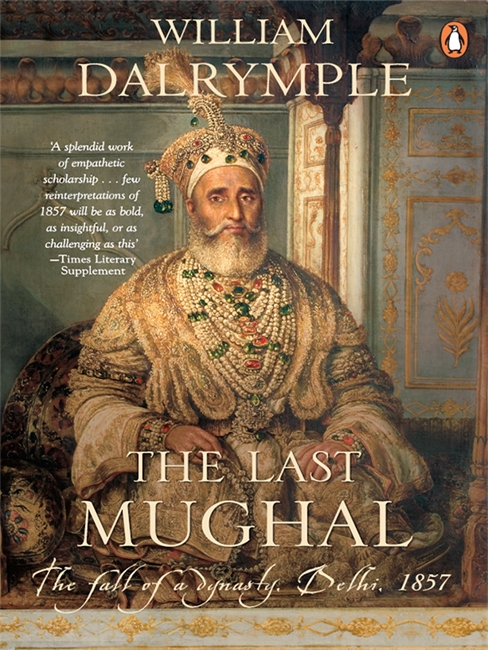
Winner of the Duff Cooper Prize for History 2007 Bahadur Shah Zafar II, the last Mughal Emperor, was a mystic, a talented poet, and a skilled calligrapher, who, though deprived of real political power by the East India Company, succeeded in creating a court of great brilliance, and presided over one of the great cultural renaissances of Indian history. In 1857 it was Zafar’s blessing to a rebellion among the Company’s own Indian troops that transformed an army mutiny into the largest uprising the British Empire ever had to face. The Last Mughal is a portrait of the dazzling Delhi Zafar personified, and the story of the last days of the great Mughal capital and its final destruction in the catastrophe of 1857. Shaped from groundbreaking material, William Dalrymple’s powerful retelling of this fateful course of events is an extraordinary revisionist work with clear contemporary echoes. It is the first account to present the Indian perspective on the siege, and has at its heart the stories of the forgotten individuals tragically caught up in one of the bloodiest upheavals in history.
Dateline Islamabad
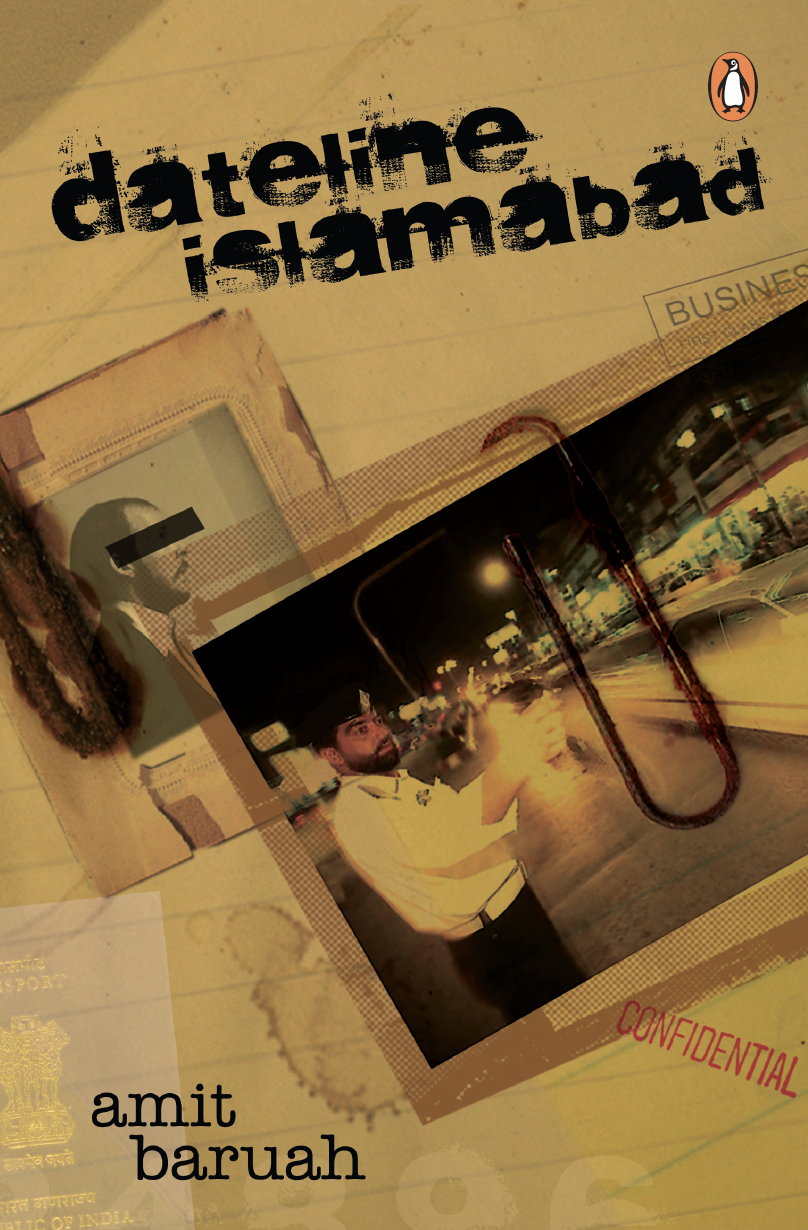
It was an assignment that was at once challenging and intimidating. I was going to be setting foot on –enemy” territory.’ Amit Baruah was one of only two Indian journalists allowed to be based in Islamabad during three tumultuous years of Pakistan’s history. The author recounts with some amusement his family’s experience of life in Islamabad society between April 1997 and June 2000″all of it conducted under the suspicious gaze of Pakistani intelligence agents who shadow Baruah, his wife and daughters everywhere, including into friends’ living rooms. He records his frustration at being disallowed from reporting freely on the ground many events that defined Indo-Pak relations, even as death or kidnapping forever stalks him. Three incidents haunt Baruah the most: not being cleared to attend the funeral, in 1998, of John Joseph, the bishop of Faisalabad who committed suicide in protest against Pakistan’s -blasphemy’ laws; being forbidden to view the wreckage of an Indian Air Force plane shot down during the Kargil conflict of 1999; and being prevented from entering Afghanistan from Pakistan to report on the Kandahar hijacking later that year. And yet, says Baruah, despite all the personal and professional difficulties he faced in Pakistan, his stint in Islamabad”and his exchanges with so many friends he cannot name”proved to be the most exciting and enriching in his career. While admitting the difficult nature of his job as a foreign correspondent in a hostile nation, Baruah recalls the joys of meeting generous, like-minded people in a country whose regimented stance on India”and its press”is less than friendly.
The Penguin U.G. Krishnamurti Reader
My teaching, if that is the word you want to use, has no copyright. You are free to reproduce, distribute, interpret, misinterpret, distort, garble, do what you like, even claim authorship, without my consent or the permission of anybody.’ Thus spoke U.G. Krishnamurti in his uniquely iconoclastic and subversive way, distancing himself from gurus, spiritual ‘advisers’, mystics, sages, ‘enlightened’ philosophers et al. UG’s only advice was that people should throw away their crutches and free themselves from the ‘stranglehold’ of cultural conditioning. Uppaluri Gopala Krishnamurti was born on 9 July 1918 in Masulipatnam, a coastal town in Andhra Pradesh. He died on 22 March 2007 at the age of eighty-nine in Vallecrosia, Italy, at the villa of a friend. The effect that he had, and will continue to have, on legions of his admirers is difficult to put into words. With his flowing silvery hair, deep-set eyes and elongated Buddha-like ears, he was an explosive yet cleansing presence and has been variously described as ‘a wild flower of the earth’, ‘a bird in constant flight’, an ‘anti-guru’ and a ‘cosmic Naxalite’. UG gave no lectures or discourses and had no organization or fixed address, but he travelled all over the world to meet people who flocked to listen to his ‘anti-teaching’. His language was always uncompromisingly simple and unadorned, his conversational style informal, intimate, blasphemous and invigorating. This reader, edited by long-time friend and admirer Mukunda Rao, is a compilation of UG’s freewheeling and radical utterances and ideas. UG unceasingly questioned and demolished the very foundations of human thought but, as Rao says, in the cathartic laughter or the silence after UG had spoken, there was a profound sense of freedom from illusory goals and ‘the tyranny of knowledge, beauty, goodness, truth and God’