



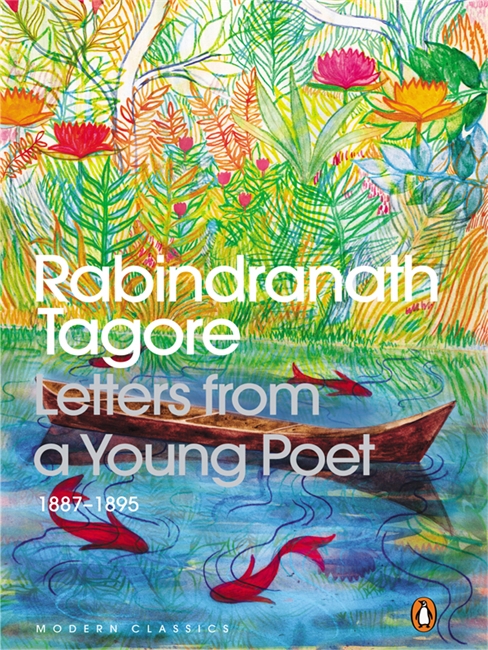
As a young man, Rabindranath Tagore wrote a series of letters to his niece during what he described as the most productive period of his life. By turns contemplative and playful, gentle and impassioned, Tagore’s letters abound in incredible insights—from sharply comical portrayals of English sahibs to lively anecdotes about family life, from thoughts on the nature of poetry to spiritual contemplation and inner feeling. And coursing through all these letters, like a ceaseless heartbeat, is Tagore’s deep love for the natural splendour of Bengal. In this manner, this volume also serves as a prose companion to his magnificent work Gitanjali.
Letters from a Young Poet shimmers with wit and warmth, and offers unforgettable vignettes of the young poet in those happy days before extraordinary fame found him.
Catagory: Non Fiction
non fiction main category
Central Time
In Central Time, Ranjit Hoskote becomes the storyteller of a turbulent epoch. We meet Ovid and Ghalib, poets in exile or eclipse, in these poems, which are by turns elliptical, conversational and narrative. We meet painters who betray their art, and sculptors who are betrayed by theirs. Fascinated by the enigmas of time, memory and evanescence that art invokes, Hoskote addresses a range of artists including Bihzad, Magritte, Masaki Fujihata and Ranbir Kaleka. At the same time, he retains his affection for the natural world, celebrating the textures and intensities of sensuous experience: the roughness of stone, the dance of light, the flowering of touch and the taste of salt and cinnamon.
A testament to a present shimmering like a mirage between contested pasts and vexed futures, this book pivots around moments of encounter: a defiant squirrel in Anuradhapura, an enigmatic collection of objects in a Berlin museum or a man discovering a mass grave near Kabul. Written between 2006 and 2014, the hundred poems that form Central Time resonate with the crises of war, genocide, terror, forced migration and the precariousness of belonging.
Emote
From being so inept at public speaking that his supervisor wouldn’t let him make presentations to clients—even when he had done all the work—Vikas Jhingran went on to become a championship-winning public speaker who leaves a lasting impact on his audience.
Few speakers and presenters understand speeches or presentations at a fundamental level. Most books have an overly prescriptive approach, using the tricks and tools of speech delivery that end up confusing the speech, instead of connecting with the essential part of speaking—that which engages listeners.
In Emote, Vikas Jhingran lays bare his unique approach—connecting with his audience on an emotional level, rather than subscribing to a “right” way of speaking—which applies equally to one-on-one conversations, small team settings, and large audiences. His method will show you how to express your ideas clearly, quell your fear of public speaking, calm the sweating, stuttering and jitters that plague people before crucial presentations, and, overall, help you become an effective communicator.
The Religions Of India
A handy guide to every religion practised in India
In India, the birthplace of some of the world’s major faiths and home to many more, religion is a way of life, existing as much in temples, mosques, churches and wayside shrines as it does in social laws, cultural practices and the political arena.
The Religions of India contains, in a single volume, a comprehensive account of every major faith practised in the country today—Hinduism, Islam, Sikhism, Christianity, Buddhism, Jainism, Zoroastrianism, Judaism, and the Bahai faith. This meticulously researched work traverses a vast range of topics—from Somnatha Temple and Babri Masjid to Tirthankaras and the Akali Movement; from the Shariat and the Eucharist to Shabuoth and nirvana. It places each religion in its historical context, tracing its evolution from its inception to the present.
• Incisive profiles of founders and key patrons, deities, saints, mystics and philosophers
• Information on and insights into lesser-known and regional forms of worship, as well as important festivals, customs and rituals
• Extensively cross-referenced with suggestions for further reading
Virasat
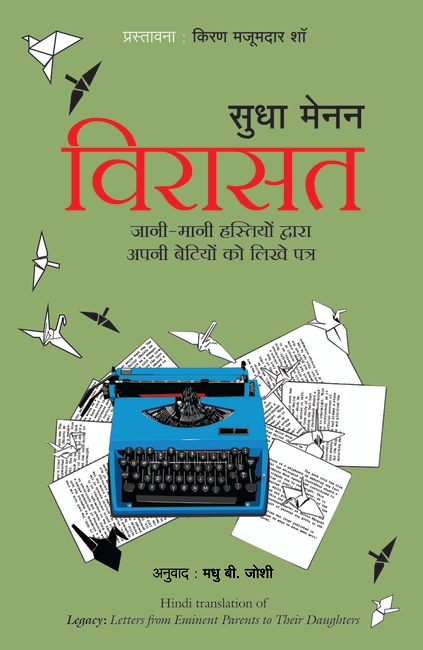
This is hindi translation from english book LEGACY. Narayana Murthy, Chanda Kochhar, Kishore Biyani, Zia Mody, K.V. Kamath, Ajay Piramal, Amit Chandra, Ganesh Natrajan, Renuka Ramnath, P.P. Chhabria, Pradeep Bhargava, Deep Anand, Capt. Gopinath, Mallika Sarabhai, Shaheen Mistri, Sanjeev Kapoor, Jatin Das, and Prakash Padukone
They say a daughter may outgrow your lap, but she will never outgrow your heart. In Legacy, noted journalist and author Sudha Menon brings forth a rare collection of personal and evocative letters from parents to their daughters. Through their fearless approach to life, love, and overcoming obstacles, these icons from the world of business, arts, films, food, and sports share with us their experience and wisdom as they pass them on to their daughters.
Deeply moving and thought provoking, Legacy is a remarkable collection of life lessons that will delight and inspire at the same time.
The Newsmakers
A smuggler of priceless antiquities, a scrap dealer turned millionaire accused in the Coalgate scam, an electrical engineer from rural Chhattisgarh, on his way to winning a one-way ticket on the Mars One mission, the controversial former Comptroller Auditor General of India, a prominent editor accused of sexually harassing one of his colleagues, and a flamboyant businessman whose airline took a nosedive.
The Newsmakers is an anthology of ordinary and extraordinary Indians, who have made headlines over the past two years. 2012 and 2013 were dominated by corruption scandals, many of which find mention, in various guises, in the lives of the people written about in this book. Some have been celebrated and some castigated. Often, however, it was not the news story itself that was the highlight of these profiles. The early careers and backgrounds of the people involved set the news in a context that changed the way we thought about current events. Each subject, in his or her own way contributed to the wider India story that has unfolded in an era of great progress and greater uncertainty.
Blindspot
The Delhi Sultanate period (1206-1526) is commonly portrayed as an age of chaos and violence – of rapacious, plundering kings, turbulent dynasties, and the aggressive imposition of Islam on India. But it was also the era that saw the creation of a pan-Indian empire, on the foundations of which the Mughals and the British later built their own Indian empires. The encounter between Islam and Hinduism also transformed, among other things, India’s architecture, literature, music and food. Abraham Eraly brings this fascinating period vividly alive, portraying the many kings-mad, brilliant, astute, cruel-who ruled during this period, and discussing the political, social and cultural developments that transformed India. Combining erudition with powerful storytelling, analysis with anecdote, The Age of Wrath is a superb book.
The Marwaris
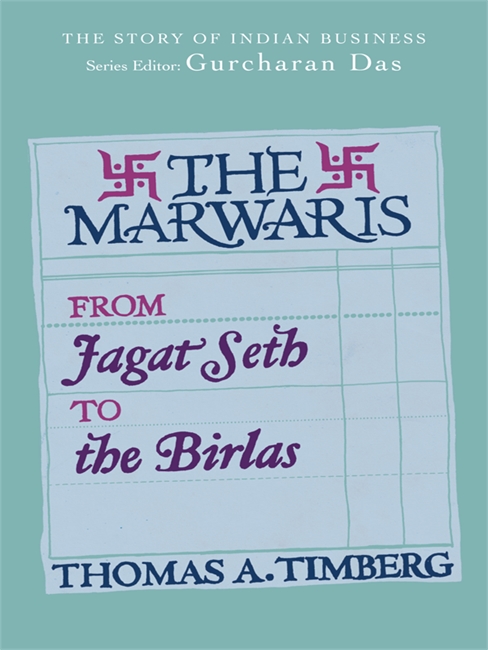
In the nineteenth century, a tiny community from the deserts of Rajasthan spread out to every corner of India. The Marwaris controlled much of the country’s inland trade by the time of the First World War. They then turned their hand to industry and, by the 1970s, owned most of India’s private industrial assets. Today, Marwari businessmen account for a quarter of the Indian names on the Forbes billionaires list.// What makes the Marwaris so successful? Is it their indomitable enterprise, or their incredible appetite for risk? In this new book, Thomas Timberg shows how the Marwaris rely on a centuries-old system for conserving and growing capital which has stood them in good stead, alongside a strong sense of business ethics which has earned them respect.// Family businesses in general and the Marwaris in particular might have a vital role to play in shaping India’s economic future.
Nowhere To Go But In
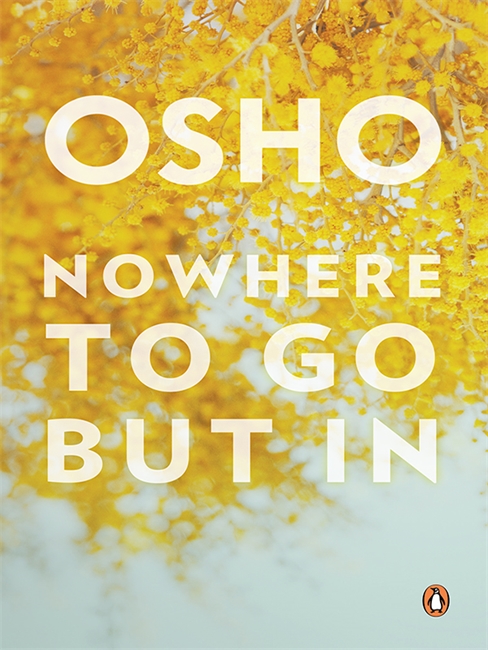
‘So much asking, so much answering, and in the end you will see that, far from getting less, your confusion has grown more; that your questions have increased rather than become less. Only then, perhaps, you may become aware that the answer to the questions is not in answers; the answer to the questions is in meditation.’
In this book of questions and answers, Osho guides people away from asking superficial, ‘religious’ and intellectual questions and helps them to open up by posing real questions. Osho’s answers to them are existential responses that take the questioner to a new level of consciousness, where they are inspired and supported to start living from their own understanding and experience.
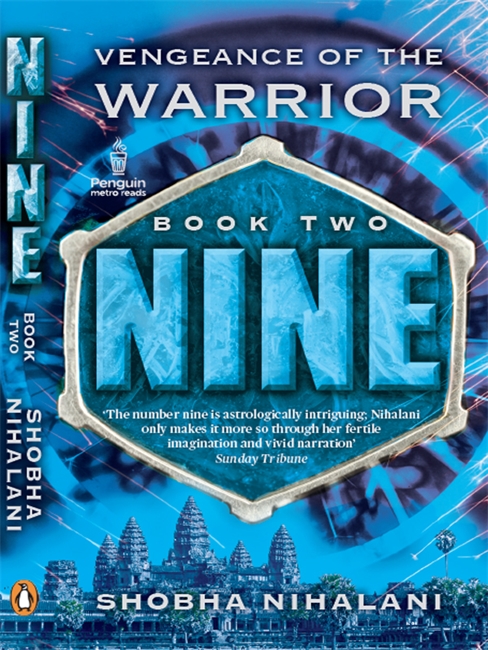
Nine
All future is defined by the past.
And therefore, the end is only the beginning . . .
After burying the vicious Kalingan warrior, Akash, Tara and Zubin are continuing their lives as before, hiding the fact that they are a part of King Ashoka’s exalted NINE; hiding even, that each of them has powers that are to be used for the benefit of mankind, when needed.
Except, things are not as quiet as they seem to be!
The Kalingan warrior has risen once again—angrier and more vengeful. And this time he knows each one of them. If they don’t destroy him now, they will be hunted down and the world will be battling its worst, most terrifying chemical warfare yet.
This second book in the NINE trilogy will change the way you look at time and space.