



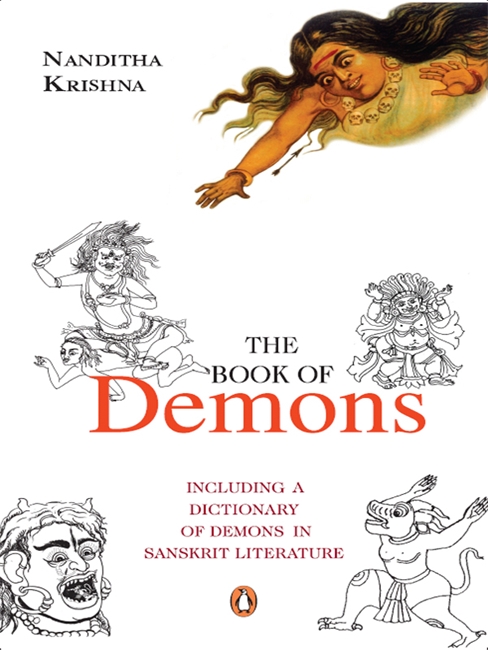
From The Rig Veda To Myriads Of Folk Narratives, The Belief In Demons Prevails All Over India, Vividly Illustrating That A Demon Is Something People Fear Because It Is Beyond Their Comprehension And Control. Time And Again, The Menacing And Uncontrollable Forces Of Night, Darkness And Death, Along With Powerful Defeated Enemies And Incomprehensible Natural Phenomena, Are Demonized.
The Book Of Demons Presents A Perceptive Overview Of The Various Types Of Demonic Beings And Concepts That Exist In Hindu Literature, Supplemented With A Dictionary Of Individual Demons For Ready Reference. Besides The Well-Known Rakshasas And Asuras, The Author Also Reveals A Densely Populated World Of Lesser-Known, But Equally Fascinating, Demonic Creatures. Andhaka (Blind Darkness), Conceived When Parvati Playfully Covered Shiva S Eyes And The World Was Plunged Into Darkness; Gajamukha, The Elephant-Faced Demon Who Was Transformed Into A Mouse By Ganesha And Then Converted Into His Vehicle; Jambha, The Demon-Leader Who Snatched The Pot Of Immortal Nectar From The Ocean During The Great Churning; Maya, The Demonic Equivalent Of Vishvakarma, Architect Of The Gods, Who Built The Three Cities Of Tripura; And Putana, The Demon Who Tried To Kill Krishna By Suckling Him With Poisoned Breasts.
Male Or Female, Human, Animal, Plant, Or Simply A Concept Demons Play A Pivotal Role In Our Mythical Traditions. Blending Insightful Erudition And Lively Description, Nanditha Krishna Brings To Life The Traits And Actions Of A Host Of Complex, Colourful, Monstrous And Intriguing Demons That Inhabit Indian Religion And Mythology.
Catagory: Non Fiction
non fiction main category
Eating India
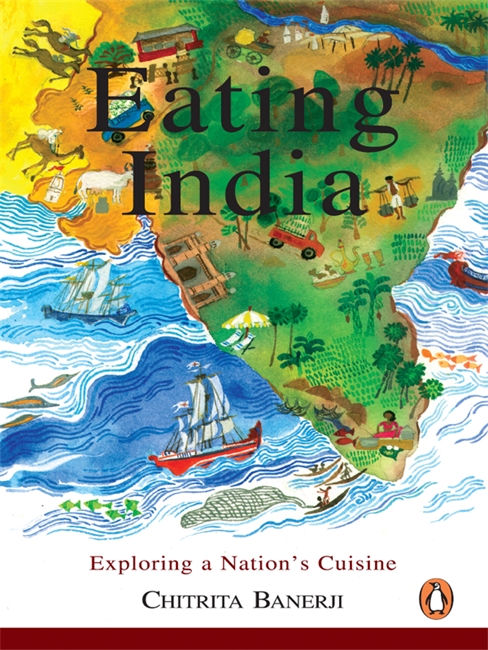
In Eating India, award-winning food writer Chitrita Banerji takes us on an extraordinary journey through a national cuisine formed by generations of arrivals, assimilations and conquests. Traveling across the length and breadth of the country-from Bengal to Goa and Karnataka, via the Grand Trunk Road, then northwards to Amritsar, Lucknow and Varanasi, on to Bombay and Kerala-Banerji discovers a civilization with an insatiable curiosity, one that consumes the old and the new with eager voracity. Weaving together myths and folklore associated with food, the people and their culture, the author narrates captivating accounts of life in the subcontinent: the legend behind the week-long harvest festival of Onam; the strictly observed rules of kosher in the Jewish households of Cochin; the best Benarasi thandai that has a dollop of bhang in it; and the food and culture of the indigenous people who hover on the edges of mainstream consciousness, among others. Eating India is also peppered with fascinating tidbits from India’s history: the use of ‘shali’ rice to make pilafs during the Mughal period; the advent of chillies with the arrival of the Portuguese; British, apart from Goan, influence on Parsi society that prompted the Parsis to open the first girls’ school in India in 1849; and the medieval movable feast that unfolded on the travellers’ platter as they moved from east to west on Sher Shah Suri’s Sarak-i-Azam. At different points in her journey, Banerji shows us how restructuring old customs and making innovations is what India is all about: food in India has always been and still is fusion-one that is forever evolving. Certain to enchant anyone enamoured of Indian food and culture, Eating India is a heady blend of travelogue and food writing.
The Shattered Thigh & Other Plays
Ethnography Of Goa, Daman And Diu
The intellectual and cultural efflorescence in Goa reached its apogee in the late nineteenth and early twentieth centuries. Antonio Bernardo de Bragana Pereira was a product of this time, and Ethnography of Goa, Daman and Diu is an expression of the author passionate interest in scholarship and research into various dimensions of Goan life. His intellectual curiosity and critical spirit led him to delve deep to understand the lan vital of the society of his ancestors and to catalogue the many dimensions of Goan life. In the book he describes the rituals, customs and manners of various castes and religions, their habitat, their artisanship, their environment and all aspects of Goa and Goan society. Ethnography of Goa, Daman and Diu was published as a two-volume edition in 1940 in Portuguese. In making the second volume available to a larger readership, the publishers perform a dual role of bringing this scholarly work to a new generation of readers and in a language that will be accessible. Its publication is a tribute to A.B. de Bragan.a Pereiras passionate attachment to Goa and his pride in being a Goan.
The Untold Charminar

A dazzling collection that captures the essence of Hyderabad, offering glimpses of the various strands that go into its making, fact and legend, old-world quaintness and the highest hi-tech, eccentricity and intrigue, the calm of genteelness and the fury of rebellion.
Hyderabad is a city once ruled by the worlds richest man who invested most lavishly in his state, most shabbily in his wardrobe; it holds stories of a courtesan who fought wars, counselled prime ministers, sang her own verse and enthralled luminaries who mattered; of a chief minister who transformed it into a hi-tech hub; and of a sports star who brought the young glamour of India to every tennis court in the world.
Home as much to the Golconda as to Jacob, the 187-carat diamond used as a paperweight by the Nizam, and to rock landscapes two and a half million years old, Hyderabad is a city that forever mixes cultures, cuisines, religions and languages. Here, Persian turned alloy with Telugu, Marathi and Arabic to yield a special version of Urdu, Dakhini. And here, as Andhra mingled with Telangana, a smiling mildness has survived, disarming at every turn, just as grace under pressure, regardless of gender, is unfailing.
In The Untold Charminar readers will discover a city they will want to explore, as Sarojini Naidu, Sir Mark Tully and William Dalrymple rub shoulders with Ian Austin, Meenakshi Mukherjee and Anees Jung, regaling you with their feast of hard facts and hearsay; as each foreign visitor shares his story through Narendra Luther; as the film-makers Shyam Benegal and Nagesh Kukunoor paint their vivid memories of home; as poets, not just the maverick Makhdoom and Gaddar, raise their voices in song; as statesmen, academics and aficionados hold forth on the completely different Hyderabad each experienced.
And when Tejaswini Niranjana profiles the vigilante Vijayasanthi and Dharmender Prasad picks out place names and explains their sometimes almost mystic origins, as Bachi Karkaria, Omkar Goswami and Harsha Bhogle share their typically offbeat views of a favourite city, readers will be persuaded to believe they have encountered not a city but the inner workings of a very complex character.
India’s Politics
An insider’s account of how politics is practised in India, and to what effect?
In India’s Politics: A View from the Backbench, Bimal Jalan, ex-Governor of the Reserve Bank of India and best-selling author of The Future of India, turns his gaze to the complex mechanics of the political system in the country. As a member of Parliament, Bimal Jalan has watched the workings of India’s politics closely. While there is much to be proud of in India’s achievements as a vibrant democracy, there are some areas of concern which require attention. In particular, Jalan finds that the emergence of multi-party coalitions as a regular form of government-and their relatively short life expectancy at birth-has brought about a sea change in political dynamics. The search for power and the compulsions of coalition politics are increasingly the primary drivers of political behaviour in India today.??This development, combined with the need to cope with global terrorism, lawlessness and economic disparities during a period of high growth, calls for some urgent reforms in the working of India’s vital political institutions.?
Jalan puts forward a ten-point programme to make India’s parliamentary democracy more stable, transparent and accountable. According to him, constant vigilance is indeed the price of liberty and if some of the emerging trends are not reversed, India’s democracy ‘by the people’ could become more and more oligarchic-‘of the few and for the few’. India’s Politics is one of the most important studies of India’s political system to have been written. This paperback edition features a new Preface by the author on emerging political trends.
Somanatha
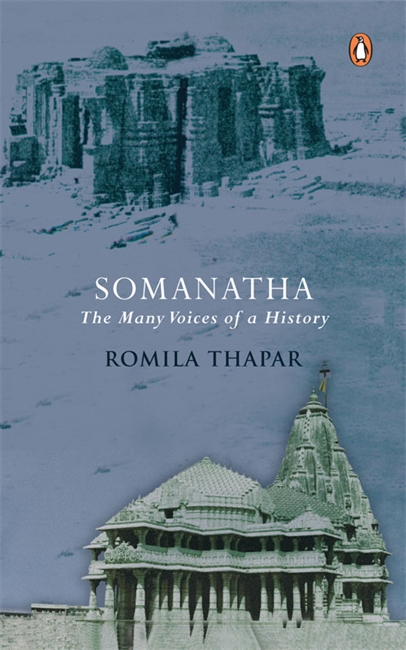
It was first depicted as a trauma for the Hindu population not in India, but in the House of Commons. The triumphalist accounts of the event in Turko-Persian chronicles became the main source for most eighteenth-century historians. It suited everyone and helped the British to divide and rule a multi-millioned subcontinent. In her new book, Romila Thapar, the doyenne of Indian historians, reconstructs what took place by studying other sources, including local Sanskrit inscriptions, biographies of kings and merchants of the period, court epics and popular narratives that have survived. The result is astounding and undermines the traditional version of what took place. What makes her findings explosive is the fact that the current Hindu nationalist regime in India constantly utilizes a particular version of history
Multiple City
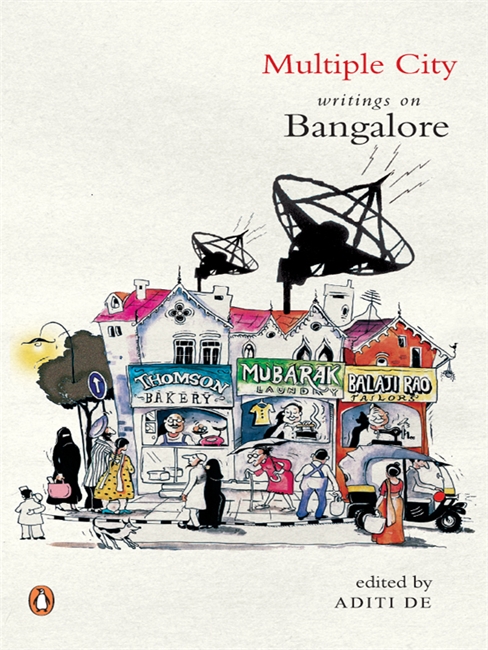
Founded by the chieftain Kempe Gowda around 1537, the story of Bangalore has no grand linear narrative. The location has revealed different facets to settlers and passers-through. The city, the site of bloody battles between the British and Tipu Sultan, was once attached to the glittering court of Mysore. Later, it became a cantonment town where British troops were stationed. Over time, it morphed into a city of gardens and lakes, and the capital of PBI – Indian scientific research. More recently, it has been the hub of PBI – India’s information technology boom, giving rise to Brand Bangalore, an PBI – Indian city whose name is recognized globally. Hidden beneath these layers lies a cosmopolitan city of sub-cultures, engaging artists and writers, young geeks and students. People from every corner of PBI – India and beyond now call it home.
In this collection of writings about a multi-layered city, there are stories from its history, translations from Kannada literature, personal responses to the city’s mindscape, portraits of special citizens, accounts of searches for lost communities and traditions, among much more. U.R. Ananthamurthy writes about Bangalore’s Kannada identity; Shashi Deshpande maps the city through the places she has lived in since she was a young girl; Anita Nair draws a touching portrait of a florist who celebrates the glories of the Raj; Ramachandra Guha describes his close bond with Bangalore’s most unusual bookseller; and Rajmohan Gandhi recounts the Mahatma’s trysts with the city. From traditional folk ballads to a nursery rhyme about Bangalore, from poems to blogs, from reproductions of turn of the twentieth century picture postcards to cartoons, Multiple City is the portrait of a metropolis trying to retain its roots as it hurtles into the future.
A Time Of Transition
Mani Shankar Aiyar looks back to the changes that have taken place during the -Time of Transition’ “the two decades since Prime Minister Rajiv Gandhi left office after the Lok Sabha elections of November 1989. Rajiv Gandhi was the fourth prime minister of India in four decades of independence, but the last twenty years have seen as many as eight prime ministers and several more governments. Accompanying the change from single-party governance to the instability of coalition politics are major transformations in the pace, trajectory and even the goals of nation-building. It is these contentious transitions that are reflected in the five major themes of this volume: Democracy, Secularism, Socialism, Nonalignment, and Neighbourhood Policy. Mani Shankar Aiyar was both a witness to, and a reluctant participant in, these processes of change: as joint secretary in Rajiv Gandhi’s prime minister’s office, as an MP since 1991, and today as a cabinet minister in the United Progressive Alliance government. His columns for the Indian Express are analytical and vivid commentaries on their times, written in the author’s inimitable style. This collection sheds light on a critically significant era in contemporary India.
Fear And Forgiveness
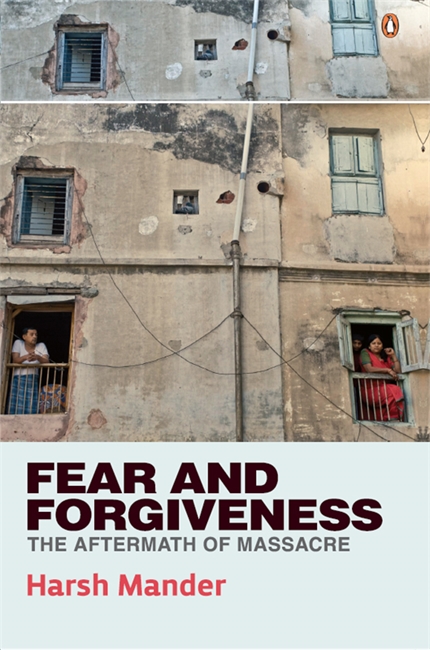
‘Human history is not just a history of cruelty, but also of compassion, sacrifice, courage, [and] kindness. What we choose to emphasise in this complex history will define our lives…’-Howard Zinn In February 2002, a violent storm of engineered sectarian hatred broke out and raged for many months in Gujarat; blood flowed freely on the streets and tens of thousands of homes were razed to the ground. An estimated 2000 men, women and children, mostly from the Muslim community, were raped and murdered, and more than two hundred thousand people fled in terror as their homes and livelihoods were systematically destroyed. However, Gujarat abounds with thousands of untold stories of faith and courage that endured amidst the fear and hate-Dhuraji and Babuben Thakur who sheltered 110 Muslims for ten days in their home; of Rambhai Adivasi who restored his Muslim neighbour’s roof in the face of local opposition, Rabiya of Ratanpur who waits in the hope that the people from her village will call her back one day and then every thing will be all right, Bilkis Bano and Niyaz Bibi whose perseverance and determination have made them symbols of courage in the face of adversity. Harsh Mander’s Fear and Forgiveness: The Aftermath of Massacre, written over the past six years, is not just about the grim events of 2002, of the state’s lack of accountability and the failure of justice, of the numerous commissions and their reports, of the indiscriminate use of the draconian Prevention of Terrorism Act 2002, of police brutality and the trauma of relief camps. It is about the acts of compassion and courage, of the hundreds who risked their own lives and those of their families and their homes to save innocent men, women and children, and even today help the betrayed and shattered minority heal and rebuild. The book compels us to acknowledge the flaws in our judicial, social and rehabilitative structures while showing that the way forward must be one of sympathy, understanding and forgiveness.