



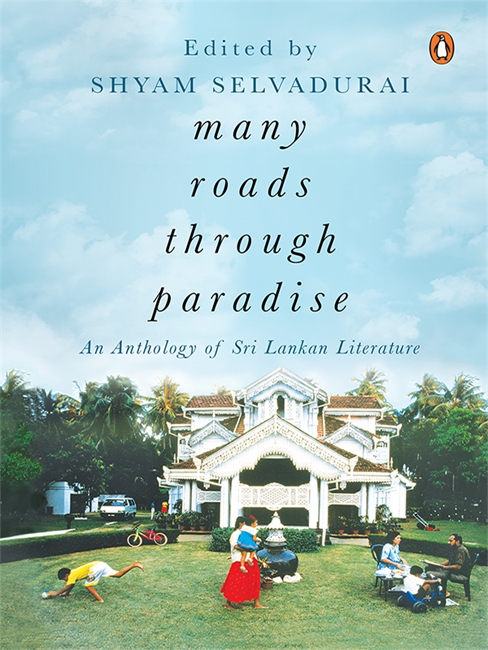
Shyam Selvadurai pieces together the best of Sri Lankan poetry and fiction in this anthology. From the Sinhala and Tamil writers of the 1950s to diasporic writers of today, from stories of love and longing to those of brutality and death, this masterfully constructed anthology will give you a rich sense Sri Lanka’s history, its people and the stories they have to tell.
Catagory: Non Fiction
non fiction main category
Memoirs
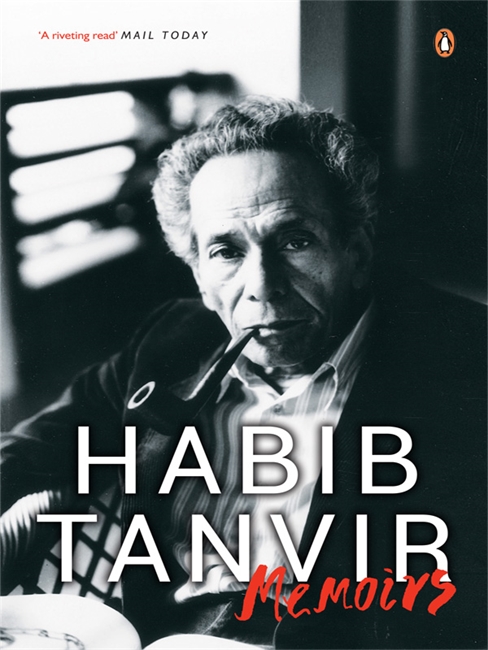
As the man who brought the popular and the demotic into modern Indian theatre, Habib Tanvir is one of Asia’s most important and gifted theatre directors. In these memoirs, touching on both the private and the public aspects of his life with startling candour, he takes us on a journey from his childhood in Raipur to the Bombay film world of the 1940s and thence to Indian People’s Theatre Association, offering an invaluable window into twentieth-century India.
Whether he is describing his family members, friends or his actors, Habib Tanvir is superbly observant and sharply insightful, capturing both the quotidian and the quirky in his distinct style and delightful voice. And the ease of Mahmood Farooqui’s translation matches the lively cadence of Tanvir’s prose. Written with great warmth, humour and insight, these memoirs provide a memorable and fully engaging portrait of an extraordinary man.
Green Poems
‘On the branches of these wild plants Some words occasionally sprout But never a full poem . . .’ One of the country’s best-loved poets and lyricists, Gulzar is renowned for his inimitable way of seeing things, his witty expressions, his quirky turns of phrase. All these creative talents come into play in delightful, unexpected ways in his new bilingual collection Green Poems, which celebrates his innate connection with nature. Gulzar writes about rivers, forests, mountains; snow, rain, clouds; the sky, the earth and space; a familiar tree, a disused well; Kullu, Manali, Chamba, Thimpu. Like glimpses of nature, the poems are often short, an image captured in a few words. And sometimes the image gives rise to a striking thought: ‘When I pass through the forest I feel my ancestors are around me . . .’ For those new to Gulzar’s work as well as his many fans, Green Poems will prove to be a true joy.
The Warrior State
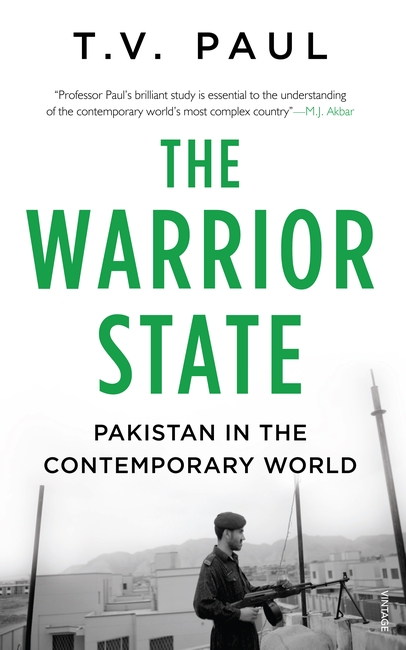
Seemingly from its birth, Pakistan has been struggling to build a proper democracy and a secure state. Today it ranks 133rd out of 148 countries in global competitiveness. Its economy is as dysfunctional as its political system is corrupt; both rely heavily on international aid for their existence. Taliban forces occupy many key areas of the country and engage in random violence. It possesses over a hundred nuclear weapons that could fall into terrorists’ hands. Why, in an era when countries across the developing world are experiencing impressive economic growth and building democratic institutions, has Pakistan been such a conspicuously weak state?
In The Warrior State, noted international relations and South Asia scholar T.V. Paul untangles this fascinating riddle. Paul argues that the “geostrategic curse”—akin to the “resource curse” that plagues oil-rich autocracies—is at the root of Pakistan’s unique inability to progress. Since its founding in 1947, Pakistan has been at the center of major geopolitical struggles: the US-Soviet rivalry, the conflict with India, and most recently the post 9/11 wars. No matter how ineffective the regime is, massive foreign aid keeps pouring in from major powers, their allies and global financial institutions with a stake in the region. The reliability of such aid defuses any pressure on political elites to launch the far-reaching domestic reforms necessary to promote sustained growth, higher standards of living, and more stable democratic institutions. Paul shows that excessive war-making efforts have drained Pakistan’s limited economic resources without making the country safer or more stable. Indeed, despite the regime’s emphasis on security, the country continues to be beset by widespread violence
and terrorism.
In an age of transnational terrorism and nuclear proliferation, understanding Pakistan’s development, particularly the negative effects of foreign aid and geopolitical centrality, is more important than ever. Painstakingly researched and brilliantly argued, The Warrior State tackles what may be the world’s most dangerous powder keg and uncovers the true causes of Pakistan’s enormously consequential failure.
The Pashtuns
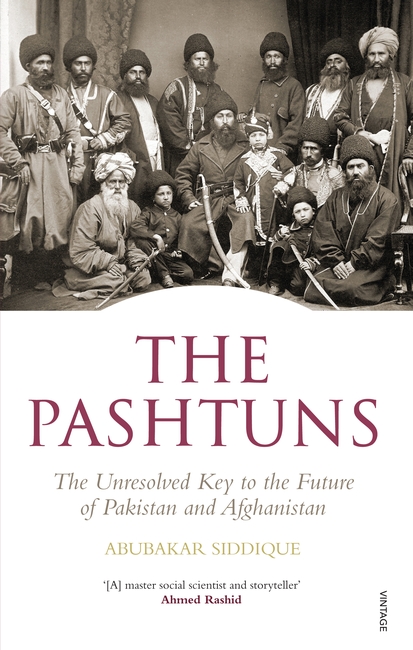
Most accounts claim that the instability gripping Afghanistan and Pakistan is either rooted in Pashtun history and culture, or finds willing hosts among Pashtun communities on both sides of the Afghanistan–Pakistan border.
In The Pashtuns, Abubakar Siddique, a stout-hearted Pashtun himself, sets out to interrogate this claim. He tells a very different story: that the failure, and unwillingness, of both Afghanistan and Pakistan to absorb the Pashtuns into their state structures and to incorporate them into the economic and political fabric is central to South Asia’s problems, and a critical failure of nation- and state-building in both countries.
In a voice that is both engaging and erudite, he makes clear that religious extremism is the product of these critical failures and that responsibility for this lies to a large degree with the elites of both countries. Partly an eye-witness account and partly meticulously researched scholarship, The Pashtuns describes a people whose destiny will, no doubt, shape the future of Pakistan and Afghanistan, and also the rest of the world.
Getting India Back on Track
Getting India Back on Track brings together some of India’s most accomplished analysts to spur a public debate about the reform agenda the new government should pursue in order to return the country to a path of high growth. It explores the challenges and opportunities faced by one of the most important–yet least understood–nations on earth and convenes some of India’s most leading policymakers to recommend policies in every major sector of the Indian economy.
These seventeen focused and concise memoranda offer the next generation of leaders and the general public alike a clear blueprint for India’s future.
Bringing Up Your Baby

Once you’ve delivered your baby, you know that the fun has just started. From your parents, to friends and neighbours, everyone has advice to give you about how to care for your baby. And as well meaning and confusing as they may be, how do you know what’s right for you and your angel? After all, you want to give your precious newborn the best, don’t you?
Mother of twins and a gorgeous boxer, Komal Porecha tells you everything you need to know about that challenging, trying, and fulfilling first year of baby care in an inimitable tone that will leave you going back to her pages for her wealth of information and her dab of warmth. From bringing your baby home, to breast feeding, diaper changing, to doctor-patient routines, to regulating your child’s sleep patterns, Bringing Up Your Baby is every Indian woman’s blessing and best friend.
Kitchen Clinic
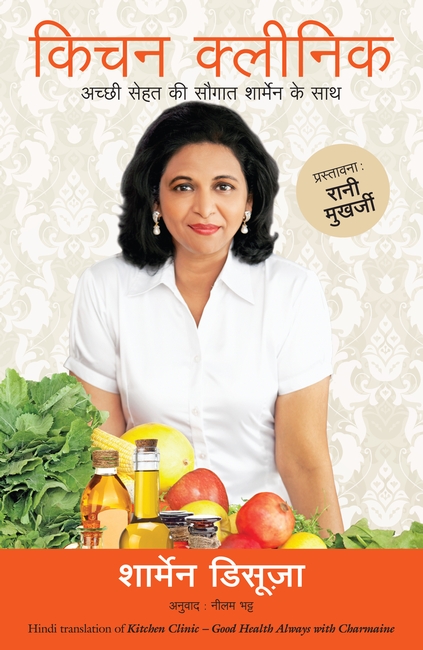
This is Hindi Translation from English Book ‘Kitchen Clinic: Good Health Always with Charmaine’.
In India, we all have our own herbal cures that we swear by. But wouldn’t it be a relief if you never caught a cold, could prevent getting a stomach infection while on holiday, and generally stayed healthy? The truth is you can. And it doesn’t cost the earth to do so. With a host of celebrity clients like Avanti and Yash Birla, Natasha and Adar Poonawala, Neetu Singh Kapoor, Rani Mukerji, Karan Johar, Siddharth Malhotra, Anita and Naresh Goyal, Ekta Raheja, Manav Gangwani and many others who swear by her, Charmaine D’Souza, for the first time ever, tells us her secrets to good health. How to: • avoid minor ailments like colds, menstrual cramps, headaches; • control and prevent major illnesses like heart disease, cancer, and stabilize diabetes. Kitchen Clinic is a comprehensive and holistic approach to herbal healing that can be done in the comfort of your home.
The Last King In India
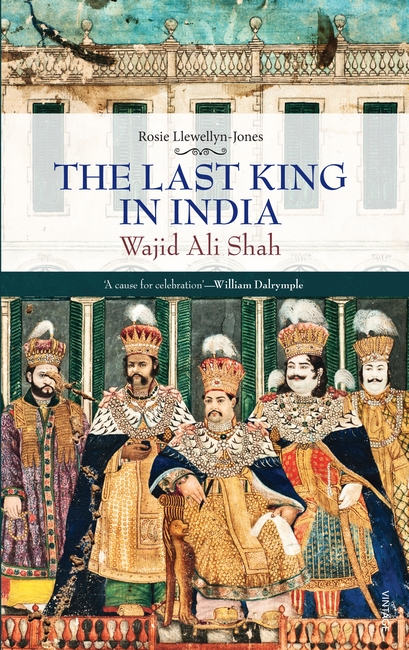
The thousands of mourners who lined Wajid Ali Shah’s funeral route on 21 September, 1887, with their loud wailing and shouted prayers, were not only marking the passing of the last king but also the passing of an intangible connection to old India, before the Europeans came.
This is the story of a man whose memory continues to divide opinion today. Was Wajid Ali Shah, as the British believed, a debauched ruler who spent his time with fiddlers, eunuchs and fairies, when he should have been running his kingdom? Or, as a few Indians remember him, a talented poet whose songs are still sung today, and who was robbed of his throne by the English East India Company?
Somewhere between these two extremes lies a gifted, but difficult, character; a man who married more women than there are days in the year; who directed theatrical extravaganzas that took over a month to perform, and who built a fairytale palace in Lucknow, which was inhabited for less than a decade. He remained a constant thorn in the side of the ruling British government with his extravagance, his menagerie and his wives. Even so, there was something rather heroic about a man who refused to bow to changing times, and who single-handedly endeavoured to preserve the etiquette and customs of the great Mughals well into the period of the British Raj.
India’s last king Wajid Ali Shah was written out of the history books when Awadh was annexed by the Company in February 1856. After long years of painstaking research, noted historian Rosie Llewellyn-Jones revives his memory and returns him his rightful place as one of India’s last great rulers.
The Return Of The Butterfly
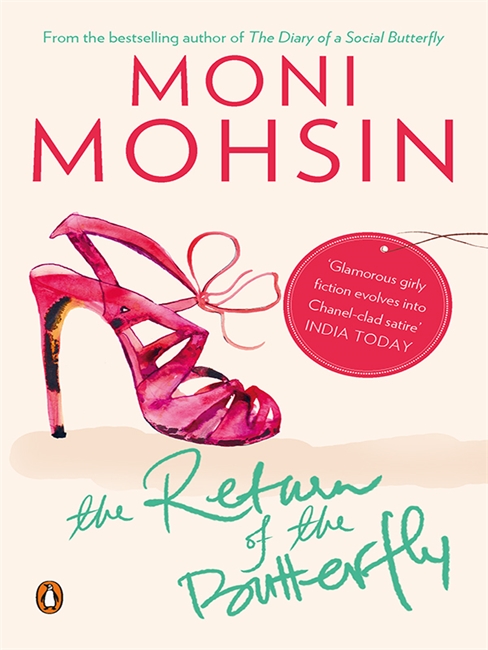
I tell you the halaats are so bad, so bad that don’t even ask. The Talibans sitting on top of our heads, bombs bursting left, right and centre, drones droning away, load-shedding a hundred hours a day, servants answering back, in-laws trying to upstage you, friends throwing you out of their kitties and on top of that elections ka tamasha. Janoo tau is coming closer and closer to a nervous brake out while Mummy is getting sterile dementia. As for Kulchoo, bhai, don’t even ask. But I’ve decided, come what may, I tau am not going to let anyone clamp my style. I’m going to live just as I like-watching my Turkish soaps, going to GTs and weddings, throwing kitty parties, telling everyone everything saaf-saaf and, of course, doing summers in London-voh tau must hai na. And I’m going to do it in my Jimmy Choo ki heels and my sleeveless designer shirts, and my streaked hair and my Prada ki sunglasses. This much I’m telling you all from now only. So tighten your seat belts, okay?