3 January 2000, It is the start of the new millennium. On Ammanagudi Street in Bangalore, a strange creature is spotted. As the beast seizes the imagination of the city, the first people to sight It — Shrinivas Moorty, a teacher in a local college, Pushpa Rani, who works in a call centre, Neela Mary Gopalrao, secretary to an influential man, and Sukhiya Ram, her office boy — are invited to talk about it on Bali Brums’s hugely popular radio show. What was it that they saw? A bat? A malevolent avatar? A sign of the displeasure of the gods? The grotesque mascot of a city that is growing too fast and crumbling too soon? Or merely a monkey that has lost its way?
Using evocative prose that reflects her profound understanding of human nature, Usha K.R. delves into the lives of her characters and their unexpectedly linked destinies in a city that has grown from a ‘Pensioner’s Paradise’ to frenetic hub of the country’s IT industry.
Catagory: Non Fiction
non fiction main category
Monkey-Man
Possession
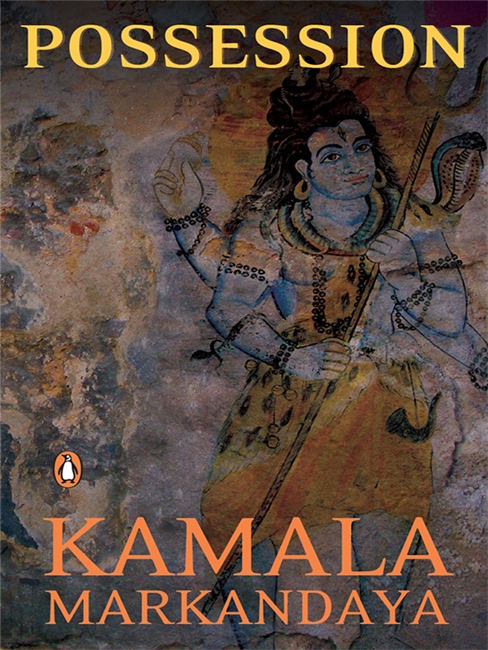
‘“Caroline thinks Valmiki belongs to her . . . People don’t easily give up what they think are their possessions. The English never have.”’
Anasuya, an Indian writer, meets the wilful Lady Caroline Bell at a party and is soon swept away by the manic energy that surrounds her. She watches as Caroline takes charge of Valmiki, a humble shepherd boy who expresses himself through painting, and whisks him away from his ragged family in a small south Indian village to London, introducing him to modernity, luxury and high society.
Initially dependent on Caroline, Valmiki becomes increasingly like her, learning the ways of the West through her unorthodox methods. But he is also unable to sever all connections with his past as he depends equally on the Swamy, an ascetic who first recognized his talent. As he grows to become his own person, one who sees the people and things around him as his possessions, Valmiki questions whether Caroline’s motives for nurturing him are purely altruistic and turns to the Swamy for advice.
Anasuya, who has been a mute spectator to Caroline’s games and machinations, fears for Valmiki’s well-being as the Swamy and Caroline head towards an inevitable clash of egos, one that is sure to end in destruction.
In Possession Kamala Markandaya deftly explores the ties that bind benefactor and artist, master and disciple, displaying the ease with which boundaries can blur, turning patronage into possession.
The Scientific Indian
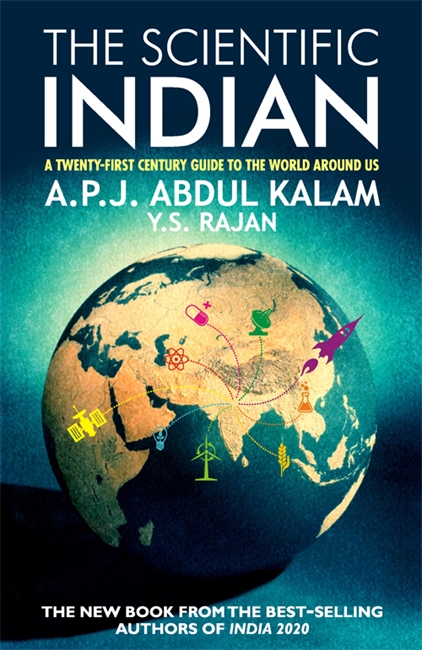
Nuclear capability; self-sufficiency in food production; an array of indigenous satellites and missiles; an unmanned Moon mission—India’s achievements in the scientific domain in recent years have been spectacular. But; according to the country’s best-known scientist A.P.J. Abdul Kalam and his close associate Y.S. Rajan; we’ve only just begun. In a century that many experts predict may belong to India; the realization of the vision of a better future for everyone will require a keen understanding of our needs and this can only be achieved by tailoring our research and innovations to the goal of national development.
India to the forefront of the world in the decades to come.
The Scientific Indian will speak to every curious and adventurous mind; and especially to tomorrow’s scientists and technologists; encouraging us to dream big; and urging us to work hard to make our dreams come true.
In The Scientific Indian; the authors of the path-breaking India 2020: A Vision for the New Millennium return after ten years to the core areas of scientific advancement that are crucial today: space exploration; satellite technology; missile development; earth and ocean resources; the biosphere; food production; energy and water harvesting; health care and communications; to name a few. For each aspect; the authors provide the context of recent progress on the global platform as well as Indian breakthroughs; before outlining a pragmatic vision of technological development that will propel
Captive Imagination
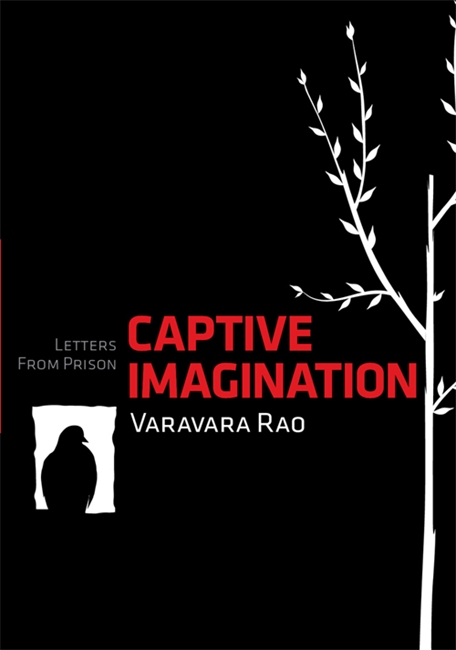
Poet, Marxist critic and activist, Varavara Rao (VV) has been continually persecuted by the state and intermittently imprisoned since 1973, but he never stopped writing during all these decades, even from within prison. When he was subjected to ‘one thousand days of solitary confinement’ during 1985-89 in Secunderabad Jail, a leading national daily invited him to write about his prison experiences.
While prison writing is a hoary tradition, no writer has had the opportunity to publish his writings from jail. VV, however, did meet the demands placed on him as a writer, despite constraints of censorship by jail authorities and the Intelligence section. He decided to test his creative powers in jail on the touchstone of his readers’ response and expressed himself in a series of thirteen remarkable essays on imprisonment, from prison.
A Better India

The Lost River
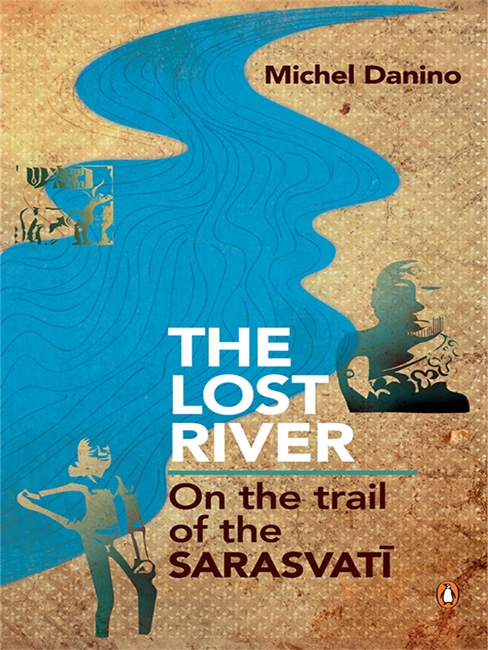
The Indian subcontinent was the scene of dramatic upheavals a few thousand years ago. The Northwest region entered an arid phase, and erosion coupled with tectonic events played havoc with river courses. One of them disappeared. Celebrated as -Sarasvati’ in the Rig Veda and the Mahabharata, this river was rediscovered in the early nineteenth century through topographic explorations by British officials. Recently, geological and climatological studies have probed its evolution and disappearance, while satellite imagery has traced the river’s buried courses and isotope analyses have dated ancient waters still stored under the Thar Desert. In the same Northwest, the subcontinent’s first urban society”the Indus civilization”flourished and declined. But it was not watered by the Indus alone: since Aurel Stein’s expedition in the 1940s, hundreds of Harappan sites have been identified in the now dry Sarasvati’s basin. The rich Harappan legacy in technologies, arts and culture sowed the seeds of Indian civilization as we know it now. Drawing from recent research in a wide range of disciplines, this book discusses differing viewpoints and proposes a harmonious synthesis”a fascinating tale of exploration that brings to life the vital role the -lost river of the Indian desert’ played before its waters gurgled to a stop.
Kadambari
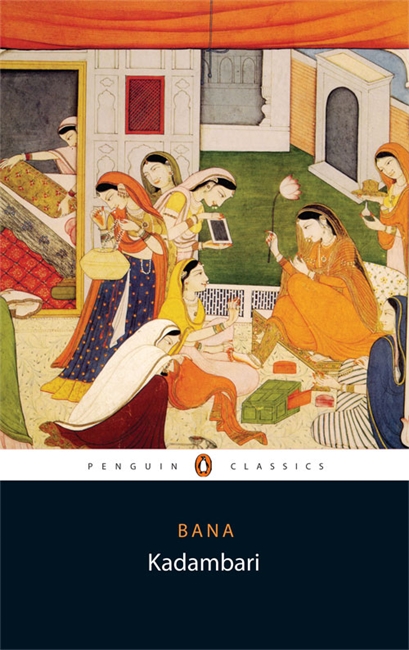
Bana is among the three most important prose writers in classical Sanskrit, all of whom lived in the late sixth and early seventh centuries AD. It is clear, from his writings, that his mind was amazingly modern, humane and sensitive, especially for the seventh-century India in which he lived. Bana had a healthy irreverence towards many of the established orthodoxies of his time and his strength lies in his skill as a storyteller and as a creator of characters vibrant with life and individuality.
Kadambari is a lyrical prose romance that narrates the love story of Kadambari, a Gandharva princess, and Chandrapida, a prince who is eventually revealed to be the moon god. Acclaimed as a great literary work, it is replete with eloquent descriptions of palaces, forests, mountains, gardens, sunrises and sunsets and love in separation and fulfillment. Featuring an intriguing parrot-narrator, the story progresses as a delightful romantic thriller played out in the magical realms between this world and the other, in which the earthly and the divine blend in idyllic splendour.
Autobiography
The memoirs of India’s first President
Dr Rajendra Prasad wrote the greater part of Autobiography while he was in prison between 1942 and 1945. First published in Hindi, it takes us through his childhood, his life in his village Chapra, his early education with his teacher ‘Maulvi Saheb’, his years as a student in Calcutta, his marriage at the age of twelve and his legal practice. It discusses not only his personal tribulations, but is also an examination of the last years of British colonial rule in India. As a freedom fighter and close associate of Gandhi, Rajendra Prasad was privy to political developments in the decades before Independence. He records Gandhi’s influence on him, the call for non-co-operation in Bihar as part of Gandhiji’s larger all-India movement, the boycott of foreign cloth, the shadow of communalism and the Hindu–Muslim question, Satyagraha and social reform.
This book is testimony to Rajendra Prasad’s deep humanity, his unswerving nationalism and belief in democracy. It is also an exploration of the foundations of modern India.