When DCP Ravi and his ACP Rahul are handed the case of the death of the Union Sports Minister and cricket board member S.N. Rao, little do they know that this is just one of the series of murders across the city. What unravels is a ruthless game of supremacy-a deeper, more sinister plan to squash anyone coming in the way of setting up the twenty-twenty league and becoming one of the richest sporting bodies of the world!
In the nexus between politicians and the cricket board, the players are just pawns and the real game a tamasha.
Forgotten tells the stories of women who transcended great tribulation to bring strength and succour to others.
We meet Donna Juliana, a devout Catholic of Portuguese descent, whose influence in the court of the Mughal prince Shah Alam-later Emperor Bahadur Shah Zafar I-was so strong that the Dutch, the Portuguese and the British frequently sought her help to get an audience with the ruler.
Similarly, the poetry of the beautiful court poet, singer, song writer and warrior Mahlaqa Bai Chanda was largely ignored by critics for nearly two centuries after her death. At a time when few women could read and write, Mahlaqa received an elaborate education, compiling her first collection of poetry when legendary Urdu poet Mirza Ghalib was just a year old.
The author draws vivid portraits of Chand Sultana, the Ismaili Muslim warrior-princess who defended Ahmadnagar against the Mughal forces of Emperor Akbar, and of two queens of the Deccan, Rudramma Devi and Hayat Bakshi Begum, who exemplified the ability of women rulers to govern well. The aurhor also remembers Radha Bai, a courageous Brahmin child-widow whose lifelong search to call someone her own touched all those she encountered.
Bilkees Latif skilfully merges real and imagined events from the lives and times of these extraordinary but forgotten women, to restore to them their place in the annals of history.

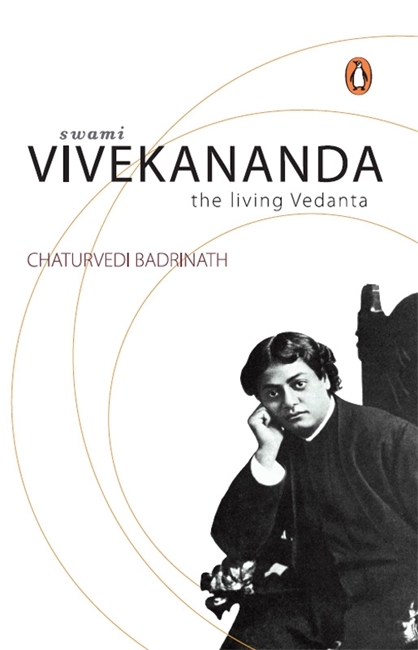
Religion is not in books, not in forms, not in sects, not in nation; religion is in the human heart…It is love alone that can conquer hatred…’- Swami Vivekananda A genius, a visionary, a writer, a dreamer, a teacher and an inspiration for generations of Indians—this was Swami Vivekananda. Born into a family of lawyers, Narendranath Dutta was an exceptionally intelligent child, a natural leader among his playmates, who impressed his teachers with his scholarship. The spirituality of his mentor Shri Ramakrishna and his own study of philosophy and logic influenced Narendranath to join the monastic order. Vivekananda was the spokesperson for India at the Parliament of Religions in Chicago where the magic of his words held his audience in thrall. He also instilled among the Indian youth self-confidence and the hope of regeneration. Devika Rangachari’s account of the life and times of Swami Vivekananda is both inspiring and absorbing. It is the remarkable story of a spiritual leader who worked against overwhelming odds to realize his vision of a free India.
When Rabindranath Tagore received the Nobel Prize for Literature in1913, it reinforced the power he had to touch readers across countries and cultures.
The Jewel That Is Best comprises three volumes of Tagore’s poetry–‘Particles’ (ika),)Kan ‘Jottings’ (Lekhan) and ‘Sparks’ (Sphuli?ga). The poems are quiet, philosophical observations that carry as much meaning as mystery, as much sensitivity as objectivity. Written at various points in the poet’s long life, they remain resonant even today. It was perhaps his imagination as a painter that enabled Tagore to combine humanity, nature and science on one canvas, a harmony strongly felt in these verses. Each poem is a gem delicately arranged with the others. They continue to sparkle in William Radice’s elegant and faithful translation.
A stunning array of voices guaranteed to make you think, feel, dream
The MetroPlus Playwright Award was instituted in 2008 by The Hindu for the best original, unpublished and unperformed English script.
Harlesden High Street by Abhishek Majumdar, the 2008 winner, is an evocative, complex play about displacement and optimism. Through its motley characters and shifts of time and space, this play captures the limited world of immigrants, their frustrations and their dilemmas.
The Skeleton Woman by Prashant Prakash and Kalki Koechlin, the 2009 winners, is a love story about two people who defeat fantastical odds to be together. Swinging between reality and make-believe, it weaves together an Inuit folk tale and a modern-day story about a young fisherman-turned-writer with a potent imagination and his long-suffering wife.
Taramandal by Neel Chaudhuri, the winner for 2010, borrows the protagonist from Satyajit Ray’s short story ‘Patol Babu Filmstar’. Chaudhuri uses a host of characters to masterfully construct a parallel narrative that mirrors Patol’s journey to disillusionment.
Three Plays questions definitions and pushes boundaries. It is a powerful reminder of who and where we are on the cultural map.

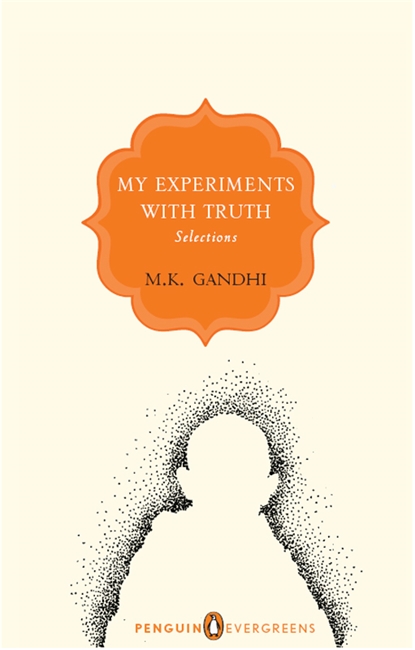
Mohandas Karamchand Gandhi one of the greatest men to walk this earth, begins the story of his life with descriptions of his childhood in Porbandar and Rajkot in Gujarat, his schooldays, his early marriage, the lessons he learnt when he tried stealing, told lies and smoked cigrattes, and his unshakable devotion to his parents. he then tells us of his journeys abroad, first to England and then to south Africa, and narrates in simple, lucid language his transformation from a shy, diffident young man with a chronic fear of public speaking to a fearless lawyer and leader of men who took on the might of the British empire.
An indisputable classic of world literature, the Kamasutra remains one of the most enjoyable texts of antiquity. A work of philosophy, psychology, sociology, Hindu dogma, scientific inquiry and sexology, it has, at the same time, both affected Indian civilization and remained an indispensable key to the understanding of it. These excerpts from Sir Richard F. Burton’s celebrated English translation highlight aspects of sexual love and marriage, and show why the Kamasutra has continued to charm readers across the centuries.