The predatory neo-liberal capitalism that has become the norm in PBI – India over the last two decades raises many uncomfortable questions. Today, consumption defines what we are. And with the western capitalist model reigning supreme, all of us seem to have been reduced to being just consumers in the eyes of the government.
The effect on PBI – India’s peasantry has been tremendous. The recent tragic stories played out in Kalinganagar, Singur and Nandigram show how many farmers suddenly find themselves up against the might of the state. The ‘theft’ of agricultural land from poor farmers in the name of progress has become routine.
Meanwhile, private corporations continue to ravage the country’s natural resources without any protest from the administration.
In Desire Named Development, Aditya Nigam makes the case for dismantling some cherished beliefs and for restructuring the economy and our cities in particular ways. A substantial change in government policies and PBI – Individual consumption habits can still make another PBI – World possible for PBI – India’s future.
‘I was born in India. Your grandparents were born in what is now Pakistan. But they live in India and I in Pakistan. Strange, isn’t it?’
Beyond the Border, based on two journeys to Pakistan, is a strikingly unconventional account of what life is like for ‘ordinary’ Pakistanis. Yoginder Sikand discovers a country that only remotely resembles
the stereotype of the hostile Muslim neighbour all too common in the Indian imagination. From Shiela, the daughter of a feudal landlord, named after her mother’s Indian best friend, to the owner of a rundown local eatery who refused to take any money as Sikand was the first Indian to visit his stall, the author’s encounters with Pakistanis from all walks of life in Lahore, Multan, Hyderabad (Sind), Moenjo Daro, Bhit Bhah, Islamabad—among other places—reveal a country that is unexpected, paradoxical and rich in diverse narratives.
Departing from the fi ercely polemical rhetoric common in Indian and Pakistani accounts of each other, Yoginder Sikand not only goes beyond the strategist’s view of the India–Pakistan divide, but dispels the myths about Pakistan as the terrible ‘other’ that have fi ltered into the Indian psyche.
This brilliantly perceptive and quirky travelogue illuminates the Pakistani side of the story while telling Sikand’s own tale of exploration and self-discovery.

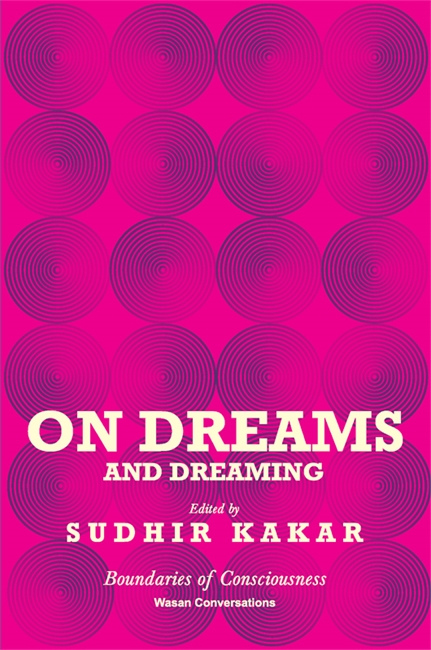
Mapping the uncharted territory at the edges of psychological knowledge, these fascinating essays explore compelling aspects of dreams and dreaming. They discuss topics as diverse as memorable dreams, lucid dreaming, the role of dreams in the evolution of human consciousness and the relationship between dreams and the waking state.
In ‘The Dream and Its Embedding’, psychoanalyst Patrick Mahony demonstrates, with absorbing case studies, how dreams can become effective therapeutic tools, while dream scholar Kelly Bulkely concludes in ‘Big Dreams’ that, ultimately, the function of dreams is to make the brain grow. Luigi Zoja, dream analyst, explores the profusion of nightmares among soldiers, prisoners and other victims of war in ‘Nightmares’. And Madhu Tandan, who lived for seven years at an ashram in the foothills of the Himalayas, explains how dreams can access a level of consciousness beyond the psychological.
This volume is the first in the ‘Boundaries of Consciousness’ series, which, under the leadership of Sudhir Kakar, seeks to bring together psychoanalysts, philosophers, religious studies scholars and neuroscientists in order to expand the frontiers of current psychological understanding. Subsequent volumes will spring from symposia held at Wasan Island, Canada, on the supernatural, death and dying and creativity and imagination.
Edited and introduced by Sudhir Kakar, On Dreams and Dreaming will be of interest to scholars and to all who dream and seek to understand why.
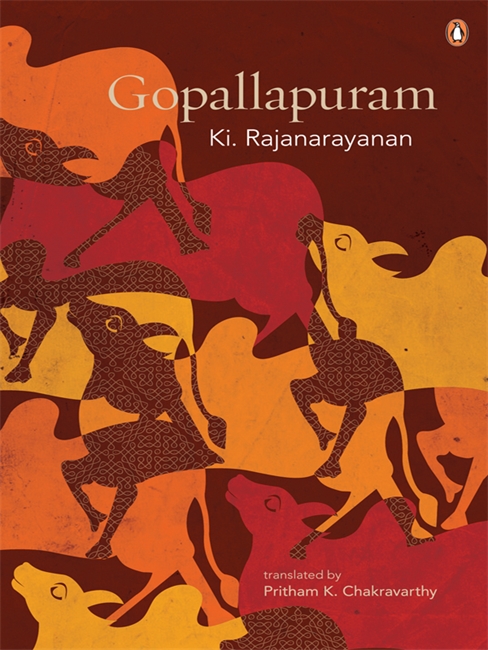
A highway robber murders a pregnant young woman for her jewellery. He is caught and sentenced to death by impalement in Gopallapuram. A community of Telugu speakers migrates to the Tamil country to escape Muslim rule. They transform a barren land, turning it into a fertile, verdant village. A horde of bandits attempts to raid a village but is foiled by the unarmed, inventive villagers. Winner of the Sahitya Akademi Awars, Ki. Rajanarayanan weaves legend, myth, history and good old-fashioned storytelling in this wonderful contemporary classic.