



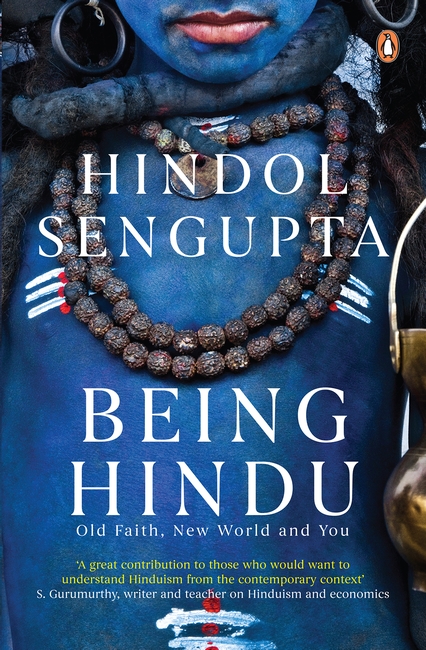
One of the world’s oldest forms of faith, Hinduism has an unbroken trajectory of beliefs and rituals that have continued for many millennia through the footsteps of pilgrims and the pedagogies of theologists; through myth, science and politics. But what does all that mean to the modern Hindu today? Why do Hindus call themselves so? Is it merely because their parents were Hindus? In what way does the faith speak to those who profess to follow it? What does Hinduism mean to the everyday-practising or sometimes-accessing ordinary Hindu? Away from the raucous debate around religion, this is the journey of a common Hind, an attempt to understand why, for so many Hindus, their faith is one of the most powerful arguments for plurality, for unity in diversity, and even more than the omnipresent power of God, the sublime courage and conviction of man.
Being Hindu is an exploration of Hinduism in a way you have never seen before, almost through your own eyes. This is the first book on Hinduism to have won the Wilbur Award given by the Religion Communicators Council of America for excellence in writing about religion.
Catagory: Non Fiction
non fiction main category
The Bhutanese Guide To Happiness
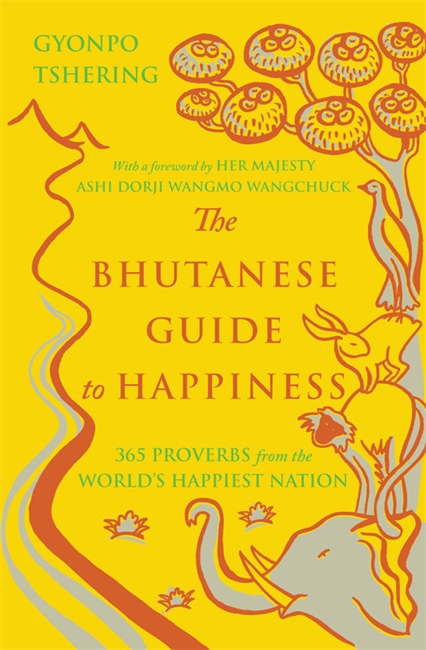
What we can learn from a country where Gross National Happiness is more important than Gross Domestic Product In clear, simple prose, and with poetic turns of phrase, this inspirational collection of quotations-apart from being funny and quirky-reflects the values of the unique country of Bhutan, and its universal embrace of compassion, understanding and kindness. This remarkable little kingdom in the Eastern Himalayas may just hold the secret to lifelong happiness. The Bhutanese grounding in Buddhist
ideals suggests that material and spiritual development should occur side by side- something we can forget too often. So dive into this inspiring collection of wisdom,
proverbs and general sage advice to help you along your own road to happiness-or at least put a smile on your face.
This Divided Island
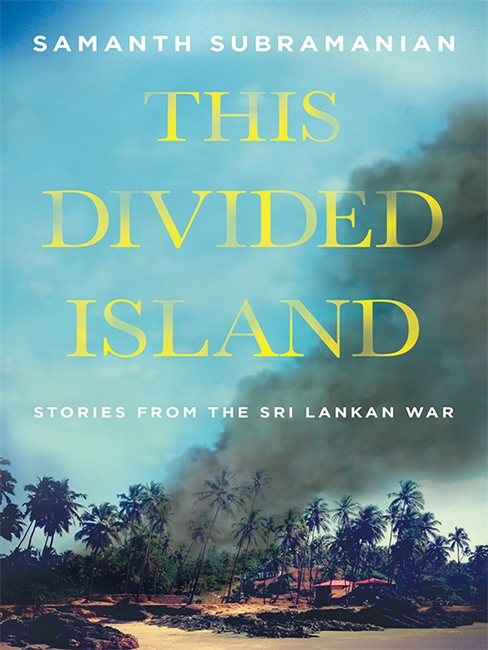
In the summer of 2009, the leader of the dreaded Tamil Tiger guerrillas was killed, bringing to a bloody end the stubborn and complicated civil war in Sri Lanka. For nearly thirty years, the war’s fingers had reached everywhere: into the bustle of Colombo, the Buddhist monasteries scattered across the island, the soft hills of central Sri Lanka, the curves of the eastern coast near Batticaloa and Trincomalee, and the stark, hot north. With its genius for brutality, the war left few places, and fewer people, untouched.What happens to the texture of life in a country that endures such bitter conflict? What happens to the country’s soul? Samanth Subramanian gives us an extraordinary account of the Sri Lankan war and the lives it changed. Taking us to the ghosts of summers past, and to other battles from other times, he draws out the story of Sri Lanka today-an exhausted, disturbed society, still hot from the embers of the war. Through travels and conversations, he examines how people reconcile themselves to violence, how religion and state conspire, how the powerful become cruel, and how victory can be put to the task of reshaping memory and burying histories.This Divided Island is a harrowing and humane investigation of a country still inflamed.
Editor Unplugged
Vinod Mehta’s new book takes forward the story of Lucknow Boy, recounting his experiences in the corridors of power in Delhi. His views on Narendra Modi, Arvind Kejriwal and the Nehru-Gandhi dynasty, and his decoding of coalition politics and the significant changes ushered in by the 2014 Lok Sabha elections, are expressed with his characteristic sharp insights, wit and wisdom. So too are his analyses of the sweeping changes taking place in the print and TV media, and his pen portraits of personalities such as Ratan Tata, Niira Radia, Khushwant Singh, Sachin Tendulkar and Arundhati Roy. Other chapters examine the lack of humour in our political life, the changing aspirations of the Indian middle class, and the mistakes and regrets of his life. Peppered with anecdotes and gossip, every page of this honest, lively and irreverent book is both illuminating and entertaining.
Goodnight And God Bless
As each chapter echoes a bedtime rumination, Goodnight and God Bless is about books, writers, mice, mothers, airport hotels, and other such unexpectedly thought-provoking subjects. Snugly interwoven with a warmly personal and anecdotal history of the author, this wise and witty book offers an ironic take on nearly everything.
Drawing from her experiences as a woman, mother, daughter, wife and writer, Anita Nair marks over a decade of her literary career with deliciously amusing quotes, mostly unnecessary and unabashed trivia, footnotes and other erudite diversions. This is the perfect book to keep by your bedside, to dip and delve into anytime.
Super Kids

‘Mom, I want to eat something interesting. No more daal–roti, please!’
How many times has your child turned their nose up at dinner? Don’t you wish someone would tell you exactly what this interesting, yummy food is? Do you worry about your child eating too much junk? Do you wish you could make good old ghar ka khana more exciting and appealing? Fret not, Suman Agarwal has answers to all your food and health woes.
Suman provides dozens of super easy, healthy and scrumptious recipes like spinach masala dosa, nachos bhel and chipotle rolls as well as fuss-free desserts and party foods that your children will adore. Complete with simple instructions, photos and calorie indicators, Super Kids is a must-buy for every mum.
Reel World
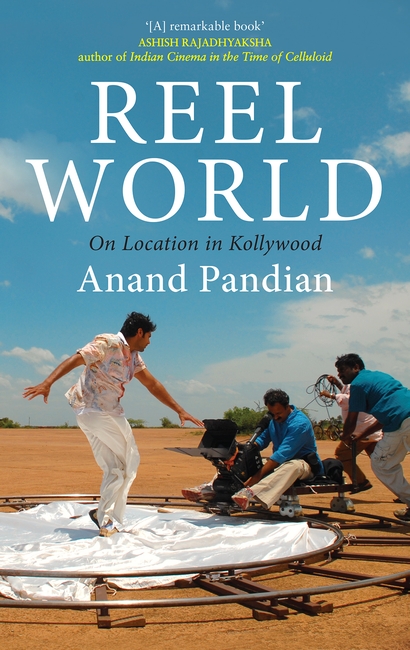
Over the last century, films have changed the way we imagine ourselves and experience the world around us. But what happens to life when the real world begins to look and feel so much like the reel one? And what about those countless craftsmen who make this happen, toiling each day to turn ordinary moments into elements of a cinematic world?
For the last few years, Anand Pandian has trailed some of the most renowned figures in the New Wave of contemporary Tamil cinema, from the studios of Chennai to Switzerland and Kuala Lumpur. His gripping stories reveal how their films come together and sometimes fall apart–the pitched scripts and rickety sets, their stormy fights and digital marvels, the joy of a hit tune and the heartbreak of box office disaster. With an anthropologist’s eye and a cinephile’s zeal, Pandian vividly conjures the frenzied highs and lows of this extraordinary creative process.
Enthralling, original, and written in a dazzlingly experimental style, Reel World is a moving meditation on the power of film, offering rich insight into a fascinating, frenetic world.
The East India Company
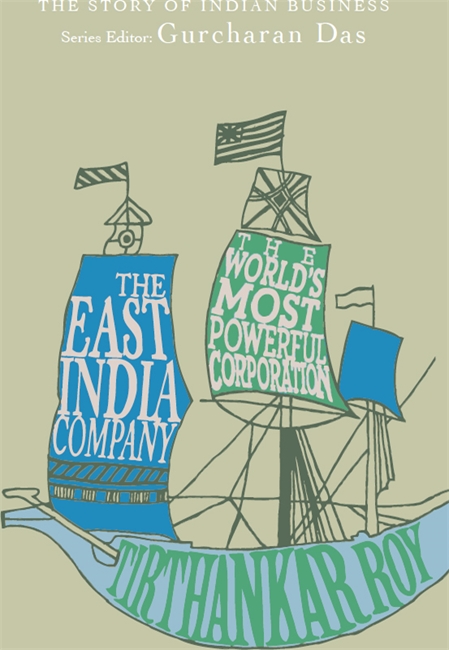
This groundbreaking study examines how the East India Company founded an empire in India at the same time it started losing ground in business. For over 200 years, the Company’s vast business network had spanned Persia, India, China, Indonesia and North America. But in the late 1700s, its career took a dramatic turn, and it ended up being an empire builder.
In this fascinating account, Tirthankar Roy reveals how the Company’s trade with India changed it-and how the Company changed Indian business. Fitting together many pieces of a vast jigsaw puzzle, the book explores how politics meshed so closely with the conduct of business then, and what that tells us about doing business now.
‘One of the first major attempts to tell the company’s story from an Indian business perspective’-Financial Express
Arthashastra
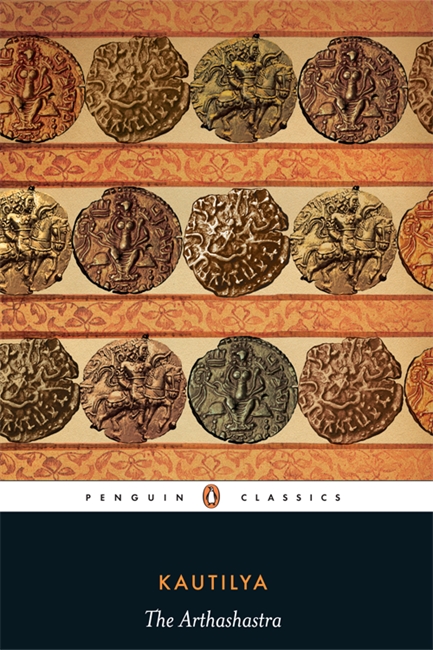
Ascribed to Kautilya (commonly identified as the prime minister of Chandragupta Maurya) and dating back more than 2,000 years, the Arthashastra is the world’s first manual in political economy. It has a pre-eminence in Indian thought that is akin to that of Machiavelli’s The Prince in Europe. Arthashastra (literally, ‘the science of wealth’) is a study of economic enterprise; specifically, Kautilya’s treatise advises the king on the business of creating prosperity. This ancient text provides a fascinating window into the social and economic structures of the time, and into the intricacies of statecraft—for the Arthashastra also addresses the question: what makes a good leader? This book is intended to be an introduction to the economic philosophy of the Arthashastra. Its goal is to analyse the relevance of this classic text in its own time—in a world in which kings were regulators of economic activities of their subjects, but also entrepreneurs themselves—in the conviction that it has much to teach us that has value in our own age
The Idea Of India
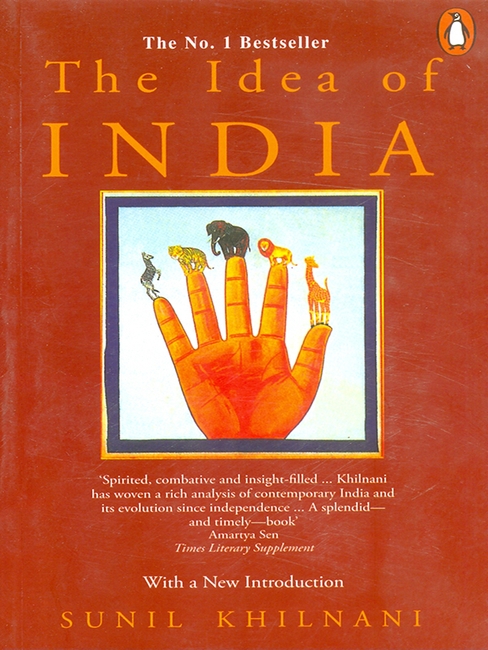
Sunil Khilnani’s exciting book addresses the paradoxes and ironies that have surrounded the project of inventing India-a project that has brought Indians considerable political freedom and carried their enormous democracy to the verge of being Asia’s greatest free state but that has also left many of them in poverty and that is now threatened by divisive religious nationalism.
Khilnani’s superb historical analysis conveys modern India’s energy, fluidity, and unpredictability-in its democracy and its voting patterns, in its visions of economic development, in its diverse cities and devotion to village culture, and in its current disputes over its political identity. Throughout, he provokes and illuminates this fundamental question: Can the original idea of India survive its own successes?