



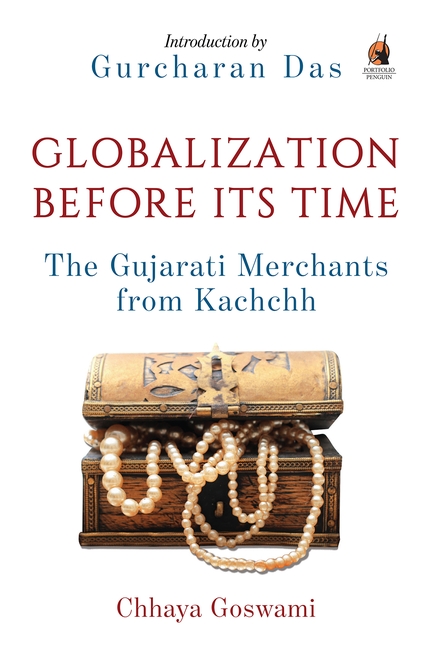
How did the Kachchhi traders build on the Gujarat Advantage?
In the eighteenth and early nineteenth centuries, during the dying days of the Mughal empire, merchants from Kachchh established a flourishing overseas trade. Building on a rich legacy of free trade in pre-modern times between the many ports of Gujarat and the Middle East, the Kachchhis dealt in pearls, dates, spices and ivory with the faraway lands of Muscat and Zanzibar.
The Kachchhi merchants behaved much like today’s venture capitalists. They knew how to grow capital, seek new markets, and create them where they didn’t exist. They also had a phenomenal risk appetite. What they were able to practise was nothing less than the traits of globalization before its time.
This new book in The Story of Indian Business series tells their fascinating story.
Catagory: Non Fiction
non fiction main category
Beyond 2020
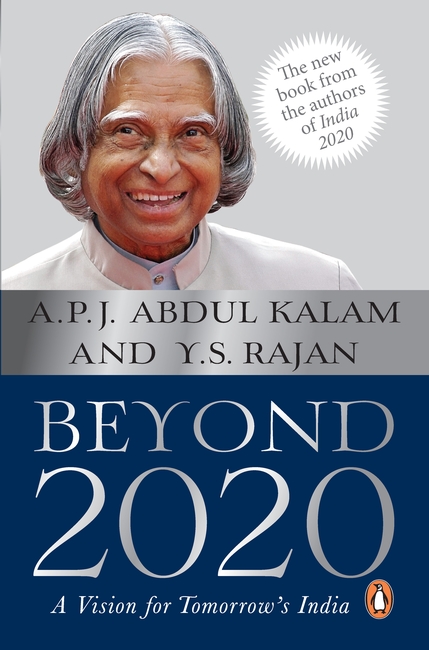
India 2020 is about to become a reality. Are we ready?
In 1998, Dr Kalam and Y.S. Rajan published the now iconic India 2020, a vision document for the new millennium that charted how India could become one of the top five economic powers in the world by 2020. Sixteen years later, as the year 2020 approaches, it is time to take stock of how much India has achieved and what lies ahead.
In many ways, India’s growth story in the twenty-first century has been hamstrung by missed opportunities and slowdowns in project execution; but it has also been marked by new opportunities and emerging technologies that make faster and more inclusive growth viable. A renewed policy focus is now needed for agriculture, manufacturing, mining, the chemicals industry, health care and infrastructure to invigorate these sectors and boost economic growth, argue Kalam and Rajan. Alongside, education, job creation, emerging technologies, biodiversity, waste management, national security and the knowledge economy are some of the other vital areas that we need to build on as we look beyond 2020.
India can still make it to the list of developed nations in a decade. Beyond 2020 provides an action plan for that transformation.
Sacred Waters
The watershed of the Ganga, or Ganges, lies in the central Himalayas of Garhwal. Hindu tradition identifies the sources of this river as sacred sites. Every year, millions of pilgrims travel to shrines at Yamnotri, Gangotri, Kedarnath and Badrinath. Stephen Alter retraces the original Char Dham Yatra on foot, following ancient routes that crossed the mountains before motor roads were built. At the same time, he navigates the mythology and lore of this natural and spiritual realm, where every tributary and confluence is invested with seminal stories.
The Cauliflower Diet
The cauliflower. An answer to the prayers of every person on the planet who wants to lose weight, cut down on sugar and stay healthy, while not being hungry all the time. Sounds like a pipe dream? It’s not. The cauliflower is one of the best-kept secrets in the dieting community. It is among the most adaptable and versatile veggies that can blend into any kind of cuisine in the world and is an almost-perfect substitute for several types of starch-flour, cereal, pasta, rice and even the potato-for a fraction of the carb count. Besides being low in carbs, the cauliflower is gluten-free and high in nutrients. In The Cauliflower Diet, learn how the amazingly adaptable cauliflower can be used in the preparation of all the things you love: rice, upma, cookies and even pizza! Perfect for all types of weight loss, this humble vegetable will help you shed the kilos in no time.
A Revolutionary History of Interwar India
Focusing on the Hindustan Socialist Republican Army (HSRA), A Revolutionary History . . . delivers a fresh perspective on the ambitions, ideologies and practices of this influential organization formed by Chandrashekhar Azad and Bhagat Singh, and inspired by transnational anti-imperial dissent. It is a new interpretation of the activities and political impact of the north Indian revolutionaries who advocated the use of political violence against the British.
Kama Maclean contends that the actions of these revolutionaries had a direct impact on Congress politics and tested its policy of non-violence. In doing so she draws on visual culture studies, demonstrating the efficacy of imagery in constructing-as opposed to merely illustrating-historical narratives. Maclean analyses visual evidence alongside recently declassified government files, memoirs and interviews to elaborate on the complex relationships between the Congress and the HSRA, which were far less antagonistic than is frequently imagined.
Fourteen Years with Boss
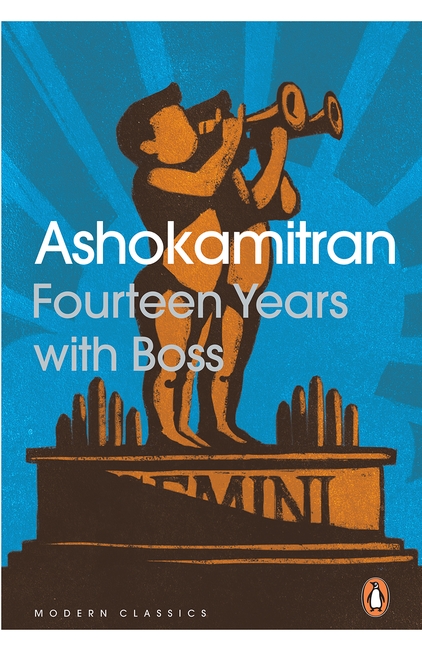
Reminiscing of a time long lost, Fourteen Years with Boss gives a delightful insight into the workings of the Gemini Studios of Madras-one of the most influential film-producing organizations in India-and its founder, the brilliant and multifaceted S. S. Vasan.
Filled with vivid sketches of actors, extras, directors and the ‘boss’, Ashokamitran recreates life at the studio so that it materializes in the reader’s mind with the perfect balance of humour and nostalgia.
Manipal and Beyond
As a young man in the immediate post-Independence era, Ramdas Pai was captivated by the nation-building fervour of the times and the opportunities for enterprise. The old-school entrepreneurs of those days envisioned their endeavours as contributory to nation-building. A fine example of this patriotic mindset was Ramdas’s own father, T.M.A. Pai, who dotted the landscape of the then South Canara district with his educational institutions. Undaunted by sceptical bystanders and numerous obstacles, the elder Pai contrived a community-based, participatory model for the funding and sustainability of these institutions, and then offered them to Morarji Desai, the then prime minister, as a gift to the nation.
As heir to these early accomplishments in private-sector education and healthcare, Ramdas ushered in an era of professionalism, revamping concepts and systems, developing colleges and hospitals into institutions of excellence, and consolidating them into his father’s dream of a university in Manipal. Ramdas leads a committed group of over 20,000 colleagues in seventy institutions, including six universities, in five countries. Bold, pragmatic and upright, Ramdas is the role model for Team Manipal.
This book is more than just the story of an institution builder. It highlights the harsh regulatory environment of education on the one hand, and the temptations of profiteering in a suppliers’ market on the other hand.
Bliss
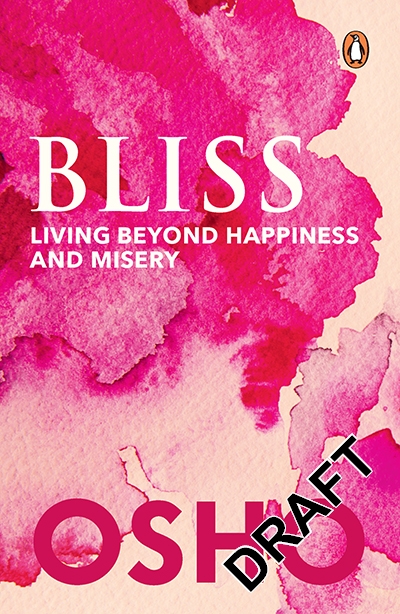
Everyone is searching for happiness, but they are looking in the wrong place-outside. Real happiness, bliss, can only be found by going inside. Commenting on the ancient wisdom of the Shiva Sutras, Osho shows how to avoid the outside traps of desire and attachment. If you can learn the knack of dis-identifying with the mind, you will find that bliss is hidden within all of everyday experience. Being human happens when you get out of the vicious circle called mind.
Restart
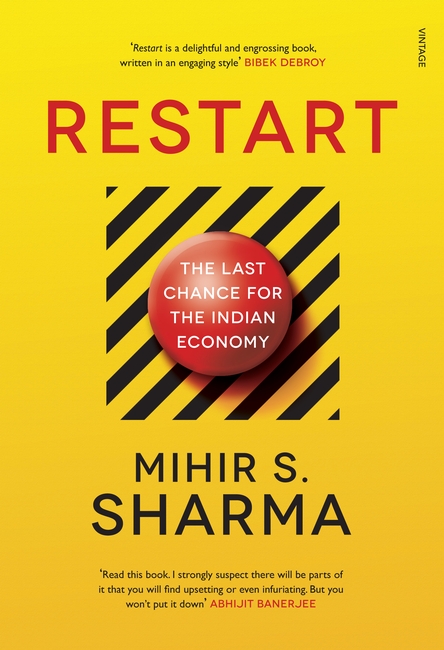
In Restart, Mihir S. Sharma shows what can and must change in India’s policies, its administration and even its attitudes. The answers he provides are not obvious, and require courage. Nor are they all comforting or conventional. Yet they could, in less time than you can imagine, unleash the creativity of a billion hopeful Indians.
Another 100 Lyrics
A delightful new collection from the master lyricist
After the great success of 100 Lyrics, this new volume contains a hundred more of Gulzar’s marvellous compositions.
Gulzar has brought a rare poetic sensibility to popular Hindi film music over a five-decade-long career, and this collection showcases some of his best work, from early lyrics like ‘Ganga aaye kahan se‘ (Kabuliwala, 1961) and ‘Koi hota jisko apna‘ (Mere Apne) to classics such as ‘Tere bina jiya jaye na‘ (Ghar), ‘Do naina aur ek kahani‘ (Masoom) and ‘Roz roz ankhon taley‘ (Jeeva) and later blockbusters like ‘Goli maar bheje mein‘ (Satya), ‘Beedi jalai le‘ (Omkara), ‘Dhan te nan‘ (Kaminey), ‘Dil toh bachcha hai ji‘ (Ishqiya), ‘Challa‘ (Jab Tak Hai Jaan) and ‘Bismil‘ (Haider). In addition, Another 100 Lyrics contains some brilliant poems from non-film albums like Dil Padosi Hai, Marasim, Ishqa Ishqa and Koi Baat Chale.
Complete with anecdotes about the compositions of some of these lyrics and photographs from Gulzar’s personal collection, Another 100 Lyrics is a true collector’s item.