



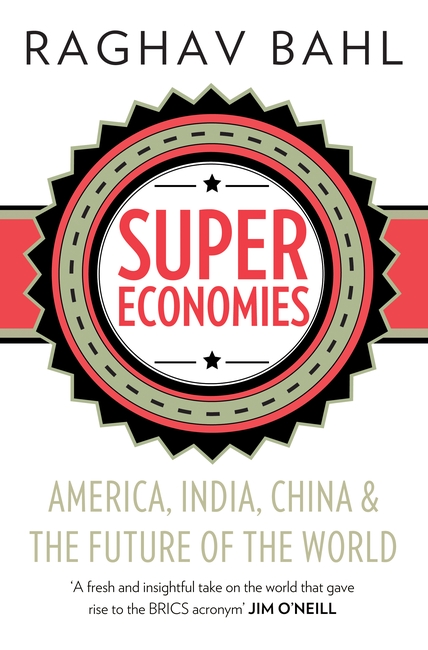
Our times are characterized not by estranged Superpowers building formidable arsenals but by engaged societies building a robust global economy. Emerging countries are redefining the geo-economic (and geopolitical) dynamic; in the new world order, a soaring GDP and a booming population are the true indicators of a nation’s strength.
The twenty-first century will be led, Raghav Bahl says, by a handful of SuperEconomies-large, prosperous countries with a high growth rate, ranking among the world’s top trading partners, commanding 15 to 20 per cent of global GDP, having nuclear arms but using economic leadership to effect significant change. The USA and China qualify automatically as the two existing SuperEconomies.
With its demographic advantage, a surplus of skilled labour, a GDP that is expected to jump from $2 trillion to over $5 trillion by 2025, a strategic geographic location and a new, decisive political leadership, India has every chance, Bahl argues, of becoming the third SuperEconomy. As the world’s largest democracy, its arrival will enhance global stability and ensure that the balance of power remains free, fair and representative of the people.
Drawing on history, current affairs and political and economic analyses, SuperEconomies projects how India can soon become a world leader and help secure a future of peace and prosperity for all.
Catagory: Non Fiction
non fiction main category
Kama Sutra
Treating pleasure as an art, Kama Sutra is a handbook covering every aspect of love and relationships. Its seven sections are devoted to everything from social life to detailed instruction on sexual techniques. This beautiful new edition dispels the well-worn image of an erotic Oriental curiosity, highlighting the work’s historical importance as a sophisticated guide to living well. Conveying all the original flavour and feel of this elegant, intimate and hugely enjoyable work, this clear, accurate translation is a masterpiece of pithy description and a wry account of human desires and foibles.
One Part Woman
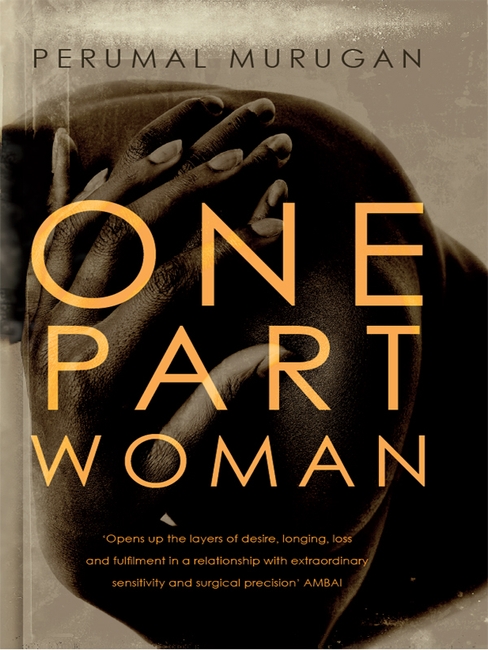
All of Kali and Ponna’s efforts to conceive a child-from prayers topenance, potions to pilgrimages-have been in vain. Despite being in aloving and sexually satisfying relationship, they are relentlessly houndedby the taunts and insinuations of the people around them.Ultimately, all their hopes and apprehensions come to converge on thechariot festival in the temple of the half-female god Ardhanareeswaraand the revelry surrounding it. Everything hinges on the one night whenrules are relaxed and consensual union between any man and woman issanctioned. This night could end the couple’s suffering and humiliation.But it will also put their marriage to the ultimate test.Acutely observed, One Part Woman lays bare with unsparing clarity arelationship caught between the dictates of social convention and the tugof personal anxieties, vividly conjuring an intimate and unsettling portraitof marriage, love and sex.
Not Out!
Chronicling the Indian Premier League (IPL), India’s first sports league and the most controversial ever, this book explores the intricacies of the business and the acceptability of the IPL to take a closer look at the various scams that have plagued it. It is a blow-by-blow description of the highs, lows, and future of the IPL that has, possibly, redefined the way the rest of the world perceives India. It analyses what the league got right and what it has got wrong and why. And, what the IPL and its owner/promoter-the Board of Control for Cricket in India (BCCI)-could have done to sell the sport and build on the popularity of cricket in India, but didn’t. Analysing the spot-fixing scandal, the conflict of interest controversy, the specific issues concerning the teams, the complicated interplay between the BCCI and the IPL, this thought-provoking work brings to light many untold stories of cricket in India.
The Sita Colouring Book
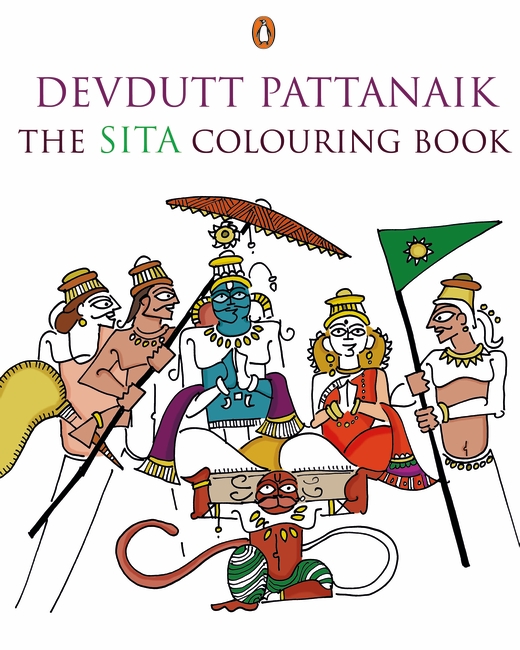
Relive the fabulous story of the Ramayana through 108 illustrations to be coloured in.
The Sita Colouring Book, based on Devdutt Pattanaik’s bestselling retelling of the Ramayana, is a fascinating colouring journey for you to embark on.
From the very beginning of the great epic, the birth of Dashratha’s four sons, to the passing of Lakshman and Ram at the very end, the remarkably simple yet multilayered story of the Ramayana comes alive through Devdutt’s wonderful illustrations.
Rediscover some of the most dramatic moments of the great Indian epic, from Ram’s breaking of the great bow to the abduction of Sita, from the sacking of Lanka to the building of the bridge across the sea, from the slaying of Ravana to Sita’s trial by fire.
Imagine the way the Dandaka forest, Kishkindha, Lanka and Ayodhya might have looked, and colour them in all their glory, along with portraits of unforgettable personages like Hanuman, Jambuvan, Jatayu, Surpanakha, Kumbhakarna and Ravana.
This is a great colouring adventure that readers of all ages will thoroughly enjoy.
The Jaya Colouring Book
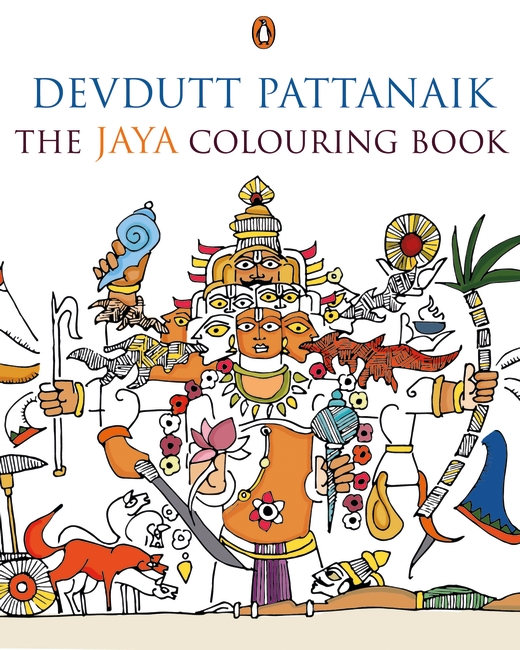
Relive the great Indian epic the Mahabharata through 108 illustrations to be coloured in.
The Jaya Colouring Book, based on Devdutt Pattanaik’s bestselling retelling of the Mahabharata, is a tremendous colouring adventure for you to embark on.
From the very beginning of the great epic (which Vyasa narrates as Ganesha writes the story down) till the dramatic end (when Yudhishtira is horrified to discover the Pandavas and Draupadi in Naraka), the entire story of the Mahabharata unfolds through Devdutt’s inimitable illustrations.
Relive the drama of the greatest story ever told, from the birth of the Kauravas and Pandavas to Draupadi’s swayamvara, the game of dice, the years in exile, and finally the great war of Kurukshetra.
Let your imagination run riot as you colour in the battle scenes-Krishna narrating the Bhagavad Gita to Arjuna, Bhima’s slaying of Dusshasana and Duryodhana, and the deaths of Karna, Drona and Bhishma.
This is a great colouring adventure that readers of all ages will thoroughly enjoy.
Home Truths
This book focuses on Indian single mothers and explores their lives, with their attendant dilemmas and challenges. The author details a phenomenon that is fast becoming common. Deftly using a free-flowing narrative, she raises questions about marriage, children and relationships. This seminal work draws attention to truths that usually lie buried in the rubble of daily life and conventional social sciences.
Vikram Sarabhai
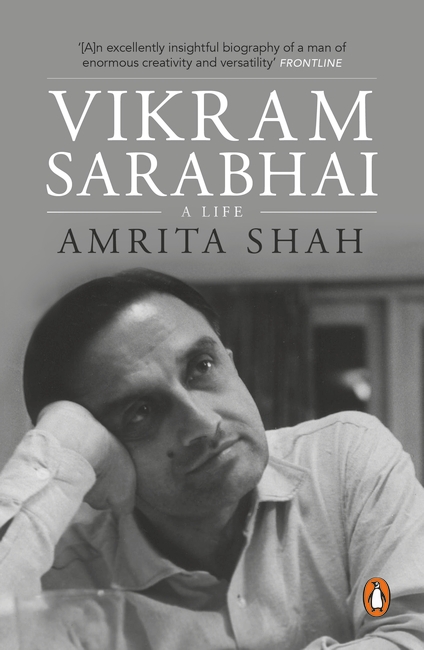
Vikram Sarabhai (1919-71), the renaissance man of Indian science, visualized the impossible and often made it happen. Founder of India’s space programme, Vikram dreamed of communication satellites that would educate people at a time when even a modest rocket programme seemed daring; of huge agricultural complexes serviced by atomic power and desalinated sea water. He envisioned research technology that would free Indian industry from foreign dependence, and of a world-class management college that would train managers for the public sector.
Vikram Sarabhai: A Life is the story of this dynamic visionary. Born into an immensely wealthy and politically conscious business family, Vikram had an early understanding of the power of money and the problems of a newly independent nation, to which he married a deep love for physics. Between 1947 and 1971, he built a thriving pharmaceutical business, conducted research into cosmic rays, set up India’s first textile research cooperative, ATIRA, the first market research organization, ORG, the Indian Institute of Management in Ahmedabad and the dance academy Darpana. He also headed the Atomic Energy Commission and laid the foundations for the world’s first entirely peaceful space programme.
Good-looking, charismatic, married to the glamorous classical dancer Mrinalini, and closely associated with the most influential figures of his time-C.V. Raman, Jawaharlal Nehru, Indira Gandhi, Homi Bhabha, Bruno Rossi, Louis Kahn and John Rockefeller III-Vikram seemed to have led a charmed existence. Yet, his personal life was troubled and his strong resistance to India’s move towards a nuclear explosion in the late 1960s put him at odds with powerful lobbies and fellow technologists.
Amrita Shah delves into the life and mind of this fascinating, complex individual. This is a vivid and intimate portrait of a multifaceted genius who died young, but whose vision still drives India’s ambitious space programme and inspires Indians in all walks of life.
The Emergency: A Personal History
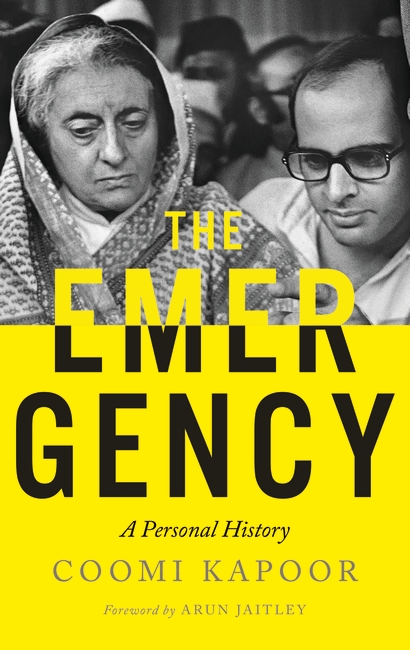
In June 1975, Coomi Kapoor was a young reporter at the Indian Express in Delhi, when Indira Gandhi declared a state of Emergency, suspending civil liberties and sending opposition leaders to prison. In the dark days that followed, she personally experienced the full fury of the Emergency-her journalist husband was imprisoned on flimsy charges under the draconian MISA (Maintenance of Internal Security Act), and her brother-in-law, Jana Sangh MP Subramanian Swamy, was on the run to evade arrest, while her family faced constant threats and harassment from the security forces.
Meanwhile, Indira Gandhi, her son Sanjay and his coterie unleashed a reign of terror that saw forced sterilizations, brutal ‘beautification‘ drives that left thousands of people homeless overnight, and students and other innocent people jailed without cause or trial, while the press was firmly muzzled under strict censorship rules.
This eyewitness account of the Emergency vividly recreates the drama, the horror, as well as the heroism of a few, during those nineteen months, 40 years ago, when democracy was derailed.
The Mind of a Terrorist
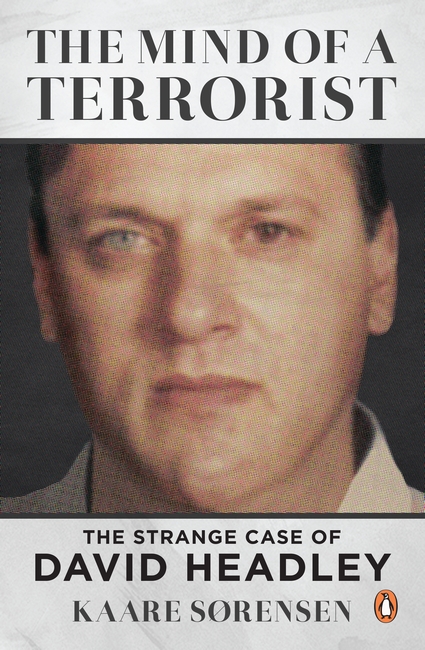
David Headley, the American-Pakistani also known as Daood Gilani, lived a double life. One day he would stroll through Central Park in his tailored Armani suit as a true New Yorker, and the next he would browse in the bazaar in Lahore wearing traditional Pakistani clothes. One day he would drink champagne at the most extravagant clubs; on another he would prostrate himself in prayer in remote Pakistan and pledge fidelity to Allah.
Born in 1960, the son of an American mother and Pakistani father, with one blue eye and one brown, Headley grew up between East and West. He was attracted to both worlds, even working as an informant for the US government, until one day he found he had to choose between the place of his birth and a radical form of Islam preaching global jihad. This is the disturbing story of the mastermind behind the 2008 attacks in Mumbai that killed 166 people-who, two months later, flew to Copenhagen to plan another act of terror with the help of al-Qaeda sleeper cells in Europe.
Veteran journalist Kaare Sørensen has reconstructed his movements and planning in a tense feat of reportage. His account, based on extensive reporting, eyewitness interviews, and documentation, including wiretaps, court transcripts, and emails by Headley accessed from a chat room cache of 9000 messages, offers unprecedented insight into the mind of the terrorist.