



In this highly acclaimed seminal work, Edward Said surveys the history and nature of Western attitudes towards the East, considering Orientalism as a powerful European ideological creation-a way for writers, philosophers and colonial administrators to deal with the ‘otherness’ of Eastern culture, customs and beliefs. He traces this view through the writings of Homer, Nerval and Flaubert, Disraeli and Kipling, whose imaginative depictions have greatly contributed to the West’s romantic and exotic picture of the Orient. In the preface, Said examines the continuing effects of Western imperialism and racism, manifest in the events leading up to and post 9/11, establishing Orientalism as a canonical text of cultural studies.
Catagory: Non Fiction
non fiction main category
Patriots And Partisans
‘I am a person of moderate views,’ writes Ramachandra Guha, ‘these sometimes expressed in extreme fashion.’ In this wide-ranging and wonderfully readable collection of essays, Guha defends the liberal centre against the dogmas of left and right, and does so with style, depth, and polemical verve. The book begins with a brilliant overview of the major threats to the Indian Republic. Other essays turn a critical eye on Hindutva, the Communist left, and the dynasty-obsessed Congress party.
The essays in Part II of this book focus on writers and scholars, and include some sparkling portraits. Whether writing about politics or culture, whether profiling individuals or analysing social trends, Ramachandra Guha displays a masterly touch, confirming his standing as India’s most admired historian and public intellectual.
Olympus
· Olympus is the home of the Greek gods, much like Amravati of the Hindu devas.
· Zeus, leader of Olympians, wields a thunderbolt like Indra, and rides an eagle like Vishnu.
· The feats of the Greek hero Heracles, known to Romans as Hercules, reminded many of Krishna, as did his name, ‘Hari-kula-esha’ or lord of the Hari clan.
· The Greek epic of a husband sailing across the sea with a thousand ships to bring his wife, Helen, back from Troy seems strikingly similar to the story of Ram rescuing Sita from Lanka.
Is there a connection between Greek and Hindu mythology then? Does it have something to do with a common Indo-European root? Or maybe an exchange of ideas in the centuries that followed the arrival of Alexander the Great, when Greek emissaries travelled to the kingdoms of Mathura and Magadha?
In this book, mythologist Devdutt Pattanaik turns his attention to ancient Greek tales, and explores a new world of stories. Long have Europeans and Americans retold Indic mythologies. It is time for Indians to reverse the gaze.
Exile
A special edition with a new introduction
On 21 November 2007, the city of Kolkata came to a rude, screeching halt as a virulent mob of religious fanatics took to the streets. Armed with a fatwa from their ideologues, the mob demanded that Taslima Nasrin leave the city immediately. While the Kolkata Police stood watching, mere dumb witnesses to such hooliganism, a morally, intellectually and politically bankrupt Left Front government, tottering under the strain of their thirty-year-old backward-looking rule, decided to ban her book and drive her out of Kolkata, a city she has always considered her second home.
This inextricable nexus of petty political conspiracies, vote bank politics and minority appeasement saw her being hurriedly shifted, first to Jaipur and then to New Delhi, only to be confined to an obscure ‘safe house’ in an undisclosed location and left to face incessant pressure from senior officials and politicians to leave India. Dark, provocative and at times surreal, Exile is a moving and shocking chronicle of Taslima Nasrin’s struggles in India over a period of five months, set against a rising tide of fundamentalism and intolerance that will resonate powerfully with the present socio-political scenario.
Six Minutes of Terror
7/11: the day Mumbai came to a standstill
The Mumbai train bombings on 11 July 2006 were one of the deadliest attacks the city had seen after the 1993 blasts. The terror strike aimed to cripple the city by disrupting its lifeline-the local train network. A series of seven explosions in a span of only six minutes at seven railway stations rocked the financial capital of India, killing 189 and injuring over 800.
Six Minutes of Terror is the first investigative book that presents a blow-by-blow account of the events that led to the onslaught.
It profiles the people involved in the blasts and describes how the plot was unearthed by the police. Superbly researched with painstaking detail, the book tries to delve into the minds of the home-grown terrorists-who wreaked unprecedented havoc and claimed innocent lives-ten years after the horrifying attacks.
The Turn of the Tortoise
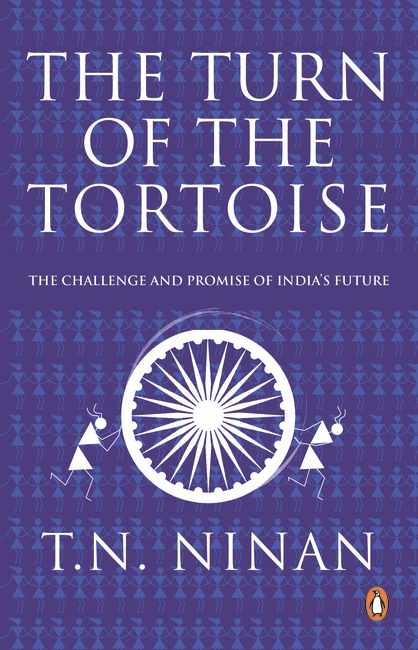
It is said of India that it is the country of the future-and will remain so
In The Turn of the Tortoise, distinguished journalist T.N. Ninan addresses a range of contemporary questions as only he can-looking at why the economy lost steam, the emerging trends in politics, the Chinese shadow over India, and the relationship between the state and the citizen. He asks whether manufacturing can be made a success story, what the size of the neo-middle class is, who the aam aadmi really is, and if it is possible to put an end to extreme poverty now. And finally, the big question-has India’s turn finally come?
This wide-ranging book is an attempt to understand, through data and analysis, where India stands today, why it has emerged the way it has, and what the next ten years might bring. For anyone interested in India and its future, this is essential and enlightening reading.
Khajuraho
An updated version of the critically-acclaimed Divine Ecstasy: The Story of Khajuraho, this is an eye-opening book on one of India’s most fascinating heritage sites and is indispensable reading for all those interested in rediscovering India’s cultural past. Includes 67 photographs.
Savaging The Civilized
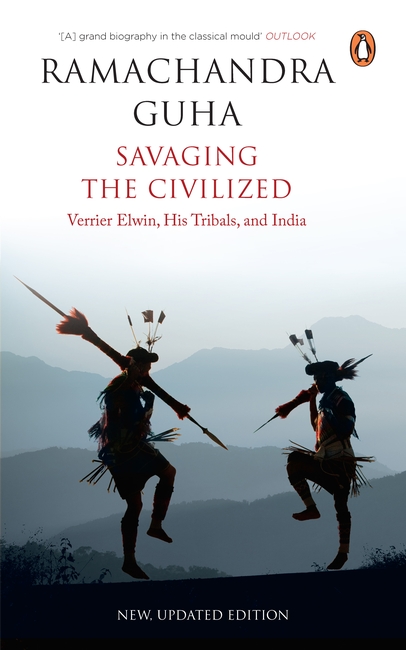
This evocative and beautifully written book brings to life one of the most remarkable figures of twentieth-century India. Verrier Elwin (1902-64) was an anthropologist, poet, Gandhian, hedonist, Englishman, and Indian.
Savaging the Civilized reveals a many-sided man, a friend of the elite who was at home with the impoverished and the destitute; a charismatic charmer of women who was comfortable with intellectuals such as Arthur Koestler and Jawaharlal Nehru; an anthropologist who lived and loved with the tribes yet who wrote literary essays and monographs for the learned.
Savaging the Civilized is both biography and history, an exploration through Elwin’s life of some of the great debates of our times, such as the impact of economic development, and cultural pluralism versus cultural homogeneity. For this new edition, Ramachandra Guha has added a long new introduction, stressing the relevance of Elwin’s work to current debates on adivasis, Naxalites, and Indian democracy.
Goras and Desis
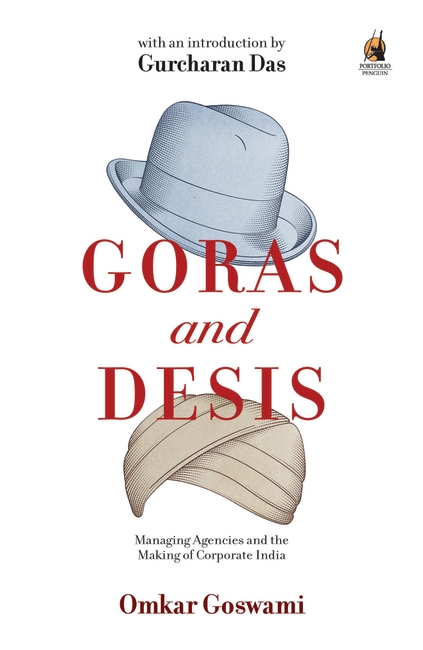
The story of corporate India is linked to managing agencies, an organizational form dominant in the subcontinent from 1875 until its abolition in 1970 that allowed entrepreneurs to promote diverse companies while exercising disproportionate control over cash flows. This is the definitive economic history of Indian companies through the lens of managing agencies, whether controlled by goras or desis.
The Sleep Solutions

Sleep is a complex phenomenon, and even though we spend one-third of our lives sleeping, there’s still very little that we know about it.
In this path-breaking book, Dr Manvir Bhatia, one of the country’s top sleep specialists, sheds light on the fascinating connection between sleep and the brain, beauty and weight, among other things.
From delving into common sleep problems and weird phenomena observed, like sexsomnia, narcolepsy and sleep apnea, to the specific tools needed to ensure good sleep, The Sleep Solution is the go-to book for all your sleep-related problems.