



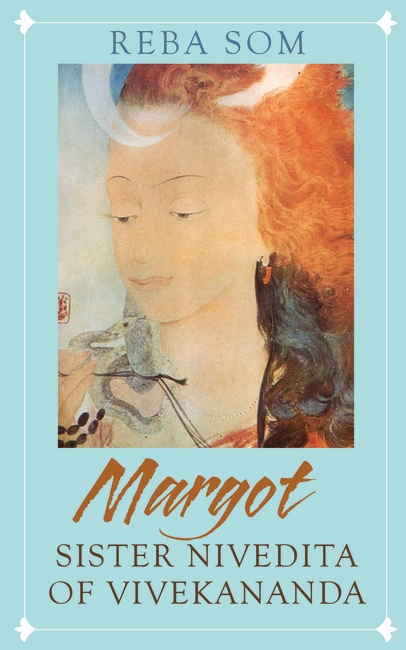
Among all disciples of Swami Vivekananda, Sister Nivedita occupies pride of place. Margaret Noble arrived at India’s shores in the late nineteenth century, took the vows of a brahmacharini, and devoted the rest of her life to the cause of India. Apart from educating women, Nivedita wrote valuable treatises on Hindu thought and Indian culture, inspiring nationalist sentiment and unity. She won over leading national figures of the day with her fierce intellect, and even influenced the ending of Rabindranath Tagore’s novel, Gora. Known to be ‘drunk with India’, she provided immense professional support to the brilliant scientist Jagadish Chandra Bose; dialogued with great leaders like G.K. Gokhale and Aurobindo Ghosh; and inspired Abanindranath Tagore to create a painting that eventually became the iconic Bharat Mata. In this compelling biography, the author traces the development of Margaret from a loyal Irish woman into Sister Nivedita, and finally into ‘Lok Mata’ or ‘People’s Mother’-a title bestowed on her by Tagore. She draws on Nivedita’s vast corpus of writings and personal letters to provide an intimate view of her life and thought. Through an insightful and moving narrative, Margot reveals the feisty, irrepressible spirit behind one of India’s greatest friends.
Catagory: Non Fiction
non fiction main category
The Sacred Sword
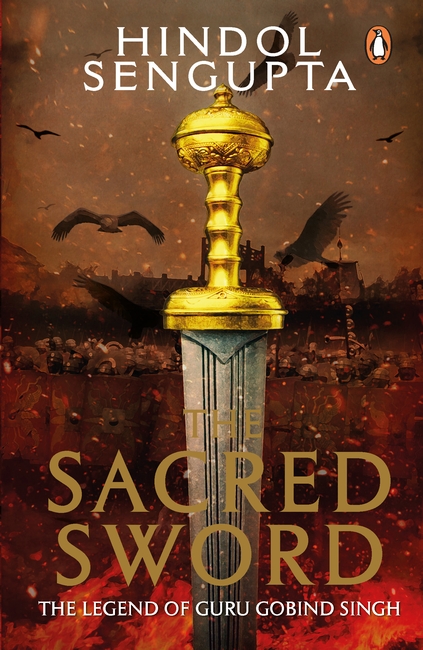
‘We are warriors, Painda. The Khalsa does not think of war as entertainment; death is not a joke, killing men is no festival,’ said Gobind.
A boy grows up, suddenly, into adulthood when he is brought the severed head of his father. He is born to rule but never acts like a monarch. Invincible as a warrior, he has the soul of a mystic. Poetry fills his heart. Few men before or after him have used a bow as he does, few men mastered their sword like him. Guru Gobind Singh turned villagers into warriors, sent shivers up the spine of the army of Aurangzeb and set the foundation stone of the great Sikh empire. The Sacred Sword is a historical fiction based on his life and legend.
Ghaffar Khan
Born into the Muhammadzai tribe, from the Charsadda valley in the Pakhtun heartland, Khan Abdul Ghaffar Khan was a passionate believer in the nonviolent core of Islam and sought to wean his people-the fierce warrior Pakhtuns or Pathans of the North-West Frontier Province-from their violent traditions and fight for a separate Pakhtun homeland that would no longer be a buffer between Russia and Britain in the Great Game.
In 1929 came Mahatma Gandhi’s call for nonviolent resistance against British rule and Badshah Khan responded by raising the Khudai Khidmatgars (Servants of God), an army of 1,00,000 men who pledged themselves to the service of mankind and nonviolence as a creed. For this, and for his steadfast devotion to his principles, this towering figure was imprisoned for a total of twenty-seven years, first by the British and later by the Pakistani government.
This is a perceptive biography that offers fresh insights into the life and achievements of an extraordinary man, drawing close parallels with the life of Mahatma Gandhi, his brother in spirit.The author looks at Ghaffar Khan ‘with the spectacles of today rather than those of 1947’, emphasizing that for people in the twenty-first century who live in the shadow of 9/11, Badshah Khan’s unwavering commitment to nonviolence and Hindu-Muslim unity offers valuable lessons.
The Pakistan Paradox
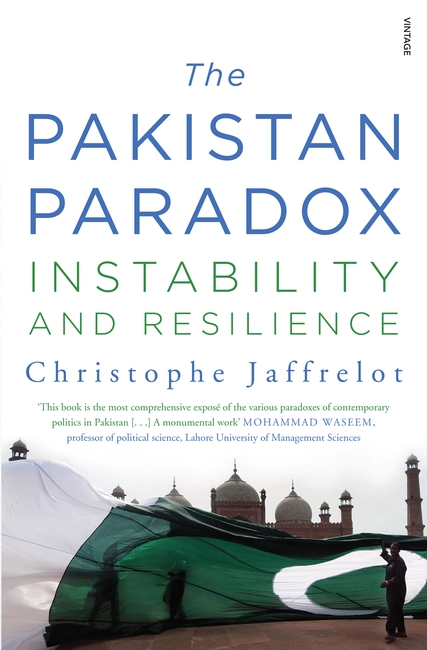
The idea of Pakistan stands riddled with tensions. Initiated by a small group of select Urdu-speaking Muslims who envisioned a unified Islamic state, today Pakistan suffers the divisive forces of various separatist movements and religious fundamentalism. A small entrenched elite continue to dominate the country’s corridors of power, and democratic forces and legal institutions remain weak. But despite these seemingly insurmountable problems, the Islamic Republic of Pakistan continues to endure. The Pakistan Paradox is the definitive history of democracy in Pakistan, and its survival despite ethnic strife, Islamism and deep-
seated elitism.
This edition focuses on three kinds of tensions that are as old as Pakistan itself. The tension between the unitary definition of the nation inherited from Jinnah and centrifugal ethnic forces; between civilians and army officers who are not always in favour of or against democracy; and between the Islamists and those who define Islam only as a cultural identity marker.
Biryani
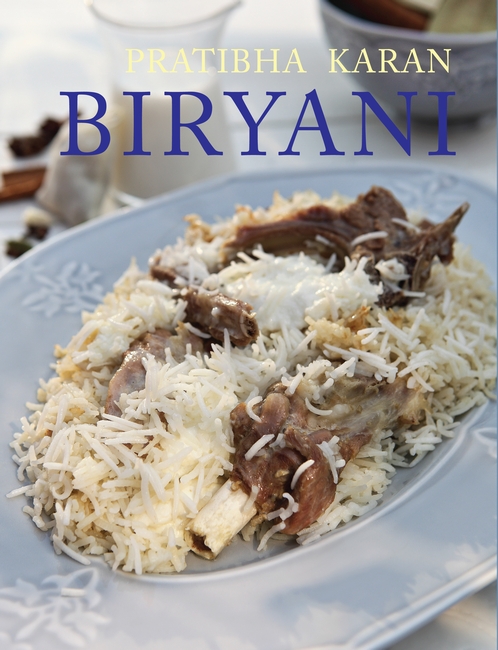
The biryani is India’s most beloved dish-one that has spread to all the four corners
of the country and assumed many forms.
It originated in the Mughal courts, flowering in the jagirs of Awadh, and it is in Lucknow, Delhi and
the small Muslim principalities of north India that one finds the classic versions, subtle, refined and
delicately flavoured. Pratibha Karan gives us not just the definitive recipes from these regions but
unearths rare and old dishes such as a biryani made with oranges, Rose Biryani and Kebab Biryani.
In the south, the biryani has an equally distinguished lineage, if not more so. There are the blue-blooded
biryanis of Hyderabad which include gems such as the Doodh ki Biryani, Keeme ki biryani
and Bater ki biryani. Away from the royal courts, the biryani has adapted itself into a spicy local
delicacy in Tamil Nadu, with many towns like Salem, Aambur, Dindigul boasting of their own
signature version of the dish. Kerala too is home to many-a prawn biryani spiced with curry leaves
and aniseed, a mutton one laced with star anise.
There are as many stunning variations in the east and west-Goan biryanis using vinegar and
olives; unusual dishes from the Parsi and Sindhi communities; Bengali adaptations using fish and
mustard seeds, even a dish from Assam!
Immaculately researched, full of extraordinary recipes, and beautifully designed and photographed,
Biryani is the ultimate book on this princely dish.
Half-Lion
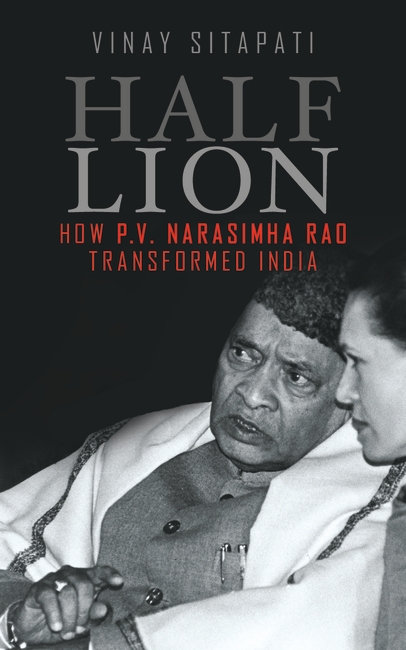
When P.V. Narasimha Rao became the unlikely prime minister of India in 1991, he inherited a nation adrift, violent insurgencies, and economic crisis. Despite being unloved by his people, mistrusted by his party, and ruling under the shadow of 10 Janpath, Rao transformed the economy and ushered India into the global arena.
With exclusive access to Rao’s never-before-seen personal papers and diaries, this definitive biography provides new revelations on the Indian economy, nuclear programme, foreign policy and the Babri Masjid. Tracing his early life from a small town in Telangana through his years in power, and finally, his humiliation in retirement, it never loses sight of the inner man, his difficult childhood, his corruption and love affairs, and his lingering loneliness. Meticulously researched and brutally honest, this landmark political biography is a must-read for anyone interested in knowing about the man responsible for transforming India.
India since 1947
This definitive guide to India takes us through the events, personalities and changes that have shaped the country in the seventy years since Independence. It traces the coming into being of the nation; the drawing and redrawing of its internal boundaries; and the functioning of its democracy-the transition from single-party dominance to the emergence of parties representing various ideologies and interest groups. The book records the metamorphosis of India’s economy, driven by self-sufficiency to one propelled by economic reforms, liberalization and globalization. It provides a view of a society that has enacted some far-reaching legislation ensuring equal rights for all citizens and safeguarding the rights of the vulnerable.
Arranged chronologically, India since 1947 covers a wide range of topics, from agriculture, archaeology and the arts to science and technology, sports and wars, and everything else in between. A separate outline of the main events leading up to Independence and interesting factoids on each page make for an engaging read.
Red Sun
A revealing journey into the heartland of India’s insurgency problem
Spread over fifteen of the country’s twenty-eight states, India’s Maoist movement is now one of the world’s biggest and most sophisticated extreme-left movements. Hardly a week passes without people dying in strikes and counter-strikes by the Maoists-interchangeably known as the Naxalites-and the police and paramilitary forces. In this brilliant and sobering examination of the ‘Other India’, Sudeep Chakravarti combines reportage, political analysis and individual case histories as he takes us to the heart of Maoist zones in the country-areas of extreme destitution, bad governance and perpetual war.
The Gene
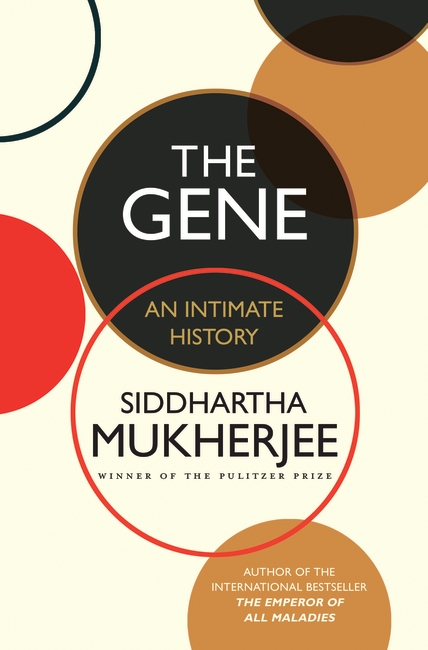
Spanning the globe and several centuries, The Gene is the story of the quest to decipher the master-code that makes and defines humans, that governs our form and function.
The story of the gene begins in an obscure Augustinian abbey in Moravia in 1856, where a monk stumbles on the idea of a ‘unit of heredity’. It intersects with Darwin’s theory of evolution, and collides with the horrors of Nazi eugenics in the 1940s. The gene transforms post-war biology. It reorganizes our understanding of sexuality, temperament, choice and free will. Above all, this is a story driven by human ingenuity and obsessive minds-from Charles Darwin and Gregor Mendel to Francis Crick, James Watson and Rosalind Franklin, and the thousands of scientists still working to understand the code of codes.
This is an epic, moving history of a scientific idea being brought to life, by the author of The Emperor of All Maladies. But woven through The Gene, like a red line, is also an intimate history-the story of Mukherjee’s own family and its recurring pattern of mental illness, reminding us that genetics is vitally relevant to everyday lives. These concerns reverberate even more urgently today as we learn to ‘read’ and ‘write’ the human genome-unleashing the potential to change the fates and identities of our children.
Majestic in its ambition, and unflinching in its honesty, The Gene gives us a definitive account of the fundamental unit of heredity-and a vision of both humanity’s past and future.
India’s Elephants
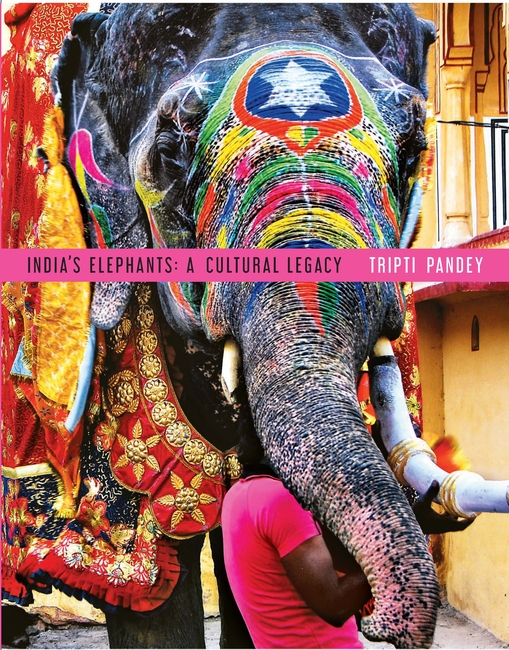
Gentle in disposition, fierce in battle and beloved in festivals, across time, India’s elephants have been synonymous with the ceremonial pomp of royalty as well as symbols of strength, production and majesty. Elephants have inspired idioms and games and have captured our fancy as evident in ancient temple architecture as well as Mughal miniatures. in India’s Elephants: A Cultural Legacy, Tripti Pandey explores our fascination with this impressive creature, looking at myths and legends, anecdotes, religious symbolism, festivals and artwork that have featured the elephant prominently, as well as the allure this animal has had with the royals over the centuries. In this way, the thrill and magic of this magnificent creature will live on for time immemorial!