



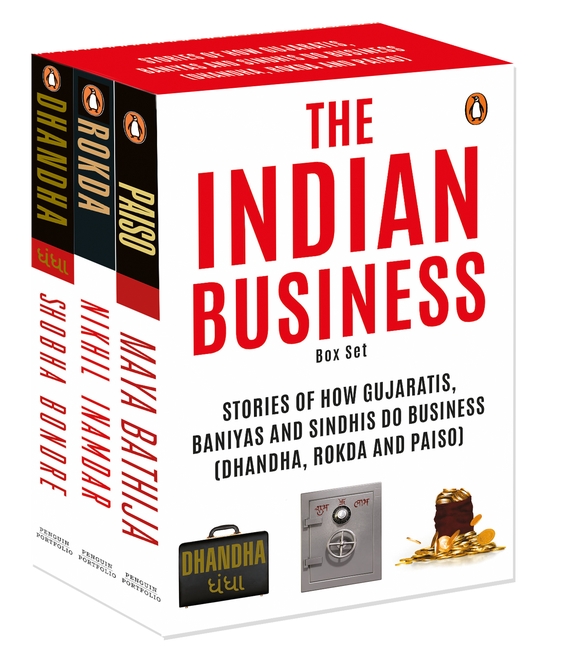
This collection of bestselling books Dhanda, Rokda and Paiso brings together renowned journalists Shobha Bondre, Nikhil Inamdar and Maya Bathija who delve into how empires such as Emami, Diamand Nagar and Embassy Group were built. These wonderful accounts show us the people behind these hugely successful companies and the entrepreneurial spirit and characteristics inherent to each community.
‘Highly readable . . . Nifty storytelling’ Business Standard
‘Well-structured and engaging . . . Each of these extraordinary stories has elements of some of the characteristic Sindhi ways of doing business’ Hindustan Times
‘Inamdar’s book offers a good insight into the ways of this remarkable community’ Business Standard
Catagory: Non Fiction
non fiction main category
Rahul
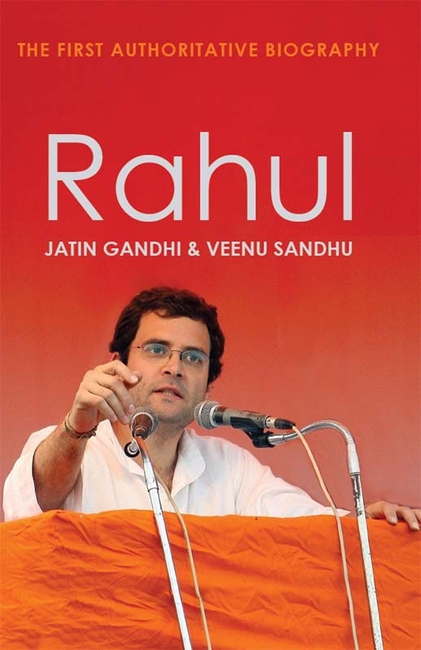
Perceptions of Rahul Gandhi have ranged from the great Indian hope to that of an over-
promoted dynastic scion. Everyone has an opinion, but the man himself remains opaque, his public persona confined to positions on political events, policies or programmes.
Who is Rahul Gandhi—the real man—beneath the hype and the hatchet jobs?
What are the ideas and influences that propel him? Who are his advisers? And
how will he tackle his new responsibilities as his mother, Sonia Gandhi, makes way for him?
Two young journalists, Jatin Gandhi and Veenu Sandhu, trace the evolution of the Rahul brand and explore the fascinating relationship between modernity and dynasty in this incisive political biography.
Wuthering Heights (Vocabulary Enhancer)
The right word, now at your fingertips!
Word power is an integral part of being able to express yourself-whether you’re in college, appearing for competitive exams or attending a job interview. It makes you an effective and confident communicator. This handy guide brings to you an abridged version of the beloved gothic romance Wuthering Heights by Emily Brontë to familiarize you with a must-read and equip you with new words.
Accessible and engaging, each book in the Vocabulary Enhancer series simplifies a classic and helps you memorize a list of carefully curated, frequently used words through their definitions, antonyms, examples of usage as well as word exercises and puzzles to recap your learning.
So what are you waiting for? Strengthen your understanding of the English language and enhance your vocabulary with this unique companion.
Tipu Sultan
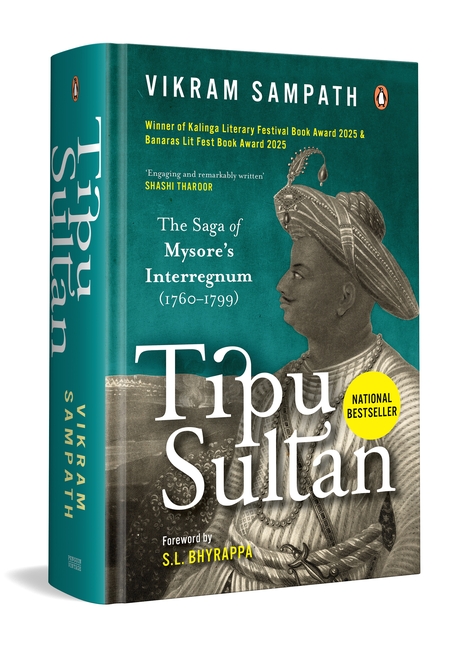
Over two centuries have passed since his death on 4 May 1799, yet Tipu Sultan’s contested legacy continues to perplex India and her contemporary politics. A fascinating and enigmatic figure in India’s military past, he remains a modern historian’s biggest puzzle as he simultaneously means different things to different people, depending on how one chooses to look at his life and its events.
Tipu’s ascent to power was accidental. His father Haidar Ali was a beneficiary of the benevolence of the Maharaja of Mysore. But in a series of fascinating events, the Machiavellian Haidar ran with the hare and hunted with the hounds; he ended up overthrowing his own benefactor and usurping the throne of Mysore from the Wodeyars in 1761. In a war-scarred life, father and son led Mysore through four momentous battles against the British, termed the Anglo-Mysore Wars. The first two, led by Haidar, brought the English East India Company to its knees. Chasing the enemy to the very gates of Madras, Haidar made the British sign such humiliating terms of treaties that sent shockwaves back in London.
In the hubris of this success, Tipu obtained the kingdom on a platter, unlike his father, who worked up the ranks to achieve glory. In a diabolical war thirst, Tipu launched lethal attacks on Malabar, Mangalore, Travancore, Coorg, and left behind a trail of death, destruction and worse, mass-conversions and the desecration of religious places of worship. While he was an astute administrator and a brave soldier, the strategic tact with opponents and the diplomatic balance that Haidar had sought to maintain with the Hindu majority were both dangerously upset by Tipu’s foolhardiness on matters of faith. The social report card of this eighteenth-century ruler was anything but clean. And yet, one simply cannot deny his position as a renowned military warrior and one of the most powerful rulers of Southern India.
Meticulously researched, authoritative and unputdownable, Tipu Sultan: The Saga of Mysore’s Interregnum (1760–1799) opens a window to the life and times of one of the most debated figures from India’s history.
Afternoon Raag
Described as a ‘felicitous prose poem’, Afternoon Raag is the account of a young Bengali man who is studying at Oxford University and caught in a complicated love triangle. His loneliness and melancholy sharpen his memories of home, which come back to haunt him in vivid, sensory detail. Intensely moving, superbly written, Afternoon Raag is a perfect miniature of a novel about arrivals and departures, new worlds and old homes.
The Shadow Lines: From bestselling author and winner of the 2018 Jnanpith Award
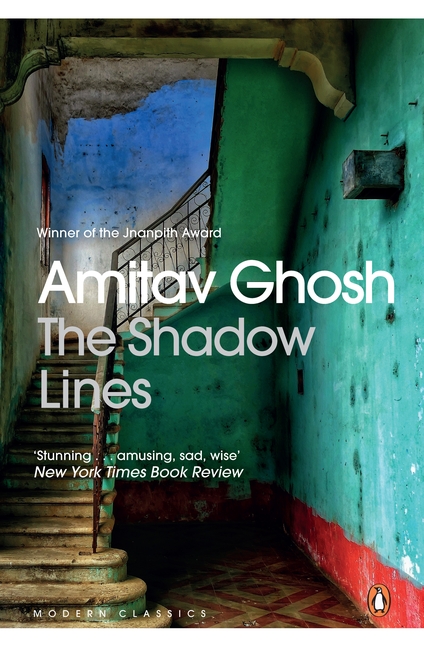
As a young boy, Amitav Ghosh’s narrator travels across time through the tales of those around him, traversing the unreliable planes of memory, unmindful of physical, political and chronological borders. But as he grows older, he is haunted by a seemingly random act of violence. Bits and pieces of stories, both half-remembered and imagined, come together in his mind until he arrives at an intricate, interconnected picture of the world where borders and boundaries mean nothing, mere shadow lines that we draw dividing people and nations.
Out of a complex web of memories, relationships and images, Amitav Ghosh builds an intensely vivid, funny and moving story. Exposing the idea of the nation state as an illusion, an arbitrary dissection of people, Ghosh depicts the absurd manner in which your home can suddenly become your enemy.
Kosa Katha
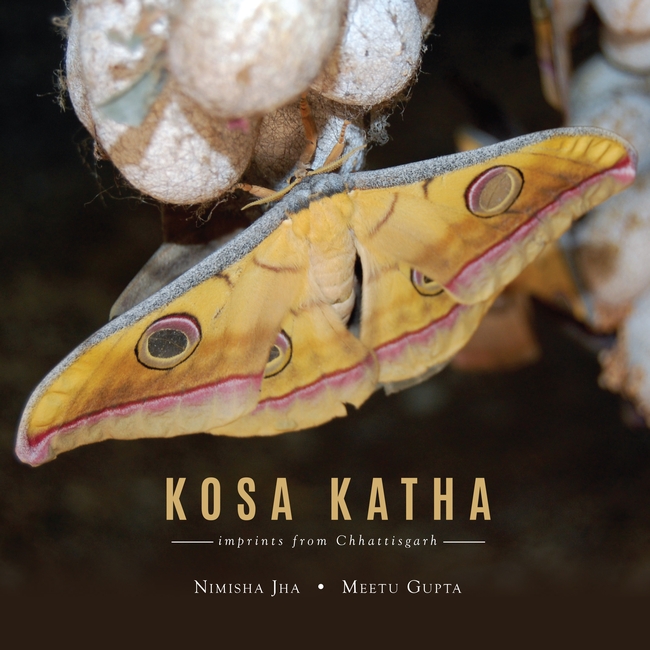
The book weaves in multifaceted accounts of the various processes and stages of its creation, from cocoon cultivation to silk yarn production. There are multiple stakeholders all along the assembly line, which means it generates layers of employment opportunities in silk manufacturing as an industry. The book also highlights the impact of kosa on the local population and discusses its socio-economic aspects, the way it affects livelihood, the importance of women in the sector and its wider effects on the environment. Emphasis has been placed on best practices in the business and the use of technology, underlining the emergence of mechanized techniques, thus making it a lucrative profession and establishing silk as the real queen of textiles.
The idea behind Kosa Katha is to compile information to address the existing gaps caused by poor documentation, incomplete literature and distorted figures, which have not been able to give a holistic view of this flourishing trade. The book also gives valuable suggestions so that the kosa sector turns out to be a highly rewarding and respectable vocation in times to come. In a bid to sustain the positive efforts in the sericulture industry, the hope is to connect the dots so that kosa can find its place in anenvironment where production is declining and weavers are gradually vanishing from the forefront.
Ramayana, Mahabharata, Bhagavata
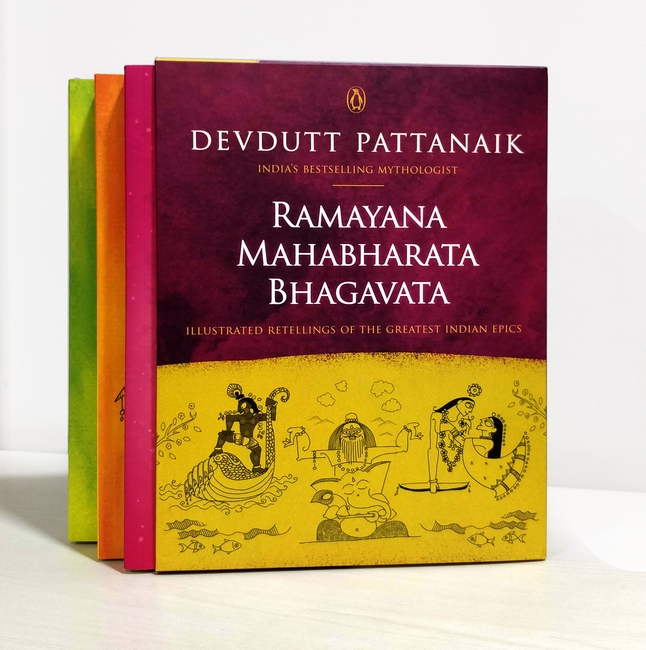
An enthralling retelling of India’s greatest epic, the Mahabharata, Jaya seamlessly weaves into a single narrative plots from the Sanskrit classic as well as its many folk and regional variants. With clarity and simplicity, the tales in this elegant volume reveal the eternal relevance of the Mahabharata and the complex and disturbing meditation on the human condition that has shaped Indian thought for over 3000 years.
Sita approaches Ram and the Ramayana by speculating on the titular character: her childhood with her father, Janaka, who hosted sages mentioned in the Upanishads; her stay in the forest with her husband, who had to be a celibate ascetic while she was in the prime of her youth; her interactions with the women of Lanka, recipes she exchanged, the emotions they shared; her role as a goddess, the untamed Kali as well as the demure Gauri, in transforming the stoic prince of Ayodhya into God.
The Bhagavata is the story of Krishna, known as Shyam to those who find beauty, wisdom and love in his dark complexion. Shyam tells the story of Krishna’s birth and his death, bringing together the fragments of this great epic composed over thousands of years, first as the Harivamsa, then as the Bhagavata Purana, and finally as the passionate songs of poet-sages in various regional languages.
Words From My Window
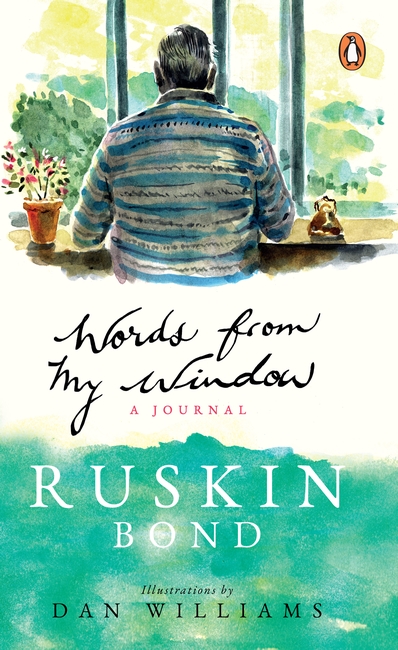
I need a window to look at the world without; for only then can I look at the world within. A room without a window is rather like a prison cell, and the soul is inclined to shrivel up in a confined space. … Car horns, children calling to each other as they return from school, a boy selling candyfloss, several crows chasing a hawk! Never a dull moment. And the magic mountain looks on, absorbing everything.
Mera Jeevan, Mera Mission
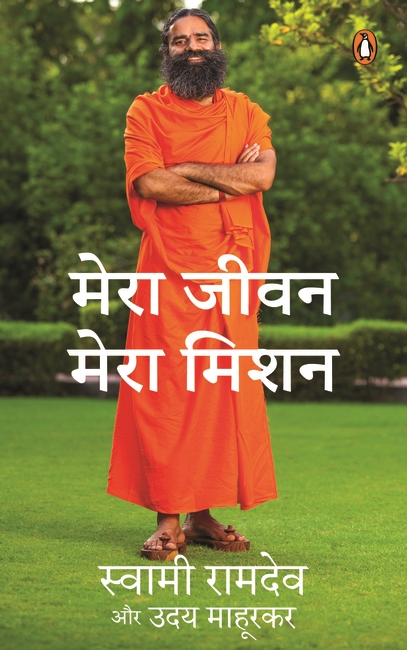
Swami Ramdev is a household name in India. But do you know where he was born?
Why did he take sanyas and get into spirituality?
What is his vision for India?
Fearless, driven and with a penchant for being outspoken, Swami Ramdev-for the first time-addresses the major controversies, turning points and achievements of his life. An autobiographical account, the book is written with senior journalist Uday Mahurkar and captures the seer’s journey from a small village in Haryana to the international stage. As we uncover the trials, tribulations and triumphs of his life, we realize that there is more to the ascetic than often meets the eye. The book provides insights into his childhood, his passion for yoga and good health, his friends and foes, and the Swadeshi campaign he has spearheaded. In 2006, the globally popular yoga teacher known for his work in Ayurveda, health and social issues, founded the Patanjali Group of Institutions that is now a major FMCG company with a turnover of about Rs 12,000 crores.
Engaging, revealing and inspiring, the book shows how determination, passion and tenacity can transform the ordinary into the extraordinary.