Publish with Us

Follow Penguin

Follow Penguinsters

Follow Penguin Swadesh

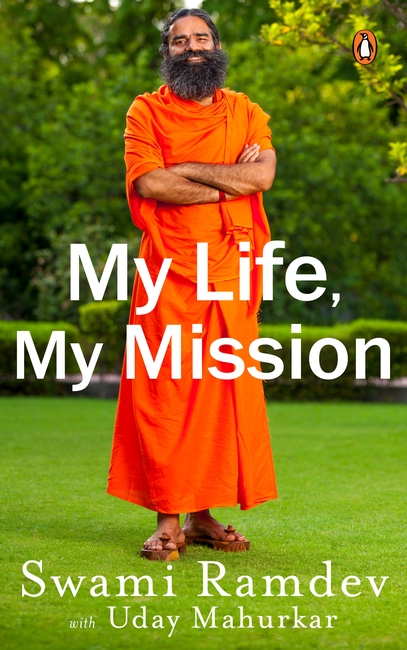
My Life, My Mission

‘A lot has been written about me by other people. Now I will share with you the story of my life in my own words.’

Swami Ramdev is a household name in India. But do you know where he was born? Why did he take sanyas and get into spirituality? What is his vision for India?

Fearless, driven and with a penchant for being outspoken, Swami Ramdev-for the first time-addresses the major controversies, turning points and achievements of his life. An autobiographical account, the book is written with senior journalist Uday Mahurkar and captures the seer’s journey from a small village in Haryana to the international stage. As we uncover the trials, tribulations and triumphs of his life, we realize that there is more to the ascetic than often meets the eye. The book provides insights into his childhood, his passion for yoga and good health, his friends and foes, and the Swadeshi campaign he has spearheaded. In 2006, the globally popular yoga teacher known for his work in Ayurveda, health and social issues founded the Patanjali Group of Institutions that is now a major FMCG company with a turnover of about Rs 12,000 crore.

Engaging, revealing and inspiring, the book shows how determination, passion and tenacity can transform the ordinary into the extraordinary.
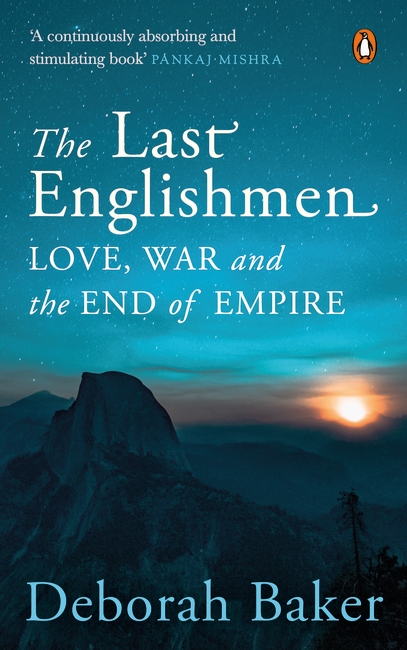
The Last Englishmen

W.H. Auden and Stephen Spender were the cutting-edge English poets of their generation, influential inter-war figures on the cusp of culture and politics, of imperialism and anti-imperialism. By a curious quirk of history, both their older brothers were mountain explorers – John Bicknell Auden was a pioneering geologist of the Himalayas, while Michael Spender was the first to draw a detailed map of the north face of the Everest. While their younger brothers achieved literary fame, John Auden and Michael Spender vied to be included in the expedition that would deliver an Englishman to the summit of Everest, a quest that became a metaphor for Britain to maintain power over India. To this rivalry was added another: both men fell in love with the same vivacious woman, the painter Nancy Sharp. Her choice would determine where each man’s wartime fate and loyalties would lie, with England and its unraveling empire, or elsewhere.
Set in Calcutta, London, in the glacier-locked wilds of the Karakoram, and on Mount Everest itself, The Last Englishmen is also the story of a generation. The cast of characters in Deborah Baker’s exhilarating drama includes Indian and English writers and artists, explorers and Communist spies, imperial ‘Die Hards’ and Indian nationalists, political chancers and police informers. Key among them is a highborn Bengali poet named Sudhindranath Datta, a melancholy soul torn like others of his generation between a hatred of the British empire and a deep love of European literature, and whose way of life would be upended by the arrival of the Second World War on his Calcutta doorstep.Dense with romance and intrigue, and of startling relevance to the cross-cultural debates and great power games of our own day, The Last Englishmen is an engrossing and masterful story that traces the end of empire and the stirring of a new world order.

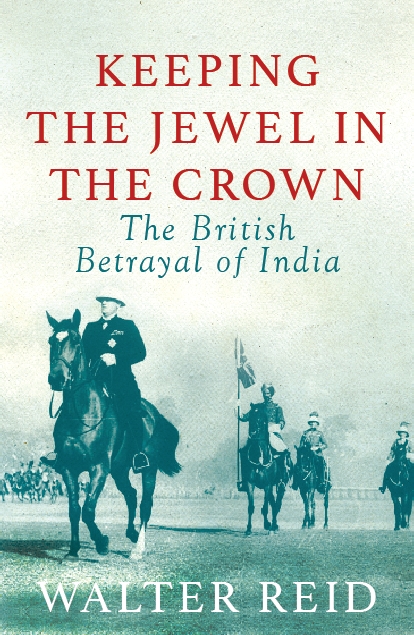
Keeping the Jewel in the Crown

When India became independent in 1947, the general view, which has prevailed until now, is that Britain had been steadily working for an amicable transfer of power for decades. In this book, Walter Reid argues that nothing could be further from the truth. Referring to a vast amount of documentary material, from private letters to public records and state papers, he shows how Britain held back political progress in India for as long as possible-a policy which led to unimaginable chaos and suffering when independence was granted, and which created a legacy of hatred and distrust that continues to this day.

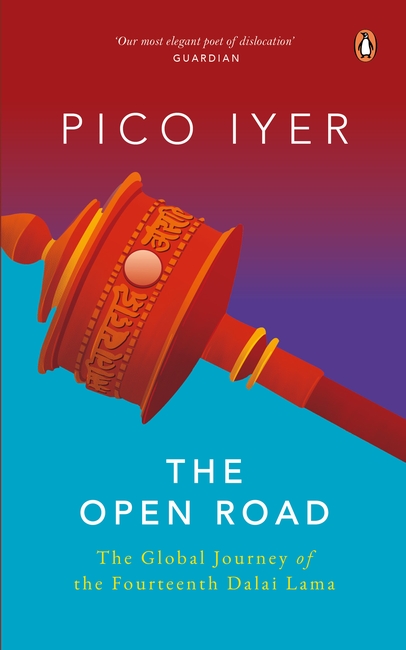
The Open Road

Pico Iyer has been engaged in conversation with the Dalai Lama (a friend of his father’s) for the last many decades-about his message and its effectiveness. Now, in this insightful, impassioned book, Iyer captures the paradoxes the Dalai Lama embodies: he is a religious leader who warns against being needlessly distracted by religion; a Tibetan head of state who suggests that exile from Tibet can be an opportunity; an incarnation of a Tibetan god who champions globalism and technology.

Moving from Dharamsala, India, to Lhasa, Tibet, to venues in the West-where the Dalai Lama’s pragmatism, rigour and scholarship are sometimes lost on an audience yearning for mystical visions-The Open Road illuminates the hidden life, the transforming ideas and the daily challenges of a global icon.

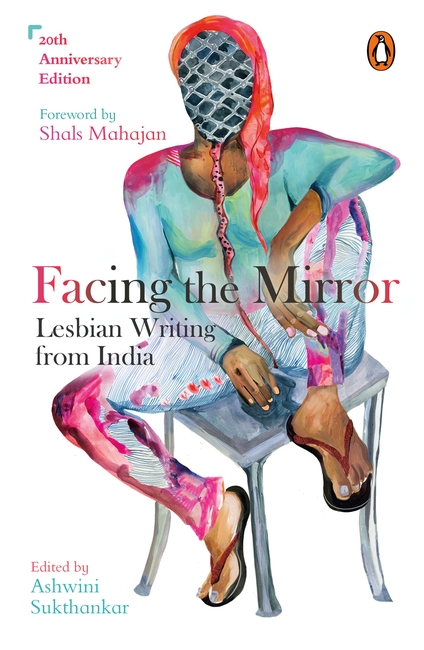
Facing the Mirror

A groundbreaking book where lesbians found their voice for the first time

For decades, most lesbians in India did not know the extent of their presence in the country: networks barely existed and the love they had for other women was a shameful secret to be buried deep within the heart. In Facing the Mirror, Ashwini Sukthankar collected hidden, forgotten, distorted, triumphant stories from across India, revealing the richness and diversity of the lesbian experience for the first time. Going back as far as the 1960s and through the forms of fiction and poetry, essays and personal history, this rare collection mapped a hitherto unknown trajectory.

In celebration of the Supreme Court’s reading down of the draconian Section 377 of the Indian Penal Code, this twentieth-anniversary edition, with a foreword by author and activist Shals Mahajan, brings to readers a remarkable history that illuminates the blood and the tears, the beauty and the magic of the queer movement in India. The raw anger and passion in them still alive, the writings in Facing the Mirror proudly proclaim the courage, the sensuality, the humour and the vulnerability of being lesbian.

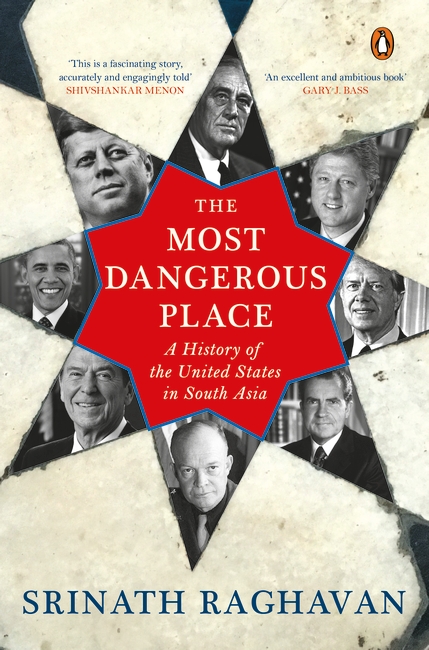
The Most Dangerous Place

South Asia looms large in American foreign policy. Over the past two decades, the United States has invested billions of dollars and thousands of human lives in the region, to seemingly little effect. As Srinath Raghavan reveals in The Most Dangerous Place, this should not surprise us. Although the region is often regarded as peripheral to America’s rise to global ascendancy, the United States has long been enmeshed in South Asia. For 230 years, America’s engagement with India, Afghanistan and Pakistan has been characterized by short-term thinking and unintended consequences. Beginning with American traders in India in the eighteenth century, the region has become a locus for American efforts-secular and religious-to remake the world in its image. Even as South Asia has undergone tumultuous and tremendous changes from colonialism to the world wars, the Cold War and globalization, the United States has been a crucial player in regional affairs.

The definitive history of US involvement in South Asia, The Most Dangerous Place presents a gripping account of America’s political and strategic, economic and cultural presence in the region. By illuminating the patterns of the past, this sweeping history also throws light on the challenges of the future.

The Fitness Box Set

Payal Gidwani Tiwari, Bollywood’s most celebrated yoga expert, tells you how to go from XL to XS. With simple and easy to follow principles and exercise routines, learn how to lose (or gain) weight, stay fit, and transform your body structure.

Learn about the four pillars of fitness (strength, endurance, flexibility, and balance), how to avoid an injury, the different forms of training, and even the miracle cure for cellulite. Right from weight training to bodybuilding, Deanne Panday will share the tricks of the trade to help sculpt your body, just the way you want it.

Do you know how Katrina Kaif manages to stay injury-free? Or how Deepika Padukone maintains her washboard abs? Pilates is the answer! Trainer to the stars, Yasmin Karachiwala and internationally known Pilates instructor Zeena Dhalla will show you how to change the shape of your body by teaching you more about your posture and how to improve it.

The Beauty Box Set

GLOW
Vausdha Rai
Did you know that saffron can make you calmer? Or that tulsi protects you against pollution? Or that turnips and radishes clarify your complexion?

Whoever said that great skin is purely genetic has obviously never harnessed the power of beauty foods. While it is possible to fake great skin with make-up, you can only be truly radiant when you nourish your body from within. From basic garden-variety fruit and vegetables to potent Ayurvedic herbs, this book tells you what to eat to ensure beauty inside and out.

Build strength and immunity, brighten and clarify your skin and obtain peace of mind with these potent Indian remedies. These combinations, recipes, home-made face masks, oils and morning infusions will transform not just your skin but also your body and mind. After all, outer beauty is only a symptom of inner health.
AGE ERASE
Rashmi Shetty
Worried about not ageing gracefully?

Do you constantly find yourself wistfully wishing you could turn back the clock?

The clock keeps ticking. That’s inevitable. What we can do, however, is slow down the process and push further the visible signs of ageing. In Age Erase, renowned aesthetic physician Dr Rashmi Shetty will fill you in on the whats, whys, and hows of ageing, the reason why these changes occur, and how simple do’s and don’ts can make a remarkable difference. Immerse yourself in insights on the latest advances in skin care, the right kind of nutrition, and cutting-edge anti-ageing solutions.

From the latest advancements in aesthetic medicine to old-fashioned kitchen remedies that really work to grandmother antidotes, Age Erase unlocks the secrets of ageing gracefully.
SKIN RULES
Jaishree Sharad
What if you could achieve glowing skin in just six weeks?
Sounds unbelievable, but it’s true!

In Skin Rules, Dr Jaishree Sharad, one of India’s top cosmetic dermatologists, gives you a revolutionary six-week plan to healthy, blemish-free skin.

From the basics-identifying your skin type, acquainting yourself with the fine print on labels-to home remedies, choosing the right make-up and the latest advancements in skincare treatments, this book has the answers to all your skin woes.

You’d be amazed at what a short, six-week routine can do for your skin. So what are you waiting for?

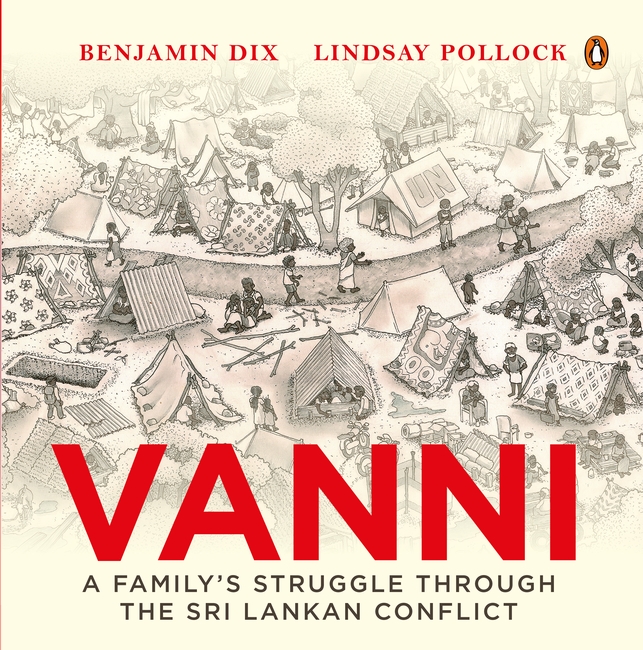
Vanni

In the tradition of Maus, Persepolis, Palestine and The Breadwinner, Vanni is a graphic novel documenting the human side of the conflict between the Sri Lankan government and the ‘Tamil Tigers’. Told from the perspective of a single family, it takes readers through the otherwise unimaginable struggles, horrors, and life-changing decisions families and individuals are forced to make when caught up in someone else’s war.

Set in Vanni, the northern region of Sri Lanka that was devastated by the civil war, this graphic novel follows the Ramachandran family as they flee their home after the 2004 tsunami and move from one displacement camp to the next, seeking an ever-elusive safe haven and struggling to keep each other alive. Inspired by Benjamin Dix’s experience in working in Sri Lanka for the United Nations during the war, Vanni draws on more than four years of meticulous research, official reports, and first-hand interviews with refugees. It depicts heroic acts of kindness and horrific acts of violence, memorializing the experiences of the Tamil civilians against the forces that seek to erase their memory.

Elegantly drawn by Lindsay Pollock, this exceptionally moving graphic novel portrays the personal experiences of modern warfare, the process of forced migration and the struggles of seeking asylum in Europe.

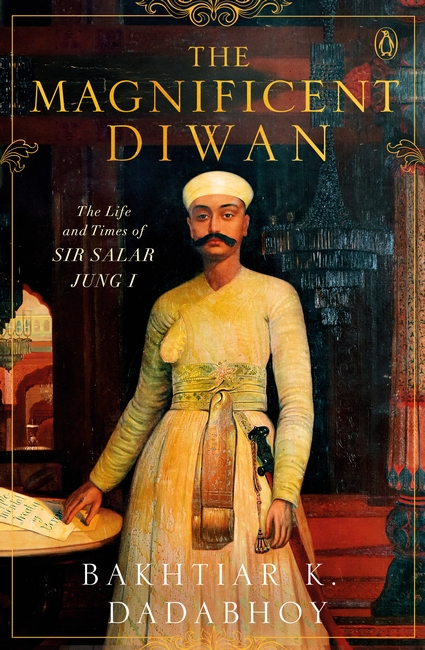
The Magnificent Diwan

The Magnificent Diwan is the definitive biography of arguably India’s most influential and powerful statesman of the nineteenth century. Drawing on extensive archival material, this is a compelling account of the life and times of a remarkable Indian who, as diwan or prime minister, decisively shaped Hyderabad’s political and economic history for nearly three decades in the second half of the nineteenth century. It was Salar Jung who, by his reforms of the medieval oligarchy that was Hyderabad, ushered the state into the modern era. This account is not merely a chronicle of his life but also a history of Hyderabad-both social and governmental-and gives the reader an encompassing view of the man who has been called the founder of modern Hyderabad. Meticulously researched and engagingly written, this biography introduces Sir Salar Jung I to a new generation, even as it rekindles the memory of a man who has become the victim of collective amnesia.

error: Content is protected !!