



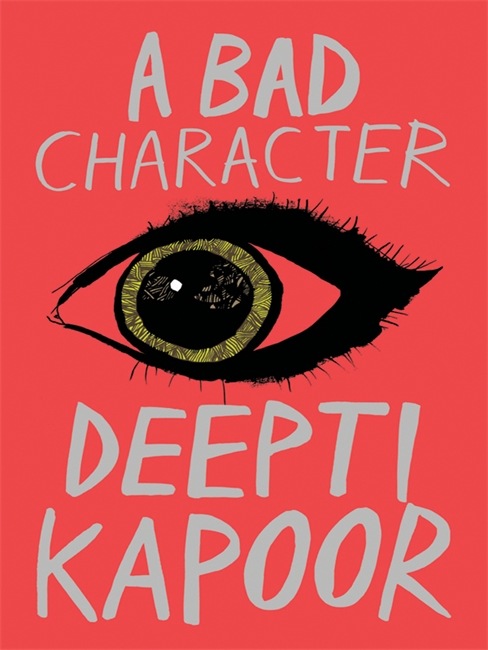
She is twenty, restless in Delhi. He is a few years older and has travelled the world. They meet in a cafe and they fall in love. In a dark, cool flat they have sex and do drugs. And then they travel the city. From the drug dens of Paharganj to the building sites of Noida, through the wastelands of Mehrauli and the dargah in Nizamuddin charged with plaintive song, the two play out their love story to its black end.
A Bad Character is a novel about a young woman finding her sexuality and herself against the backdrop of a dangerous city. It is the great novel of Delhi, capturing its beauty, its history and its violence like no other recent novel and it is a vivid account of a young woman coming of age. Written with passionate, lyrical intensity, A Bad Character is a haunting and utterly memorable novel.
Catagory: Non Fiction
non fiction main category
The Mahabharata
The Mahabharata is one of the greatest stories ever told. Though the basic plot is widely known, there is much more to the epic than the dispute between Kouravas and Pandavas that led to the battle in Kurukshetra. It has innumerable sub-plots that accommodate fascinating meanderings and digressions and it has rarely been translated in full, given its formidable length of 80,000 shlokas or couplets. This magnificent 10-volume unabridged translation of the epic is based on the Critical Edition compiled at the Bhandarkar Oriental Research Institute.
The final volume ends the instructions of the Anushasana Parva. The horse sacrifice is held and Dhritarashtra, Gandhari, Kunti, Vidura and Sanjaya leave for the forest. Krishna and Balarama die as the Yadavas fight among themselves. The Pandavas leave on the great journey with the famous companion – Dharma disguised as a dog. Refusing to abandon the dog, Yudhishthira goes to heaven in his physical body and sees all the Kurus and the Pandavas are already there.
Every conceivable human emotion figures in the Mahabharata, the reason why the epic continues to hold sway over our imagination. In this lucid, nuanced and confident translation, Bibek Debroy makes the Mahabharata marvellously accessible to contemporary readers.
The Mahabharata
The Mahabharata is one of the greatest stories ever told. Though the basic plot is widely known, there is much more to the epic than the dispute between Kouravas and Pandavas that led to the battle in Kurukshetra. It has innumerable sub-plots that accommodate fascinating meanderings and digressions, and it has rarely been translated in full, given its formidable length of 80,000 shlokas or couplets. This magnificent 10-volume unabridged translation of the epic is based on the Critical Edition compiled at the Bhandarkar Oriental Research Institute.
*
The final volume ends the instructions of the Anushasana Parva. The horse sacrifice is held, and Dhritarashtra, Gandhari, Kunti, Vidura and Sanjaya leave for the forest. Krishna and Balarama die as the Yadavas fight among themselves. The Pandavas leave on the great journey with the famous companion-Dharma disguised as a dog. Refusing to abandon the dog, Yudhishthira goes to heaven in his physical body and sees all the Kurus and the Pandavas are already there.
*
Every conceivable human emotion figures in the Mahabharata, the reason why the epic continues to hold sway over our imagination. In this lucid, nuanced and confident translation, Bibek Debroy makes the Mahabharata marvellously accessible to contemporary readers.
The Hanging of Afzal Guru
A comprehensive, sensitive view of one of the most controversial hangings of modern India
On 13 December 2001, the Indian Parliament was attacked by a few heavily armed men. Eleven years later, we still do not know who was behind the attack, nor the identity of the attackers. Both the Delhi high court and the Supreme Court of India have noted that the police violated legal safeguards, fabricated evidence and extracted false confessions. Yet, on 9 February 2013, one man, Mohammad Afzal Guru, was hanged to ‘satisfy’ the ‘collective conscience’ of society.
This updated reader brings together essays by lawyers, academics, journalists and writers who have looked closely at the available facts and who have raised serious questions about the investigations and the trial. This new version examines the implications of Mohammad Afzal Guru’s hanging and what it says about the Indian government’s relationship with Kashmir
Listening to Grasshoppers
In eleven powerful, and closely argued, linked essays, Arundhati Roy takes a hard look at the underbelly of the PBI – World’s largest democracy. Beginning with the state-backed killing of Muslims in Gujarat in 2002, she writes about how ‘progress’ and genocide have historically gone hand in hand; about the murky investigations into the 2001 attack on the PBI – Indian Parliament; about the dangers of an increasingly powerful and entirely unaccountable judiciary; and about the collusion between large corporations, the government and the mainstream media. The volume ends with an account of the August 2008 uprising in Kashmir and an analysis of the November 2008 attacks on Mumbai.
‘The Briefing’, included as an appendix, is a compelling fictional text that brings together many of the issues central to the collection.
The Shape of the Beast
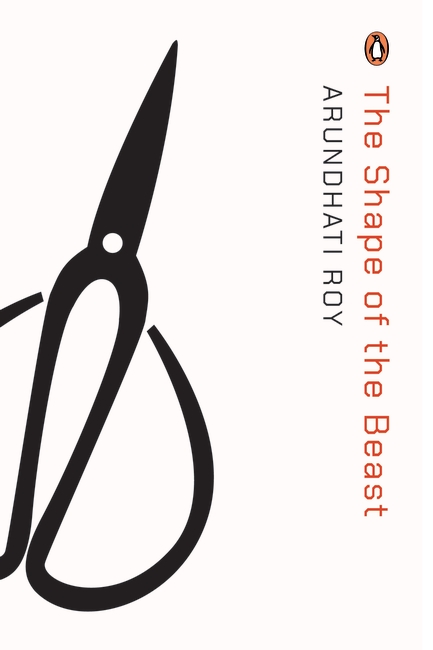
The Shape of the Beast is our world laid bare by a mind that has consistently and unhesitatingly engaged with its changing realities and often anticipated the way things have moved in the last decade.
In the fourteen interviews collected here, conducted between January 2001 and March 2008, Arundhati Roy examines the nature of state and corporate power as it has emerged during this period, and the shape that resistance movements are taking. As she speaks about people displaced by dams and industry, the genocide in Gujarat, Maoist rebels, the war in Kashmir and the global War on Terror, she raises fundamental questions about democracy, justice and non-violent protest.
Unabashedly political, this is also a deeply personal collection that talks about the necessity of taking a stand and about the dilemma of guarding the private space necessary for writing in a world that demands urgent, unequivocal intervention.
Listening to Grasshoppers
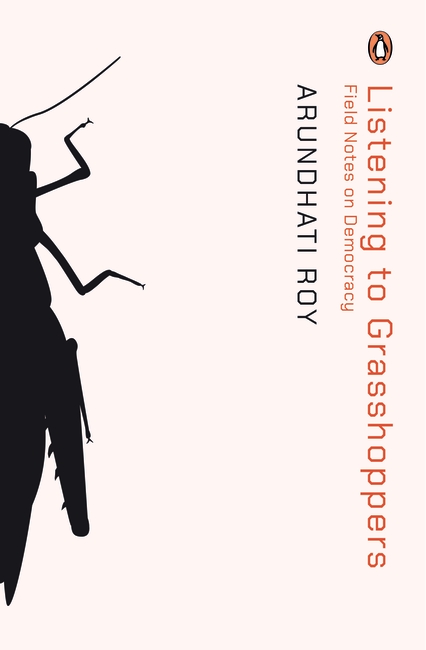
Now with a new introduction by the author discussing the election of India’s new prime minister, Narendra Modi.
In eleven powerful, and closely argued, linked essays, Arundhati Roy takes a hard look at the underbelly of the world’s largest democracy. Beginning with the state-backed killing of Muslims in Gujarat in 2002, she writes about how ‘progress’ and genocide have historically gone hand in hand; about the murky investigations into the 2001 attack on the Indian Parliament; about the dangers of an increasingly powerful and entirely unaccountable judiciary; and about the collusion between large corporations, the government and the mainstream media. The volume ends with an account of the August 2008 uprising in Kashmir and an analysis of the November 2008 attacks on Mumbai. ‘The Briefing’, included as an appendix, is a compelling fictional text that brings together many of the issues central to the collection.
A Childhood In Malabar
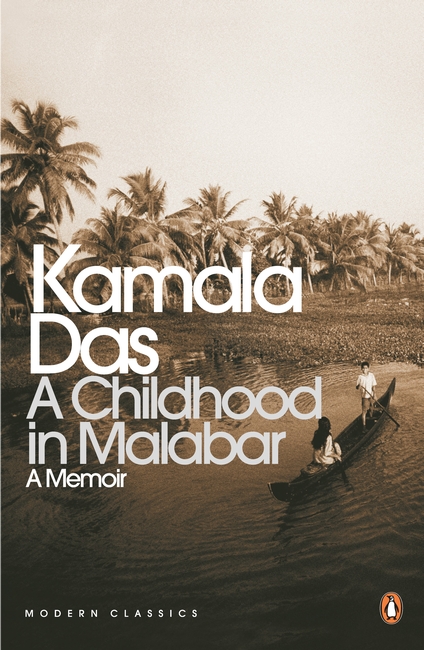
It is the Second World War and Kamala and her brother are removed from their parents’ home in Calcutta to the safer environs of their village in northern Kerala. At once an outsider and an integral part of her ancestral home, Kamala struggles to fathom the intricacies of class, caste and language. But surrounded by people like her adoring Ammamma, the servant Sankaran who promises to teach her the crow-language, and Valli who tells her stories of yakshis whose breasts are as big as jackfruits, Kamala soon discovers the joys of growing up as the center of everyone’s universe. As Calcutta fades from her mind like an old dream, while the thudding of the drums at the Para festival, the roar of the velichappadu as he becomes possessed and the songs of the parayankaali dancers become absolute realities of life.
Kashmir
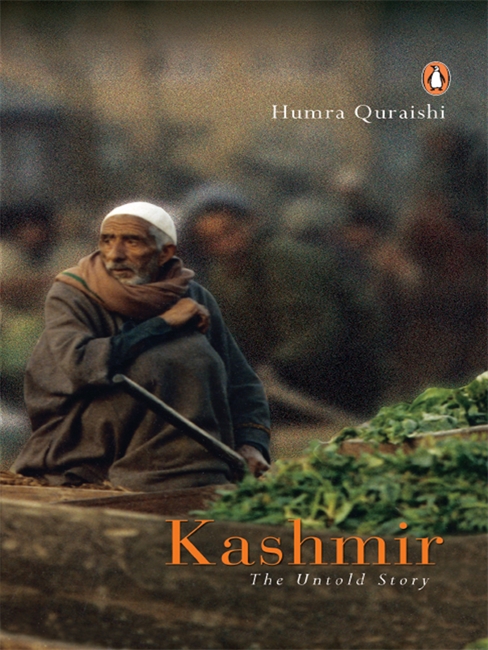
Dispatches from a valley under siege
Since 1989, Kashmir has rarely been out of the headlines, as local militants, foreign terrorists and PBI – Indian security forces battle it out in a region once known as `paradise on earth’. In all the propaganda, and news and statistics about terrorist strikes, counter insurgency operations and the foreign hand, the human stories, however, are often lost.
In this book, journalist Humra Quraishi draws upon her extensive travels in the Valley and interactions with ordinary Kashmiris over two decades to try and understand what the long strife has done to them. She brings us heartrending stories of mothers waiting for their young sons who disappeared years ago, picked up by the army or by militants; minds undone by the constant uncertainty and fear and almost daily humiliation; old harmonies tragically undermined by the atmosphere of suspicion; an entire generation of young Kashmiris who have grown up with no concept of security; and PBI – Individual families and a whole society falling apart under the strain of the seemingly endless turmoil
An Ordinary Person’s Guide to Empire
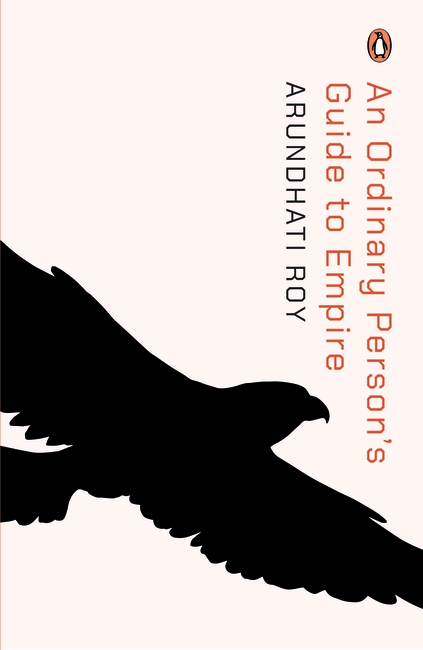
This second volume of Arundhati Roy’s collected non-fiction writing brings together fourteen essays written between June 2002 and November 2004. In these essays she draws the thread of empire through seemingly unconnected arenas, uncovering the links between America’s War on Terror, the growing threat of corporate power, the response of nation states to resistance movements, the role of NGOs, caste and communal politics in India, and the perverse machinery of an increasingly corporatized mass media. Meticulously researched and carefully argued, this is a necessary work for our times.