A smuggler of priceless antiquities, a scrap dealer turned millionaire accused in the Coalgate scam, an electrical engineer from rural Chhattisgarh, on his way to winning a one-way ticket on the Mars One mission, the controversial former Comptroller Auditor General of India, a prominent editor accused of sexually harassing one of his colleagues, and a flamboyant businessman whose airline took a nosedive.
The Newsmakers is an anthology of ordinary and extraordinary Indians, who have made headlines over the past two years. 2012 and 2013 were dominated by corruption scandals, many of which find mention, in various guises, in the lives of the people written about in this book. Some have been celebrated and some castigated. Often, however, it was not the news story itself that was the highlight of these profiles. The early careers and backgrounds of the people involved set the news in a context that changed the way we thought about current events. Each subject, in his or her own way contributed to the wider India story that has unfolded in an era of great progress and greater uncertainty.

The Delhi Sultanate period (1206-1526) is commonly portrayed as an age of chaos and violence – of rapacious, plundering kings, turbulent dynasties, and the aggressive imposition of Islam on India. But it was also the era that saw the creation of a pan-Indian empire, on the foundations of which the Mughals and the British later built their own Indian empires. The encounter between Islam and Hinduism also transformed, among other things, India’s architecture, literature, music and food. Abraham Eraly brings this fascinating period vividly alive, portraying the many kings-mad, brilliant, astute, cruel-who ruled during this period, and discussing the political, social and cultural developments that transformed India. Combining erudition with powerful storytelling, analysis with anecdote, The Age of Wrath is a superb book.
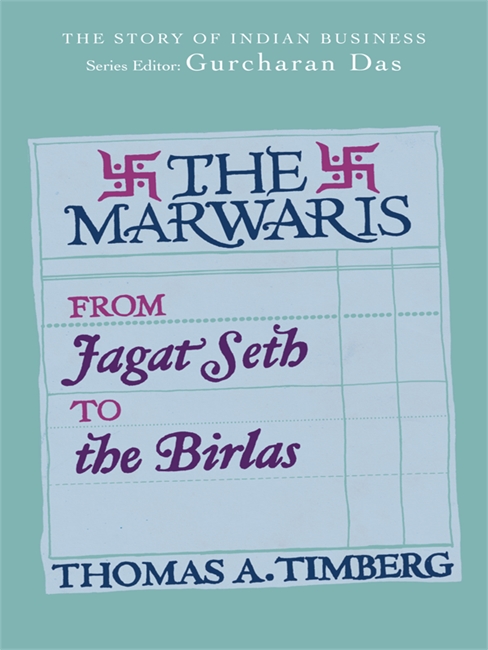
In the nineteenth century, a tiny community from the deserts of Rajasthan spread out to every corner of India. The Marwaris controlled much of the country’s inland trade by the time of the First World War. They then turned their hand to industry and, by the 1970s, owned most of India’s private industrial assets. Today, Marwari businessmen account for a quarter of the Indian names on the Forbes billionaires list.// What makes the Marwaris so successful? Is it their indomitable enterprise, or their incredible appetite for risk? In this new book, Thomas Timberg shows how the Marwaris rely on a centuries-old system for conserving and growing capital which has stood them in good stead, alongside a strong sense of business ethics which has earned them respect.// Family businesses in general and the Marwaris in particular might have a vital role to play in shaping India’s economic future.
‘So much asking, so much answering, and in the end you will see that, far from getting less, your confusion has grown more; that your questions have increased rather than become less. Only then, perhaps, you may become aware that the answer to the questions is not in answers; the answer to the questions is in meditation.’
In this book of questions and answers, Osho guides people away from asking superficial, ‘religious’ and intellectual questions and helps them to open up by posing real questions. Osho’s answers to them are existential responses that take the questioner to a new level of consciousness, where they are inspired and supported to start living from their own understanding and experience.
All future is defined by the past.
And therefore, the end is only the beginning . . .
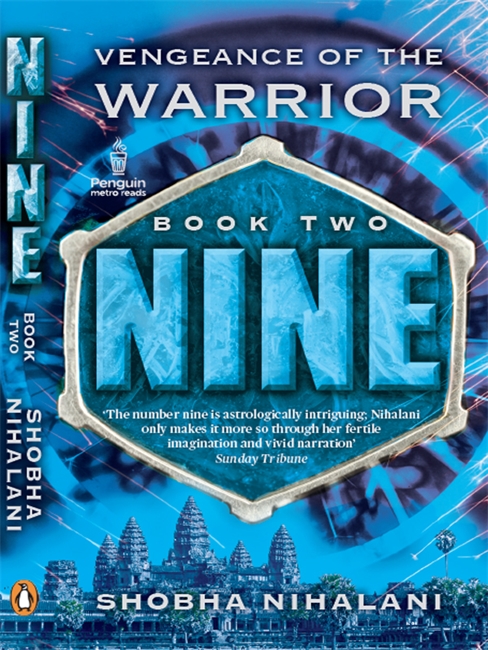
After burying the vicious Kalingan warrior, Akash, Tara and Zubin are continuing their lives as before, hiding the fact that they are a part of King Ashoka’s exalted NINE; hiding even, that each of them has powers that are to be used for the benefit of mankind, when needed.
Except, things are not as quiet as they seem to be!
The Kalingan warrior has risen once again—angrier and more vengeful. And this time he knows each one of them. If they don’t destroy him now, they will be hunted down and the world will be battling its worst, most terrifying chemical warfare yet.
This second book in the NINE trilogy will change the way you look at time and space.
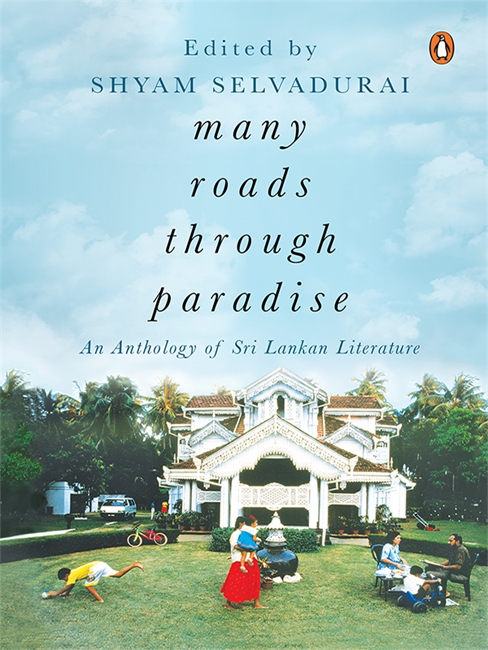
Shyam Selvadurai pieces together the best of Sri Lankan poetry and fiction in this anthology. From the Sinhala and Tamil writers of the 1950s to diasporic writers of today, from stories of love and longing to those of brutality and death, this masterfully constructed anthology will give you a rich sense Sri Lanka’s history, its people and the stories they have to tell.
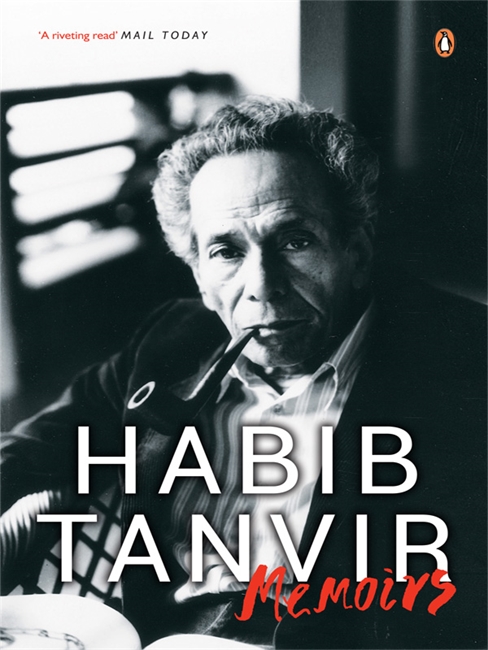
As the man who brought the popular and the demotic into modern Indian theatre, Habib Tanvir is one of Asia’s most important and gifted theatre directors. In these memoirs, touching on both the private and the public aspects of his life with startling candour, he takes us on a journey from his childhood in Raipur to the Bombay film world of the 1940s and thence to Indian People’s Theatre Association, offering an invaluable window into twentieth-century India.
Whether he is describing his family members, friends or his actors, Habib Tanvir is superbly observant and sharply insightful, capturing both the quotidian and the quirky in his distinct style and delightful voice. And the ease of Mahmood Farooqui’s translation matches the lively cadence of Tanvir’s prose. Written with great warmth, humour and insight, these memoirs provide a memorable and fully engaging portrait of an extraordinary man.

‘On the branches of these wild plants Some words occasionally sprout But never a full poem . . .’ One of the country’s best-loved poets and lyricists, Gulzar is renowned for his inimitable way of seeing things, his witty expressions, his quirky turns of phrase. All these creative talents come into play in delightful, unexpected ways in his new bilingual collection Green Poems, which celebrates his innate connection with nature. Gulzar writes about rivers, forests, mountains; snow, rain, clouds; the sky, the earth and space; a familiar tree, a disused well; Kullu, Manali, Chamba, Thimpu. Like glimpses of nature, the poems are often short, an image captured in a few words. And sometimes the image gives rise to a striking thought: ‘When I pass through the forest I feel my ancestors are around me . . .’ For those new to Gulzar’s work as well as his many fans, Green Poems will prove to be a true joy.

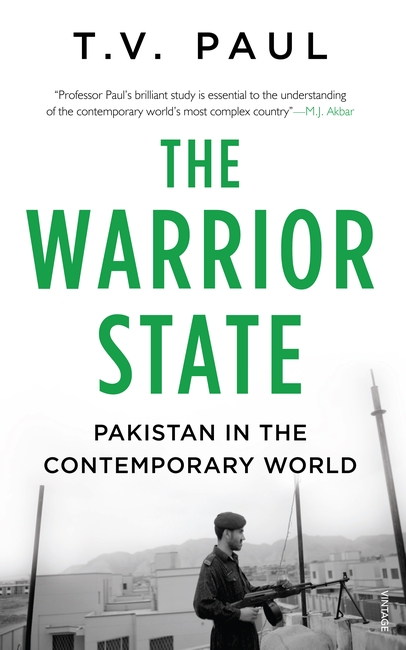
Seemingly from its birth, Pakistan has been struggling to build a proper democracy and a secure state. Today it ranks 133rd out of 148 countries in global competitiveness. Its economy is as dysfunctional as its political system is corrupt; both rely heavily on international aid for their existence. Taliban forces occupy many key areas of the country and engage in random violence. It possesses over a hundred nuclear weapons that could fall into terrorists’ hands. Why, in an era when countries across the developing world are experiencing impressive economic growth and building democratic institutions, has Pakistan been such a conspicuously weak state?
In The Warrior State, noted international relations and South Asia scholar T.V. Paul untangles this fascinating riddle. Paul argues that the “geostrategic curse”—akin to the “resource curse” that plagues oil-rich autocracies—is at the root of Pakistan’s unique inability to progress. Since its founding in 1947, Pakistan has been at the center of major geopolitical struggles: the US-Soviet rivalry, the conflict with India, and most recently the post 9/11 wars. No matter how ineffective the regime is, massive foreign aid keeps pouring in from major powers, their allies and global financial institutions with a stake in the region. The reliability of such aid defuses any pressure on political elites to launch the far-reaching domestic reforms necessary to promote sustained growth, higher standards of living, and more stable democratic institutions. Paul shows that excessive war-making efforts have drained Pakistan’s limited economic resources without making the country safer or more stable. Indeed, despite the regime’s emphasis on security, the country continues to be beset by widespread violence
and terrorism.
In an age of transnational terrorism and nuclear proliferation, understanding Pakistan’s development, particularly the negative effects of foreign aid and geopolitical centrality, is more important than ever. Painstakingly researched and brilliantly argued, The Warrior State tackles what may be the world’s most dangerous powder keg and uncovers the true causes of Pakistan’s enormously consequential failure.

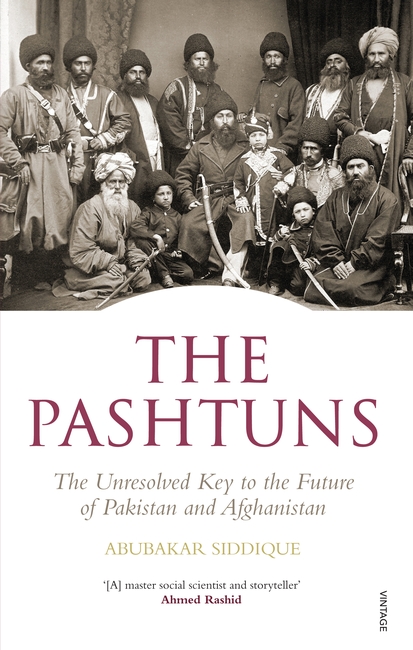
Most accounts claim that the instability gripping Afghanistan and Pakistan is either rooted in Pashtun history and culture, or finds willing hosts among Pashtun communities on both sides of the Afghanistan–Pakistan border.
In The Pashtuns, Abubakar Siddique, a stout-hearted Pashtun himself, sets out to interrogate this claim. He tells a very different story: that the failure, and unwillingness, of both Afghanistan and Pakistan to absorb the Pashtuns into their state structures and to incorporate them into the economic and political fabric is central to South Asia’s problems, and a critical failure of nation- and state-building in both countries.
In a voice that is both engaging and erudite, he makes clear that religious extremism is the product of these critical failures and that responsibility for this lies to a large degree with the elites of both countries. Partly an eye-witness account and partly meticulously researched scholarship, The Pashtuns describes a people whose destiny will, no doubt, shape the future of Pakistan and Afghanistan, and also the rest of the world.