What is it that we as a nation are missing?
Why, given all our skills, resources and talents, do we settle so often for the ordinary instead of striving to be the best?
At the heart of Ignited Minds is an irresistible premise: that people do have the power, through hard work, to realize their dream of a truly good life. Kalam’s vision document of aspiration and hope motivates us to unleash the dormant energy within India and guide the country to greatness.

The story of the forging of India, the world’s largest democracy, is a rich and inspiring one. This volume, a sequel to the best-selling India’s Struggle for Independence, analyses the challenges India has faced and the successes it has achieved in the light of its colonial legacy and century-long struggle for freedom. It covers the framing of the Constitution and the evolution of the Nehruvian political and economic agenda and basics of foreign policy; the consolidation of the nation and contentious issues like party politics in the Centre and the states, the Punjab problem, and anti-caste politics and untouchability. These, along with objective assessments of Jawaharlal Nehru, Indira Gandhi, Jayaprakash Narayan, Lal Bahadur Shastri, Rajiv Gandhi, Vishwanath Pratap Singh, Atal Bihari Vajpayee and Manmohan Singh, constitute a remarkable overview of a nation on the move.

‘Sex underlies human existence, and if human life is sacred, how can sex not be?’
As squeamish as India is today about sex, this is also the land where queens once copulated with head horses at religious ceremonies, where the art of love-making was declared the revelation of the gods and recorded in elaborate detail in the kama sutras and prostitution was a form of sacred offering at temples adorned with erotic sculptures.
Using India as a paradigm, Rita Banerji illustrates that sexual morality is not an absolute but a facet of living that undergoes periodic upheavals. She delineates four major periods in Indian history when there were significant shifts in the collective social perception of sex and sexuality, and the associated customs and beliefs. What causes this revision in sexual ethos? To explain this, Sex and Power proposes a modified version of Nietzsche’s slave versus master morality theory. The theory, which is tested against the dynamics of each of the four defined periods, establishes that the moral overview of any given period is determined not by a set of pre-existing ethics but by the existent power structure of the period in question.
The accepted moral code actually serves the party in power. How would this theory play out in the context of India today? Banerji examines this question at length as one of extreme urgency, and concludes that the three most burning issues facing the country today-population explosion, AIDS and female genocide-are the manifestations of a collective sexual malfunctioning of society and need to be redressed in the context of an existent social and economic power hierarchy.

Ten years ago, the founders of the Indian School of Business, Hyderabad articulated a vision that was as daunting to execute as it was simple to state: to build a world-class business school in India.
The rest is history: within a decade the ISB grew from a start-up venture to globally top-ranked business school, named among the top twenty business schools in the world three years in a row, with the distinction of being the youngest business school ever to enter the world top twenty rankings.
An Idea Whose Time Has Come traces the ISB’s eventful history and also examines the reasons that account for the institute’s success. What emerges is a tale of perseverance and dedication, of challenges met and rewards reaped, and of an unshakeable idea that was painstakingly transformed into an invincible institution. It is no wonder that the ISB continues to attract thousands of confident, purposeful men and women every year and moulds them into talented professionals.

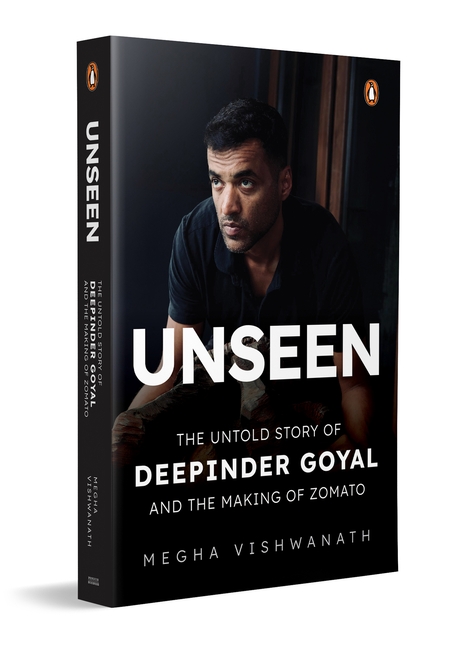
This is not a biography.
Nor is it a linear march of a man from childhood to success.
Unseen is the anatomy of a founder who doesn’t chase stability but thrives in contradictions—restless yet laser focused, flirting with high stakes and uncertain outcomes.
In July 2021, as Zomato became India’s first tech unicorn to go public, its founder, Deepinder Goyal, was largely untouched by the reverberating glory. Unseen begins where most stories end, at the peak, only to pull you into the shadows that shaped it.
Through the eyes of former journalist Megha Vishwanath, this is the deeply personal journey of a stuttering boy from small-town Punjab who grew into the reluctant face of a billion-dollar brand. Vishwanath pieces the narrative through hundreds of interviews, capturing the voices of those who worked with Deepinder, fought with him and followed him—through years of watching him build, break and build again.
Assembled from fragments of private battles, impossible questions and split-second decisions that altered the course of one of the largest companies of our generation, this book reveals what happens when ambition is stripped of vanity, brilliance sheds its theatre and success arrives without peace.
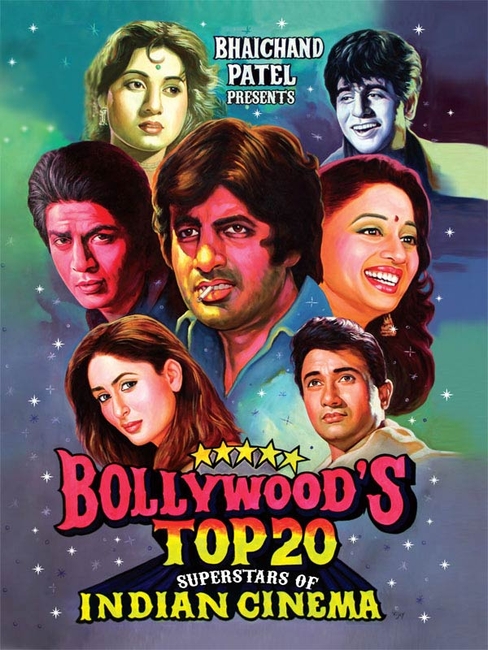
Hindi cinema has cast a seductive spell over its spectators for close to a century now. Visually arresting, dynamic in outlook and pulsating with life, Bollywood has entertained and enthralled moviegoers over the years with its melodious music, its colourful drama and its lively plotlines. At the very heart of the Bollywood mystique is the towering presence of its galaxy of stars-demigods and divas who have shaped and defined popular cinema, and popular imagination, from one generation to the next.
Bollywood’s Top 20 is an exciting collection of brand new essays by renowned writers that pays tribute to Hindi popular cinema’s biggest stars of all time-from Ashok Kumar, Dilip Kumar, Dev Anand, Raj Kapoor, Nargis and Madhubala to Rajesh Khanna, Amitabh Bachchan, Aamir Khan, Shah Rukh Khan, Kajol and Kareena Kapoor-who are indispensable to the Bollywood pantheon. Each piece offers unique insights into the lives of Bollywood’s most exceptional legends-their struggles and triumphs, downfalls and scandals, and the inscrutable x-factor that made them carve a niche for themselves in an industry bursting with talented professionals and desperate hopefuls.

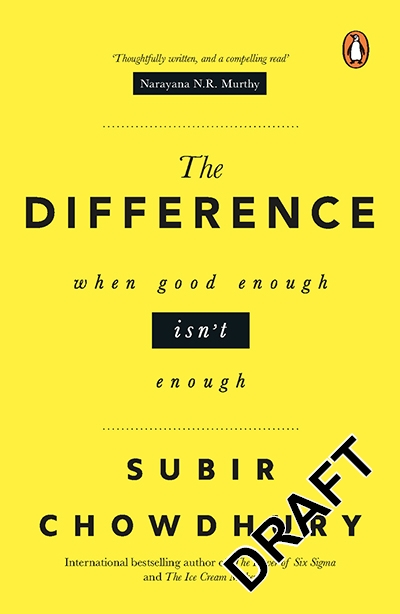
If you saw a toothpick on the floor, what would you do?
This seemingly innocuous question was posed to Subir Chowdhury by one of his long-time clients, and ultimately lead him to a profound realization: good enough is not enough. In this pithy and thought-provoking new book, bestselling author Subir Chowdhury shares the secret of how some organizations only improve incrementally while others improve exponentially. The Difference, he reveals, is in the star facets of a caring mindset laid out in the book.
‘Those who fail to adopt the caring mindset Subir Chowdhury describes in The Difference will find themselves falling behind in innovation, employee engagement, and productivity. Reading and practicing the ideas in The Difference will change your life’- Marshall Goldsmith

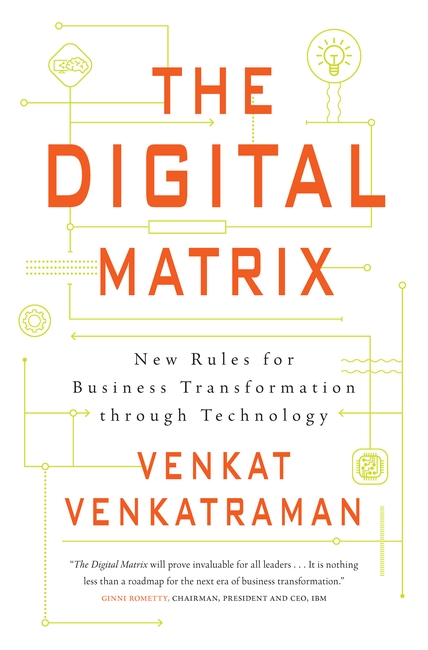
Ambitious digital-driven startups are now creating and cornering new markets in every sector. And yet, most legacy businesses continue to operate by old playbooks. Most are not keeping pace with the changes in their industry, let alone leading the way-what is yours doing? The Digital Matrix will help you understand the three types of players that are shaping the new business landscape; the three phases of transformation that every firm will encounter on its journey to business reinvention; and the three winning moves that will ensure your company’s success along the way.
With The Digital Matrix, you will:
Learn to navigate the world of digital ecosystems.
Discover ways of competing and collaborating with other companies to create and capture value.
Realize how powerful machines can amplify your company’s human talent.
Learn to assemble the team to experiment with new ideas, re-examine your core beliefs, and reinvent your business rulebook for the digital future.
Your company’s future depends on its ability to harness digital technology.
Don’t wait!

In the summer of 1995, six tourists were kidnapped in the mountains of Kashmir. The ransom note said the kidnappers were from an unheard of Islamic outfit and that they wanted the release of Pakistani militant leader Maulana Masood Azhar (later responsible for the attack on the Indian parliament). The kidnapping electrified the world and for the first time put the global spotlight on Kashmir. Within four days, one of the prisoners had made a hair-raising escape. A month on, was found, beheaded by his captors who had carved their name into his flesh. In the background, camped out in Delhi, the families of the missing struggled to keep their hopes alive, while international governments negotiated frantically with India, and the army, police and intelligence services tried to follow the trail. But the remaining four hostages were never found, their case forgotten – until now.

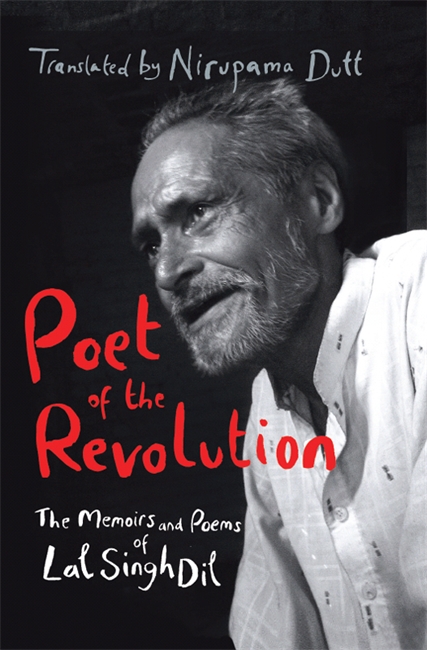
Lal Singh Dil is a legend in Punjab, famed as much for his rousing poetry as for the brew of his tea stall. Born into the ‘untouchable’ Dalit community in the years before Partition, he bravely challenged deep-rooted social prejudices through his crisp and stirring verses. His struggle led him to join the Naxalite movement-an experience that culminated in three horrifying years of torture at the hands of the police. In his later years, much to the dismay of his comrades, he converted to Islam because he believed that its tenets could be reconciled with the egalitarian and inclusive principles of communism. A powerful indictment of caste violence and discrimination, Poet of the Revolution describes Dil’s most turbulent years in his clear, fiery voice. Translated into English for the first time, this book also includes a selection of his most memorable poems.